A car repossession loophole isn’t a secret trick that lets you keep your vehicle for free. It involves mistakes your lender or repo agent makes.
I have seen how small details can change your options after a repo. A locked garage entry or accepted late payments may create legal issues.
You need to check the rules before assuming you have no choices left. These violations can help you challenge the process or gain more leverage.
I will explain what counts as a violation and how to prove it. You will also learn the next steps after repossession and what matters.
What Are the Signs Your Car Repossession Broke the Law?
A few specific details about how your car was taken can point to a real legal problem. If any of these sound familiar, it’s worth digging deeper.
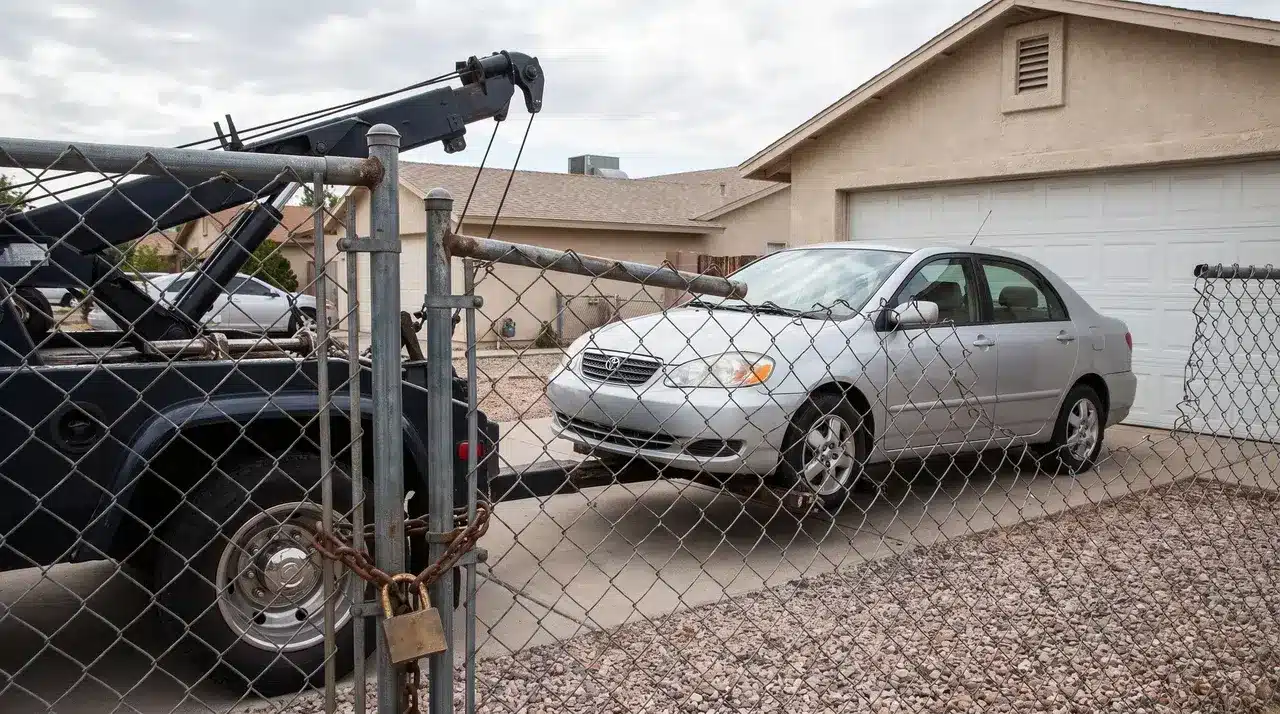
Start with where the car actually was. If it was behind a locked gate, inside a closed garage, or the agent had to cut a chain to get it, that’s a red flag. Repo agents can pull a car from your driveway or the street. They can’t break into a secured space to do it.
Next, think about how the agent acted. Did they push past you, block your car in so you couldn’t leave, or keep going after you told them to stop? Any of that crosses a line.
Payment history matters too. If your lender let late payments slide for months, then repossessed without any warning that the policy had changed, that pattern can work in your favor.
Last, check the numbers. Repos sometimes happen because of a lender’s mistake, not an actual missed payment. A misapplied payment or a miscounted grace period can trigger a repo that never should have happened.
What Legal Violations Turn Into Real Car Repossession Loopholes?

Not every mistake a lender makes counts as a real violation. These five patterns are the ones that actually hold up.
1. Breach of the Peace
This is one of the most common repossession violations, but many people misunderstand it. It happens when a repo agent uses force, threats, or intimidation to take a vehicle.
If you clearly tell the agent to stop and they continue anyway, it may be considered a breach of the peace. The same applies if they block your car or physically push past you.
The rule is straightforward. Repo agents can take a vehicle peacefully, but they cannot use force or ignore your clear objection during the process.
2. Taking the Car From a Locked Space
Repo agents can usually take a vehicle from public streets, open driveways, or unlocked areas. They cannot enter protected spaces to recover it.
Breaking a padlock, opening a locked gate without permission, or entering a closed garage may violate repossession rules and create legal issues.
If your car was stored behind a locked barrier, that detail matters. The repo process may have crossed a legal boundary.
The key question is whether the agent had lawful access. A locked area often provides stronger grounds to challenge how the repossession happened.
3. A History of Accepted Late Payments
Lenders sometimes accept late payments for months without raising concerns. Then, they may suddenly repossess the vehicle after another missed payment.
That pattern can matter because consistent past behavior may create expectations. A sudden change without notice could give you grounds to challenge the repossession.
The key issue is whether the lender changed its approach unfairly after repeatedly accepting late payments. Documentation can help show that pattern.
4. Errors in the Account or Default Calculation
Not every repossession happens because someone missed payments. Sometimes, the lender’s records create the problem instead.
A payment applied to the wrong month, a miscalculated grace period, or an autopay error can make an account appear overdue.
If your account was not actually in default, the lender may not have had a valid reason to repossess your vehicle.
Checking payment records, notices, and understanding what makes a loan agreement legally binding can help reveal whether the repo was based on incorrect information
5. Selling the Car in a Commercially Unreasonable Way
After repossession, the lender still has to sell the vehicle through a fair process. They cannot use an unfairly low sale price to increase your debt.
The difference between the sale amount and your remaining loan balance is called a deficiency balance. A lower sale price can make that amount much higher.
If the lender skipped required steps or sold the car for far less than its value, you may be able to challenge the balance.
A successful challenge could affect damages you may be able to recover or, in some cases, eliminate the deficiency balance completely.
How Do You Confirm a Repossession Violation Actually Happened?
- Separate suspicion from proof: Feeling that a repossession was unfair is not enough. You need clear evidence connected to a specific action, document, or event.
- Record what happened during the repo: Write down the exact time, location, and actions of the repo agent. Note whether the car was behind a locked barrier or whether you objected.
- Collect witness statements: People who saw the repossession can provide stronger evidence than your memory alone. A neighbor who witnessed a lock being cut may be valuable.
- Review your account records: Check payment history, lender notices, and your loan agreement. Documents showing timely payments or incorrect account records can support your claim.
- Understand what proof can do: Evidence does not automatically reverse a repossession. It gives you leverage when negotiating or presenting your case to a lawyer or court.
What Should You Do After a Wrongful Repossession or Before One Happens?

What you do next depends entirely on whether you can actually prove a violation happened. These are two different paths.
If You Can Prove a Violation
Proof on its own doesn’t get your car back. It gets you leverage.
Bring what you’ve documented to a lawyer or your lender directly. A clear violation, backed by timestamps or payment records, gives you real standing to push for the car’s return, a lower balance, or damages. Without that step, the proof just sits there unused.
If There’s No Violation
No violation doesn’t mean no options. It means a different set of moves.
Call your lender before you fall further behind. Most banks would rather restructure your loan or pause payments for a bit than pay a recovery agency to chase your car down.
If a repo already feels unavoidable, selling the car yourself usually beats voluntary surrender. Surrender feels like the easy way out, but you still owe the difference if the car sells for less than your loan balance at auction. Selling it privately usually gets a better price, which shrinks that gap.
If neither option works, bankruptcy is worth a serious look. Filing for Chapter 13 or Chapter 7 triggers an automatic stay, which stops collection calls and repossession immediately once it’s filed.
Conclusion
A car repossession loophole almost never means you get to keep the car for good. It means a mistake happened, and mistakes create leverage.
Maybe the agent crossed a line. Maybe your lender’s own records were wrong. Either way, proof turns a bad situation into a real case.
If nothing on this list applies to your repo, that’s still useful. It points you to call your lender early, sell the car yourself, or look into bankruptcy before things escalate.
Don’t wait until the car is already gone to figure out which path fits you. Pull your paperwork today, and talk to a lawyer if something about your repo still doesn’t sit right.
Frequently Asked Questions
How Can You Beat a Car Repossession?
There’s no guaranteed way to stop a repossession once your loan is in default. A proven legal violation, an early call to your lender, or filing for bankruptcy can each pause or unwind it. Which one works depends on your situation. Waiting until the car is already gone limits most of these options.
How Many Months of Missed Payments Lead to Repossession?
Most lenders can start repossession after a single missed payment, since most loan contracts define default that way. Many wait 60 to 90 days before acting, though. The exact timing depends on your lender’s policy and any past pattern of accepting late payments. Check your loan contract for the clearest answer.
Do Car Repossession Laws Vary by State?
Yes. Rules differ by state, especially around notice requirements, what counts as breach of peace, and how the deficiency balance gets calculated after a sale. A rule that applies where you live may not apply somewhere else. Check your state’s consumer protection resources to confirm the local rules that apply to you.
Will Police Get Involved in A Repossession?
Police generally don’t step in during a repossession, since it’s treated as a civil matter between you and your lender, not a criminal one. Some people call police anyway to have an officer present as a witness. That can help document a breach of the peace if one happens.