A single judge rarely has the full picture of what a case might affect.
Outside groups, agencies, and experts often understand the stakes better than the parties arguing the case, and courts have built a formal channel for that outside knowledge to reach them.
That channel is the amicus brief, a tool that lets non-parties add research, context, or a specialized viewpoint a judge might otherwise miss.
Civil rights groups, trade associations, and government agencies use it often, especially in cases that ripple far beyond the two sides in the courtroom.
Here is who can file one, what the rules require, and how much weight this input actually carries.
What is an Amicus Brief and Why Does It Matter?
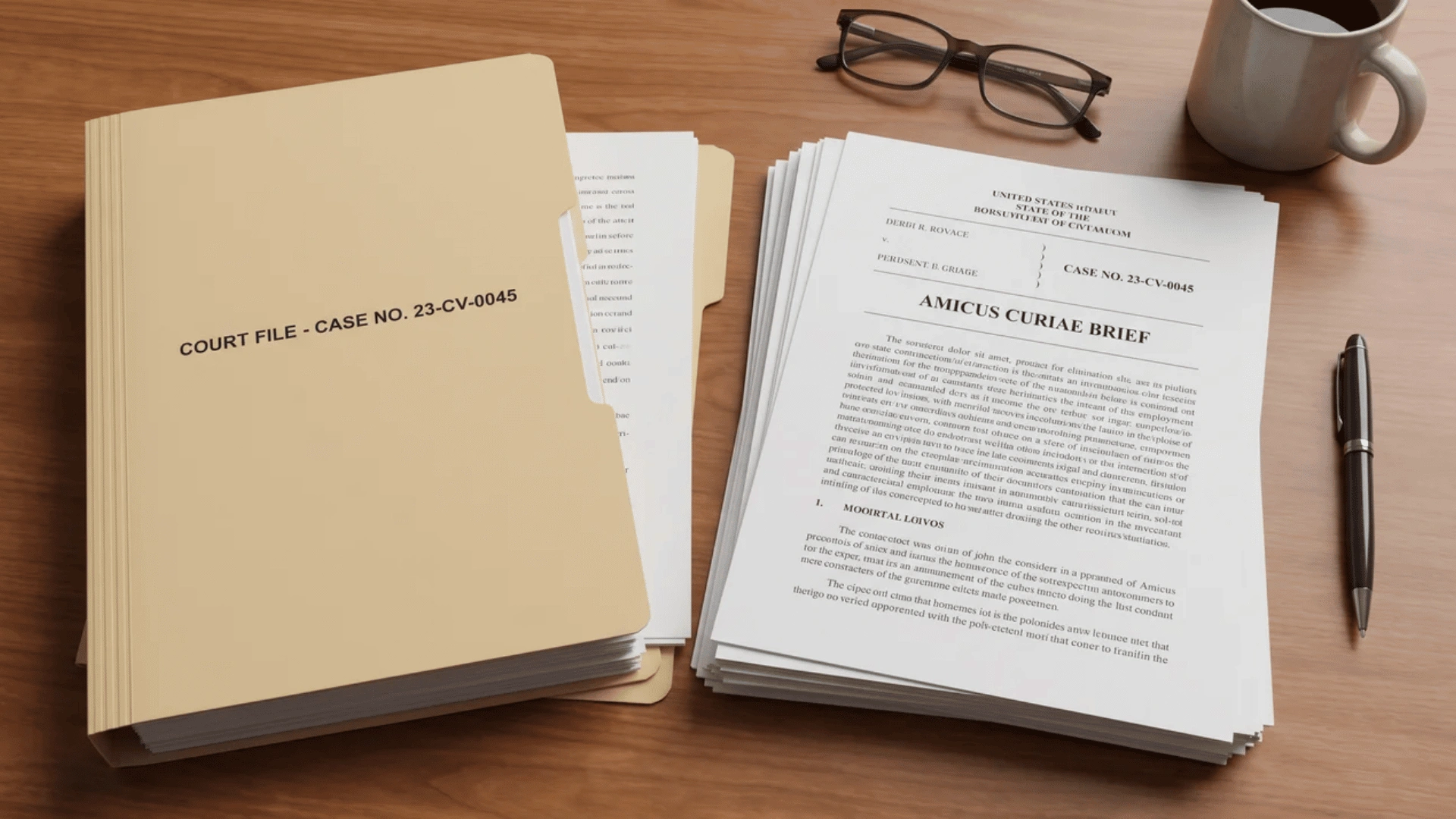
An amicus brief is a legal document submitted to a court by someone not directly involved in a lawsuit but with an interest in the issue.
The person or organization filing it is called an amicus curiae, meaning “friend of the court.” It provides information, research, or arguments that may help judges.
Unlike plaintiffs or defendants, amici do not represent a side in the lawsuit. Courts may consider these briefs, but judges decide how much weight to give them.
Who Can File an Amicus Brief?

Filing an amicus brief does not require being a party to the case, only relevant knowledge, expertise, or a genuine interest in the legal issue at hand.
These filers stay outside the lawsuit itself while offering information the court can use.
| Common Amicus Brief Filers | Why They File |
|---|---|
| Advocacy groups | Explain how a court decision could affect the public, communities, or groups they represent |
| Businesses and industry groups | Provide information about economic effects, industry practices, or practical challenges. |
| Professional associations | Share specialized knowledge related to a profession or field |
| Government agencies | Explain how a ruling may affect policies, regulations, or public interests |
| Academics and researchers | Provide studies, data, or expert analysis on complex issues |
| Legal experts | Offer additional legal perspectives or analysis related to the case |
In practice, a small set of organizations file far more often than the rest.
The American Civil Liberties Union and the NAACP Legal Defense Fund regularly weigh in on constitutional and civil rights cases, professional bodies like the American Medical Association file on health-related disputes, and the U.S. Chamber of Commerce Litigation Center focuses on cases touching business regulation.
State attorneys general also file jointly on issues like immigration or antitrust when a ruling could reach every state, not just the one where the case started.
An amicus does not need to be a plaintiff or defendant in a lawsuit. Their role is not to control the case or seek personal legal relief but to assist the court.
Courts may require permission or consent before accepting an amicus brief.
Having an interest in the outcome is different from being legally involved in the dispute, and the parties to a lawsuit still carry the only direct stake in what the court ultimately orders.
What are the Rules for Filing an Amicus Brief?
Courts do not accept amicus briefs automatically.
Most require either the consent of all parties in the case or permission granted directly by the court, sometimes called “leave to file.”
In federal appeals, Federal Rule of Appellate Procedure 29 sets out these requirements, including a motion explaining the filer’s interest in the case and why the brief would help the court.
The U.S. Supreme Court applies a similar standard under Supreme Court Rule 37, which lets the Court reject any amicus brief that only repeats arguments the parties have already made.
Filing deadlines are usually tied to the briefing schedule of the party the amicus supports.
Length limits, formatting rules, and disclosures about who wrote and funded the brief also vary by court, so filers typically check that court’s specific rules before submitting.
The Judicial Conference has approved changes to Rule 29’s disclosure requirements that are expected to take effect December 1, 2026, pending final adoption, so anyone filing after that date should confirm the current text before relying on this summary.
An attorney licensed in the relevant jurisdiction can confirm the rules that actually apply to a specific case.
How Does an Amicus Brief Help a Court?

Judges gain another source of analysis when an amicus brief adds information, research, or viewpoints the main arguments don’t cover.
These briefs are valuable when they add new information rather than merely repeat points already made by the parties. Their usefulness depends on relevance to the legal issue.
An amicus brief may include:
- Legal analysis: Additional legal arguments or interpretations tied to the case.
- Scientific research: Helps judges understand technical evidence or specialized subjects.
- Economic data: What a ruling could mean financially for an industry or the wider economy.
- Historical background: Context about the laws, events, or past decisions that shaped the issue.
- Expert opinions: Knowledge drawn from professionals or researchers with direct experience in the field.
- Broader impact information: How a ruling could ripple out to communities, industries, or the public at large.
How are Amicus Briefs Used in Advocacy and Policy Cases?
Amicus briefs are one of the main tools advocacy groups use to push a policy argument into a case without becoming a party to it.
A civil liberties group, a trade association, or a coalition of state attorneys general can use a single case to put research, data, or a preferred legal interpretation directly in front of the judges deciding an issue that reaches well past the two named parties.
Civil rights litigation is one of the clearest examples.
Groups filing in these cases often provide survey data, historical documentation, or on-the-ground accounts of how a law affects communities not directly represented in the courtroom.
Business and industry groups do the same on the other side of the aisle, warning courts about compliance costs, market disruption, or unintended effects on an entire sector.
This is also where amicus participation blurs into public advocacy.
A brief filed by a well-known organization can shape media coverage and signal where an industry or movement stands, even if the court never adopts its argument.
Because of that dual purpose, courts and scholars watch closely for briefs that exist mainly to generate publicity rather than to inform the judges.
Can an Amicus Brief Change a Court Decision?
Judges may come away with a different understanding of a legal issue after reading an amicus brief, but no filing can force a specific ruling.
Courts remain free to reject the arguments or conclusions it presents. Judges review amicus briefs along with arguments from plaintiffs and defendants.
The impact depends on the quality, relevance, and usefulness of the information provided. The volume can be significant in high-profile disputes.
The Supreme Court’s 2022 abortion ruling in Dobbs v. Jackson Women’s Health Organization drew more than 140 amicus briefs, compared to a single filing in a routine pension case argued the same term.
A well-supported brief may shape the court’s perspective while the final decision remains with the judges.
How is an Amicus Brief Different From a Regular Brief?

A regular brief is filed by a lawsuit party to present legal arguments, while an outsider submits an amicus brief. It provides additional information, research, or perspective to help the court understand an issue.
The key differences between these two legal documents come down to who files them, their purpose, and their role in the case.
| Feature | Regular Brief | Amicus Brief |
|---|---|---|
| Who files it | A plaintiff, defendant, or party directly involved in the lawsuit | An individual or organization that is not a party in the case |
| Main purpose | Argues for a party’s position and supports its claims or defenses | Provides additional information, research, or viewpoints to assist the court |
| Role in the case | Represents the interests of someone involved in the dispute | Offers outside knowledge without representing a lawsuit party |
| Information included | Legal arguments focused on why the court should rule in that party’s favor | Legal analysis, research, expert opinions, or broader effects related to the issue |
| Effect on outcome | Directly supports a party’s argument in the case | May influence the court’s understanding but does not control the decision |
A regular brief focuses on winning an argument for someone involved in the lawsuit, while an amicus brief focuses on helping the court consider additional information.
Both can contain legal reasoning, but they serve different purposes.
Where are Amicus Briefs Most Commonly Used?
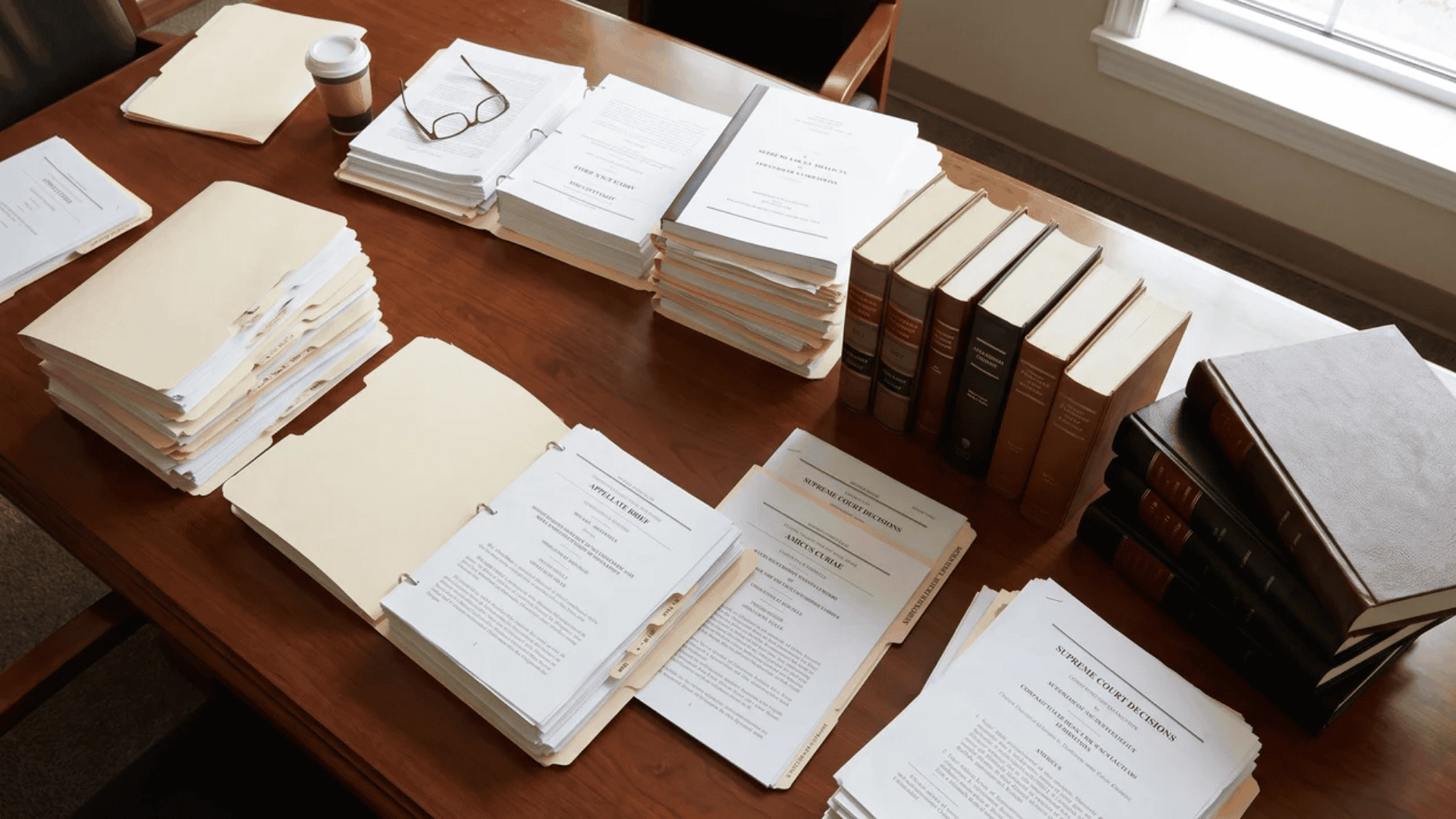
Amicus briefs are commonly used in appellate and Supreme Court cases because these decisions can affect people, organizations, and legal issues beyond the immediate lawsuit.
They are frequent in appellate courts because judges review broader legal questions. Outside groups can provide research, context, or expertise that may influence future cases.
Supreme Court and lower courts may accept amicus briefs for complex issues. They are especially useful when cases involve a wider public or legal importance.
High-profile Supreme Court cases can draw dozens of amicus briefs from different groups, each offering a distinct angle on how the ruling could play out.
Trial courts, by contrast, accept them far less often, since the legal questions at that stage are usually narrower.
Conclusion
An amicus brief matters because it gives courts outside knowledge without making the filer part of the lawsuit.
It can add research, expert insight, history, policy context, or real-world impact that the main parties may not fully cover.
Still, it does not decide the case, and judges can accept, question, or ignore its arguments. Its strength depends on how useful and relevant the information is to the legal issue.
That is why these briefs appear most often in appeals, Supreme Court cases, and disputes with wider public importance.
Following a major case? Check who filed amicus briefs to understand which groups, industries, or agencies are trying to shape the court’s view.
Frequently Asked Questions
What is the Purpose of an Amicus Brief?
An amicus brief provides courts with additional information, research, expertise, or arguments from someone who is not directly involved in a lawsuit. It helps judges understand broader effects or specialized issues that the main parties may not fully address.
Can Anyone File an Amicus Brief?
Not everyone can automatically file an amicus brief. Courts usually have rules about who may submit one, whether permission is needed, and how the filer’s interest connects to the legal issue being considered.
Does an Amicus Brief Decide a Case?
An amicus brief does not decide a case or replace arguments from the parties involved. Judges may consider the information it provides, but they decide how much importance the filing receives.