
August 24, 2026
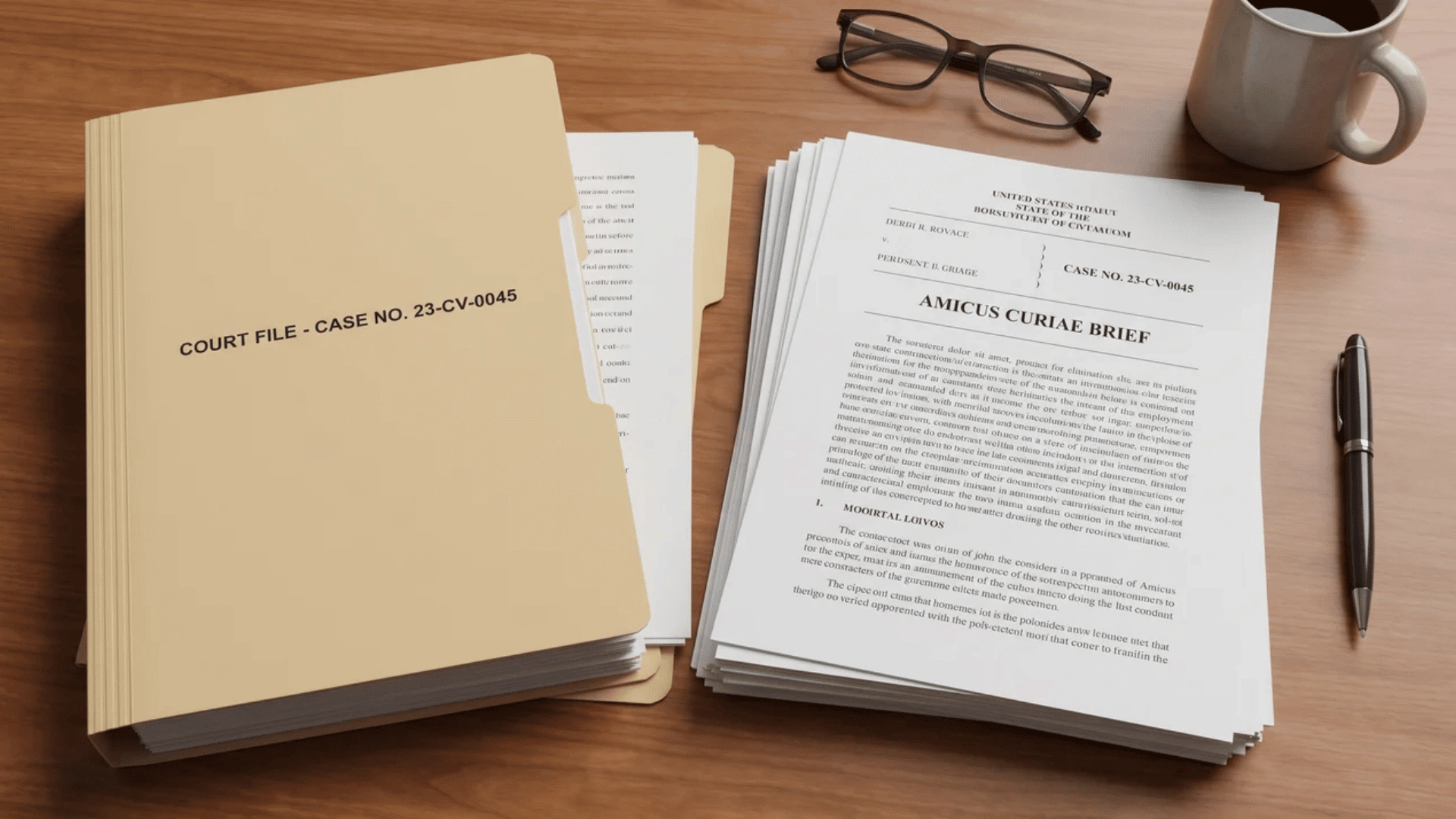
A single judge rarely has the full picture of what a case might affect. Outside groups, agencies, and experts often understand the stakes better than the parties arguing the case, and courts have built a formal channel for that outside knowledge to reach them. That channel is the amicus brief, a tool that lets non-parties add research, context, or a specialized viewpoint a judge might otherwise miss. Civil rights groups, trade associations, and government agencies use it often, especially in cases that ripple far beyond the two sides in the courtroom. Here is who can file one, what the rules require, and how much weight this input actually carries. What is an Amicus Brief and Why Does It Matter? An amicus brief is a legal document submitted to a court by someone not directly involved in a lawsuit but with an interest in the issue. The person or organization filing it is called an amicus curiae, meaning “friend of the court.” It provides information, research, or arguments that may help judges. Unlike plaintiffs or defendants, amici do not represent a side in the lawsuit. Courts may consider these briefs, but judges decide how much weight to give them. Who Can File an Amicus Brief? Filing an amicus brief does not require being a party to the case, only relevant knowledge, expertise, or a genuine interest in the legal issue at hand. These filers stay outside the lawsuit itself while offering information the court can use. Common Amicus Brief Filers Why They File Advocacy groups Explain how a court decision could affect the public, communities, or groups they represent Businesses and industry groups Provide information about economic effects, industry practices, or practical challenges. Professional associations Share specialized knowledge related to a profession or field Government agencies Explain how a ruling may […]
The Rachel Morin case shocked Maryland because it began with a normal evening jog and ended with a long search
A news alert says someone was charged with murder, and the story moves on without saying which kind. That gap
If you searched for the Venmo class action lawsuit, you probably found a mix of old news and new investigations

Sports betting has grown in popularity across the United States over the last ten years, with horse racing remaining one of the most popular options among gamblers. Making horse race betting online selections is most common around the times of the biggest events in the calendar, with millions of mainstream viewers typically tuning in to watch the Breeders’ Cup, Kentucky Derby, and Belmont Stakes. The Triple Crown remains the most popular with a mainstream audience, with the first Saturday in May typically being the most-watched horse racing event in the U.S. These events are as popular with experienced bettors as with those who only make a handful of wagers per year. However, betting on horse racing is unlike wagering on any other sport, as the industry is regulated differently from other options in the U.S. So, how does horse racing betting differ from other sporting options such as American Football and basketball? Pari Mutuel Betting One of the biggest differences in betting on horse racing is the odds bettors make their selections on. Fixed-odds betting is common across Europe and the rest of the world when betting on the sport, but in North America, Pari-Mutuel is most prominent. Here, odds are determined by how many other bettors select the same horse. In this type of betting, the prize pool for each race is determined by the size of the pool, with the track taking its cut. This can work in bettors’ favor, as odds for outsiders can be much higher than on fixed-odds sites. However, popular favorites will traditionally be even shorter in price in pari-mutuel wagering. Interstate Horseracing Act Horse racing has been ahead of the curve in sports betting in the United States, as the Interstate Horseracing Act was passed into law in 1978, before amendments were made […]
Real property vs personal property comes down to one question: can it move? Real property stays put, like land, buildings, and anything permanently attached. Personal property can be picked up and taken with you, like furniture, cars, and jewelry. This split matters more than it seems. It affects how something is taxed, how it’s sold, and what happens to it after you die. Money can be either type. Cash in your wallet is personal property. Money in a bank account is an intangible claim against the bank, which can matter for estate and creditor purposes. What Is Real Property? Real property means land and anything permanently attached to it, like buildings, fences, in-ground pools, and driveways. If you can’t remove it without damage, it’s likely part of the property. Owning real property gives you a bundle of rights. These include the right to possess, control, exclude others, enjoy, and sell the property. Real property and real estate get used interchangeably, but they aren’t identical. Real estate refers to the physical land and structures. Real property is the broader legal concept, covering ownership rights tied to that land. Real property can also include airspace above the land and mineral or water rights below it. What Is Personal Property? Personal property is everything you own that isn’t real property. It’s not fixed to land, so you can move it around or take it with you. Tangible personal property includes things you can touch, like cars, furniture, and jewelry. Intangible personal property covers things you own but can’t physically hold, like stocks, patents, and bank accounts. Here’s a gap worth noting. Cash in your hand is tangible property, but money in a bank account is intangible. This distinction can affect how it’s taxed. Digital assets also count as intangible personal property. This includes […]
Choosing the right license plate frame in Florida means paying attention to more than just looks. State law has clear rules about what can and can’t cover your plate, and getting it wrong can lead to a ticket even if the frame seems harmless. Not every plate product on the market follows the rules, especially those designed to blur or hide details. This blog breaks down what Florida license plate frame law actually requires, which frames are safe to use with your plate, and how to check whether the frame is compliant before installing. Is a License Plate Frame Illegal in Florida? No, license plate frames are legal in Florida, so you’re fine to use one. The problem starts when a frame covers the license plate number or the registration validation decal in the top right corner. Under Florida Statute 320.061 and FLHSMV’s December 2025 guidance, those two items are the plate’s core primary features, and the state or county name at the bottom is fair game. Florida Statute 316.605 still requires every other printed detail to stay legible, so don’t assume covered text is automatically safe. Tinted or smoked covers break the same rule. What Does Florida Law Say About License Plates? Florida Statute 316.605 says your license plate must stay clean, unobstructed, and easy to read at all times. Statute 320.061 covers frames specifically, and 320.262 covers criminal “obscuring devices” like tag flippers. An “obscuring device” is anything that blocks, tints, or distorts the plate number or validation sticker, or stops a camera from reading them. This includes smoked covers, spray coatings, and slanted frames that bend light. Decorative frames are generally allowed as long as all letters, numbers, and stickers stay visible. What the Frame Must Leave Visible Florida law is specific about what has to stay […]