
It is 1 a.m., you are three hours from home, and your eyes will not stay open. The rest stop sign glows up ahead.
You pull in, recline the seat, and then a thought creeps in: is it legal to sleep in your car here, or are you going to wake up to a knock on the window?
Millions of people ask this every year. Road trippers, truck drivers, shift workers, and folks between homes all end up in the same parking lot at the same hour, wondering the same thing.
The answer is not as simple as you would hope.
Is It Legal to Sleep in Your Car?
In most cases, yes. No law says you cannot close your eyes behind the wheel of a parked car.
The trouble starts with where you stop and what shape you are in when an officer knocks on the window. Four different sets of rules can turn a legal nap into a ticket:
Parking rules and time limits
Vehicle habitation or camping bans
Trespass laws on private property
DUI laws covering actual physical control
What Does the Law Say About Sleeping in a Parked Car?
No federal law bans it. The rules come from cities and counties, not blanket state statutes, so the answer can change from one town to the next.
The key distinction is sleeping versus camping. Most states define camping as pitching a tent, setting up a shelter, or sleeping on the ground.
Resting inside a legally parked vehicle usually does not count.
That difference matters at highway rest areas and on public land, where camping is restricted but overnight parking often isn’t.
When Is Sleeping in Your Car Generally Allowed?
Some spots are set up for it, or at least tolerate it. Here is where you are usually in the clear:
Highway rest areas: Allowed in most states, but watch the posted time limits, often 4 to 10 hours.
Truck stops and travel centers: Chains like Pilot, Love’s, and TA typically welcome overnight parking.
Campgrounds and RV parks: You pay for a site, so sleeping there is the whole point.
BLM and some public land: Dispersed camping rules often allow a night or more at no cost.
Private property with permission: With the owner’s okay, it is usually legal. Without it, you risk a trespassing charge.
Municipal safe parking programs: Some cities run supervised lots for people living in their vehicles.
When Sleeping in Your Car May Be Illegal?

Yes, plenty of common spots are off-limits. Local ordinances, not the act of sleeping itself, decide where you cannot legally rest for the night:
Cities with vehicle-habitation ordinances (Los Angeles has restricted sleeping in vehicles on residential streets overnight and near schools, parks, and daycares)
Streets with posted overnight parking bans
Private lots with posted no-overnight-parking signage
Rest areas in states that prohibit overnight stays
Public parks after hours
Rest Area Rules Vary by State
Every state sets its own limit, and some ban overnight stays outright. Here is a sample of how much the rules differ:
State | Max stay | Overnight allowed? |
|---|---|---|
Pennsylvania | 2 hours (24 at service plazas) | Limited |
Tennessee | 2 hours | No |
Virginia | No time limit | No |
South Carolina | No time limit | No |
Washington | 8 hours | Yes |
California | 8 hours | Yes |
Oregon | 12 hours | Yes |
Texas | 24 hours | Yes |
These are state DOT rules, and they change. Posted signs at the rest area always control, so read them before you settle in.
Can You Get a DUI for Sleeping in Your Car?
Yes, and this catches people off guard. Most states let police charge you for being in actual physical control of a vehicle, so you don’t have to have driven over the legal alcohol limit; sleeping it off in the driver’s seat can still bring charges.
Some states, such as California, mandate proof that you have actually driven.
Nevada follows the broader rule. Under NRS 484C.110, being in actual physical control while impaired is illegal, so sleeping it off in the driver’s seat can still bring charges.
Courts use a totality of the circumstances test fromState v. Love, 182 Ariz. 324 (1995) to weigh the engine, the keys, and where you sat, and a push-button start has only muddied it further.
What Should You Know About Private Property and Trespass Rules?
Private lots run on permission, not rights, and that permission can vanish at any moment. Here is what to know:
Overnight parking is a courtesy: Walmart, casinos, and travel centers may allow it, but no business must let you stay.
Store managers decide: One Walmart says yes, the next says no, often because of local ordinances or past problems.
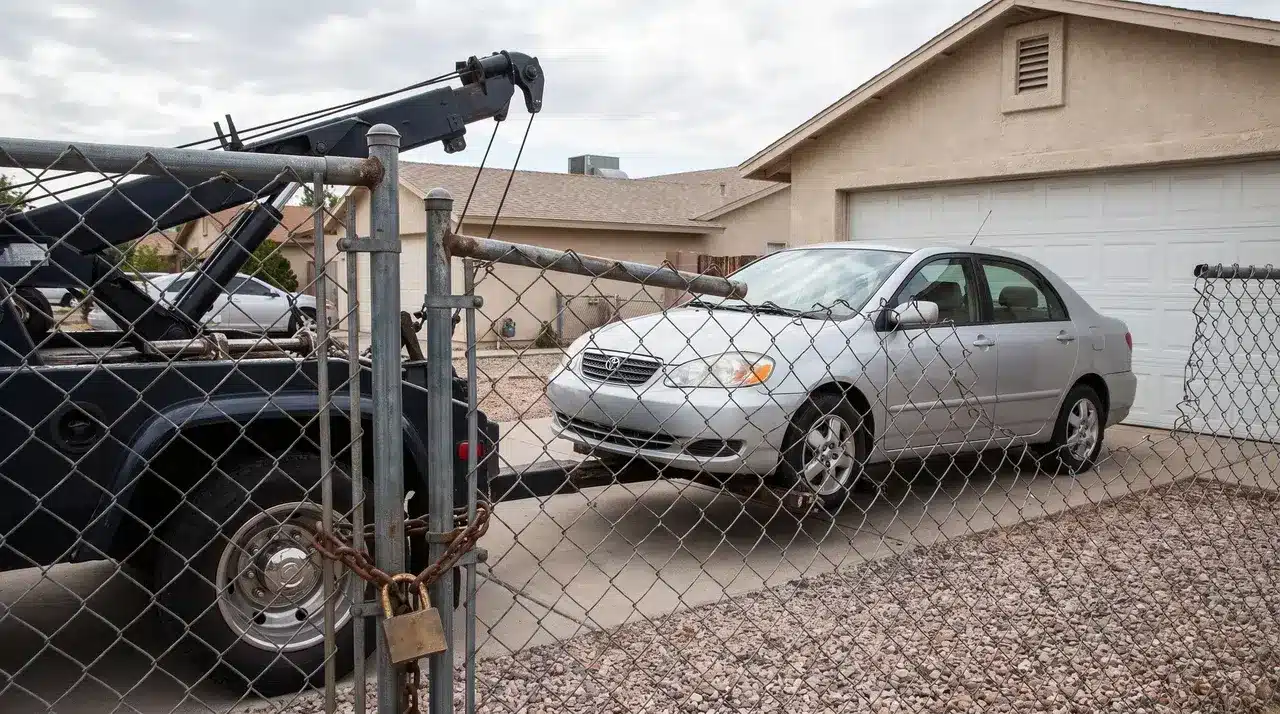
Hotel and apartment lots are strictest: Those spaces are for paying guests and residents, and towing is common.
Leave when asked: Once permission is revoked, staying becomes trespassing, and police can cite you or tow your car.
Note: A two-minute call to the manager turns a gray area into a clear yes or no.
Can Police Wake You Up for Sleeping in Your Car?
Yes, and it happens often. An officer who spots an occupied car parked overnight can knock on the window to check on you.
These welfare checks are routine and different from detention or arrest, since police cannot tell a sleeping traveler from a medical emergency without looking.
Officers may question you or ask you to move from a restricted parking area immediately.
What happens next depends on what the officer notices. Signs of alcohol, keys in the ignition, or a lot with posted restrictions can turn a simple check into a longer stop.
Rules and police practice vary widely by state and city, so what is routine in one place may play out differently in another.
How the Supreme Court’s Grants Pass Ruling Changed the Law
In 2024, the Supreme Court decided City of Grants Pass v. Johnson.
The Court held that enforcing generally applicable laws against camping on public property does not violate the Eighth Amendment’s ban on cruel and unusual punishment.
That matters here because the Grants Pass ordinance did not stop at tents. It also covered overnight parking in city parks, which put vehicle sleepers squarely within its reach.
The practical result is simple. Cities now have more room to write and enforce ordinances that reach people sleeping in cars, and some have expanded enforcement since the ruling.
If you rely on street or park parking overnight, check local rules more carefully than you did a few years ago.
What Happens If You Break the Law?
What you face depends on which rule you broke, and the range is wide:
Violation | Typical consequence |
|---|---|
Parking citation | Roughly $25 to $100 |
Vehicle habitation ordinance | Fine, often $50 to several hundred |
Towing and impound | $150 to $500+, plus daily storage |
Trespass charge | Citation or misdemeanor, depending on state |
DUI | Fines, license suspension, possible jail |
Amounts vary by city and court. A DUI is by far the most serious outcome, since it may follow you long after you pay the fine.
Final Verdict
So, is it legal to sleep in your car? In most places, yes. But the answer never comes from one law.
It comes from four: parking rules, vehicle habitation ordinances, trespass law, and DUI statutes that reach drivers who never turned the key.
Where you park matters more than the fact that you are sleeping. A rest stop in Texas gives you 24 hours.
A residential street in Los Angeles may give you a citation. And if you have been drinking, the driver’s seat is the worst place in the car to close your eyes.
Know local parking rules, and contact a defense attorney if you face charges.
Frequently Asked Questions
Can You Sleep in Your Car at Walmart?
Many stores are happy to let you do it, but since each manager has their own rules, it’s a good idea to check with them first before you settle in for the night.
Is It Illegal to Sleep in Your Car With the Engine Running?
Not by itself, but idling limits, DUI rules, and carbon monoxide risk in a closed, parked cabin can all still apply based on location and circumstances.
Can You Sleep in Your Back Seat to Avoid a DUI?
It helps, since courts weigh where you sat and where the keys were, but it never fully guarantees you won’t be charged.
Can You Sleep in Your Car on a Residential Street?
Often yes, unless the local city government bans overnight parking or has its own vehicle habitation ordinance in place.