
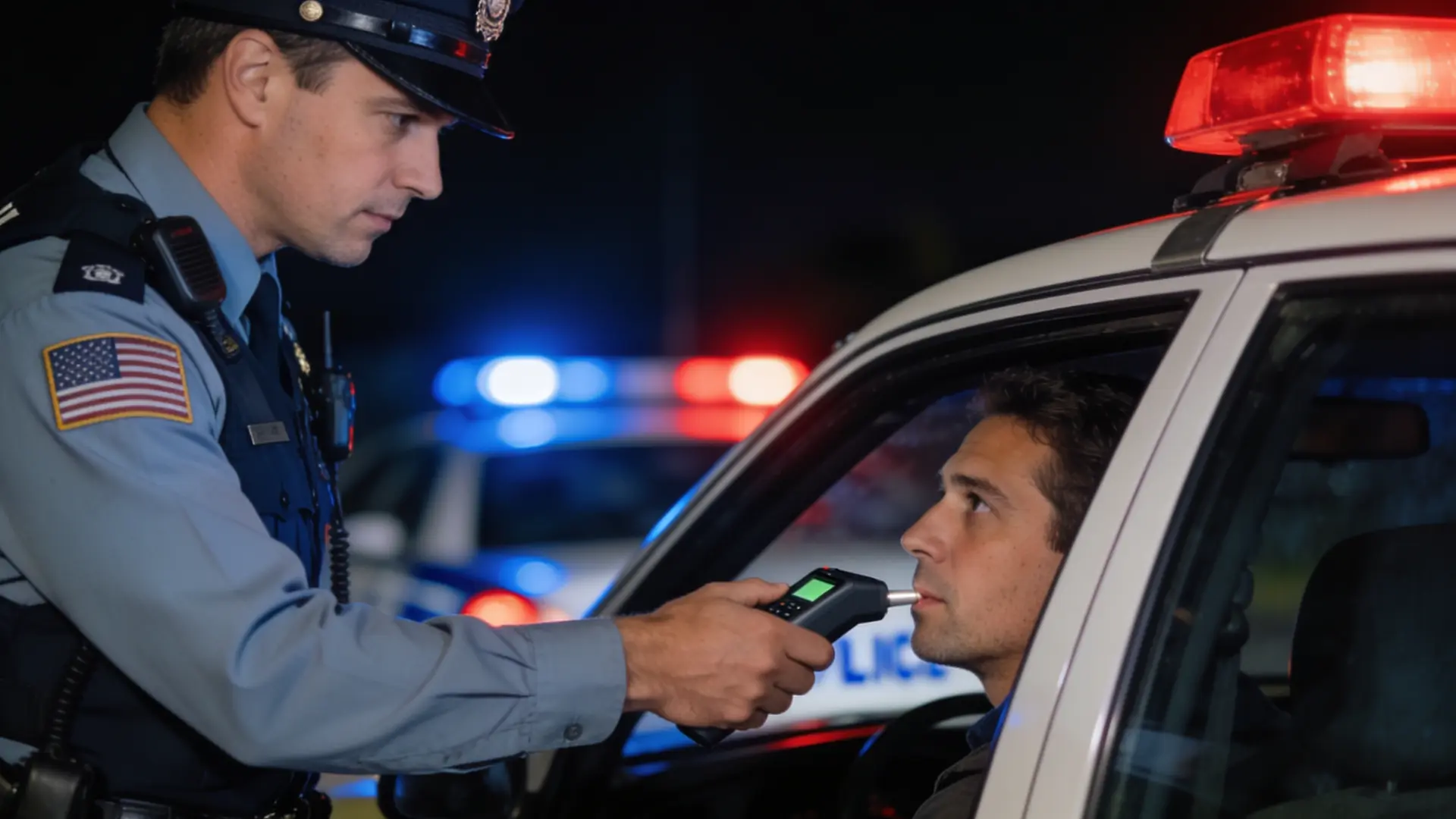
Most people understand there’s a legal alcohol limit. Fewer understand what actually happens when they cross it, and even fewer realize that impairment begins well before that number.
The law was built around that reality, and the penalties reflect it.
A DUI charge does not resolve quickly or quietly. It triggers criminal proceedings, a separate DMV administrative process, and a range of penalties that can include fines, jail time, mandatory programs, and years of elevated insurance costs.
In the more serious cases, it changes the course of a person’s professional and personal life.
This blog breaks down what the legal BAC limit means for different types of drivers, what the open container law actually requires, and what you can realistically expect from the legal system if you are charged with exceeding it.
What Does the Legal BAC Limit Mean?
Blood alcohol concentration is the measure of how much alcohol is present in a given volume of blood.
A BAC of 0.08% means there are 0.08 grams of alcohol per 100 milliliters of blood.
That might sound abstract, but at that level, the National Highway Traffic Safety Administration documents measurable declines in concentration, short-term memory, speed control, and the ability to process information from multiple sources at once.
The 0.08% standard is what’s known as a “per se” DUI. Under per se laws, reaching or exceeding that BAC is sufficient for a DUI charge by itself.
The prosecution does not need to prove the driver was behaving erratically or showing obvious signs of impairment. The number alone is enough.
All 50 states adopted the 0.08% threshold as a condition of receiving full federal highway funding under the Transportation Equity Act for the 21st Century.
What is the Legal BAC Limit for Different Types of Drivers?
The 0.08% standard applies to most adult drivers operating a standard passenger vehicle. But the law draws different lines for different categories of drivers.
- Standard drivers (21 and over): A BAC of 0.08% or higher constitutes DUI per se in every state.
- Commercial drivers: The federal limit is 0.04% for anyone operating a commercial motor vehicle, including semi-trucks, buses, and vehicles requiring a CDL. The lower threshold reflects the increased risk that large vehicles pose in an accident.
- Drivers under 21: Most states apply zero-tolerance policies, setting the limit at 0.00% to 0.02%. Even a trace amount of alcohol can trigger charges under these rules.
- The DWAI gray zone: Several states recognize a lower impairment standard below 0.08%. A driver with a BAC between 0.05% and 0.079% may not face a full DUI charge but can still be charged with driving while ability impaired (DWAI) or a similar offense. The driver does not need to appear visibly drunk for this charge to apply.
Understanding which category you fall into matters because the thresholds and the penalties attached to them are not the same across the board.
How BAC Levels Affect Your Ability to Drive?
One of the more counterintuitive findings in alcohol research is that drivers at 0.07% BAC are still technically below the legal limit in most states.
It showed significantly diminished driving performance during clinical testing while participants remained largely unaware of their own impairment.
That gap between actual performance and perceived performance is what makes alcohol and driving a particularly dangerous combination.
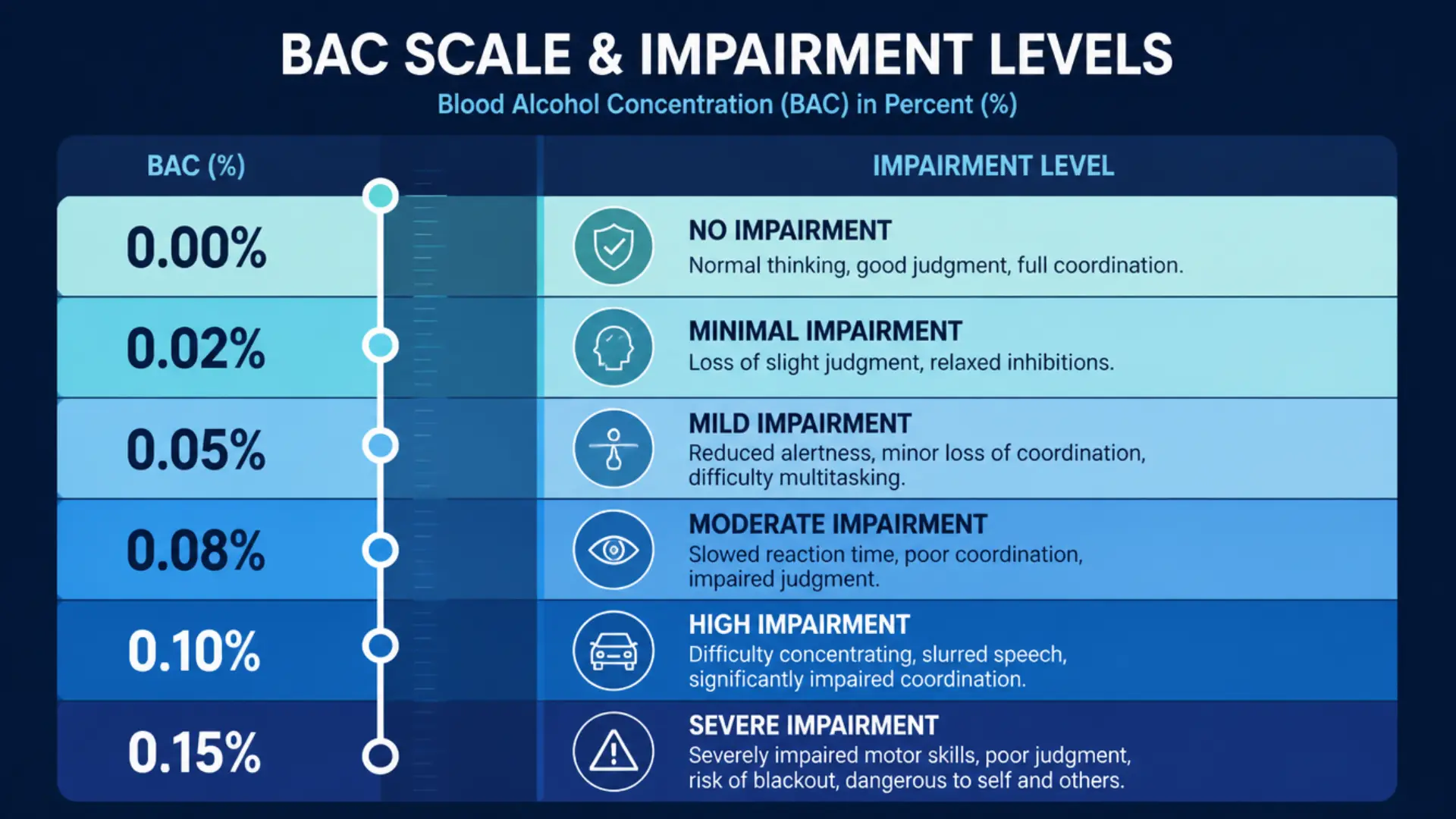
According to NHTSA data, here is how impairment generally progresses by BAC level:
- 0.02%: Slight decline in visual tracking and reduced ability to handle two tasks at once. Most drivers feel no effect.
- 0.05%: Noticeably slower reaction time, reduced coordination, and difficulty steering while simultaneously monitoring surroundings. Confidence often increases at this level despite declining ability.
- 0.08%: Measurable decline in concentration, judgment, perception, and reaction speed. Muscle coordination is impaired. This is the legal threshold for DUI per se.
- 0.10%: Clear deterioration in reaction time, speed control, and the ability to stay in lane.
- 0.15%+: Major impairment across all driving-related functions. At this level, many states impose enhanced penalties.
The legal limit reflects a policy line, not a safety line. Impairment begins before 0.08%, and the law in most states can still reach drivers who fall below that threshold.
What Does the Open Container Law Mean?
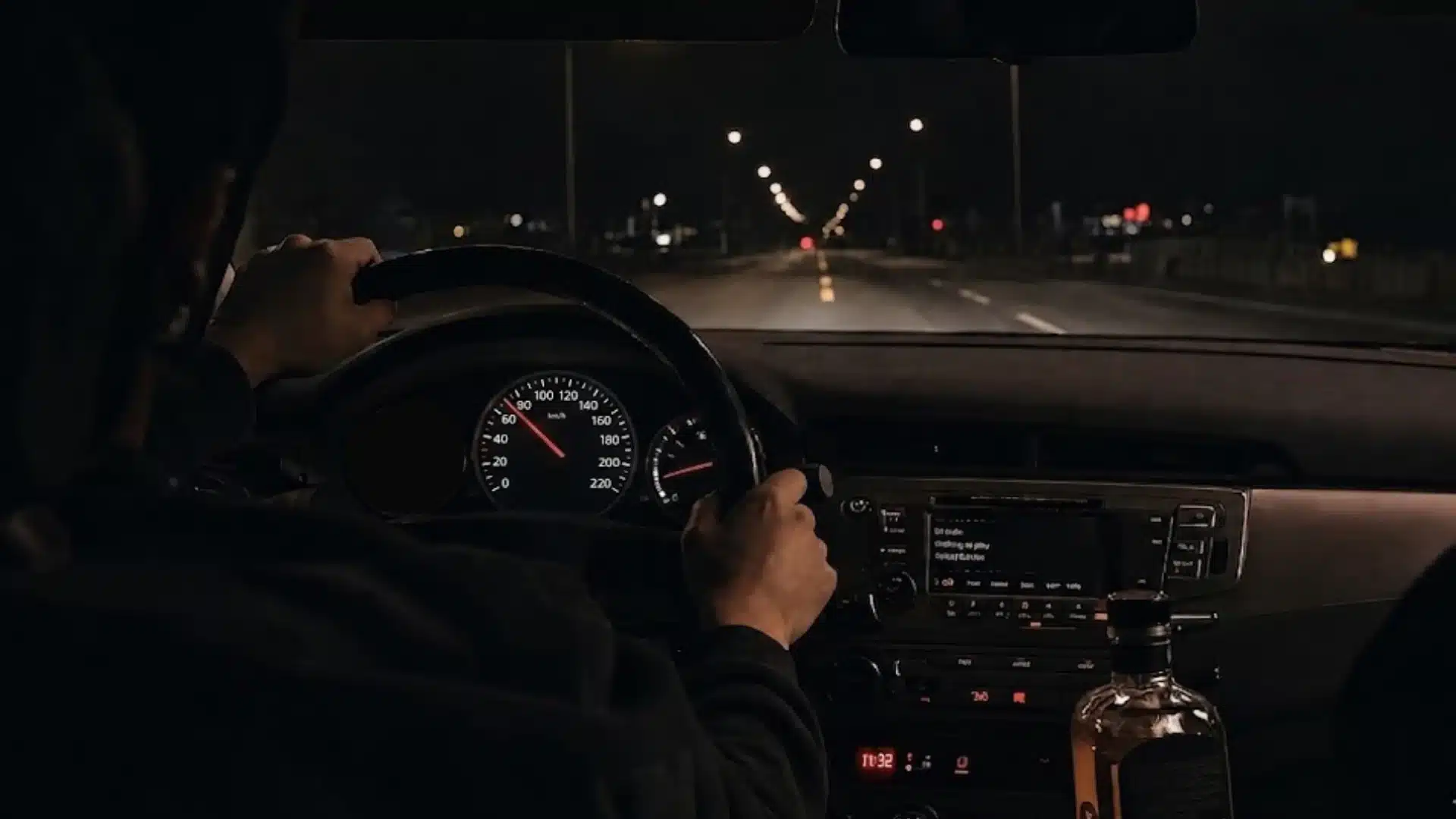
Open container laws prohibit the possession of any unsealed alcoholic beverage container in the passenger area of a motor vehicle.
Under federal standards set by 23 U.S.C. § 154, a container counts as “open” if it has been unsealed, has a broken seal, or has had any portion of its contents removed, even if it has been reclosed.
The federal framework encourages states to adopt open container laws that cover all vehicle occupants, not just the driver, apply to the entire passenger area, including unlocked glove compartments, and allow for primary enforcement.
As of 2022, 38 states and the District of Columbia had open container laws meeting those federal standards.
States that do not comply risk having a portion of their federal highway construction funds redirected to alcohol safety programs.
Common exceptions apply to passengers in commercial vehicles like buses, limousines, and taxis. Some states also exempt sealed containers in the trunk or a locked compartment separated from the passenger area.
The specific rules vary by state, and an open container violation carries its own penalties separate from a DUI charge, though the two can and often do occur together in the same stop.
What are the Legal Consequences of Exceeding the Alcohol Limit?
A DUI charge triggers two parallel tracks: criminal court proceedings and administrative action through the DMV. Both can affect you at the same time and are handled independently.
An acquittal in criminal court does not automatically restore a license suspended by the DMV.
On the criminal side, a first-offense DUI is typically charged as a misdemeanor. General consequences across most states include:
- Fines: A first offense typically results in fines ranging from $500 to $1,000 before court costs and fees. Total out-of-pocket costs, including legal fees, alcohol education programs, and license reinstatement, can exceed $10,000.
- Jail time: Many states impose mandatory minimum jail time even for first offenses, ranging from a few hours to 48 hours or more. Probation is commonly substituted or added.
- License suspension: Most states suspend driving privileges for 90 days to one year on a first offense. The suspension can begin before conviction through administrative action alone.
- Ignition interlock device: Courts in many states require the installation of an ignition interlock device (IID) on the offender’s vehicle. The driver must pass a breath test before the car will start.
- Alcohol education programs: Completion of a court-mandated alcohol education or treatment course is standard in most jurisdictions.
Penalties increase sharply with each subsequent offense. A second DUI typically doubles fines and extends the license suspension to one to two years. A third offense in many states elevates the charge to a felony, which carries the possibility of multi-year prison sentences and a permanent criminal record.
High-BAC readings also trigger enhanced penalties in most states, even on a first offense. Readings at or above 0.15% to 0.16% are treated as aggravating factors in sentencing.
DUI Laws and the Legal BAC Limit in Colorado
Colorado has some of the strictest impaired driving laws in the country. The state uses a tiered system that includes offenses such as Driving While Ability Impaired (DWAI), enhanced penalties for high BAC levels, and separate rules for commercial and underage drivers.
| Issue | BAC / Trigger | Colorado Legal Result |
|---|---|---|
| DUI per se | BAC of 0.08% or higher under Colorado Revised Statutes § 42-4-1301 | Charged as DUI per se |
| DWAI | BAC between 0.05% and 0.079% | Lesser offense than DUI, but still a criminal conviction |
| Commercial drivers | BAC of 0.04% or higher | Legal exposure under commercial driver limits |
| Underage drivers | BAC of 0.02% or higher | Can be charged under zero tolerance rules |
| Persistent drunk driver designation | BAC of 0.15% or higher | Ignition interlock and treatment may be required |
| High BAC threshold | BAC of 0.20% or higher | Mandatory jail time may apply |
| Administrative license revocation | First offense DUI | License revocation is handled separately by the DMV |
| DMV hearing | Limited request window | Can contest the license revocation |
| Open container law | Unsealed alcohol in the passenger area | Separate infractions with fines |
Administrative penalties are handled separately from the criminal case. This means a driver may face license revocation through the Colorado DMV even while the court case is still pending.
When to Call a DUI Attorney?
A DUI charge is not a traffic ticket. It starts a criminal process with deadlines, hearings, and decisions that can have lasting consequences. There are specific situations where legal counsel should be the first call:
- Any DUI where an accident occurred, particularly if another person was injured or property was damaged
- High-BAC readings (0.15% or above), where sentencing enhancements apply
- Refusal of chemical testing, which carries its own automatic license suspension in most states
- Commercial driver’s license holders, whose CDL is at immediate risk
- Second or subsequent offenses, where felony-level charges become possible
Understanding field sobriety test procedures and whether they were properly administered is one of several areas where an experienced attorney can identify grounds to challenge the evidence.
Conclusion
The 0.08% threshold is a legal standard, not a guarantee of safety. Impairment starts lower, and the law in many states, including Colorado, can reach you before you hit that number.
Understanding where the lines are drawn, what open container laws prohibit, and how the DMV process works separately from criminal court gives you a clearer picture of what is actually at stake.
If you or someone you know is facing a DUI charge, do not wait to get legal advice. The decisions made in the first hours and days after an arrest have real consequences.
Have questions about Colorado DUI laws, BAC limits, or open container rules? Leave a comment below and share what you would like clarified.
Frequently Asked Questions
Can You Get a DUI if Your BAC is Under 0.08%?
Yes. In some states, including Colorado, you can face impaired-driving charges below 0.08%. Colorado’s DWAI law applies at 0.05% to 0.079%, and officers may also rely on field observations.
Does Refusing a Breathalyzer Test Help You Avoid a DUI?
No. Refusing usually triggers an automatic license suspension under implied consent laws. Refusal may also be used against you in court.
Are Open Container Violations the Same as a DUI?
No. They are separate offenses. You can have one without the other, but an open container during a DUI stop may be treated as an aggravating factor.
How Long Does a DUI Stay on Your Driving Record?
It depends on the state. Many states keep it on your driving record for five to ten years, while a criminal DUI conviction may stay on your record longer unless expungement is available.