
June 12, 2026

Every year, businesses across the U.S. lose thousands of dollars not because they made bad deals, but because they didn’t have the right legal guidance before signing them. A lease clause buried in fine print. A zoning restriction nobody checked. A title defect that should have been caught weeks earlier. In commercial real estate, the financial consequences of moving without legal counsel are rarely small and almost never quick to fix. Whether you’re leasing your first office space, acquiring a commercial property, or navigating a landlord dispute, understanding commercial real estate law is the foundation of every smart business decision regarding property. This guide walks you through everything you need to know, clearly, practically, and without the legal jargon. What is Commercial Real Estate Law? Commercial real estate law is the body of legal rules, regulations, and contractual frameworks that govern property used for business purposes. It covers everything from buying or selling an office building to negotiating a retail lease, developing an industrial facility, or resolving a boundary dispute with a neighboring property owner. The key distinction from residential property law? In commercial transactions, the law generally assumes both parties are sophisticated. There are no standard consumer protections automatically applied to your lease. Whatever you agree to in writing, including clauses you didn’t fully understand, is enforceable. That’s exactly why professional legal guidance isn’t optional; it’s essential. Property Types Covered Commercial property law applies to a wide range of property types. Understanding which category your property falls into matters because zoning classifications, lease structures, and legal requirements differ significantly across types. Office buildings, retail storefronts, and shopping centers Industrial warehouses and distribution facilities Mixed-use developments and multi-family units (5+ units) Hotels, medical offices, and food service properties Commercial Property Law vs Residential Real Estate Law Most people’s understanding of […]
A preliminary hearing is one of the first steps in a criminal case. It gives the court a chance to
Legal terms can be confusing, especially when two words are often used as if they mean the same thing. Bail
The moment your biometrics appointment ends, a quieter part of the immigration process begins. There are no big announcements, no
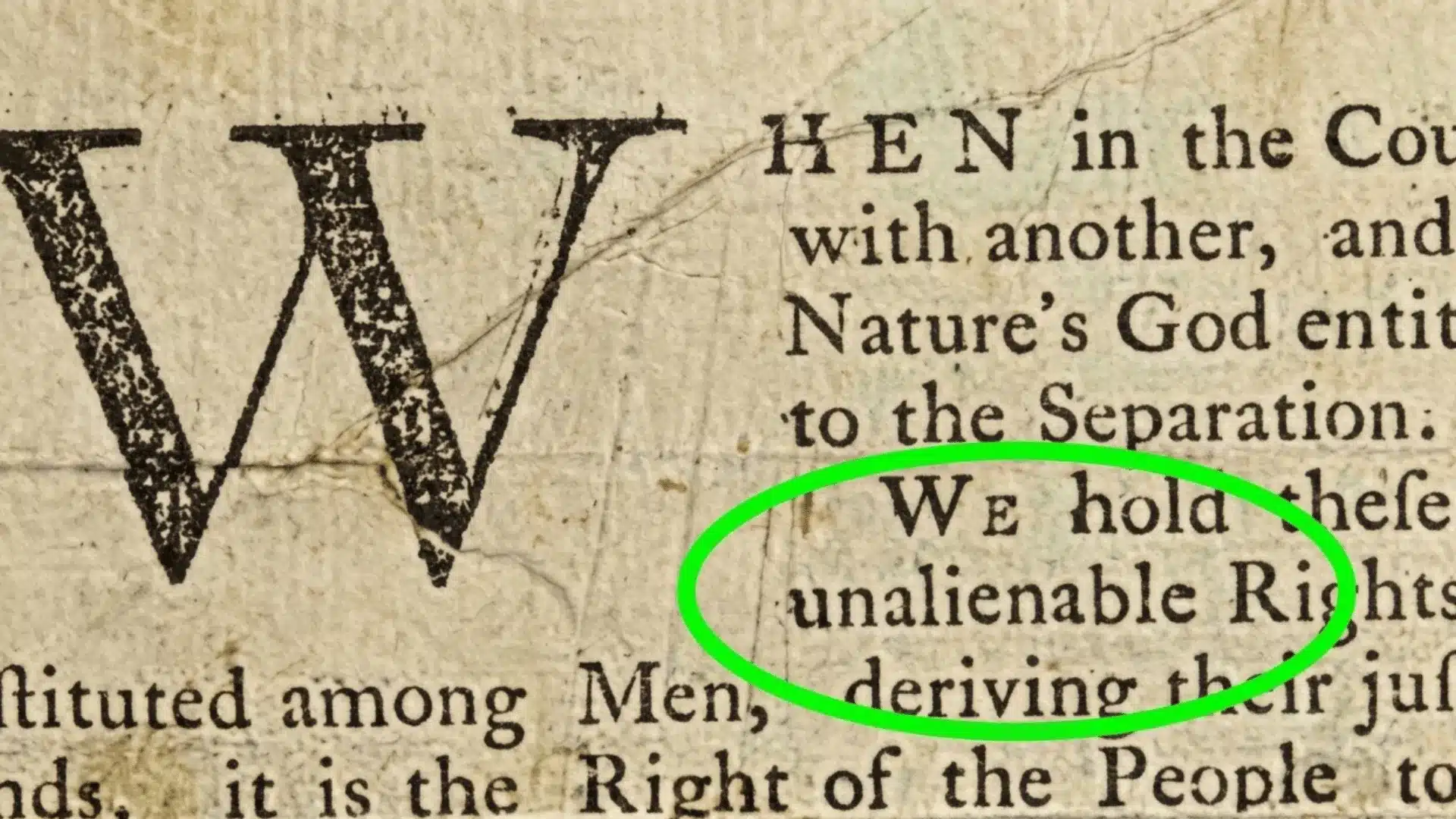
Some phrases from American history sound familiar but still feel hard to explain. “Life, liberty, and the pursuit of happiness” is one of them. These words sit at the heart of the Declaration of Independence, but their meaning goes far beyond a classroom quote. So, what are unalienable rights, and why did the Founders treat them as the foundation of freedom? In simple terms, they are basic human rights that the government does not create and should not take away without a lawful process. As a legal writer, I see this concept as one of the clearest links between America’s founding ideals and today’s constitutional protections. This blog post explains their meaning, origin, and modern importance in plain language. What are Unalienable Rights? Unalienable rights are a category of fundamental rights that cannot be sold, transferred, surrendered, or permanently taken away. They belong to every person by virtue of being human, not because any authority decided to grant them. The term comes directly from the Declaration of Independence. The document states that all people “are endowed by their Creator with certain unalienable Rights.” This framing was deliberate. By grounding these rights in human nature rather than government authority, the Founders made the argument that no government has the power to remove them. In practical terms, unalienable rights function as a floor below which the legal system cannot go. A government can regulate behavior, restrict certain activities through law, and impose consequences for crimes. What it cannot do is permanently strip a person of the fundamental rights that define human freedom Why the Declaration Calls These Rights “Unalienable”? The word “unalienable” comes from property law. In that context, “alienation” refers to the transfer of ownership. When you sell a house, you alienate your interest in it. Something that is “alienable” can […]

Most people understand there’s a legal alcohol limit. Fewer understand what actually happens when they cross it, and even fewer realize that impairment begins well before that number. The law was built around that reality, and the penalties reflect it. A DUI charge does not resolve quickly or quietly. It triggers criminal proceedings, a separate DMV administrative process, and a range of penalties that can include fines, jail time, mandatory programs, and years of elevated insurance costs. In the more serious cases, it changes the course of a person’s professional and personal life. This blog breaks down what the legal BAC limit means for different types of drivers, what the open container law actually requires, and what you can realistically expect from the legal system if you are charged with exceeding it. What Does the Legal BAC Limit Mean? Blood alcohol concentration is the measure of how much alcohol is present in a given volume of blood. A BAC of 0.08% means there are 0.08 grams of alcohol per 100 milliliters of blood. That might sound abstract, but at that level, the National Highway Traffic Safety Administration documents measurable declines in concentration, short-term memory, speed control, and the ability to process information from multiple sources at once. The 0.08% standard is what’s known as a “per se” DUI. Under per se laws, reaching or exceeding that BAC is sufficient for a DUI charge by itself. The prosecution does not need to prove the driver was behaving erratically or showing obvious signs of impairment. The number alone is enough. All 50 states adopted the 0.08% threshold as a condition of receiving full federal highway funding under the Transportation Equity Act for the 21st Century. What is the Legal BAC Limit for Different Types of Drivers? The 0.08% standard applies to most […]

One split-second decision behind the wheel can change multiple lives forever, and when a fatal crash occurs, the legal consequences can be severe. Across the United States, drivers who cause a death through negligent, reckless, or impaired driving may face serious criminal charges, even when they never intended to harm anyone. While the laws vary from state to state, prosecutors must still prove specific legal elements before securing a conviction. Understanding how vehicular manslaughter laws work is critical for anyone facing an investigation, criminal charges, or questions about liability after a deadly accident. Knowing the legal standards, potential penalties, and available defenses can make a significant difference when navigating these cases. This blog explains charges, penalties, defenses, state differences, Colorado law, and what happens after an arrest in these cases today. What is Vehicular Manslaughter? Vehicular manslaughter is the unlawful killing of another person caused bynegligent, reckless, or impaired driving. Most states treat it as a separate category of homicide that applies only to driving-related deaths. The charge goes by different names depending on the state. Some states call it vehicular manslaughter, others call it vehicular homicide, and some use terms like homicide by vehicle or criminally negligent homicide. A handful of states, including Alabama and Arizona, do not have a dedicated vehicular homicide statute and instead charge fatal crash cases under general manslaughter or homicide laws. Regardless of the label, the prosecution must prove two things: that the driver’s conduct met the legal standard for negligence or recklessness, and that the driving was the direct cause of the death. Both elements are challengeable in court. Types of Vehicular Manslaughter Charges The charge a driver faces depends on what they were doing at the time and how the prosecutor reads the facts of the crash. 1. Gross Negligence Vehicular Manslaughter […]

Finding out your name is not on the deed can feel unsettling, especially when you are married and the home has been part of your shared life. You may start wondering if my partner owns the house, what rights I have, and the answer is not always as simple as whose name appears on the title. A deed matters, but it is not the only thing courts may look at. When the property was bought, how it was paid for, whether marital funds were used, and what local property laws apply can all be important. Maybe one spouse had stronger credit, or maybe no one thought to add the second name. That is why it is important to know where your rights may begin, where they may stop, and what could affect your claim before you make your next move. What a Deed Actually Tells You About Ownership? A deed is a legal document that records who holds title to a property. What it does not always do is settle the full question of who has rights to the home within a marriage. The name on the deed identifies the titled owner for administrative and legal purposes. But depending on where you live, marital property rules may give a spouse rights even if their name is not listed on the title. Think of it this way: the deed answers who is listed on the paperwork. Marital property law may answer a different question: who has a legal or financial interest in the home because of the marriage. This distinction can matter during divorce, estate administration, refinancing, or whenever one spouse tries to sell or transfer property without the other spouse’s knowledge. What Rights Does a Spouse Have If Their Name Is Not on the Deed? Marriage creates certain protections in […]