

One moment, everything seems normal. The next, a phone call, a knock at the door, or a notice from law enforcement changes everything.
Few situations leave parents feeling more overwhelmed than learning their child is involved in the juvenile justice system. Questions come fast, answers are hard to find, and every decision suddenly feels critical.
What makes the situation even more challenging is that juvenile court operates differently from the adult criminal system.
The rules, procedures, and potential outcomes are often unfamiliar, leaving families uncertain about what happens next or how to protect their child’s future.
Understanding the process early can make a significant difference in how a case unfolds and the options available moving forward.
In this blog, I’ll explain juvenile lawyers, court procedures, common charges, adult transfers, legal rights, and defense strategies.
What Does a Juvenile Lawyer Do?
A juvenile lawyer is a criminal defense attorney who handles cases involving minors. They understand how juvenile court works, including its rules, terms, hearings, and possible outcomes.
Their job is to review police reports, witness statements, and evidence to find weak points in the case.
They also protect the child’s rights if there are issues like an unlawful search, improper questioning, or unfair treatment.
A juvenile lawyer can represent a minor during detention hearings, adjudicatory hearings, and sentencing.
They may also negotiate for better outcomes, such as diversion, informal adjustment, reduced charges, or plea deals that limit damage to the child’s record.
If the case could move to adult court, they work early to prevent that. They also guide families through each step so the process feels less confusing.
How Does the Juvenile Court System Work?
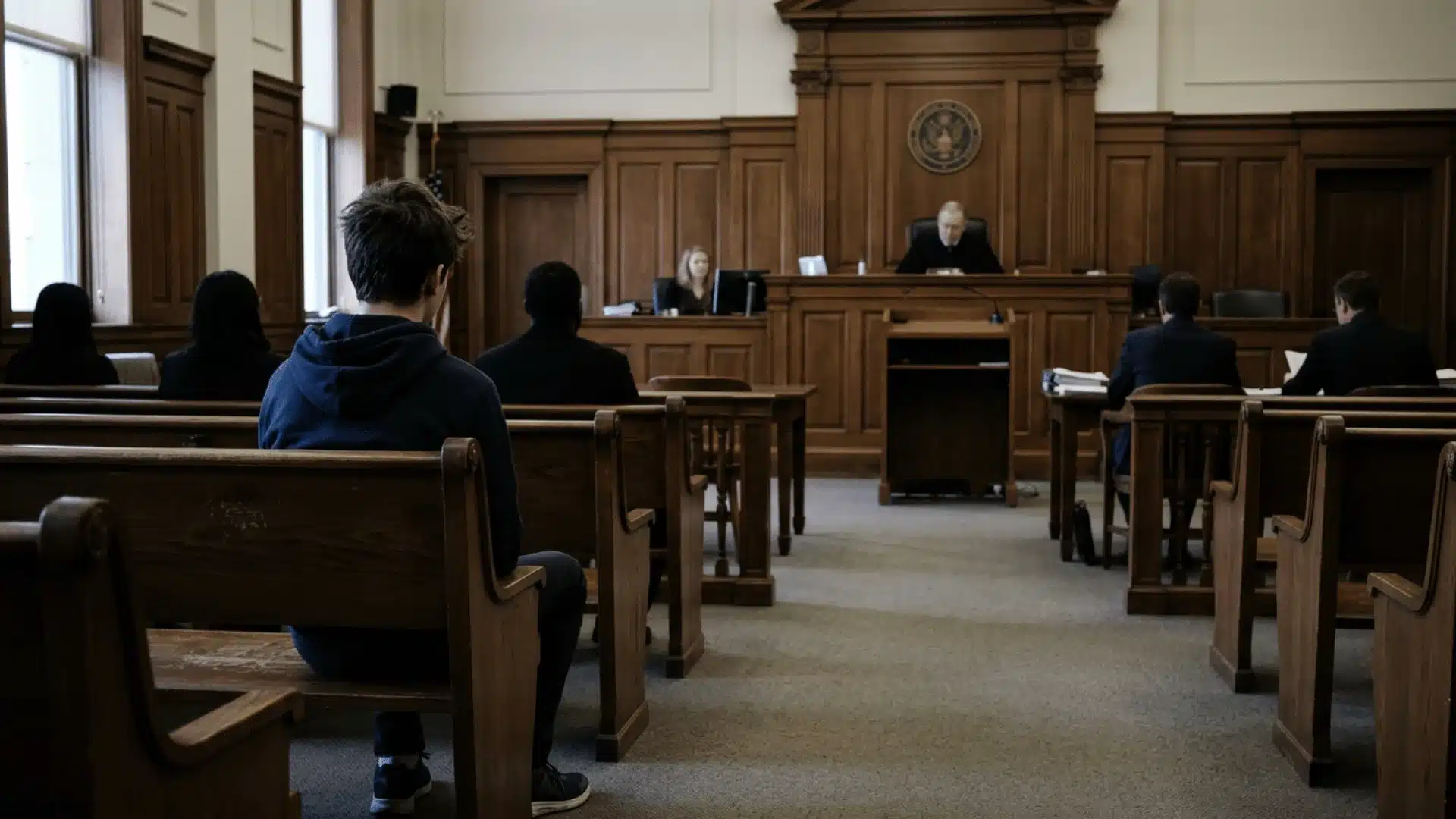
The juvenile justice system focuses on rehabilitation rather than punishment. Courts consider factors such as home environment, mental health, school performance, and potential for change.
After a minor is arrested, the case generally progresses through several stages.
- Delinquency Petition: A formal document that starts the juvenile case and explains the charges, basic facts, and accusations made against the minor.
- Detention Screening: A review that decides whether the minor should stay in custody or return home while the case moves forward.
- Advisement Hearing: The first hearing in which the minor learns about the charges, legal rights, possible penalties, and the next court steps.
- Diversion: An option that may let the minor avoid formal court by completing counseling, classes, service hours, or other conditions.
- Adjudication: The stage where the court reviews evidence and decides whether the allegations against the minor are proven.
- Disposition: The final stage where the court sets consequences, services, probation terms, treatment, or other requirements.
Dispositions may include probation, community service, counseling, treatment programs, or residential placement.
Incarceration is reserved for serious cases and used as a last resort, emphasizing rehabilitation and positive intervention for youth.
Common Cases Handled by a Juvenile Defense Attorney
Minors end up in juvenile court for a wide range of offenses. Some are minor and handled quickly. Others carry serious potential consequences, especially if the child has a prior record.
1. Theft and Shoplifting
Theft and shoplifting are among the most common juvenile offenses handled in court. These cases often involve taking merchandise, personal property, or money without permission.
Depending on the circumstances, first-time offenders may qualify for diversion programs, community service, or restitution rather than formal penalties.
A juvenile defense attorney works to minimize long-term consequences and help protect the minor’s future educational and employment opportunities.
2. Drug Possession
Drug possession charges involving minors can range from marijuana and prescription medications to more serious controlled substances.
The severity of the charge depends on factors such as the type of substance, quantity, and whether there is evidence of distribution.
A juvenile defense attorney evaluates the facts, challenges unlawful searches when appropriate, and seeks alternatives to detention that focus on rehabilitation rather than punishment.
3. Assault
Assault charges in juvenile court can vary significantly, from simple physical altercations to more serious allegations involving substantial injuries.
The level of the charge often determines the potential penalties and sentencing options available.
A juvenile defense attorney examines witness statements, evidence, and the circumstances surrounding the incident to identify defenses, challenge weak claims, and pursue the most favorable outcome for the minor.
4. Vandalism and Property Damage
Vandalism and property damage offenses frequently involve graffiti, destruction of public or private property, or other acts that result in financial loss.
Courts may require restitution to compensate victims for repairs or replacement costs.
A juvenile defense attorney helps assess the extent of the alleged damage, negotiates resolutions when appropriate, and works to reduce penalties that could otherwise affect a minor’s future record.
5. DUI/DWAI
Driving under the influence or while ability impaired as a minor is treated seriously under most state laws.
These cases may lead to fines, mandatory education programs, probation, and driver’s license suspension.
Because underage drivers are often subject to stricter standards than adults, a juvenile defense attorney reviews testing procedures, traffic stops, and evidence to challenge weaknesses and protect the minor’s legal rights.
6. Weapons Offenses
Weapons offenses involving minors often include possession of firearms, knives, or other prohibited weapons.
Courts generally view these allegations as serious and may impose harsher penalties, especially when schools or public places are involved. In certain situations, the case may even be considered for transfer to adult court.
A juvenile defense attorney evaluates the evidence, circumstances, and intent to build the strongest possible defense strategy.
When a Juvenile Can Be Tried as an Adult?
Some juvenile cases can move into adult court, and that shift can make the situation far more serious for the child and family. Adult court usually brings stricter procedures, harsher penalties, and a greater risk of long-term damage.
- Direct file: The prosecutor files the case directly in adult court, usually when an older teen is accused of a serious offense.
- Transfer hearing: The case starts in juvenile court, then a judge decides whether it should move to adult court.
- Court factors: The judge may review the minor’s age, past record, seriousness of the offense, and chance for rehabilitation.
- Main difference: Juvenile court focuses more on rehabilitation, while adult court often focuses more on punishment.
Because adult prosecution can lead to harsher penalties, a lasting record, and fewer second-chance options, families should speak with a juvenile defense attorney as early as possible.
If convicted in adult court, a minor may face sentencing considerations that do not typically arise in juvenile proceedings, including whether multiple sentences will run consecutively or concurrently.
Colorado Juvenile Defense Laws Explained
Colorado’s juvenile justice system operates under Title 19 of the Colorado Revised Statutes, with a juvenile defined as anyone under 18 under CRS 19-1-103.
Cases are generally handled in juvenile court, where the focus is on rehabilitation, treatment, and diversion rather than punishment. Colorado allows certain cases to be prosecuted in adult court through two pathways.
Under CRS 19-2.5-801, prosecutors may directly file charges in adult (district) court for juveniles who are 16 years or older at the time of the alleged offense when the case involves a Class 1 or Class 2 felony.
Certain sexual assaults that qualify as crimes of violence, or other specified serious offenses (including some weapons-related felonies).
Under CRS 19-2.5-802, a judge may transfer a case after a hearing, including for minors as young as 12 in the most serious cases.
How to Find the Right Juvenile Lawyer?
Finding the right juvenile lawyer can significantly impact a young person’s future. Because juvenile courts operate under different rules and priorities than adult criminal courts, choosing an attorney with specialized experience is essential.
- Look for Specific Juvenile Court Experience: Ask how many juvenile cases the attorney has handled and which local courts they regularly practice in. Familiarity with juvenile judges, prosecutors, and court procedures can influence case outcomes.
- Assess Their Knowledge of Diversion Programs: A qualified juvenile defense lawyer should understand available diversion opportunities and know how to position a minor for eligibility, potentially avoiding formal court involvement altogether.
- Evaluate Communication Style: The attorney should communicate clearly with both the minor and their parents, explaining legal options, timelines, and potential outcomes in a way that is easy to understand.
- Ask About Record Protection Strategies: Juvenile records can have long-term implications. An experienced attorney should discuss options for sealing records, expungement eligibility, and minimizing future consequences.
- Discuss Similar Case Experience: During the consultation, ask about cases comparable to yours and how they were resolved. Relevant experience often provides valuable insight into possible strategies.
- Consider Accessibility and Responsiveness: Pay attention to how promptly the attorney responds to calls or emails. Early communication habits often reflect the level of support you can expect throughout the case.
- Use the Free Consultation Wisely: Most juvenile defense attorneys offer an initial consultation at no cost. Prepare direct questions about experience, court familiarity, and potential approaches to your child’s situation.
The best juvenile lawyer is not necessarily the most aggressive or the most advertised.
The right choice is an attorney who understands the juvenile justice system, protects your child’s future, and guides your family confidently through every stage of the process.
Signs You Need a Juvenile Criminal Defense Attorney
Act quickly if your child is facing criminal allegations, police involvement, court action, or any situation that could affect their future.
- Your child has been arrested: Early legal representation can help protect your child’s rights, preserve evidence, and prevent statements or actions that could negatively affect the case.
- Law enforcement wants to conduct an interview: Anything your child says may be used as evidence. An attorney should be consulted before any questioning takes place.
- School disciplinary action is connected to criminal allegations: School investigations often overlap with criminal cases, making it important to address both issues strategically from the beginning.
- A court summons has been received: A summons means the juvenile court process has already started. Legal guidance can help ensure deadlines are met and hearings are handled properly.
- Probation violation allegations have been made: Alleged violations can lead to additional penalties, detention, or extended supervision. An attorney can challenge unsupported claims and advocate for alternatives.
- Prosecutors are considering transferring the case to adult court: Adult court carries far more serious consequences, making immediate legal intervention critical.
- Your child is being held in juvenile detention: An attorney can seek release, challenge continued detention, and argue for less restrictive alternatives.
- The allegations could impact your child’s future: Charges involving drugs, theft, violence, or weapons can affect education, employment, scholarships, and other future opportunities, making early legal representation especially important.
Conclusion
Facing the juvenile justice system can be intimidating for both parents and children, especially when the future feels uncertain.
While juvenile courts are generally designed to focus on rehabilitation rather than punishment, the outcome of a case often depends on the decisions made in the earliest stages.
Understanding the process, recognizing potential risks, and securing experienced legal guidance can help protect a child’s rights and future opportunities.
No parent should have to navigate complex legal proceedings without reliable information or support.
The sooner you understand your options, the better positioned you are to make informed decisions that can influence the direction of the case.
Have questions about juvenile defense or a situation involving your child? Share your thoughts or concerns in the comments below.
Frequently Asked Questions
Can My Child Be Questioned by Police without a Parent Present?
Police questioning rules for minors vary by state. In some jurisdictions, law enforcement may question a juvenile without a parent present, while others require parental notification or additional protections. A juvenile defense attorney can determine whether the child’s rights were properly protected.
What Happens at a Juvenile Detention Hearing?
A detention hearing is typically held shortly after a juvenile is taken into custody. The judge determines whether the child can return home while the case is pending or whether detention is necessary based on factors such as public safety and flight risk.
Can a Juvenile Case Be Dismissed?
Yes, a juvenile case may be dismissed if there is insufficient evidence, constitutional violations occurred during the investigation, witnesses become unavailable, or the prosecutor decides not to pursue the charges. An attorney can identify opportunities to seek dismissal early in the process.