
Trespassing sounds like a minor property dispute, but the charge can become serious faster than people expect.
I think the confusion comes from how differently states define restricted property, warnings, intent, and prior offenses. So, is trespassing a felony?
In most cases, it is charged as a misdemeanor, especially when someone enters or stays on property without permission.
However, criminal trespass may become a felony when the incident involves a home, critical infrastructure, a weapon, property damage, repeated violations, or another crime. The penalty depends on where the event happened and what the person allegedly did.
Understanding these details can help you see why two similar situations may lead to very different charges, fines, probation terms, or possible jail time.
Is Trespassing a Felony?
Trespassing is usually not a felony. In many cases, it is treated as a misdemeanor or another lower-level offense.
However, states use different classification systems, so the charge may be called a misdemeanor, petty misdemeanor, violation, infraction, or a numbered degree.
A felony charge generally requires additional facts beyond simply entering or remaining on property without permission.
These may include entering a specially protected location, carrying a weapon, causing serious damage, or having prior qualifying convictions.
The exact penalty also depends on the state statute and the facts of the case.
Someone who ignores a posted warning may face a much different charge than someone who enters restricted property while armed. Always check the law in the state where the incident occurred.
What Makes Trespassing a Criminal Offense?
Criminal trespass happens when someone knowingly enters or stays on another person’s property without permission.
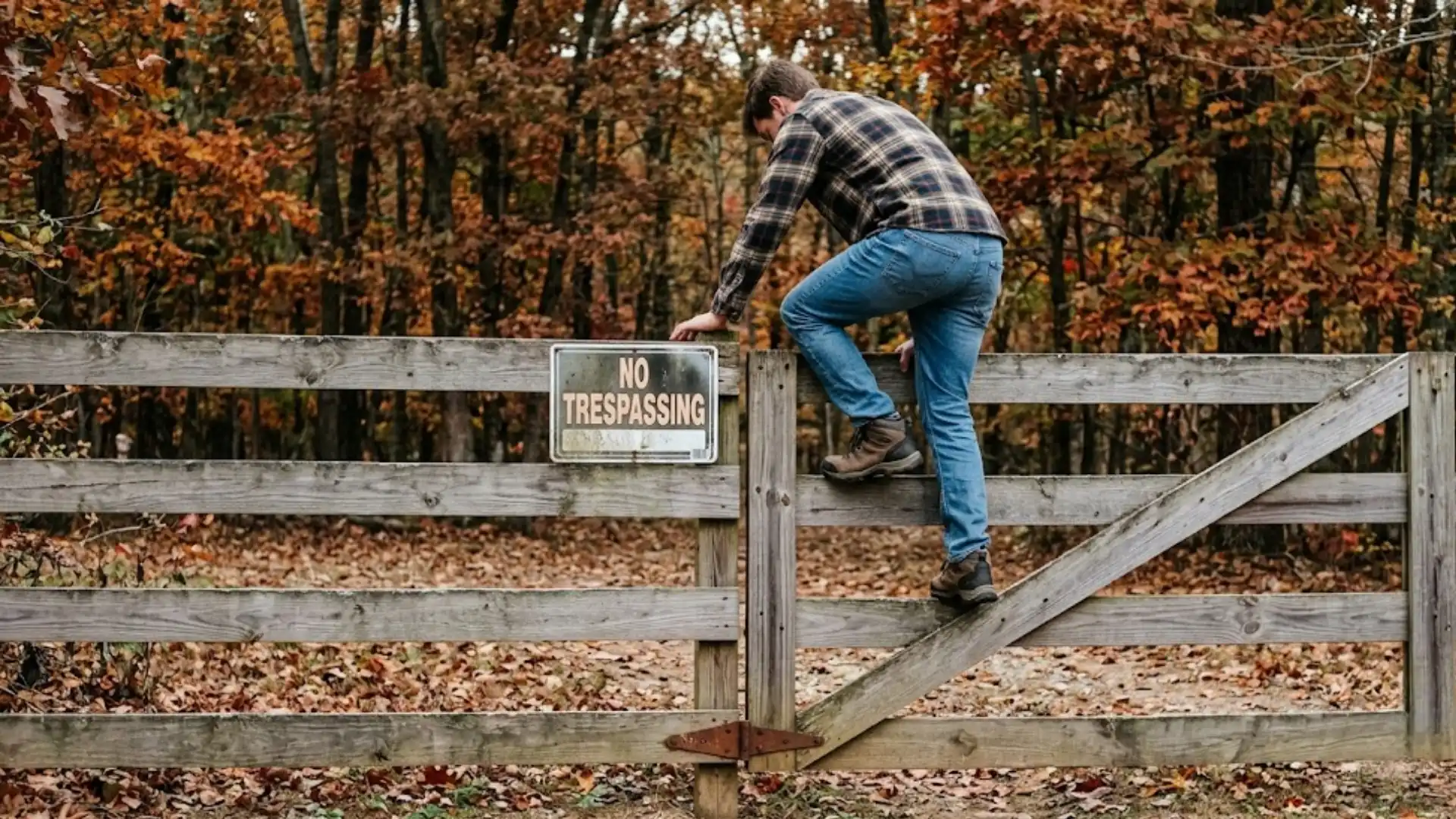
The word knowingly is important because the person must understand that they are not allowed to be there. That knowledge may come from a posted sign, a locked fence, a direct warning, or an order to leave.
Staying after permission has been withdrawn may also lead to a charge. Criminal trespass differs from civil trespass.
In my case work, the most common surprise for clients is realizing that a single verbal warning to leave is often all it takes to turn a lawful visit into a criminal trespass charge.
Civil cases are private disputes where a property owner may seek compensation for damage or interference. Criminal cases are prosecuted by the state and may result in fines, jail time, probation, and a criminal record.
For example, accidentally stepping onto a neighbor’s lawn is different from climbing their fence after being warned to stay away.
What Can Make Trespassing a Felony?

Several factors may increase trespassing from a lower-level offense to a felony, but the exact rules depend on state or federal law.
1. Trespassing at a Protected Location
Some states raise trespassing penalties when someone enters property given special legal protection.
Examples may include correctional facilities, schools, utilities, military property, or restricted government grounds.
The location alone does not always create a felony. Prosecutors must show that the site and conduct meet the specific requirements set forth in the applicable state or federal law.
2. Possessing a Weapon
Possessing a firearm or deadly weapon can make a trespass charge more serious under certain laws. The weapon may increase the degree of trespass, support a felony enhancement, or create a separate charge.
Whether it must be carried, displayed, or used depends on the statute and the type of restricted property involved.
The same weapon-based enhancement shows up in other charges, where the differences between assault and battery follow a similar pattern.
3. Causing Qualifying Property Damage
Property damage can lead to more serious charges when the loss reaches a threshold set by state law. Prosecutors may file criminal mischief, vandalism, or another property offense alongside trespass.
Damage does not automatically turn every trespass into a felony, so the repair cost, location, intent, and applicable statute must all be reviewed.
4. Having Prior Trespass Convictions
Prior trespass convictions can increase the charge in states with repeat-offender provisions.
A later offense may carry stronger penalties when it involves the same property, a protected location, or a specified number of earlier convictions.
The prosecutor must prove that the previous cases qualify under the statute before a felony classification can apply.
These factors are not applied uniformly, so the charge should always be checked against the specific trespass law in the relevant state.
When Trespassing May Become Burglary
Trespassing may become burglary when someone enters or remains in a building with intent to commit a crime inside.
The main difference is intent.
Simple trespass focuses on being somewhere without permission, while burglary adds a plan to steal, damage property, assault someone, or commit another offense.
A person does not always need to break a door or window for burglary charges to apply.
In some states, entering through an unlocked opening or staying after permission ends may be enough when criminal intent is present.
The type of property also matters because homes and occupied buildings may carry stronger penalties. Burglary definitions vary by state, so prosecutors must prove the required legal elements.
For a closer look at how the two charges differ, our guide on the difference between robbery and burglary breaks down the elements prosecutors have to prove.
A criminal defense attorney can explain whether the facts support trespass, burglary, or separate charges.
Felony vs. Misdemeanor Trespass: Penalties and What Happens Next
The consequences of trespassing depend heavily on whether the charge is classified as a misdemeanor or felony.
Under the federal definition, a felony is an offense punishable by more than one year of imprisonment, while a misdemeanor tops out at a year or less, though states set their own exact lines.
| Factor | Misdemeanor Trespass | Felony Trespass |
|---|---|---|
| Possible punishment | Fine, probation, or local jail time | Longer incarceration and larger fines, depending on state law |
| Classification | Lower-level criminal offense | Serious criminal offense available only under certain statutes |
| Common circumstances | Unauthorized entry or refusal to leave | Protected property, weapons, repeat offenses, or qualifying damage |
| Criminal record | Misdemeanor conviction | Felony conviction |
| Long-term effects | May affect employment and background checks | May create greater employment, housing, licensing, and legal consequences |
| Next step | Review the citation and applicable statute | Speak with a criminal defense attorney promptly |
Exact penalties vary by state, so anyone facing an aggravated trespass charge should review the local statute and seek legal advice.
What to Do After a Trespassing Charge?

Handle a trespassing charge carefully, since your first actions may significantly influence the case, available defenses, and possible outcome later.
- Read the citation and release conditions: Confirm the court date, charge level, location, and any orders restricting contact or access.
- Avoid the property and the people involved: Do not return to the property or contact the owner, witnesses, or alleged victim, since further contact could create new charges or violate release conditions.
- Preserve helpful evidence: Save messages, photographs, receipts, location records, permission agreements, and witness names.
- Stay off the record publicly: Avoid discussing the case online or with anyone except your lawyer, since statements can be misunderstood or later presented as evidence.
- Contact a criminal defense attorney promptly: Ask about possible defenses, reduced charges, diversion programs, and whether court-appointed counsel is available.
Follow every court instruction and seek advice based on the laws of the state where the charge was filed.
Conclusion
Trespassing is not always as simple as walking onto property without permission. The answer to is trespassing a felony depends on the facts, the location, and the state law involved.
A basic criminal trespass charge may stay a misdemeanor, but weapons, damage, repeat violations, protected property, or intent to commit another crime can raise the stakes fast.
I would never judge the charge by the word trespassing alone. Look at what the citation says, what the prosecutor must prove, and what penalties apply in that state.
If the case could affect your record, job, housing, or license, speak with a criminal defense attorney before making decisions.
Frequently Asked Questions
Is Criminal Trespass the Same as Trespassing?
Not exactly. “Trespassing” is a broad term that covers both civil and criminal situations. Criminal trespass specifically means knowingly entering or remaining on property without permission in a way the state prosecutes, while civil trespass is a private dispute where the property owner seeks compensation instead.
What Makes Trespassing a Felony Instead of a Misdemeanor?
Trespassing becomes a felony when specific aggravating factors are present. Common examples include entering a school, military base, or research facility; carrying a weapon during the trespass; causing significant property damage; or entering with intent to commit another crime like burglary.
How Much Jail Time Can Criminal Trespassing Carry?
Misdemeanor trespass typically carries up to a year in local jail along with possible fines. Felony trespass carries much longer potential sentences, often served in state prison rather than county jail, though exact terms depend on the state and which aggravating factor applies.
Does a First-Time Trespassing Charge Automatically Mean Jail Time?
Not necessarily. First-time misdemeanor trespass charges often result in a fine, probation, or a short sentence rather than significant jail time. The actual outcome depends on the state, the property involved, and whether any aggravating factors raise the charge beyond a standard misdemeanor.