
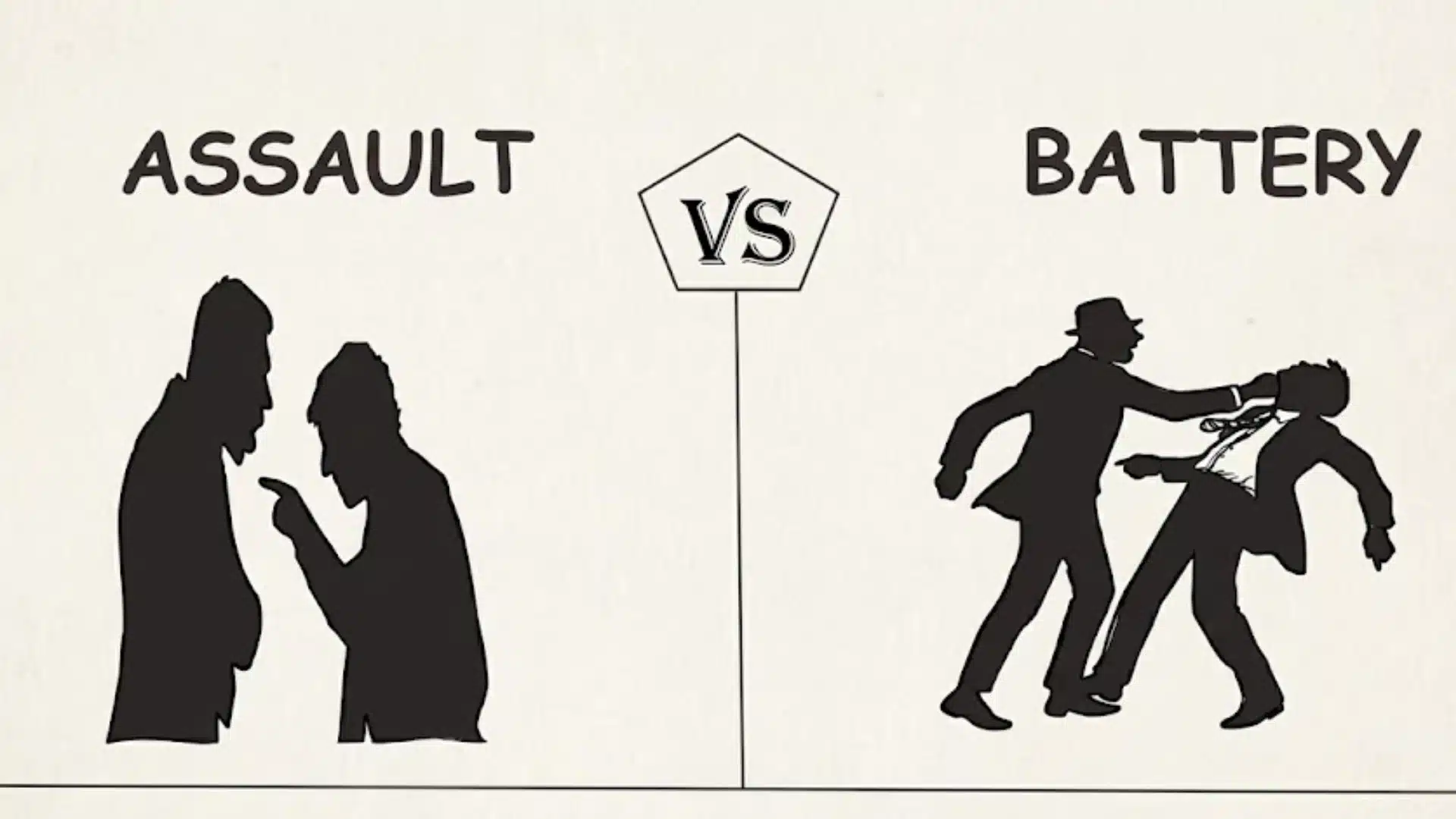
People hear “assault and battery” so often as a single phrase that they assume it’s one thing.
It isn’t. In most U.S. jurisdictions, assault and battery are two legally distinct offenses, each with its own definition, its own required elements, and its own set of consequences.
That difference matters far more than most people realize until they’re sitting across from an attorney trying to understand what they’ve actually been charged with, or what their rights are as a victim.
I’ve worked in criminal law litigation for years, supporting case filings and legal research for defense and civil matters.
The clients who walk in on these definitions tend to make better decisions faster, so getting this right matters from the start.
This post breaks down what each term means, where the legal line sits between them, and why that line has real consequences.
What is Assault?
Assault is an intentional act that places another person in reasonable fear of imminent bodily harm. No physical contact is required. That surprises a lot of people.
The legal standard centers on the victim’s experience of fear, not on whether anything actually happened to their body. For an act to qualify as assault, the fear has to be something a reasonable person would have felt given the same circumstances.
A vague or distant threat typically doesn’t meet the threshold. The immediacy of the threat, the physical proximity of the person making it, and the overall situation all factor in.
A person who says, “I’ll deal with you someday,” is generally not committing assault. A person who squares up, raises their fist, and moves toward you in a hallway is a different matter entirely.
Something I see consistently in these cases: verbal confrontations that feel genuinely threatening in the moment do not automatically qualify as assault under Nevada law.
That gap between how something feels and how the law classifies it is precisely where legal advice becomes necessary.
That gap between how something feels and how the law classifies it is exactly where legal advice becomes necessary.
What is a Battery?
Battery is the intentional and unlawful use of physical force against another person. Contact has to actually occur.
But here’s where it gets more complicated than most people assume: injury need not result.
Cornell Law’s definition of battery describes it as any intentional, harmful, or offensive touching of another person without their consent. A shove, a slap, spitting on someone, or throwing an object that makes contact can all meet that standard.
The intent required is the intent to make the contact, not necessarily the intent to cause harm. Accidental contact is generally not a battery. Deliberate contact that the other person did not consent to is usually.
There’s a detail worth knowing: direct physical contact is not always required. If a person throws an object that strikes the victim, that is battery.
The object acts as an extension of the act itself under most legal frameworks. This matters when cases involve thrown items, spilled substances, or other indirect physical contact.
Battery is the charge that most people actually mean when they say someone “assaulted” them. The word assault has absorbed a meaning in everyday speech that the law treats differently.
What is the Difference Between Assault and Battery?
The difference between assault and battery is the presence or absence of physical contact, and what the law requires you to prove for each.
Assault is about fear. The battery is about to contact. Here’s how they compare side by side:
| Criteria | Assault | Battery |
|---|---|---|
| Physical contact required? | No | Yes |
| Injury required? | No | No |
| What matters legally? | Victim’s reasonable fear | Intentional unlawful contact |
| Can it occur without the other? | Yes | Yes |
Assault can happen with no physical contact at all. Battery can happen without any prior fear, for example, when contact occurs before the victim has a chance to register what is happening.
In many real incidents, assault precedes battery: the threat comes first, the contact follows. But the law doesn’t require that sequence. Each offense can stand on its own.
Something practitioners debate less often, but that matters in practice: how states handle these charges varies considerably.
Some states combine assault and battery into a single statute. Others maintain fully separate offenses. That structural difference shapes how charges are filed and what defenses apply.
Real-World Examples of Assault and Battery
This is where the definitions become clearer. Abstract legal language tends to click into place when you put it into a real situation.
- Assault without battery: A heated argument in an office breaks out. One person picks up a heavy stapler, cocks their arm back, and moves toward the other, saying, “you’re going to regret this.” No throw happens. No contact is made. But the other person had a genuine, reasonable fear that harm was coming. Under most statutes, that is assault.
- Battery without prior assault: Someone at a gathering walks up behind a person and dumps a glass of water over their head as a joke. No threat was made. No fear preceded it. The victim had no chance to anticipate the contact. The intentional, offensive physical act still meets the legal definition of battery.
- Both charges in one incident: Two people in an argument. One raises a fist and takes a swing. The first swing misses. The second one connects. The missed punch is assault. The punch that lands is a battery. Both charges can arise from the same confrontation.
- Verbal conflict only (neither charge applies): One person across a room screams insults and profanity. No movement toward the other person. No objection raised. Most jurisdictions would not classify this as assault because it lacks the physical immediacy the law requires.
- Aggravated battery: Someone strikes another person with a glass bottle, breaking skin and causing injury. The use of a weapon and the resulting physical harm move this from simple battery into aggravated battery territory. The penalties are significantly more serious.
I find these scenarios useful because they expose the mechanics of the law better than any definition does. The line between “threatening” and “assault,” or between “contact” and “battery,” is one of specifics, not impressions.
Penalties for Assault and Battery

Assault and battery penalties depend on how the offense is classified.
Simple charges are usually misdemeanors, while aggravated charges involving weapons, serious injury, protected victims, or repeat offenses can lead to felony penalties. Because each state defines these offenses differently, the possible outcome depends on the facts of the case and the law where the incident happened.
Assault Penalties
Simple assault is typically a misdemeanor, carrying penalties that can include fines, probation, community service, and up to one year in county jail. The exact range varies by state.
The charge escalates to a felony when aggravating factors are present. Using a deadly weapon, targeting a victim who belongs to a protected class, or intending to commit a serious underlying crime can all result in a felony assault charge.
Victims who are police officers, healthcare workers, the elderly, or pregnant often trigger enhanced penalty provisions under state law.
If you’re asking specifically whether assault can become a felony charge, the answer depends on the state and the circumstances surrounding the incident.
Battery Penalties
Battery follows a similar structure. A simple battery with no weapon and no serious injury is generally a misdemeanor.
Aggravated versions, those involving weapons, strangulation, or substantial bodily harm, are often felonies with multi-year prison terms.
As with assault, the victim’s status matters. Battery against certain protected individuals results in steeper consequences under most state laws.
One thing worth flagging: the penalty difference between simple and aggravated battery can be significant. It’s worth understanding which category applies before drawing any assumptions about likely outcomes.
Can You Be Charged with Both Assault and Battery?
Yes, and it happens. Because assault and battery are separate legal acts with separate elements, prosecutors can charge both when the facts support it.
The missed punch is assault. The punch that connects is a battery. Two distinct charges, one incident.
There is a legal wrinkle: the lesser-included offense doctrine. In some jurisdictions, if battery is proven, the assault charge may be folded into it because assault is considered a lesser-included offense of battery.
Courts handle this inconsistently across states. Some permit both convictions to stand. Others require one to be dismissed.
Situations involving mutual combat between the parties add another layer, as the question of who initiated the threat and who made contact becomes contested on both sides.
This is one of those areas where the statutory language of a specific state makes a meaningful difference. General rules about dual charges don’t translate cleanly from jurisdiction to jurisdiction.
When Legal Help Makes Sense

If you’ve been charged with assault or battery, or if you were the victim of either offense and are trying to understand your options, the path forward involves more nuance than the legal definitions alone suggest.
On the defense side: Charges can be filed even when the underlying facts are contested, ambiguous, or incomplete. How charges are framed, what evidence exists, and the prior relationship between the parties all affect which defenses may apply.
On the victim side: A criminal prosecution is one path, but not the only one. Battery is a civil wrong in addition to a criminal offense. A victim may have grounds for a civil lawsuit seeking compensation for medical costs, lost income, and related damages.
The criminal and civil processes are separate. A civil claim can proceed regardless of what happens on the criminal side, and the burden of proof in civil court is lower than the criminal standard of beyond a reasonable doubt.
Conclusion
Assault and battery are not the same charge. Assault requires proof that the victim experienced a reasonable fear of imminent harm. The battery requires proof of intentional, unlawful physical contact.
Both can result in serious legal consequences. Both can arise from a single incident. And the distinction between them matters from the moment charges are filed.
If you’re dealing with an assault or battery situation in Las Vegas or anywhere in Nevada, the attorneys at Mainor Wirth can help you understand what you’re facing.
Still unsure how assault and battery apply to your case? Speak with a lawyer today and get clear legal guidance before your next step.
Frequently Asked Questions
Can a Battery Victim Sue in Civil Court?
Yes. Battery is both a criminal offense and a civil wrong. A victim may file a civil lawsuit against the person responsible, seeking compensation for medical expenses, lost income, pain and suffering, and other damages. A criminal conviction is not required for a civil claim to succeed, and the burden of proof in civil court is lower than the criminal standard.
What Makes Battery “Aggravated”?
Aggravated battery involves factors that increase the severity of the offense beyond simple unwanted contact: a deadly weapon, serious bodily injury to the victim, or battery against a particularly vulnerable person. The threshold for aggravated battery varies by state, but the use of a weapon or significant physical harm is the most common dividing line between a misdemeanor and a felony charge.
Does the Victim Need to Be Aware of a Threat of Assault to Apply?
Generally, yes. Assault requires that the victim actually experienced reasonable fear of imminent harm at the time the threatening act occurred. If a person were completely unaware of a threatening gesture in the moment, most jurisdictions would not classify it as assault. Battery, by contrast, does not require the victim to have anticipated the contact before it happened.