

Elements of a contract are the basic parts that help decide whether an agreement can be treated as legally valid.
Not every promise, handshake, text message, or casual agreement becomes a contract in the eyes of the law. Courts usually look for certain parts before they say both sides made a real agreement.
These parts help show what was offered, what was accepted, and what each side agreed to give or do.
They also help show whether both parties intended to create legal duties, had the capacity to agree, and made an agreement for a lawful purpose.
In this blog, you will get a simple breakdown of offer, acceptance, consideration, mutual intent, capacity, legality, and enforceability, so the whole idea feels easier to understand.
What are the Elements of a Contract?

A valid contract usually needs a few basic parts that show both sides clearly agreed to something the law can recognize.
1. Offer: One Side Proposes Clear Terms
An offer is the starting point of a contract. It happens when one side presents clear terms to another side and shows a willingness to be bound by them.
The offer should be easy to understand, so the other person knows what is being proposed.
It may include the price, service, product, deadline, delivery terms, or each person’s responsibility.
For example, offering to sell a car for a set price by a certain date is much clearer than saying, “I might sell it someday.” Vague talk, loose plans, or unclear ideas may not count as a legal offer.
2. Acceptance: The Other Side Agrees to the Offer
Acceptance means the other side agrees to the offer as it was presented. This agreement can happen in writing, through spoken words, or sometimes through actions.
For example, signing a contract, agreeing to clear terms, or starting work after agreeing to the deal may constitute acceptance.
The important point is that the person must accept the same terms, not different ones. If someone changes the price, deadline, or responsibility, it may become a counteroffer rather than an acceptance.
Clear acceptance matters because it helps both sides understand that a real agreement has been made.
3. Consideration: Something of Value is Exchanged
Consideration means each side gives something or promises something of value. This is one of the main elements of a contract because it shows the agreement is more than a simple favor or gift.
The value does not always have to be money. It can be a service, a product, a promise, a payment, or even a promise not to do something.
For example, one person agrees to paint a room, and the other person agrees to pay for the work.
A one-sided gift usually does not work the same way because only one side gives without a promise of a return.
4. Mutual Intent: Both Sides Mean to Create a Contract
Mutual intent means both sides understand that they are making a real agreement, not just having a casual talk.
Courts may look at the words used, the actions of each party, and the circumstances surrounding the agreement.
A joke, a friendly promise, a loose plan, or a casual statement may not create a contract if neither side intended to create legal duties.
For example, saying “I will help you move someday” is usually different from agreeing to provide moving services for a set price and date.
Written terms can help show intent because they make the agreement easier to prove later.
5. Capacity: Both Parties Must Be Able to Contract
Capacity means each person must be legally able to enter a contract. In simple terms, both sides should be old enough and able to understand what they are agreeing to.
Age is a common issue because minors may have limited capacity to enter into certain contracts.
Mental ability can also matter if a person cannot understand the terms, duties, or results of the agreement. Courts may look at whether each person understood the deal when it was made.
This part does not make every contract complicated, but it helps protect people who may not be able to make a fair legal decision.
6. Legality: The Contract Must Be for a Lawful Purpose
Legality means the contract must be based on something the law allows. If an agreement involves illegal activity, courts usually will not enforce it.
The subject of the contract must be lawful, and the duties inside the contract should not require either side to break the law.
Legal services, lawful business transactions, product sales, repair work, and rental agreements are common examples of contracts that may be permitted if the other parties are also present.
Problems can arise when the agreement includes prohibited acts, illegal payments, or terms that violate public rules. In those cases, enforcement may become difficult or impossible.
Written vs Verbal Contracts: Does It Have to Be in Writing?
Use this table to understand when verbal contracts may work, when writing matters, and why written terms are usually safer.
| Point | Verbal Contract | Written Contract |
|---|---|---|
| Basic validity | Some verbal contracts can be valid if the essential elements of a contract are present. | Written contracts can also be valid when they include clear terms and an agreement. |
| Proof | Harder to prove because people may remember the conversation differently. | Easier to prove because the terms are recorded in one place. |
| Clear terms | Details may be missed, forgotten, or misunderstood later. | Written terms help show price, duties, deadlines, and responsibilities. |
| Legal requirement | Some verbal deals may not be enough under state law. | Certain agreements may need to be in writing, such as some real estate deals or long-term contracts. |
| Disputes | More room for confusion if the deal was only spoken of. | Less confusion because both sides can review the same terms. |
| Best use | Works better for simple, low-risk agreements. | Better for money, property, business, services, or long-term duties. |
| Main benefit | Faster and easier to make. | Safer and easier to enforce if a problem comes up. |
Common Reasons a Contract May Not Be Valid
A contract may fail when the agreement is unclear, unfair, or unlawful, or when it is missing one of the basic parts courts usually review.
- No clear offer: If one side never gives clear terms, the other side may not know what deal is actually being proposed.
- No clear acceptance: If the other side does not clearly agree to the offer, it may be hard to prove a real agreement.
- No consideration: If only one side gives something and gets no return promise, the agreement may look more like a gift.
- No legal capacity: If someone is too young or cannot understand the terms, the contract may be limited or challenged later.
- Illegal Purpose: Courts usually will not enforce contracts involving unlawful work, prohibited services, banned payments, or illegal activity.
- Fraud or pressure: If someone lies, omits key facts, or pressures another person into agreeing, the contract may be invalid.
- Unclear terms: If price, duties, dates, or responsibilities are too vague, both sides may later disagree about what was promised.
Simple Example of a Valid Contract
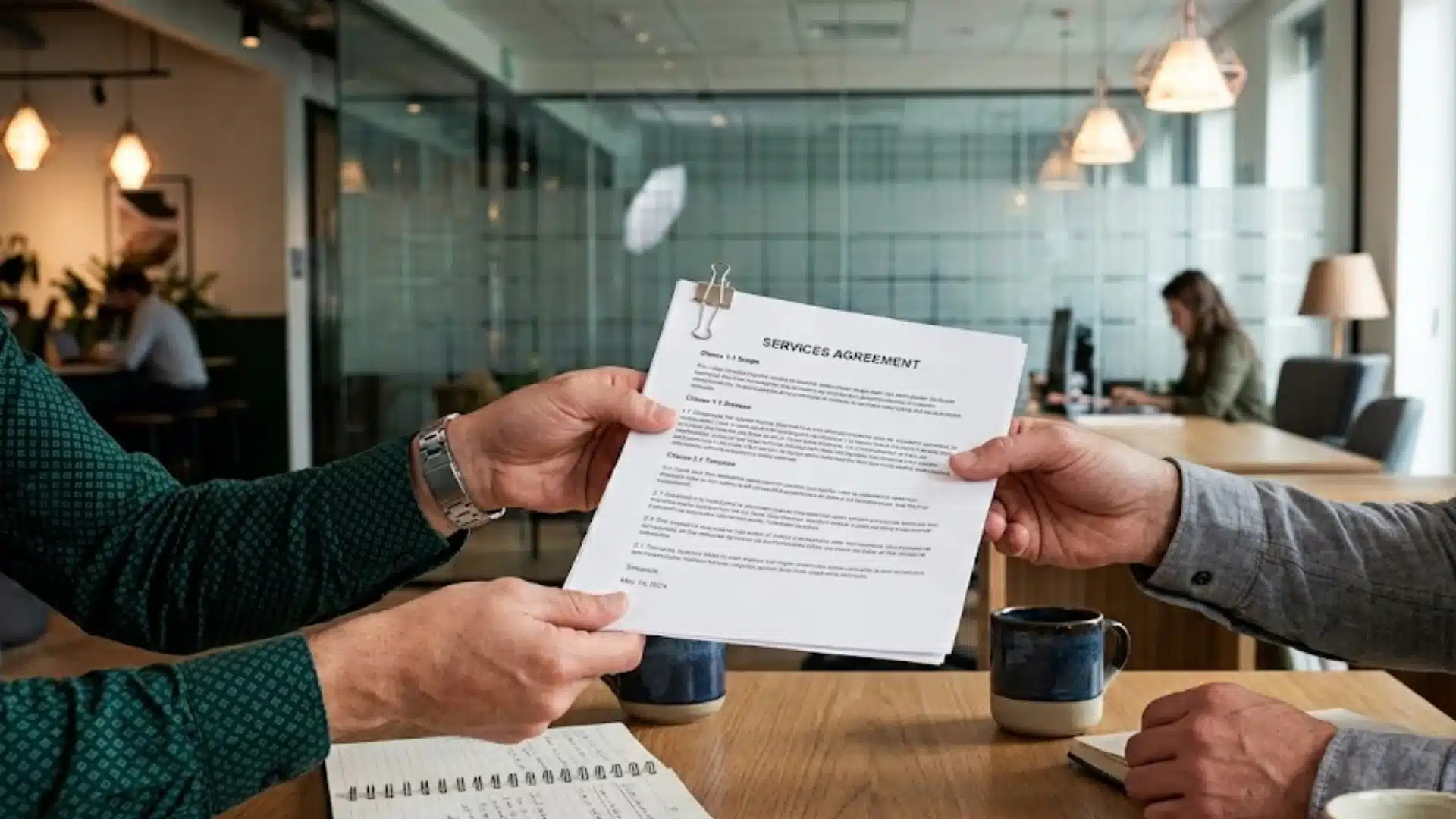
A simple example can make the idea easier to understand. Say Maria agrees to paint one bedroom for David for $300 by Friday afternoon.
Maria says she will bring the paint supplies and finish the job by the agreed date. David agrees to pay her $300 after the work is done.
The offer is for Maria to paint the room for a set price and by a set deadline. The acceptance is David agreeing to those same terms.
The consideration is the exchange of value. Maria provides her painting service, and David pays.
The mutual intent is also clear because both sides understand this is a real agreement, not a casual favor. This kind of example shows how the basic parts of a valid contract work together.
What to Do If a Contract Dispute Comes Up
If you believe a contract was broken, or someone is disputing whether one existed in the first place, the first step is gathering everything tied to the agreement: texts, emails, signed documents, receipts, and any record of what was said and when.
Write down a timeline while the details are still fresh.
Next, check whether the contract itself addresses dispute resolution, such as a required notice period or a mediation clause. Some agreements limit how and where a dispute can be brought.
Call a lawyer early if money, property, or a long-term obligation is involved, or if the other side is denying the agreement existed at all.
A short consultation can clarify whether you have a litigation option worth pursuing before you spend time and money trying to resolve it on your own
When Should You Get Legal Help?
Legal help may be useful when a contract involves money, property, business duties, job terms, or long-term promises.
Simple agreements may seem easy at first, but problems can arise when the terms are unclear or one party does not follow through.
A lawyer can review the wording, explain the risks, and help you understand what the agreement may actually require.
This can matter in deals involving real estate, loans, services, partnerships, employment, or large payments. If you are already dealing with a breach of contract, getting advice early can save you from a longer fight later.
Contract disputes often depend on the facts, the exact wording, and the laws of that state. Getting advice does not always mean a fight is starting.
It can simply help both sides avoid confusion and know where they stand before signing or taking the next step.
Conclusion
A contract is more than a simple promise between two people. It usually requires clear terms, a valid agreement, and a lawful purpose before it can be considered valid.
The offer shows what one side is proposing. Acceptance shows that the other side agrees to those terms.
Consideration shows that something of value is being exchanged. Mutual intent shows that both sides meant to create legal duties.
Capacity and legality also matter because both parties must be able to agree, and the agreement must follow the law.
When these elements of a contract are missing or unclear, the agreement may become harder to prove or enforce.
Have you ever seen a contract term that felt confusing? Share your experience in the comments.
Frequently Asked Questions
Can a Contract Be Changed After Both Sides Agree?
Yes, a contract can usually be changed if both sides agree to the change. The updated terms should be clear and written down when possible. This helps avoid confusion about what was changed, when it changed, and whether both parties accepted the new terms.
What Happens if One Side Breaks a Contract?
If one side breaks a contract, it may be called a breach. The other party may seek payment, performance, cancellation, or another legal remedy. The result depends on the contract terms, the damage caused, and the applicable law.
Are Online Agreements Real Contracts?
Online agreements can be real contracts when the user clearly agrees to the terms. This can happen through clicking an acceptance box, signing electronically, or using a service after being shown the terms. The details depend on the agreement and local law.