

Most people use the terms attorney and lawyer interchangeably, and in casual conversation, that is usually fine.
In a TV drama, on a billboard, or in a general discussion about legal help, the terms blur together without real consequence.
But if you are dealing with an injury claim, an insurance dispute, or anything heading toward a courtroom, that swap can cost you.
The person you hire needs to be authorized to act, not just educated.
Knowing the difference between a lawyer and an attorney is how you make sure you have the right person in your corner when it matters, especially when legal rights, deadlines, money, and case outcomes are on the line.
What is an Attorney?
An attorney, or attorney at law, is a law school graduate who has passed the bar exam and holds an active license to practice in a specific state.
Attorney comes from the Old French atorner, meaning to appoint someone to act on another’s behalf, which is precisely what a licensed attorney does when you retain them for a case.
The title is not honorary. It means the person cleared a state-administered licensing exam and took an oath placing them under state bar supervision.
With that license comes real authority: filing lawsuits, appearing before a judge, negotiating settlements, and signing legal documents as your authorized representative.
Attorneys are bound by a professional code of conduct, and violations can lead to suspension or disbarment.
Understanding what litigation involves clarifies why bar admission matters the moment a dispute enters the court system.
What is a Lawyer?
A lawyer is someone who has earned a Juris Doctor degree from an accredited law school, covering three years of contracts, torts, civil procedure, and constitutional law.
That degree alone does not authorize someone to represent clients in court. That step requires passing the bar exam and obtaining a state license.
Lawyer has Middle English roots and originally referred to someone educated in the law.
Many law graduates never seek bar admission. They move into roles where courtroom authority is not needed:
- Legal research and writing: Preparing case memos, briefs, contract drafts, legal summaries, and supporting documents for attorneys, firms, agencies, or companies.
- Compliance officer: Advising companies on whether their practices meet regulatory requirements, internal policies, industry standards, and government rules.
- Policy analyst: Analyzing and drafting legislation, reviewing legal impacts, and helping shape public policy in government or advocacy roles.
- In-house advisor: Guiding a corporation on contracts, business risks, employment issues, vendor agreements, and internal legal decision-making.
Difference Between Attorney and Lawyer

Education separates a law graduate from a licensed professional, and the license is what matters when a dispute becomes formal. Here is how the two compare across the areas that matter most.
1. Education and Law Degree
Both a lawyer and an attorney hold a Juris Doctor degree from an accredited law school. The JD program runs for three years and covers contracts, torts, civil procedure, constitutional law, and legal writing.
At the education stage, there is no practical difference between the two titles. Both sit through the same coursework, take the same exams, and graduate with the same credentials.
The distinction between a lawyer and an attorney only begins after graduation, when the bar exam enters the picture.
2. Bar Exam and State Licensing
This is where the two roles split. A lawyer holds a law degree but is not required to pass the bar exam.
An attorney has passed the state bar exam and holds an active license to practice law in a specific jurisdiction.
That license is state-specific, meaning an attorney admitted in Nevada cannot automatically practice in California.
Without passing the bar, a law graduate remains a lawyer but cannot become a licensed, practicing attorney authorized to take cases into court.
3. Court Representation Rights
Only a licensed attorney can represent you in court. A lawyer without bar admission cannot file a lawsuit, appear at a hearing, sign court documents on your behalf, or negotiate a formal settlement as your legal representative.
Practicing law in a courtroom without a license is illegal in every U.S. state.
If your situation involves a lawsuit or a formal proceeding, this is the difference between a lawyer and an attorney that matters most.
Depositions and legal proceedings are handled entirely by licensed attorneys.
4. Ethical Duties and Bar Oversight
Attorneys are governed by their state bar association and must follow a formal code of professional conduct. That code covers client communication, handling of funds, conflicts of interest, and courtroom conduct.
Violations can result in suspension or disbarment. Lawyers who have not been admitted to the bar do not fall under the same disciplinary framework.
For clients, this matters because bar oversight creates a formal, enforceable accountability structure that unlicensed legal professionals are simply not subject to in any state.
Real Users Discussion on Attorney vs Lawyer
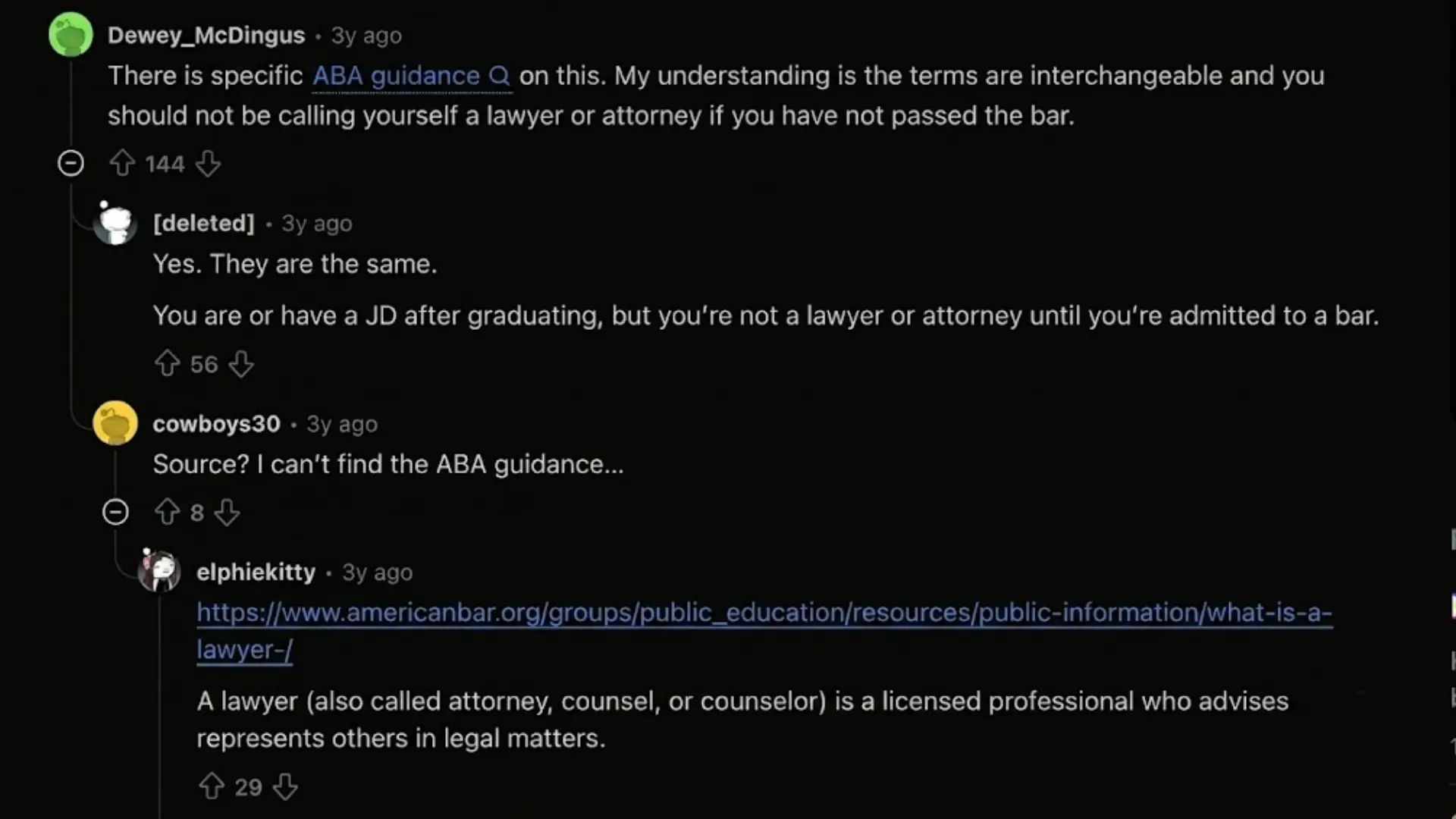
Reddit discussions show that most legal professionals treat “lawyer” and “attorney” as the same in everyday U.S. practice.
Several users explained that a law school graduate may have a JD, but should not hold themselves out as a lawyer or attorney unless admitted to a bar.
The main practical point is licensing. If someone is not authorized to practice law in a state, using either title can mislead the public and may create serious professional or legal problems.
Some commenters mentioned an older academic distinction: a lawyer studies law, whereas an attorney is authorized to act on behalf of another person.
Still, the general opinion was clear: in real life, clients should focus less on the label and more on whether the person is licensed, experienced, and allowed to represent them in their specific legal matter.
Difference Between an Attorney and a Lawyer: At a Glance
Education separates a law graduate from a licensed professional, and the license is what matters when a dispute becomes formal. Here is how the two compare:
| Factor | Lawyer | Attorney |
|---|---|---|
| Law degree (JD) | Yes | Yes |
| Bar exam passed | Not required | Required |
| Licensed to practice | No (without bar) | Yes |
| Court representation | No | Yes |
| Can file lawsuits | No | Yes |
| Ethical oversight | Limited | State bar rules |
| Can negotiate settlements | Informally only | Formally, on your behalf |
If you were injured in a car accident, a lawyer without a license can discuss your options but cannot file a complaint or sign off on a settlement as your representative.
Attorney vs Lawyer: Which One Do You Need?
Choosing between an attorney and a lawyer depends on the type of legal help you need.
Many people use the terms interchangeably, but the services required often determine the right professional. If your issue involves legal representation, an attorney is usually the better choice.
If you only need legal guidance, research, or document preparation, a lawyer may be enough.
When to Hire an Attorney
- Court representation: You need someone who can appear before a judge and represent your interests during hearings or trials.
- Criminal charges: An attorney can defend you, negotiate with prosecutors, and protect your legal rights throughout the case.
- Personal injury claims: Attorneys handle settlement negotiations, file lawsuits, and represent clients if the dispute reaches court.
- Family law disputes: Divorce, child custody, adoption, and support cases often require an attorney with courtroom experience.
- Complex legal negotiations: Attorneys negotiate settlements, contracts, and disputes where legal representation is essential.
When to Hire a Lawyer
- General legal advice: A lawyer can explain your rights, responsibilities, and available legal options before taking action.
- Contract review: Lawyers review agreements, identify legal risks, and suggest changes before you sign important documents.
- Business compliance: Companies often hire lawyers to ensure operations follow applicable laws and industry regulations.
- Legal research: Lawyers analyze statutes, regulations, and case law to support informed legal or business decisions.
- Document preparation: Lawyers assist with drafting contracts, legal notices, wills, policies, and other important legal documents.
Reviewing personal injury claim outcomes shows what a licensed attorney can recover compared to going it alone.
Conclusion
In everyday use, attorney and lawyer often mean the same thing, but the practical difference matters when legal representation is involved.
A lawyer may understand the law, research issues, review documents, or explain options. An attorney is usually the person licensed and authorized to act on behalf of clients in legal matters.
For readers, the safest step is not choosing by title alone. Check licensing, experience, practice area, and whether the professional can represent you where your case is handled.
That small check can prevent confusion when deadlines, rights, money, or court appearances are involved.
Still not sure which type of legal professional you need? Drop your question in the comments below.
Frequently Asked Questions
Can a Lawyer Give Legal Advice without Passing the Bar?
A lawyer can discuss general legal concepts but cannot formally advise clients on specific situations for compensation. Providing that advice without a bar license may constitute the unauthorized practice of law.
What is the Difference Between an Attorney-in-Fact and an Attorney-At-Law?
An attorney-at-law is a bar-licensed professional who represents clients in court. An attorney-in-fact is anyone granted authority through a power of attorney document, with no law degree required.
Do Attorneys in the U.S. Specialize, and Does That Affect Who I Should Hire?
Yes, most attorneys focus on specific areas like personal injury or criminal defense. For serious legal matters, hiring an attorney with direct experience in your type of case yields better results.