
ABOUT THE AUTHOR




No weapon was ever found. No clear crime scene was ever proven. No confession ever came, but a person still ended up on death row. That man was Scott Peterson, who was convicted of killing Laci Peterson and their unborn son, Conner, after a trial watched across America. The Scott Peterson appeal matters because people still question the evidence, the jury issues, and the rulings that followed years later. Even today, after all these years, this case still shows up in news coverage, true-crime shows, and everyday conversations. I will explain the case background, trial timeline, evidence, appeal claims, media coverage, and latest updates without turning it into a messy recap. But before the court fight begins, we need to understand who Scott and Laci Peterson were. Who were Scott & Laci Peterson? Scott Peterson and Laci Peterson were American citizens living in Modesto, California, when the case began in 2002. Scott was 30 years old and worked as a fertilizer salesman. Laci was 27 years old, worked as a substitute teacher, and was 8 months pregnant with their unborn son, Conner. Laci went missing on Christmas Eve after Scott said he had gone fishing at Berkeley Marina. What began as a missing persons case in California’s Central Valley became one of the most heavily covered criminal stories in American broadcast history. The Scott Peterson appeal that followed would keep the case alive in courtrooms for the next two decades. Without knowing who Laci was, the rest of the Scott Peterson case loses its real weight, because this was about a woman, her unborn baby, and a family waiting for answers. The First Trial of Scott Peterson Scott Peterson’s first trial began on June 1, 2004, in Redwood City, California. The case was moved from Modesto because the media coverage […]

Two people walk out of a pharmacy. One accidentally leaves with the wrong prescription bag, honestly believing it belongs to him. The other intentionally swaps bags because he knows exactly what medication is inside. From the outside, the situation looks nearly identical. Both individuals are holding someone else’s prescription. Yet in court, those cases can lead to completely different outcomes. As a criminal defense attorney with more than a decade of courtroom experience, I have spent a large part of my career explaining this exact issue to clients. Many people assume that criminal law focuses only on what happened. In reality, one of the biggest questions prosecutors, judges, and juries examine is what the accused person intended at the time of the act. In this guide, I will explain what mens rea means, the different levels of criminal intent, how courts apply these standards, and why intent can completely change the outcome of a criminal case. What Does Mens Rea Mean? Mens rea is the mental element required for a crime. Under long-standing common law principles, a harmful act alone is rarely sufficient to support a criminal conviction. The prosecution must also show that the defendant acted with the required state of mind for that particular offense. The Latin maxim behind the concept states that “the act is not culpable unless the mind is guilty.” Most states in the US, including Nevada, follow this framework. According to the Legal Information Institute at Cornell Law School, the prosecution must prove beyond a reasonable doubt that the defendant committed the offense with a culpable state of mind. That standard applies whether the charge is a misdemeanor or a felony. This requirement protects people who cause harm by accident, through honest mistake, or without any awareness that their conduct was illegal. It is […]

You’re driving home, and suddenly you see orange cones, patrol cars, and officers in uniform slowing traffic ahead. You’re not sure if you’re required to stop, whether the checkpoint is even constitutional, or what you’re allowed to say once an officer approaches your window. This confusion is more common than most drivers realize. DUI checkpoints sit at the intersection of public safety and constitutional rights, and the rules are not the same everywhere. This blog covers the federal legal framework, which states permit or ban sobriety checkpoints, what makes a checkpoint legally valid, and exactly what rights you have if you’re stopped. What are DUI Checkpoints? A DUI checkpoint, also known as a sobriety checkpoint, is a temporary roadblock where law enforcement systematically stops vehicles to screen drivers for alcohol or drug impairment. Officers do not need individualized suspicion to stop you. Instead, vehicles are selected using a neutral formula, such as stopping every third or fourth car, to remove officer discretion from the process. You may also see these called sobriety checkpoints, DWI checkpoints, or roadside safety checks. The terminology varies by state, but the legal framework is largely the same. A typical stop lasts about 25 seconds for a sober driver. The officer asks a few brief questions, checks for visible signs of impairment, and waves you through. If something raises concern, the stop continues from there. Colorado police also use “blitz” operations, a heightened patrol presence without a formal checkpoint to spot impaired drivers. Both are legal under state law. Are DUI Checkpoints Legal Under Federal Law? Yes. The Supreme Court settled the federal question in Michigan Department of State Police v. Sitz, 496 U.S. 444, a 1990 case that remains the controlling precedent today. The Court ruled 6-3 that sobriety checkpoints are consistent with the Fourth […]
When a young person gets pulled over and charged with drunk driving, most families do not fully understand what they are up against. The charge sounds straightforward, but it rarely is. Underage DUI cases can involve two separate legal processes: the criminal case in court and the administrative action against the young person’s driver’s license. Each process has its own deadlines, rules, and consequences. These cases also turn on strict evidentiary standards, including whether the traffic stop was lawful, how sobriety tests were conducted, and whether breath or blood tests were properly administered. The penalties can reach well beyond the courtroom, affecting driving privileges, school opportunities, insurance rates, employment options, and a young person’s future record. Knowing how these cases work, what rights are at stake, and what a qualified underage drinking lawyer can do is where the process has to start. How Underage DUI Laws Work Every state in the country has enacted what are commonly called zero-tolerance laws. These statutes set the blood alcohol concentration (BAC) limit for drivers under 21 at a fraction of the adult standard. While drivers 21 and older face a per se DUI charge at 0.08% BAC, underage drivers can be charged with a BAC as low as 0.01% to 0.02% depending on the state. In practical terms, that can be one drink or less. Underage DUI laws are strict because drivers under 21 are not legally allowed to drink. In many states, any measurable alcohol in an underage driver’s system can trigger penalties, and some states also apply zero-tolerance rules to THC. These cases often involve both a criminal court case and a separate DMV license action. A young driver can lose their license at DUI checkpoints. Because the evidence and procedures differ between court and DMV hearings, an experienced underage DUI […]

In March 2022, an 18-year-old woman left her Fernley, Nevada, home before sunrise to catch a work shuttle, but she never made it. What followed was a two-week search across the remote Nevada desert, a murder investigation that crossed three county lines, and a criminal case that drew national attention for reasons that had nothing to do with a verdict. The suspect was identified, arrested, charged, and found competent to stand trial. Then, before a single witness ever testified, the case was over. For the Irion family, the investigation provided answers without ever delivering formal accountability. This post covers the full arc of the case, from Naomi’s disappearance to what the evidence ultimately revealed. Who was Naomi Irion? Naomi Christine Irion was born on June 25, 2003, in Houston, Texas. Her father served as a U.S. State Department diplomat, and the family lived in France, Russia, Germany, and South Africa during her childhood. She graduated from the American International School of Johannesburg in 2021 and moved to Fernley, Nevada, to live with her stepbrother, Casey Valley. She was an avid musician, playing both ukulele and guitar. She worked at the Panasonic Energy plant in Sparks, commuting each morning by employee shuttle from the Fernley Walmart lot. March 12, 2022, was supposed to be a routine workday, which later turned the lives of Naomi and her family upside down. How Naomi Irion Disappeared? Naomi arrived at the Walmart lot at approximately 5:09 A.M. and was active on social media until 5:23 A.M. At 5:24 A.M, surveillance footage showed a masked man in a gray hooded sweatshirt approach her 1992 Mercury Sable, climb into the driver’s seat, and drive away. Her car was found 3 days later, abandoned in a dirt lot near an industrial area half a mile from the Walmart. […]

Kathleen Peterson’s death is the kind of case that makes you slow down before accepting the easiest explanation. A woman is found at the bottom of a staircase. Her husband says it was a fall. Prosecutors say the scene tells a different story. As a legal case, what matters is not the shock of the allegation. It is the evidence: the blood on the walls, the scalp wounds, the missing weapon, the expert testimony, and the details that later came under serious doubt. That is why the Kathleen Peterson case still holds attention more than two decades later. It is not just about what happened inside that Durham home. It is about how far forensic evidence can take a case, and what happens when that evidence starts to break under scrutiny. Who Was Kathleen Peterson? Kathleen Peterson was born on February 21, 1953, in Greensboro, North Carolina. She was the first woman admitted to Duke University’s engineering program in 1971 and went on to earn degrees in both civil and mechanical engineering. After divorcing her first husband, Fred Atwater, with whom she had a daughter named Caitlin, Kathleen moved to Durham and rose to vice president at Nortel Networks. She met novelist and columnist Michael Peterson there. He had four children, including adopted daughters Martha and Margaret Ratliff. They married and built what appeared to be a stable blended family life in Durham’s Forest Hills neighborhood. By late 2001, Nortel was in financial trouble, and Kathleen faced the possibility of losing her job. The couple was also carrying over $100,000 in credit card debt. She held a $1.8 million life insurance policy and was the sole owner of their 14-room Forest Hills mansion. Kathleen Peterson’s Cause of Death: What the Autopsy Found Image source: Amazon Prime Video The autopsy was […]
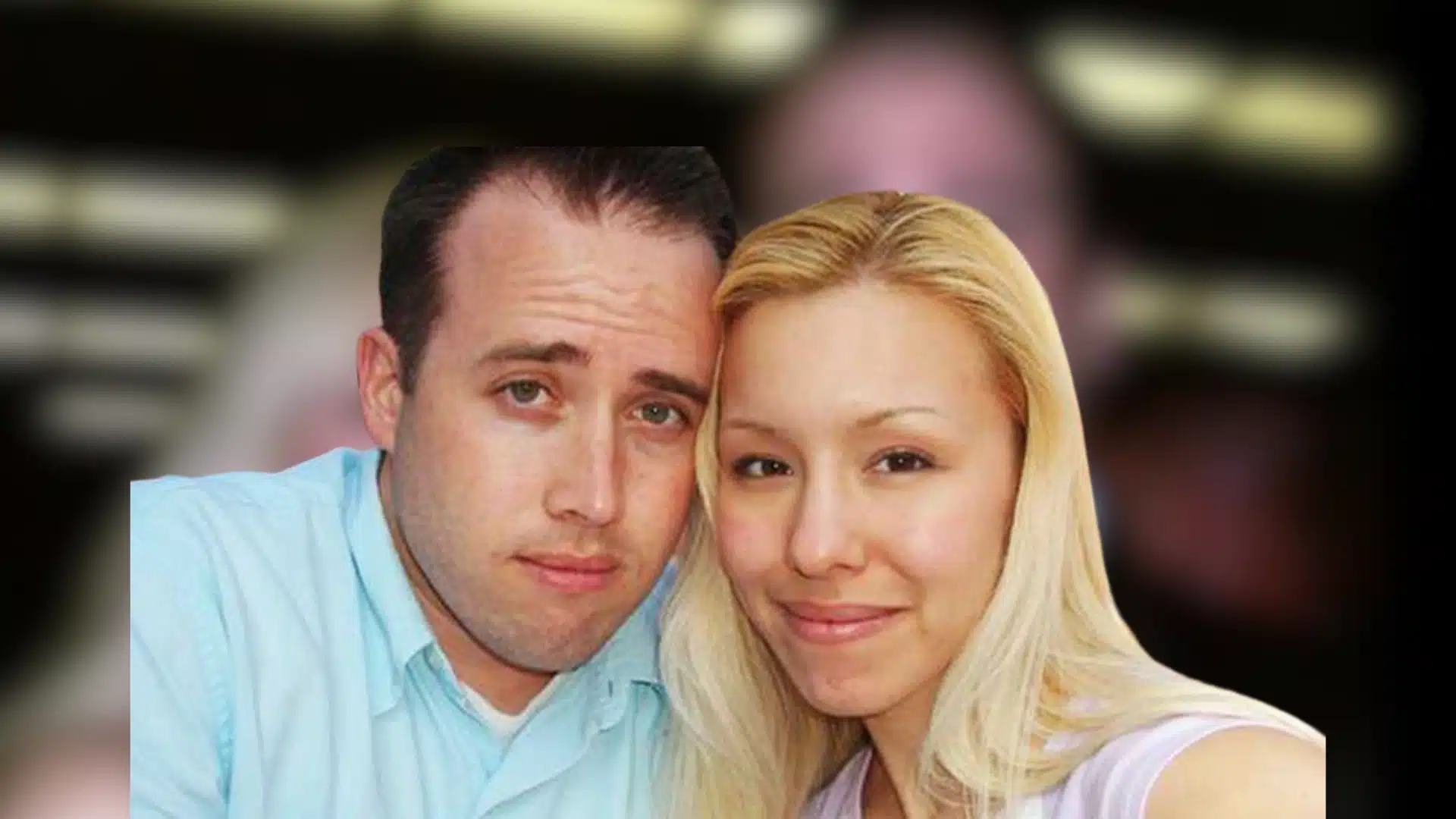
Travis Alexander’s murder is one of those true crime cases that still makes people stop and ask how things went so far. What looked like a broken relationship turned into a shocking crime, a long trial, and years of public debate. At the center of it all was Jodi Arias, who first denied being involved, then changed her story more than once. So, why did Jodi Arias kill Travis, and what really happened before his death? Ahead, you will get a clear look at who Travis was, how he knew Jodi, what happened inside his Arizona home, and why the trial became such a huge part of true crime history. The case is dark, but the story behind it is important to understand. Who Were Jodi Arias and Travis Alexander? Travis Alexander was born in 1977 in Riverside, California. By his late 20s, he had become a motivational speaker and sales executive living in Mesa, Arizona. His friends described him as charismatic and socially active. He was also a devout member of The Church of Jesus Christ of Latter-day Saints. Jodi Arias was born in 1980 and grew up in California. She had worked in the restaurant industry and had a history of intense romantic attachments. She and Alexander met at a work convention in Las Vegas in September 2006. According to trial testimony, she ended a long-term relationship shortly after and pursued Alexander with significant urgency. How Did Their Relationship Lead to the Murder? Alexander and Arias became involved romantically and sexually almost immediately after meeting. Their relationship had a contradictory quality from the beginning. He introduced her to his Mormon faith, and she converted. At the same time, they maintained a sexually explicit relationship that was at odds with the values of that faith. The two officially ended […]

The Barry Morphew case is the kind of case that makes an attorney slow down before reaching any conclusion. On the surface, it has the elements that draw national attention: a missing wife, a husband under suspicion, a prosecution that failed once, and new evidence that brought the case back into court. But legally, this case is not about headlines or public opinion. It is about whether prosecutors can take a complicated set of facts and turn them into proof beyond a reasonable doubt. That is what makes the Morphew case so important to understand. It is not just a story about what may have happened to Suzanne Morphew. It is also a case about evidence, timing, forensic findings, and the pressure courts face when the public wants answers before a jury ever hears the full case. What Happened in the Barry Morphew Case? ImageSource: Oxygen Suzanne Morphew was reported missing on May 10, 2020, after she did not return from a solo bike ride near her home in Maysville, Colorado. Barry Morphew said he was working in Broomfield, about three hours away. A large search across Chaffee County followed, with volunteers, law enforcement, and cadaver dogs, but Suzanne was not found. Investigators focused on Barry early. Prosecutors later disputed his alibi using cell phone data and witness statements, placing him near the area around the time Suzanne disappeared. Prosecutors also allege Suzanne had been in a two-year affair and wanted a divorce. Four days before she vanished, she texted Barry, “I’m done,” which became key motive evidence. Barry was arrested on May 5, 2021, and charged with first-degree murder, tampering with a deceased human body, tampering with physical evidence, and ballot fraud. The ballot charge related to allegations that he forged Suzanne’s signature on a mail-in ballot after her […]

Public behavior can sometimes cross a line when it makes others feel uncomfortable, unsafe, or exposed to something they did not agree to see. This topic can feel confusing because rules are not always the same everywhere. In simple terms, it usually deals with showing private body parts in a public place or in a setting where other people can see them. The phrase what is indecent exposure often comes up when someone wants to understand the meaning, examples, and possible legal concerns behind this act. Ahead, this blog will explain what may count as indecent exposure, what may not count, why intent matters, where it can happen, and what kind of consequences can follow. It will also help separate common myths from the basic legal idea. What is Indecent Exposure? Indecent exposure generally refers to the intentional display of private body parts in a public place or in a location where other people can see them without consent. The exact definition can vary depending on local laws, but the basic idea remains similar in many places. It is often viewed as behavior that may offend, alarm, or disturb others in a public setting. When determining whether an act qualifies as indecent exposure, several factors may be considered. Intent can play a major role, as accidental exposure is often treated differently from deliberate actions. Location also matters because behavior that is acceptable in one setting may not be allowed in another. Context is equally important, as the circumstances surrounding an incident can affect how it is viewed under the law. What Counts as Indecent Exposure? Indecent exposure usually involves behavior where private body parts are shown in a public or visible place in a way that others did not agree to see. It is not always limited to being fully […]
A preliminary hearing is one of the first steps in a criminal case. It gives the court a chance to look at the basic facts before the case moves deeper into the system. The judge does not decide guilt at this stage. Instead, the judge checks whether there is enough evidence for the case to continue. For anyone trying to understand what happens at a preliminary hearing, the main idea is simple: the prosecution presents limited proof, the defense can question parts of it, and the judge decides the next step. In this blog, I will explain the purpose of the hearing, who takes part in it, what kind of evidence may be shown, how it differs from a trial, and what outcomes can follow once the hearing ends. What Happens at a Preliminary Hearing? A preliminary hearing is an early court hearing in a criminal case. Its purpose is to help the judge decide whether the case has enough support to keep moving forward. It is not meant to prove guilt or decide the final result. Several people may be in the courtroom. This usually includes the judge, prosecutor, defense lawyer, defendant, court staff, and sometimes witnesses. In some cases, law enforcement officers may also testify about what they saw, heard, or investigated. The judge listens to limited evidence at this stage. The prosecutor may present basic facts, documents, or witness testimony. The defense may question witnesses and point out weak parts of the case. Still, this is not the trial. The judge only decides whether the case can continue. Why Do Courts Hold Preliminary Hearings? Courts use preliminary hearings to determine whether there is probable cause to support the charges. Probable cause means there is enough evidence to reasonably believe that a crime may have been committed and […]