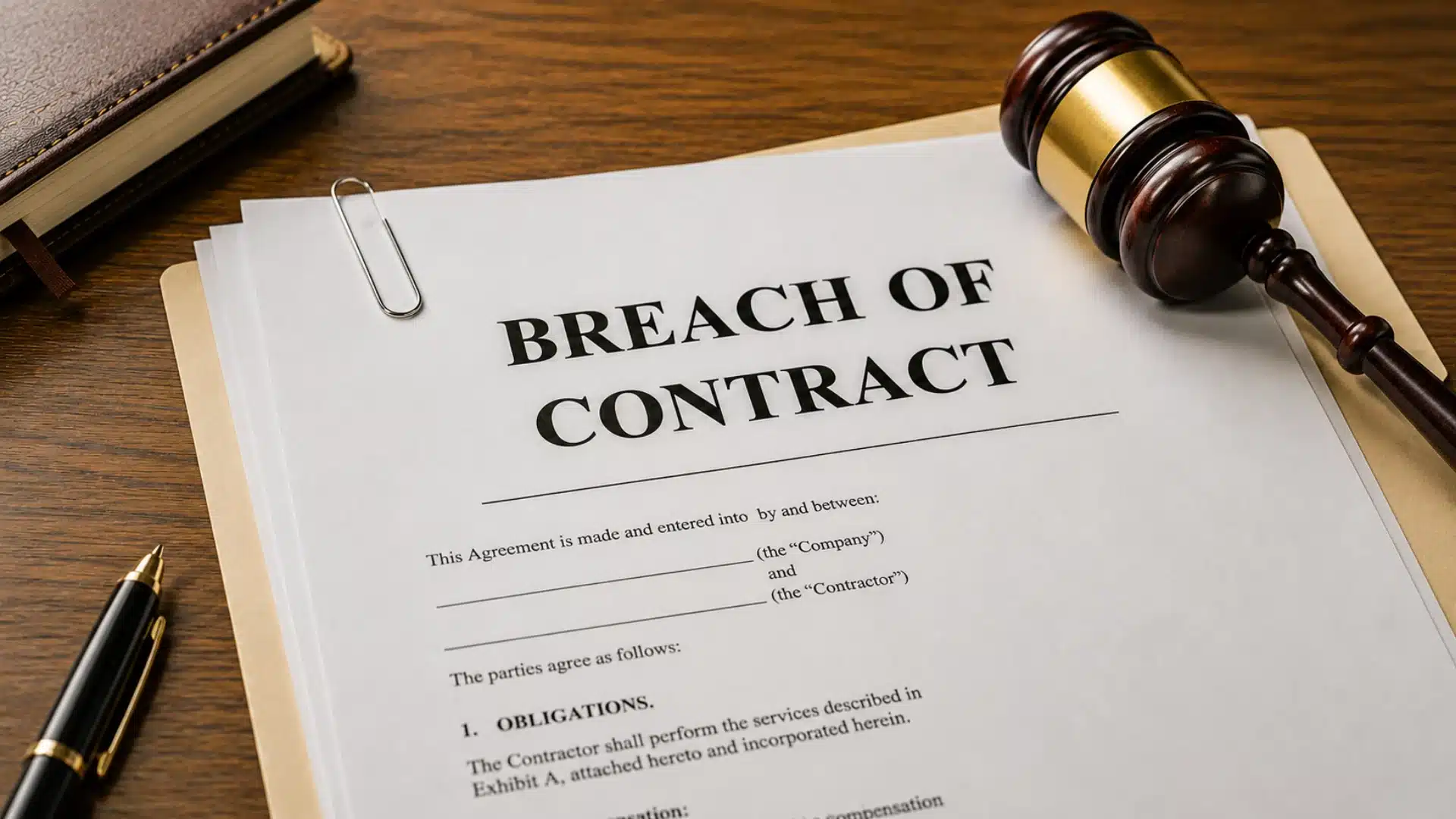
When a contract falls apart, the fallout moves fast. A vendor stops delivering. A partner walks away mid-deal. An employer violates terms tied to your income.
Financial and operational losses compound quickly, and the window to take legal action does not stay open indefinitely.
Most people wait too long before calling an attorney. That delay can cost money, weaken a claim, or close the door on legal action entirely.
If another party failed to perform under a contract, or you are facing a breach claim, legal review can help.
An experienced breach-of-contract lawyer can assess your situation and explain your options.
What Counts as a Breach of Contract?
A breach of contract occurs when one party to a legally binding agreement fails to perform the duties outlined in that agreement without a legally recognized excuse.
Contracts can be written, oral, or implied by conduct, depending on your state’s law. Courts generally recognize two categories of breach.
Material breach is where the failure is significant enough to defeat the contract’s core purpose. It typically allows the non-breaching party to treat the contract as terminated and pursue damages.
A contractor abandoning a project halfway through is a classic example.
Non-material breach is a minor failure that does not undermine the contract’s overall purpose. The non-breaching party can seek compensation for specific losses but is generally still required to fulfill its own obligations.
Four Elements of a Breach of Contract Claim
To succeed on a breach of contract claim, you must establish four elements. A gap in any one of them can defeat the case.
- Existence of a valid contract: A legally enforceable contract existed between the parties, containing a clear offer, acceptance, consideration, legal capacity, mutual consent, and a lawful purpose.
- Substantial performance by the plaintiff: The plaintiff fulfilled all significant contractual obligations, or a valid legal justification existed that excused performance under the agreement.
- Failure to perform by the defendant: The defendant failed to perform required contractual duties, breached agreed terms, or otherwise did not meet obligations specified in the contract.
- Resulting damages: The defendant’s breach directly caused measurable financial loss, harm, or other damages that can be proven through evidence and documentation.
Disclaimer: This is for informational purposes only. Consult a licensed attorney in your state before acting on any of the following.
What a Breach of Contract Lawyer Does
Most people know they need legal help. Fewer understand what that help actually looks like. A breach of contract lawyer does more than file lawsuits. Their work typically spans several stages of a dispute.
- Contract review and case assessment: The attorney reads the contract closely, identifies what each party was obligated to do, and evaluates whether a breach occurred and whether it was material. This step determines whether you have a viable claim or defense before any money is spent.
- Demand letters and pre-litigation negotiation: Many disputes settle before anyone files anything. A lawyer can send a formal demand letter, quantify damages, and negotiate directly with the other party or their counsel. This phase alone resolves a significant share of contract disputes.
- Mediation and arbitration: When direct negotiation stalls, a contract litigation lawyer can represent you in alternative dispute resolution. Arbitration and mediation are often faster and less expensive than court, and many contracts require them as a first step.
- Litigation: If the case goes to court, your attorney handles discovery, depositions, motions, and trial. They calculate and document damages, argue liability, and work toward a judgment or settlement.
The right attorney will tell you which stage your dispute actually calls for. Litigation is not always the answer, and a good breach of contract lawyer will say so.
Types of Breach of Contract Cases
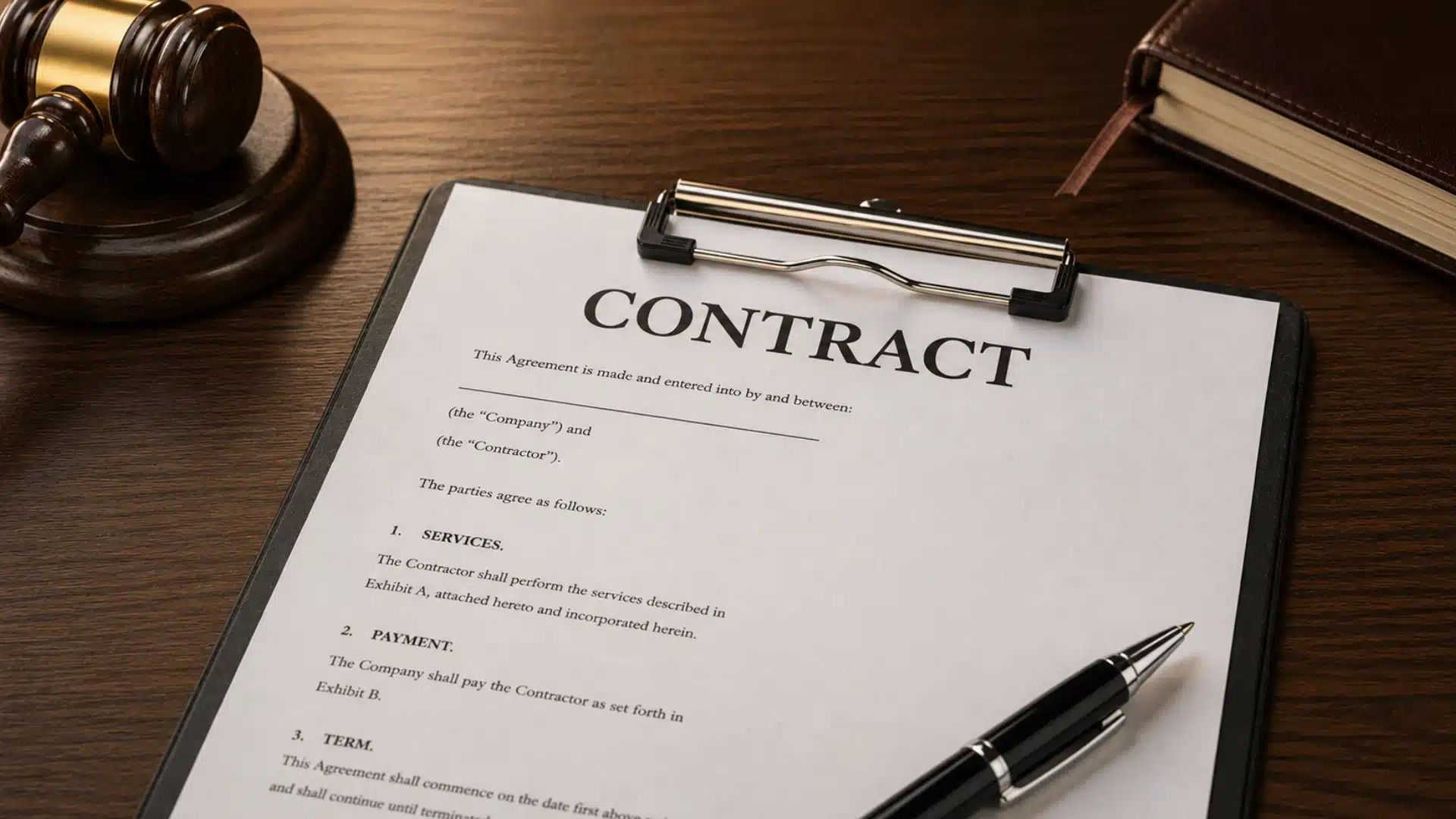
Contract disputes arise across many business and personal transactions.
Common cases include vendor agreements, employment contracts, business partnerships, construction projects, service agreements, and real estate transactions.
1. Vendor and Supplier Agreements
A supplier may breach a contract by failing to deliver goods as agreed, shipping defective products, or repeatedly missing delivery deadlines.
These disputes often involve direct financial losses as well as broader business consequences.
A delayed shipment can disrupt customer orders, production schedules, inventory management, and cash flow.
Evidence may include contracts, purchase orders, invoices, delivery records, inspection reports, and messages that prove liability and damages.
2. Employment Contracts
Disputes involving non-compete clauses, confidentiality agreements, severance packages, or compensation arrangements frequently arise after employment relationships end.
The enforceability of restrictive covenants varies widely by state, making jurisdiction a critical factor in these cases.
Courts often evaluate the employee’s role, the scope and duration of restrictions, and the employer’s legitimate business interests.
Compensation and severance disagreements require careful review of contracts, company policies, communications, and payment records before determining liability or potential remedies.
3. Partnership and Business Agreements
Partner disputes over profits, control, finances, or withdrawal can quickly disrupt business operations.
The partnership agreement or operating agreement usually governs ownership rights, voting authority, financial obligations, and withdrawal procedures.
Emails, records, notes, and internal messages can show each partner’s duties and whether obligations were breached.
4. Construction Contracts
Failure to complete work, defective workmanship, unauthorized material substitutions, or non-payment to subcontractors are common grounds for a breach claim in construction.
These disputes often involve multiple parties, including owners, general contractors, and subcontractors.
Construction claims have their own deadlines and procedural rules in most states. Early legal review helps assess payments, project records, deadlines, and responsibility for defective work.
5. Service Agreements
A professional or service provider fails to deliver what was promised, whether in scope, quality, or timeline.
These disputes usually turn on whether the final work matched the contract terms.
A client may claim the service was incomplete, late, or below the agreed standard. The provider may argue the client changed the scope or failed to pay.
Contracts, proposals, messages, invoices, and project notes can help clarify which side failed to perform and what was originally promised.
6. Real Estate Contracts
Real estate deal agreements, lease disputes, and title-related contract failures are among the more common contract claims in civil courts.
These disputes may involve missed closing deadlines, failed disclosures, financing problems, unpaid rent, repair duties, or title defects.
Because real estate contracts often involve large sums and strict timelines, early legal review can help protect the claim.
Colorado’s Statute of Limitations for Breach of Contract
Colorado Law Sets Firm Deadlines for Contract Claims. Missing the Deadline Can Forfeit Your Right to Sue, Even When the Underlying Claim is Strong.
| Claim Type | Limitation Period | Statute |
|---|---|---|
| Most Breach of Contract Claims | 3 Years from Discovery | C.R.S. § 13-80-101 |
| Contracts Involving a Liquidated Debt or Determinable Amount | 6 Years | C.R.S. § 13-80-103.5 |
| Construction Defect Claims | 2 Years | C.R.S. § 13-80-104 |
The clock typically starts when the breach was discovered or reasonably should have been discovered, not necessarily when it occurred.
Delaying legal help can also limit your discovery options, including the ability to take depositions and gather time-sensitive evidence.
Remedies Available in a Breach of Contract Case
When a breach is established, courts can award several types of relief. Most remedies aim to put the non-breaching party in the position they would have occupied if the contract had been performed.
- Compensatory damages: Cover direct financial losses caused by the breach. These must be proven with reasonable certainty and cannot be speculative.
- Consequential damages: Cover foreseeable losses beyond the immediate transaction, such as lost revenue, missed business opportunities, or downstream costs tied to the breach.
- Specific performance: A court order requiring the breaching party to perform. Courts grant this when monetary compensation is inadequate, which is most common in disputes involving unique property.
- Rescission: Cancels the contract entirely and attempts to restore both parties to their original positions before the agreement was made.
- Punitive damages: They may be awarded in rare circumstances where the breaching party acted egregiously or a statute specifically authorizes them. If you believe punitive damages may apply to your situation, discuss the specifics with an attorney.
Civil settlement amounts depend heavily on the type of breach, the losses involved, and the clarity with which damages can be documented. Early legal review helps establish which remedies are realistic in your situation.
Disclaimer: This is for informational purposes only. Which remedies apply depends on the facts of your case and the law in your state.
Common Defenses to a Breach of Contract Claim
If you have been accused of breaching a contract, several legal defenses may apply. A valid defense can significantly affect how the dispute is resolved, sometimes before it reaches a courtroom.
- Statute of limitations: If the claim was filed after the applicable deadline, the court may dismiss it regardless of the underlying facts.
- Lack of a valid contract: The agreement may be unenforceable if it lacks consideration, legal capacity, or a lawful purpose.
- Impossibility or impracticability: An unforeseen event may excuse performance if it made the contract impossible to fulfill, not just more difficult or expensive.
- Unclean hands: Courts may deny relief if the party bringing the claim also failed to perform under the same contract or acted in bad faith.
When Do You Need a Breach of Contract Lawyer?

The right time to call a contract litigation lawyer is before a dispute becomes more costly and difficult to resolve.
You should consider seeking legal help if the other party has stopped performing or stated they will not fulfill their contractual obligations.
If you have experienced financial losses, missed business opportunities, or operational disruptions because of another party’s actions, or if you have received a demand letter or notice of a potential lawsuit.
Early legal guidance can help protect your rights, assess your options, and prevent the dispute from escalating further.
An attorney can explain your options, help limit costs, and walk you through the civil litigation process before the dispute escalates further.
What to Do if You’ve Been Accused of Breaching a Contract
Knowing when to involve a breach of contract lawyer can make a significant difference in how a dispute is resolved and how much it ultimately costs you.
Seeking legal guidance early can help you understand your rights, evaluate your options, and potentially resolve the matter before it leads to litigation. Some of the clearest signs that you should consult a breach of contract lawyer include:
- The other party has stopped performing their obligations. A contractor, vendor, supplier, employee, or business partner has failed to meet key contract terms or has indicated they will not fulfill their responsibilities.
- You have suffered financial losses. Lost revenue, added expenses, missed opportunities, project delays, or business disruptions may indicate a breach causing measurable damages.
- You have received a demand letter or legal notice. If someone alleges that you breached a contract or threatens legal action, seek legal advice promptly to protect your interests.
- Contract terms are unclear or disputed. A lawyer can help interpret the agreement and clarify your legal rights and obligations.
- Negotiations have stalled. If efforts to resolve the issue directly have failed, legal counsel can assist with negotiations, mediation, or arbitration.
- The dispute involves significant financial stakes. When substantial money, assets, or important business relationships are at risk, professional legal guidance is essential.
Consulting a breach of contract lawyer early often provides more options for resolving the dispute efficiently and cost-effectively.
Whether you are enforcing your rights under a contract or defending against allegations of breach, timely legal advice can help prevent small disagreements from becoming major legal and financial problems.
How to Choose a Breach of Contract Lawyer?
Not every business attorney handles contract litigation at the same level. A few things worth assessing before you hire:
- Relevant experience: Look for an attorney who has handled disputes similar to yours, whether that is an employment contract, a vendor agreement, or a construction claim. Contract law intersects with industry-specific issues, and general practice attorneys may miss them.
- Approach to resolution: Ask directly whether the attorney prioritizes negotiation before recommending litigation. If your goal is to preserve a business relationship or limit legal costs, you want someone who will not push toward court as the default.
- Fee structure: Some contract litigation lawyers bill hourly. Others work on contingency, meaning they take a percentage of any recovery and charge nothing if the case is lost. Understand the structure before signing an engagement letter.
- Communication: Contract disputes move on deadlines. You need an attorney who responds promptly and keeps you informed as the case develops.
If a firm offers a free initial consultation, use it to assess fit as much as legal strategy. The first meeting tells you a lot about how the attorney thinks and whether they understand your situation.
Conclusion
Contract disputes do not resolve themselves. Records get harder to find, deadlines close in, and financial losses accumulate while the situation sits unaddressed.
The statute of limitations is a hard deadline, and missing it can forfeit the right to pursue recovery entirely.
Whether another party failed to perform under your contract or you are facing a claim that your performance was deficient, the facts need careful review.
That review should come from someone who understands contract law and the courts in your jurisdiction.
An attorney can assess your position, explain your options, and help you move forward before the situation gets more expensive.
Have questions about a contract dispute or breach of contract claim? Share your thoughts or experiences in the comments below.
Frequently Asked Questions
Can I Sue for Breach of an Oral Contract?
Yes. Most states recognize oral contracts, but proof is harder to establish. Emails, texts, payment records, and witness statements can help show the agreement existed and what its terms were.
What is the Difference Between a Material and a Minor Breach?
A material breach defeats the contract’s core purpose. A minor breach causes limited harm, but usually does not end the agreement.
Do I Have to Go to Court to Resolve a Breach of Contract Dispute?
No. Many disputes are resolved through negotiation, demand letters, mediation, or arbitration. Court is one option, not the only path, and litigation is often the most expensive one.