Missing a court date can create problems that many people do not expect. Some think the court will simply reschedule the hearing.
Others assume it was just a small mistake that can be fixed later. In reality, missing court can lead to added penalties, warrants, and more legal trouble depending on the case.
An FTA charge often leaves people confused because they are not sure if it is tied to the original case or treated as a separate issue.
The process can also move quickly once the court notices the absence. This blog explains what failure to appear means, why courts take it seriously, and what may happen after a missed hearing.
It also covers common penalties, possible defenses, and the steps that can help someone deal with the situation before it becomes harder to resolve.
What is an FTA Charge?
FTA means failure to appear. It happens when a person misses a required court date after being ordered or notified to appear.
This can come up in criminal, traffic, probation, or other court-order matters.
For example, someone may miss a hearing for a misdemeanor charge, a traffic ticket, or a scheduled court review.
Even if the original case seems minor, the missed appearance can create a new legal problem. The court may view the absence as a failure to comply with its order.
That can lead to a bench warrant, added fines, bond issues, or another charge, depending on the case and state law.
In simple terms, an FTA is not just about being late or forgetting a date. It can turn one court matter into a bigger issue that needs quick attention.
As a criminal defense attorney, one of the most common situations I see is a client who missed one court date, assumed it could be sorted out later, and then found themselves facing a bench warrant, higher bond amounts, and a case that became significantly harder to resolve.
Why Courts Take Failure to Appear Seriously?

Courts set hearing dates so cases can move forward in an organized way. Judges, lawyers, witnesses, and court staff all depend on people showing up when required.
When someone misses court, the entire process can slow down or stop for a period of time. Hearings may need to be rescheduled, paperwork may increase, and other court matters can also be affected.
Because of this, courts often treat missed appearances as more than a simple mistake. A failure to appear may also make the judge question whether the person will follow future court orders.
That concern can affect decisions about bail, release conditions, or future scheduling. In some cases, the court may respond quickly by issuing a warrant or adding penalties.
Even when the original case is minor, a missing court can make the legal situation more serious and harder to resolve later.
What Happens After You Fail to Appear in Court?
Once the court registers an absence, several things can happen quickly. Understanding the difference between an FTA arrest and other outcomes is important here, as the response depends on the case type and whether a warrant has already been issued.
Bail or bond conditions may also change. In some cases, the court can raise the bond amount, cancel release terms, or keep the person in custody after arrest.
Additional fines or penalties may also be added for failing to appear. The original case can become more difficult to resolve because the missed hearing may affect how the judge views the situation.
Nevada courts also follow rules that require judges to order a warrant within certain time limits when a defendant fails to appear in required cases.
Not every FTA rises to that level, but the risk exists in certain cases.
Common Consequences of an FTA Charge
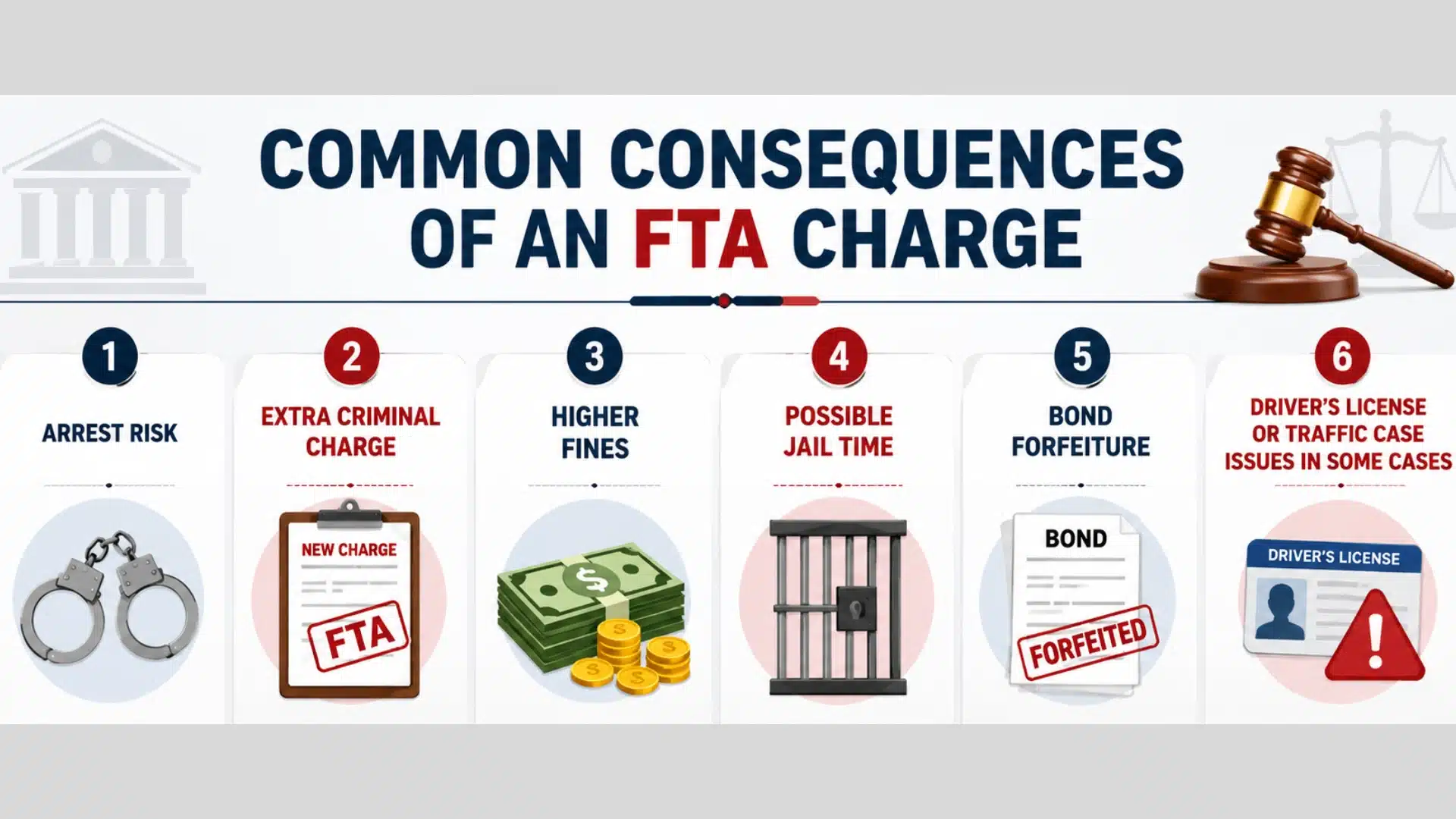
Missing a required court date can lead to several legal problems, and the penalties often depend on the original case and state law. When a court issues an FTA warrant, the consequences start stacking quickly.
- Arrest Risk: Courts issue a warrant after most missed hearings, authorizing officers to make an arrest during a routine traffic stop or encounter with police.
- Extra Criminal Charge: In some states, failure to appear may become a separate criminal offense in addition to the original case.
- Higher Fines: Courts can add extra fines, fees, or penalties after a missed appearance, especially in traffic or misdemeanor matters.
- Possible Jail Time: Some FTA cases may result in jail time depending on the seriousness of the original charge and the person’s court history.
- Bond Forfeiture: Missing a court date can cause the court to cancel or forfeit an existing bond, which may lead to financial loss.
- Driver’s License Issues: Traffic-related cases may affect driving privileges, license status, or future renewals in certain situations.
Long-Term Consequences of an FTA Charge
The immediate fallout from a missed court date gets most of the attention. But the longer-term effects of an unresolved FTA are just as important and worth understanding before deciding how urgently to act.
- Bail history in future cases. Courts look at prior FTA history when deciding pretrial release in any future matter. A judge who sees a past failure to appear on the record is less likely to grant release or may set a substantially higher bond amount. That pattern can follow someone across multiple proceedings over many years.
- Employment background checks. An active warrant or unresolved court matter tied to an FTA may appear in a background screening. Depending on the employer, the type of position, and applicable state law, this can affect hiring decisions even before any conviction is entered.
- Driver’s license reinstatement. A license suspended because of a traffic-related FTA does not come back automatically once the court date passes. It typically requires the court matter to be resolved, fees paid to the DMV, and, in some states, a formal reinstatement process that takes additional time and costs.
- Civil case outcomes. In civil proceedings, missing a court date can result in a default judgment against the absent party. The court rules in favor of the opposing side without hearing any defense. This can mean a financial judgment, loss of a custody argument, or other adverse rulings that are difficult to undo after the fact.
- Bench warrant persistence. A bench warrant does not expire. It remains in the system until the defendant appears or the warrant is recalled by the court. The longer it sits unaddressed, the fewer options are typically available and the more costly the resolution tends to become.
Is Failure to Appear Always Intentional?
Not every missed court date happens on purpose.
People fail to appear for many different reasons, and some situations involve confusion or unexpected problems rather than an attempt to avoid court.
A person may write down the wrong hearing date, never receive a notice, or misunderstand the court schedule.
Transportation problems, medical emergencies, illness, work conflicts, or family issues can also make it difficult to attend court on time.
In some cases, fear or stress about the legal process may cause someone to avoid appearing altogether. Even so, courts do not always treat the reason behind the absence differently at first.
Judges may still issue a warrant or add penalties even when the missed appearance was not planned. That is why it is important to respond quickly after missing court.
Taking action early may help explain the situation and reduce additional legal problems later.
What a Defense Lawyer Can Do After an FTA Charge
An attorney can take several practical steps after a missed court date. In many cases, a lawyer can contact the court proactively, request a hearing to address the warrant, and present a reason for the absence to the judge before an arrest occurs.
Courts are sometimes willing to recall or quash a bench warrant when a defendant voluntarily appears with counsel and offers a credible explanation.
A lawyer can also work to address the underlying case at the same time, which may reduce the total legal exposure.
Handling the FTA and the original matter together is generally more efficient than dealing with them separately, and it limits the number of additional court dates required.
If the warrant has already led to an arrest, an attorney can appear at the initial hearing to argue for reasonable bail terms and push back on conditions that go beyond what the situation warrants.
Early legal involvement consistently produces better outcomes than waiting.
What Should Someone Do After Missing Court?
Taking quick action after missing court may help prevent the situation from becoming more serious and may reduce the risk of added penalties.
- Do Not Ignore It: Waiting too long can make the problem worse. Courts may issue warrants, add fines, or change bond conditions after a missed hearing.
- Check Court Records: Court websites or clerk offices may show updated hearing details, warrant information, or new court orders connected to the case.
- Contact The Court Or A Lawyer: Speaking with the court or a defense lawyer can help explain the next legal steps and possible options.
- Ask About A Warrant: It is important to find out whether a bench warrant has already been issued after the missed appearance.
- Address The Issue Quickly: Trying to resolve the matter before an arrest happens may improve the chances of a smoother court process later.
Conclusion
Missing a court date may seem like a small mistake at first, but it can quickly create larger legal problems.
As covered in this blog, failure to appear can lead to warrants, fines, bond issues, and even extra criminal charges depending on the case and state law.
An FTA charge can also make the original case harder to resolve if the issue is ignored for too long. That is why responding quickly matters.
Have questions or thoughts about failure to appear cases and court procedures? Drop a comment below and join the discussion.
Frequently Asked Questions
Can a Failure to Appear Affect Employment Background Checks?
In some situations, an unresolved court matter or active warrant connected to a missed appearance may appear during a background check. The impact often depends on the employer, the type of job, and local laws.
Can Someone Appear in Court Remotely After Missing a Hearing?
Some courts may allow virtual appearances or remote hearings depending on the case type and local court rules. This option is more common in certain traffic, misdemeanor, or scheduling matters.
Does a Failure to Appear Stay on a Criminal Record Forever?
The effect of a failure to appear on a record depends on state law and the outcome of the case. In some situations, records may later qualify for sealing or other legal relief after the matter is resolved.