A restraining order can affect where you live, who you can contact, your firearm rights, child custody arrangements, and even future employment opportunities.
Protection order cases often move through the court system quickly, leaving little time to understand your rights or prepare for the hearing ahead.
Whether you need protection from harassment, stalking, or domestic violence, or you have been served with a protection order and need to defend yourself, the outcome can have long-lasting legal and personal consequences.
Understanding how courts handle these cases is essential if you want to avoid costly mistakes and protect your interests.
Working with an experienced restraining order attorney can help you navigate the process, gather evidence, and present the strongest possible case.
This blog post covers how to get a restraining order in Colorado, how to file, what happens at hearings, how to contest a protection order, what an attorney does, and when you need one.
What is a Restraining Order?
A restraining order is a court order that prohibits a person from contacting, approaching, or threatening another person.
Courts issue them to protect individuals from domestic abuse, harassment, stalking, sexual assault, and credible threats of harm.
Depending on the state, these orders may also be called orders of protection, protective orders, or civil protection orders.
The legal standard, duration, and conditions vary by jurisdiction, but the core function is the same: restrict access before harm occurs.
Common conditions include no-contact restrictions by phone, text, email, or social media; stay-away orders from a person’s home, workplace, or children’s school; and, in domestic violence or extreme-risk cases, a requirement to surrender firearms.
Types of Protection Orders
Most states issue three tiers of protective orders. The names differ slightly by state, but the structure is consistent across the country.
1. Emergency Protection Order (EPO)
An Emergency Protection Order (EPO) is a short-term court order requested by law enforcement when someone faces an immediate risk of domestic violence, stalking, or sexual assault.
Police typically seek an EPO after responding to an incident, including at night, on weekends, or during holidays.
The order provides immediate legal protection and usually remains in effect for three to seven days, allowing the protected person time to pursue a longer-term court order.
2. Temporary Protection Order (TPO)
A Temporary Protection Order (TPO) is requested directly by the person seeking protection through a civil court.
Judges often consider these requests during an ex parte hearing, meaning the respondent is not present. If approved, a TPO generally remains effective for seven to twenty-one days.
The order serves as an interim safeguard until a scheduled hearing where both parties can present evidence and testimony.
3. Permanent Protection Order (PPO)
A Permanent Protection Order (PPO) is issued after a full court hearing where both the petitioner and respondent have an opportunity to present their cases.
Although described as “permanent,” the order is typically indefinite rather than lifelong. Many states permit either party to request modification or termination after several years.
A PPO can have significant legal consequences, including restrictions related to housing, employment, firearm ownership, and professional licensing.
Who Can File a Restraining Order?
Protection order laws extend well beyond spouses. Most states allow someone to seek a protective order after experiencing domestic abuse, harassment, stalking, sexual assault, or credible threats from a person with whom they have a qualifying relationship.
Covered relationships typically include:
- Current or former romantic partners and spouses
- Family members
- People who share or have shared a household
Many states also allow civil harassment orders against someone outside a domestic relationship, such as a neighbor, coworker, or acquaintance.
Minors, people with disabilities, and individuals who cannot safely file on their own may have a parent, guardian, or advocate file on their behalf.
How to File a Restraining Order: Step-by-Step
The process below applies broadly across U.S. states. Specific forms and court locations vary, so check your county or state court’s website for local requirements.
- Get the forms: Visit your local district or family court, or download forms from your state’s judicial branch website. Most states have a standardized petition or complaint form for protection orders.
- File at the correct court: File in the county where you live, where the respondent lives, or where the incident occurred.
- Attend the TPO hearing: The clerk will schedule a hearing, often the same day. You speak directly with a judge or magistrate. The respondent is not present. You must show that you face an imminent threat.
- Receive the TPO if granted: You get a certified copy that also includes the date and time for the full permanent order hearing.
- Serve the respondent: The TPO does not take effect until the respondent is formally served. You cannot serve the papers yourself. A county sheriff can usually do this, and in many states, service is free for domestic violence cases.
- Appear at the PPO hearing: Both parties appear. If you do not show up, the TPO expires automatically. If the respondent does not appear, the judge may make the TPO permanent.
What Happens at a Restraining Order Hearing?
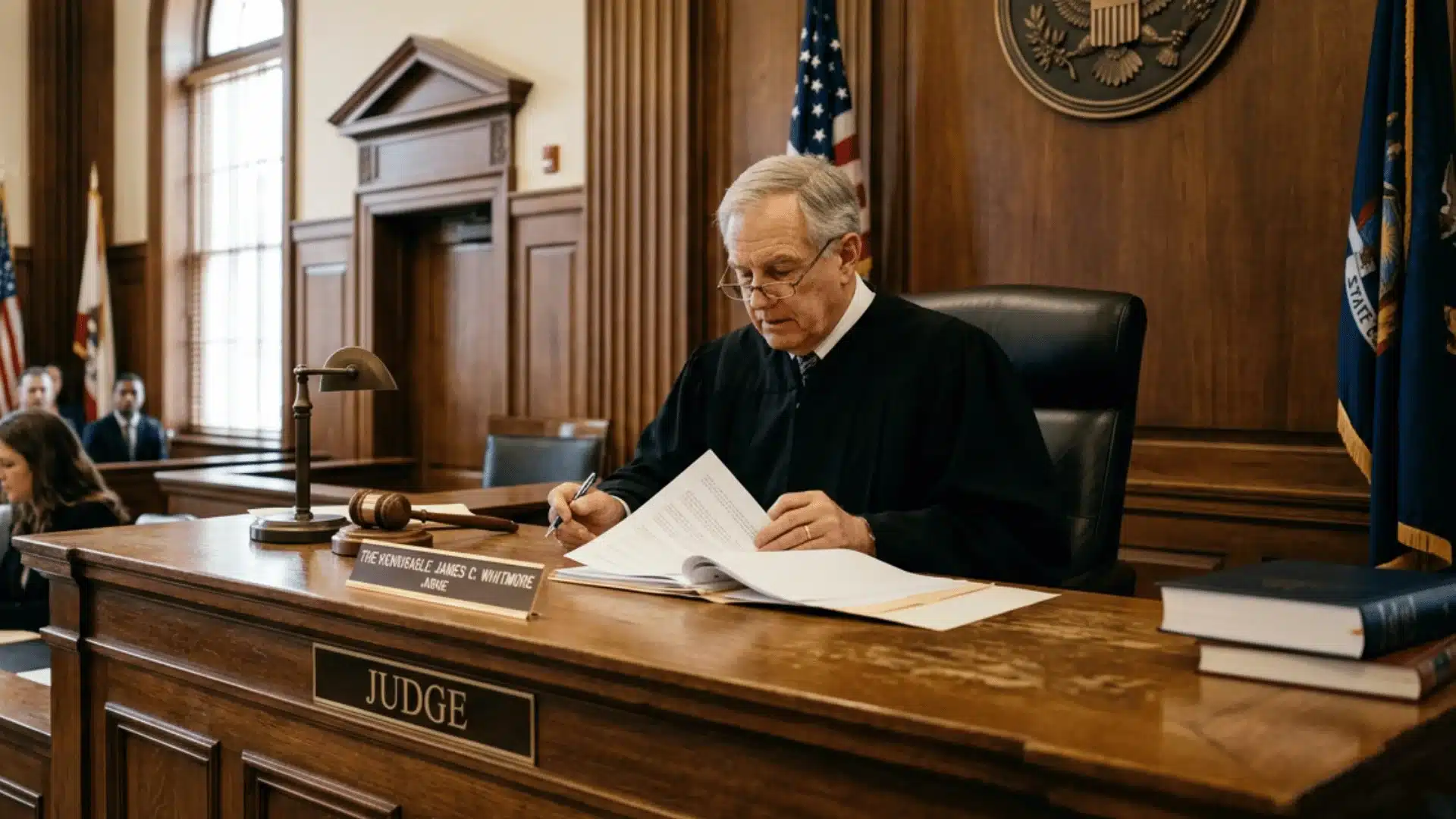
A TPO hearing is brief and one-sided by design. The petitioner presents their account to a judge, who decides whether imminent danger exists. There is no cross-examination, and the respondent is not present.
The PPO hearing is different. Both sides can present evidence, including witness testimony, photographs, text messages, call logs, and police reports.
The judge evaluates credibility and the weight of the evidence before deciding whether a permanent order is warranted. Understanding the basics of civil litigation helps you know what to expect when you walk in.
For petitioners, this hearing is the opportunity to build a complete record. For respondents, it is often the only real chance to challenge the allegations before restrictions become long-lasting.
Failing to appear at a PPO hearing can result in the order being entered by default and, in some states, a bench warrant.
How to Fight or Contest a Restraining Order?
If you have been served with a temporary protection order, the court hearing is your opportunity to challenge the allegations and present evidence supporting your side of the case.
- Gather Evidence: Collect text messages, emails, photos, videos, or other records that contradict the allegations or provide important context.
- Identify Witnesses: Present credible witnesses who can testify about the events in question or challenge the petitioner’s version of events.
- Highlight Inconsistencies: Point out contradictions, omissions, or exaggerated claims in the petitioner’s statements and supporting documents.
- Demonstrate Lack of Imminent Danger: Show that the alleged conduct does not meet the legal standard required for a restraining order in your jurisdiction.
- Seek Legal Representation: Work with an experienced attorney to develop a strong defense strategy and ensure all evidence is properly presented.
Successfully contesting a restraining order requires strong evidence and a clear defense strategy. A well-prepared case can improve your chances of having the order modified or dismissed.
What Does a Restraining Order Attorney Do?
A restraining order attorney does more than file paperwork. They build a legal strategy, gather and organize evidence, prepare witnesses, and represent you in court.
Their job is to present your case in a way that meets the legal standard the judge must apply.
- On the petitioner’s side, an attorney helps you clearly document the threat, avoid procedural mistakes that could delay or weaken your order, and prepare for cross-examination at the PPO hearing.
- On the respondent side, they analyze the claims, identify weaknesses in the petitioner’s account, and prevent a default order from going on your permanent record. Attorneys also advise on collateral consequences.
A protection order can affect firearms ownership under federal law, security clearances, military service, and professional licenses. Knowing those risks before the hearing, not after, changes how you prepare.
When Should You Hire a Restraining Order Attorney?

You are not legally required to have an attorney for a protection order proceeding. But there are situations where going without one poses real, avoidable risk.
- Children are involved: A protection order can directly affect child custody and visitation in ways that outlast the order itself. The decisions made in these hearings often carry weight in later family court proceedings.
- The other party has an attorney: The court is neutral, but preparation is not. An unrepresented party, compared with a represented one, is at a real disadvantage in how evidence is framed and presented.
- You are contesting a false or exaggerated order: Denial without documentation rarely works. You need organized records, credible witnesses, and a clear legal argument.
- Your career depends on the outcome: A permanent protection order can restrict firearms ownership under federal law, affect security clearances, and put military or law enforcement careers at risk.
- A violation is alleged if someone claims you violated the terms of a protection order; that is a criminal matter.
Colorado Protection Orders: What You Need to Know?
Colorado issues Civil Protection Orders (CPOs) under C.R.S. § 13-14-104.5 when a judge finds an imminent danger to a person’s life or health.
The state uses a three-tier system: Emergency Protection Orders (EPOs), Temporary Protection Orders (TPOs), and Permanent Protection Orders (PPOs).
Petitioners typically file JDF 402 (Complaint/Motion) and JDF 442 (Information Sheet) through a county district court or the Colorado Judicial Branch website.
In most cases, courts hold TPO hearings the same day, and county sheriffs will serve respondents at no cost when an address is available.
Effective January 1, 2025, under HB24-1122, state and public agencies cannot charge service-of-process fees in cases involving domestic abuse, domestic violence, stalking, or sexual violence.
Once a PPO is issued, the restrained party generally cannot seek modification or dismissal for 2 years.
Violating a protection order is a criminal offense under C.R.S. § 18-6-803.5. A first violation may result in up to 364 days in jail and $1,000 in fines, while repeat or related offenses may be charged as higher-level misdemeanors.
Penalties for Violating a Restraining Order
Violating a protection order is a criminal offense in every U.S. state, not a civil matter.
Most states treat a first violation as a misdemeanor, with jail time and fines. Subsequent violations, or those involving another crime, are typically charged as felonies.
There is one narrow exception worth knowing: an accidental encounter is not automatically a violation.
If the respondent unexpectedly encounters the protected person, the law generally requires the respondent to leave immediately.
That exception does not cover planned contact or communication through third parties.
Courts do not require proof that the respondent meant harm. The fact of the contact, regardless of intent, can be enough to support a charge. That is a detail many people learn the hard way.
Conclusion
Protection order cases can move quickly, and early decisions may affect contact, housing, work, child custody, firearm rights, and future court options.
Whether someone needs protection from threats or must respond to allegations, understanding the process helps avoid mistakes and prepare for each hearing.
Knowing how to get a restraining order, how to file one, and what to expect after service can make the situation less confusing and less stressful.
In Colorado, the rules and deadlines can be strict, so timely legal guidance matters. A restraining order attorney can review the facts, organize evidence, explain possible outcomes, and represent your interests in court.
Have a question or personal experience to share? Leave a comment below and join the conversation.
Frequently Asked Questions
Can a Restraining Order Be Filed Against Someone Who Lives in a Different State?
Yes. A restraining order can be filed through courts against someone in another state, but it must be properly served before it can be enforced nationwide.
Does a Restraining Order Show up on a Background Check?
A civil protection order itself is a court record and can appear in certain background checks, depending on the type of check and the database used. If a criminal charge for a violation also exists, that appears separately. The presence of a protection order can affect housing applications, employment screening, and firearms eligibility.
How Long Does a Permanent Protection Order Last?
A permanent protection order usually remains in effect indefinitely unless a court modifies or dismisses it. The restrained person may have to wait before requesting dismissal.