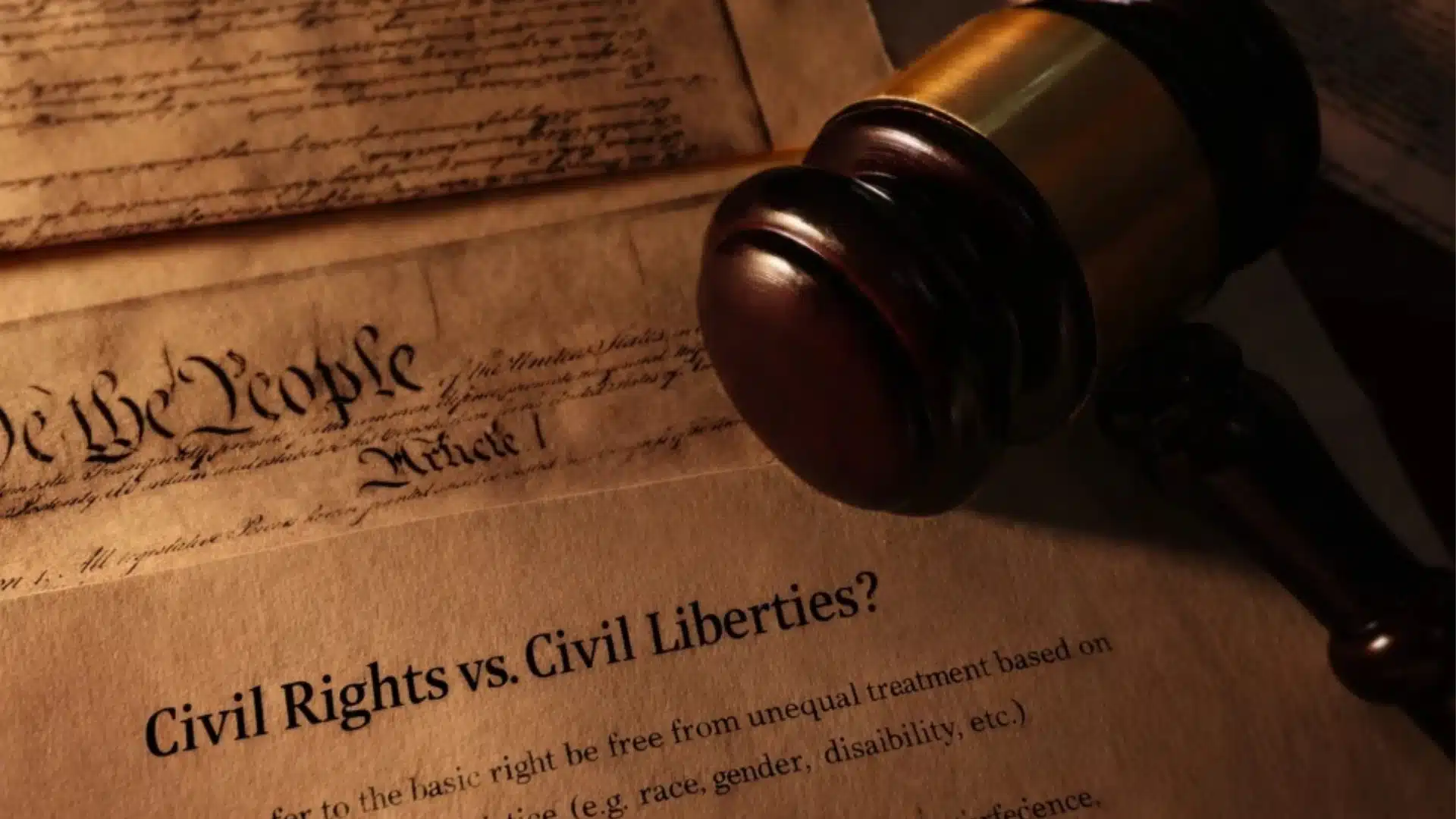
Most people use the terms “civil liberties” and “civil rights” as if they mean the same thing.
I used to hear clients make this mistake constantly, and it cost them, because framing the wrong claim against the wrong party is how cases get dismissed before they even reach a courtroom.
The core difference between civil liberties and civil rights comes down to this: civil liberties protect your individual freedoms from government interference.
While civil rights protect you from discrimination, they can also be violated by private parties, not just the government.
That single distinction determines who can be sued, which law applies, which court has jurisdiction, and what remedies are available.
In this blog, I break down what each term actually means, walk through real examples, and explain why the distinction matters in situations most people encounter, including workplace conflicts, police stops, and digital privacy.
If you have ever wondered which concept protects you and when, this is where to start.
What Are Civil Liberties?
Civil liberties are the fundamental freedoms that governments cannot deprive people of without due process. Think of them as a fence around your personal autonomy.
These are not granted by politicians. They are natural rights every person holds simply by being human. In the United States, they are primarily codified in the Bill of Rights, with the Fourteenth Amendment extending those protections against state governments.
Notice how the First Amendment is written, not “you have the right to speak freely,” but “Congress shall make no law” restricting speech.
Whether these protections apply to non-citizens depends on the right in question.
Due process and equal protection extend broadly under the Fourteenth Amendment, while some political rights, such as voting, remain limited to citizens.
How constitutional protections apply to non-citizens depends significantly on which right is being asserted, and courts have drawn careful distinctions between rights tied to personhood versus rights tied to citizenship.
Real-Life Examples of Civil Liberties
These are not just legal theories; real people fought for these freedoms in court, and their cases still protect you today.
- Freedom of Speech. In 1965, students wore black armbands to protest the Vietnam War and were suspended for it. The Supreme Court ruled in Tinker v. Des Moines (1969) that schools cannot silence students without substantial disruption. That ruling remains the controlling standard for student speech rights in public schools across the country.
- Freedom of Religion: New York schools opened daily with a government-written prayer. The Court ruled that this violated the church-state separation principle in Engel v. Vitale (1962). The decision established that the government cannot compose or sponsor religious activity, even voluntary prayer, without crossing the First Amendment line.
- The Right to Privacy: FBI agents bugged a public phone booth without a warrant and convicted the user. The Court threw it out in Katz v. United States (1967). Katz shifted the privacy analysis from physical trespass to a reasonable expectation of privacy, a framework that courts still apply to digital surveillance questions today.
- The Right to a Fair Trial: Clarence Gideon was denied a lawyer and convicted. His handwritten Supreme Court petition changed American law forever, Gideon v. Wainwright (1963). That case established the Sixth Amendment right to counsel for all criminal defendants, regardless of financial means.
What Are Civil Rights?
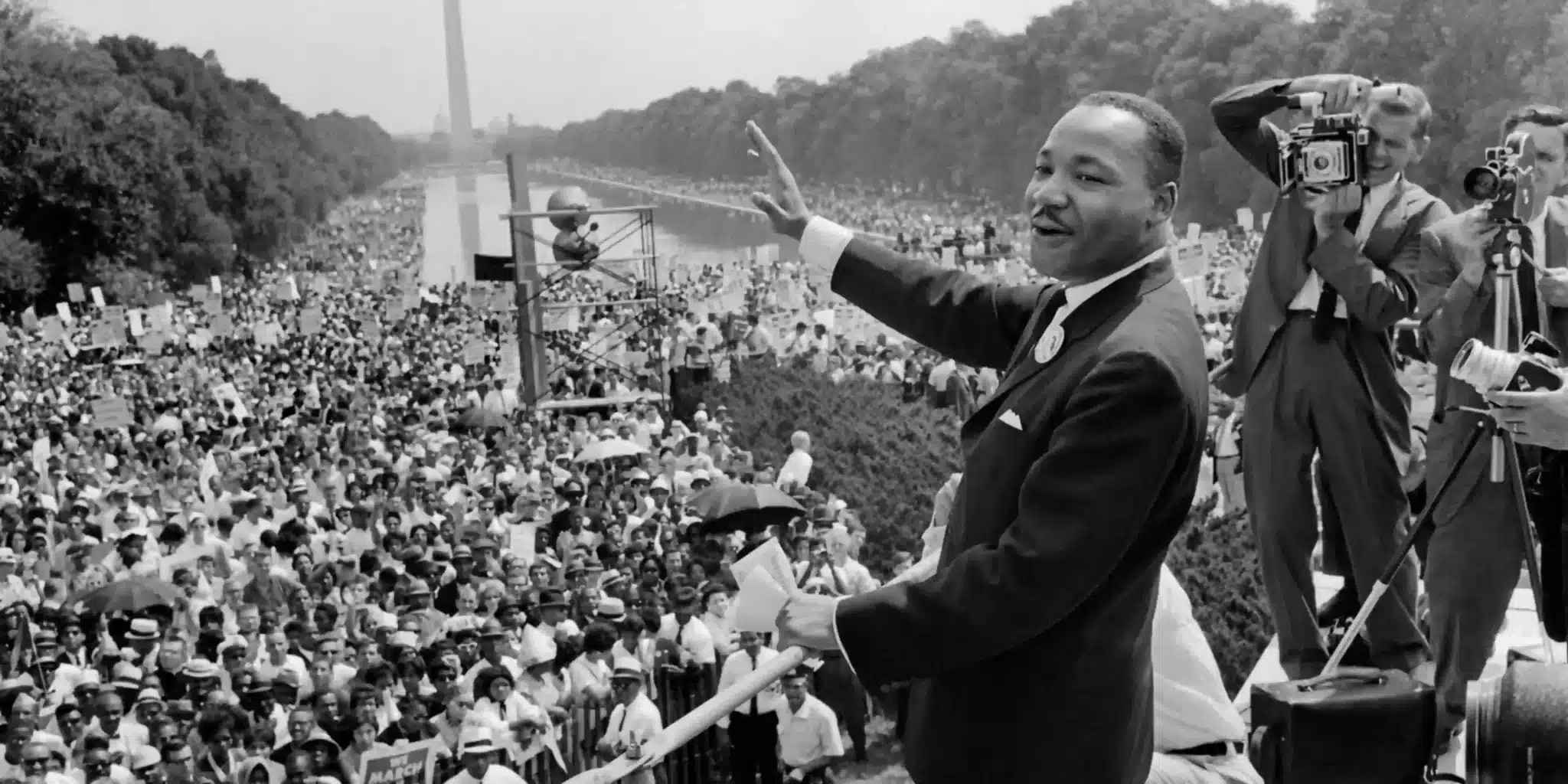
Source:History.com
Civil rights are legal protections against discrimination.
While civil liberties restrict government action, civil rights prohibit both the government and private actors from treating people unequally on the basis of race, gender, religion, national origin, or disability.
They are rooted in the Fourteenth Amendment’s equal protection clause and built out through legislation: the Civil Rights Act of 1964, the Voting Rights Act of 1965, the Fair Housing Act of 1968, and the Americans with Disabilities Act of 1990.
One point that surprises many people: civil rights can be violated by private citizens and companies, not just the government.
A private employer who refuses to hire someone based on race has violated Title VII, even without any government involvement. That is the key liability difference.
Only government actors can violate civil liberties. Civil rights violations have a much wider pool of potential defendants.
This distinction also shapes how police encounters are analyzed. When an officer stops someone without a legal basis, the civil liberties framework governs the analysis.
Understanding the legal distinction between detention and arrest is one of the most practical applications of civil liberties law in everyday life.
Real-Life Examples of Civil Rights
Civil rights battles have played out in courtrooms, schools, workplaces, and voting booths. Here are four cases that changed American law.
- Voting Rights: Poll taxes and literacy tests blocked Black voters for decades until the Voting Rights Act of 1965 changed that. Section 5 of that Act required states with a history of discrimination to get federal pre-clearance before changing voting laws, a provision that transformed electoral participation in the South.
- Education: Black children were forced into separate schools until Brown v. Board of Education (1954) declared segregation unconstitutional. The Court’s holding that separate educational facilities are inherently unequal remains one of the most consequential civil rights rulings in American history.
- Workplace Non-Discrimination: A gay employee was fired for his identity until Bostock v. Clayton County (2020) extended federal workplace protections to LGBTQ+ workers. The Supreme Court held that discrimination based on sexual orientation or gender identity necessarily involves discrimination based on sex under Title VII, a textual reading with sweeping practical impact.
- Public Services: Black Americans were refused service at restaurants and hotels until the Civil Rights Act of 1964 banned discrimination in public spaces. That prohibition now extends to physical and digital spaces in an increasing number of states, with courts actively addressing accessibility requirements for websites and apps.
Civil Liberties vs Civil Rights: Core Differences
The simplest frame: civil liberties are about protection from government action; civil rights are about equal provision of legal treatment.
One demands government restraint; the other demands government action. Only the first can be violated by government actors; the other can be violated by private parties as well.
| Dimension | Civil Liberties | Civil Rights |
|---|---|---|
| Core function | Protect individual freedom from government interference | Ensure equal treatment; protect against discrimination |
| Government role | The government must restrain itself | The government must take action |
| Who can violate them | Government actors only | Government actors and private individuals/entities |
| Primary legal source | Bill of Rights; 14th Amendment due process clause | 14th Amendment equal protection clause; federal statutes |
| Focus | Individual freedom and autonomy | Social equality and non-discrimination |
| Examples | Free speech, right to privacy, fair trial | Voting rights, workplace equality, housing access |
It is worth noting that some protections operate simultaneously.
Freedom of religion is a civil liberty under the First Amendment and a protected characteristic under civil rights statutes, which is precisely why framing matters when deciding what to file and against whom.
Why the Difference Matters in Everyday Life?
This is not a law school abstraction. In practice, getting this wrong is one of the most common reasons civil rights complaints fail at the pre-litigation stage.
The distinction has direct consequences for how legal disputes are framed, who bears the burden of proof, which statute of limitations applies, and what relief a court can award.
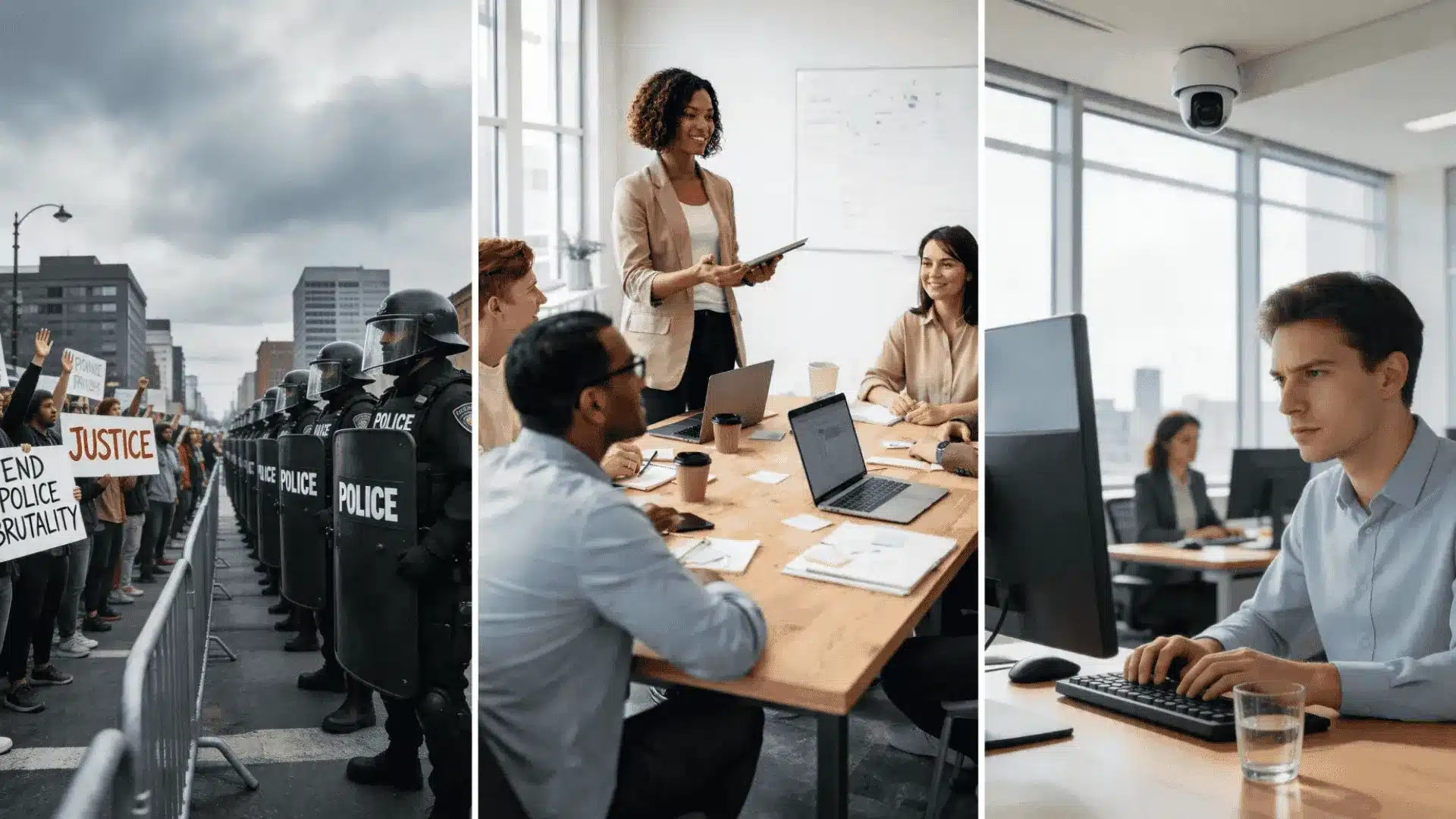
Here is how it plays out across three situations most people actually encounter.
- Protests and Police Conduct: Dispersing a peaceful protest violates the First Amendment. If only protesters of one race are arrested, that adds an equal protection claim. Both can run simultaneously.
- The Workplace: Government monitoring your personal device is a civil liberties issue. Being passed over for promotion due to gender is a civil rights violation under Title VII.
- Surveillance and Digital Privacy: Government metadata collection triggers Fourth Amendment claims, civil liberties territory. Post-9/11 policies created lasting tension between national security priorities and civil liberties protections, particularly for Muslim and Arab American communities, a tension courts continue to resolve on a case-by-case basis. Private employers monitoring messages unequally based on protected characteristics raises a separate civil rights concern entirely.
A practical two-question framework: first, ask whether government action restricted your freedom without legal justification; if yes, you are likely in civil liberties territory.
Then ask whether the treatment was unequal because of a protected characteristic; if yes, civil rights law applies, and a private party can be the defendant.
If both answers are yes, you may have overlapping claims worth pursuing together.
In government action cases, whether the officer had probable cause is often the first threshold question in determining whether a civil liberties violation occurred.
How Governments Handle Civil Liberties and Civil Rights?
Courts protect civil liberties through judicial review.
If a law violates constitutional freedoms, it can be struck down. These protections are not absolute, as governments may impose limited restrictions during emergencies, subject to court oversight.
Civil rights require affirmative government action. Federal agencies investigate complaints, file lawsuits, and issue compliance guidance.
The Equal Employment Opportunity Commission handles employment discrimination, HUD oversees housing, and the DOJ Civil Rights Division pursues systemic discrimination cases against institutions like police departments and school districts.
State-level enforcement also matters significantly.
California’s Unruh Civil Rights Act, for example, extends anti-discrimination protections further than federal law, covering arbitrary discrimination even in categories not explicitly named in federal statutes.
New York’s Human Rights Law similarly reaches gender expression and source of income. If you are in a state with robust civil rights statutes, your remedies may be broader than federal law alone would provide.
Common Misconceptions About Civil Liberties and Civil Rights
Most people use these terms interchangeably, and in a legal setting, that mistake has real consequences.
They operate under different laws, involve different defendants, and offer different remedies. Confusing the two can lead to your claim being dismissed.
| Myth | Reality |
|---|---|
| Civil liberties and civil rights mean the same thing. | They differ in legal basis, government role, defendants, and remedies. Wrong framing in a complaint can lead to dismissal. |
| One is more important than the other. | Both are essential. Freedom without equality allows discrimination. Equality without freedom enables government overreach. |
| The government always protects both equally. | Enforcement gaps are real. A valid discrimination claim means nothing if the statute lacks a private right of action or caps damages too low. |
| Civil liberties and civil rights never conflict. | They can and do. A discriminatory viewpoint in a workplace or housing setting can directly clash with another person’s civil rights. Courts decide case by case. |
Conclusion
Civil liberties and civil rights are not the same thing, and knowing the difference matters more than most people realize. Civil liberties protect your freedom from government overreach.
Civil rights protect you from discrimination, and they extend to private actors as well.
One demands government restraint; the other demands government action. Getting that distinction right is what determines whether a legal claim holds up or falls apart.
I hope this gave you a clearer, more practical understanding of both.
Understanding these distinctions early can make a real difference when it matters most. If the situation ever becomes unclear or hard to navigate, knowing where to look for help can prevent bigger problems down the line.
Have you experienced something and felt unsure whether it fell under civil liberties or civil rights? Drop your thoughts in the comments below.
Frequently Asked Questions
What is the Difference Between a Civil Rights Violation and a Constitutional Violation?
Constitutional violations always involve government action infringing a right protected by the Constitution. Civil rights violations can be committed by private parties and do not require constitutional grounding.
Who Enforces Civil Rights if the Government Itself is the Violator?
Federal agencies like the DOJ Civil Rights Division and the EEOC handle complaints even against government entities. Individuals can also bring private lawsuits in federal court under statutes like 42 U.S.C. § 1983, which allows claims against government officials who violate constitutional rights.
Can a Private Company Violate Your Civil Liberties?
Generally no. Civil liberties protect against government action. A private employer monitoring your messages or restricting your speech is not a First Amendment issue unless that employer is acting on behalf of the government.
It may, however, raise civil rights concerns if the conduct involves discriminatory treatment.
Does the Difference Between Civil Liberties and Civil Rights Change by State?
Federal law sets the floor. States can, and frequently do, extend both civil liberties protections and civil rights coverage beyond federal minimums.
California’s constitution contains independent privacy protections that apply even to some private actors, going further than the federal Fourth Amendment.
If you believe your rights have been violated, state law may offer remedies that federal statutes do not reach.