Questions about legal rights often spark strong opinions, confusion, and plenty of misinformation, especially when the topic is immigration.
Many people assume the Constitution draws a clear line between citizens and non-citizens, but the reality is not always that straightforward.
Legal protections, court interpretations, and real-world enforcement create a more layered picture than most expect.
Understanding where those lines are drawn and why requires looking beyond assumptions and into how the law actually works in practice.
From courtroom procedures to everyday interactions with authorities, the rules can shift depending on context, status, and location.
This blog breaks down those complexities, helping clarify what the Constitution says, how courts interpret it, and where the boundaries begin and end.
Does the U.S. Constitution Apply to Non-Citizens?
Yes, the U.S. Constitution applies to non-citizens, including undocumented immigrants, but the scope of their rights is not identical to that of citizens.
The Supreme Court first established this principle in Yick Wo v. Hopkins (1886), ruling that the Fourteenth Amendment applies to “all persons within the territorial jurisdiction, without regard to any differences of race, of color, or nationality.” That precedent has held for over 130 years.
Courts, including the Supreme Court, have consistently affirmed that non-citizens are entitled to certain constitutional protections, particularly the rights to due process and equal protection under the law.
I often explain it to clients this way: if you’ve lived in the same city for many years, have U.S.-born children, and pay taxes, your constitutional standing is meaningfully different from someone who crossed the border last week. The law recognizes that connection.
This creates a balance where constitutional protections exist, but certain rights are restricted depending on immigration status and context.
Key Constitutional Amendments That Apply
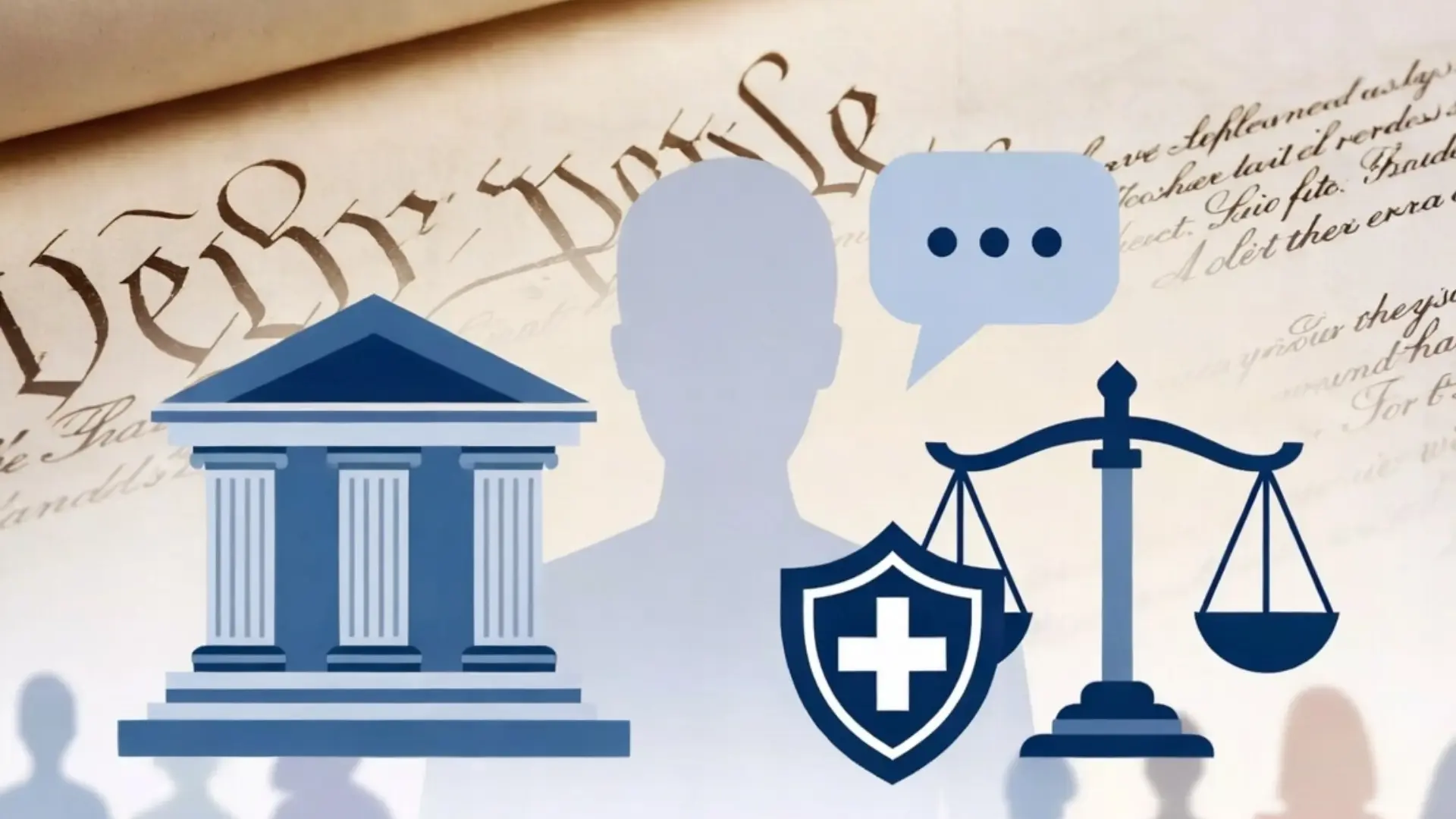
Certain constitutional amendments play a central role in shaping how rights are applied to individuals within the United States, regardless of citizenship status.
These provisions form the legal foundation that courts rely on when deciding cases involving non-citizens.
The First Amendment safeguards freedom of speech and religion for non-citizens as well, although these rights may face limitations in immigration contexts, particularly when national security or specific legal violations are involved.
The Fourth Amendment protects against unreasonable searches and seizures, meaning immigration officers generally need a valid judicial warrant or consent to enter private homes, distinguishing administrative warrants from court-issued ones.
The Fifth Amendment guarantees that no person can be deprived of life, liberty, or property without due process of law, and because it applies to “persons” rather than citizens, courts have extended this protection to non-citizens.
As affirmed in Zadvydas v. Davis (2001), requiring notice and an opportunity to respond in immigration proceedings.
The Fourteenth Amendment ensures equal protection under the law, preventing discrimination based on immigration status, as demonstrated in Plyler v. Doe (1982), which upheld access to public education for undocumented children.
However, in immigration-related contexts, these freedoms may face certain practical limits.
For example, activities tied to national security concerns or specific immigration violations can affect how these rights are applied.
What Rights Do Illegal Immigrants Have Under the Constitution?
Illegal immigrants in the United States are granted several constitutional protections, even without legal status.
While they do not have the full range of rights that citizens enjoy, courts have repeatedly confirmed that undocumented individuals are still protected under key parts of the Constitution.
1. Due Process Rights in Legal Proceedings
Due process rights are a key part of the U.S. legal system and apply to undocumented immigrants as well. Individuals must receive a notice to appear that explains the charges against them.
During this process, they can present evidence and defend against removal. In many cases, they also have the right to appeal if the decision is not in their favor.
These protections help ensure access to legal procedures, even for those without legal status.
2. Protection Against Unlawful Search and Seizure
The Fourth Amendment protects individuals, including undocumented immigrants, from unreasonable searches and seizures.
This means law enforcement, including immigration authorities, generally cannot enter a home without a valid warrant or consent.
These protections apply within the U.S., although enforcement practices may vary, especially near borders.
3. Right to Free Speech and Religion
Undocumented immigrants also have First Amendment protections, including the right to express their opinions and to practice their religion freely.
While these rights exist, they may be limited in certain immigration-related contexts, especially when national security or enforcement priorities are at issue.
4. Access to Courts and Legal Defense
Undocumented immigrants have the right to access the court system and defend themselves during legal proceedings. They can hire a lawyer at their own expense to represent them in immigration court and challenge removal orders.
They also have access to judicial review, which allows higher courts to review decisions made during the process.
Unlike criminal cases, there is no guarantee of a government-provided attorney in immigration proceedings, which can make legal representation more challenging.
What Rights Non-Citizens Do Not Have?
Understanding what protections apply also requires knowing which rights are reserved exclusively for U.S. citizens.
These exclusions are significant and affect how non-citizens can participate in civic and political life.
Non-citizens cannot vote in federal elections. Federal law prohibits undocumented and most non-citizen individuals from voting in elections for federal office, including the President, Senate, and House of Representatives.
Violation of this law can result in criminal charges and deportation.
Non-citizens are also ineligible to hold most federal offices, run for President or Vice President, serve on federal juries, or access most federal public benefit programs.
In criminal proceedings, undocumented individuals do not have the same standing as citizens for bail consideration in certain jurisdictions, and a criminal conviction.
The intersection of criminal charges and immigration consequences is one of the most underestimated risks for undocumented individuals, particularly because the consequences extend well beyond the criminal case itself.
What Limits the Constitutional Rights of Non-Citizens?
Even though constitutional protections extend to non-citizens, those protections are not absolute. U.S. immigration law gives the federal government greater control over areas such as border regulation, enforcement priorities, and removal proceedings.
- Plenary Power Doctrine: Congress has broad authority over immigration law, allowing it to create policies that directly affect non-citizens in ways that typically do not apply to citizens. Courts often show deference to this authority, especially in matters involving entry, removal, green card, and visa regulations.
- National Security Concerns: When national security is involved, the government has the flexibility to impose restrictions. This can include enhanced screening, detention practices, or limitations on certain activities.
- Border Enforcement Rules: Legal protections can be more limited near borders and ports of entry. Enforcement agencies are given expanded authority in these areas, which can affect how searches, questioning, and detentions are carried out.
- Civil Nature of Deportation: Immigration proceedings are classified as civil rather than criminal, which significantly changes how protections are applied. Because of this classification, individuals are not guaranteed the same rights that apply in criminal cases.
Step-by-Step Deportation Process
The removal of non-citizens in the United States follows a structured legal process under federal immigration law. Deportation is treated as a civil matter rather than a criminal case. Understanding this process helps clarify how decisions are made and what steps are involved.
- Arrest or Detention: Immigration authorities, such as ICE, may detain an individual suspected of violating immigration laws. This can happen during enforcement actions, routine checks, or after interaction with local law enforcement.
- Notice to Appear (NTA): A formal document is issued that outlines the charges and begins the legal process. It requires the individual to appear before an immigration court and respond to the allegations.
- Immigration Court Hearing: An immigration judge reviews the case in court. The individual has the opportunity to present evidence, request relief options, and argue against removal based on their circumstances.
- Judge’s Decision: After reviewing the case, the judge determines whether the individual will be removed from the United States or allowed to remain under specific legal protections or relief programs.
- Appeal Process: If the outcome is unfavorable, the decision can be challenged through an appeal. This may involve higher immigration authorities or federal courts, depending on the case details.
Real-World Examples of Constitutional Rights in Action
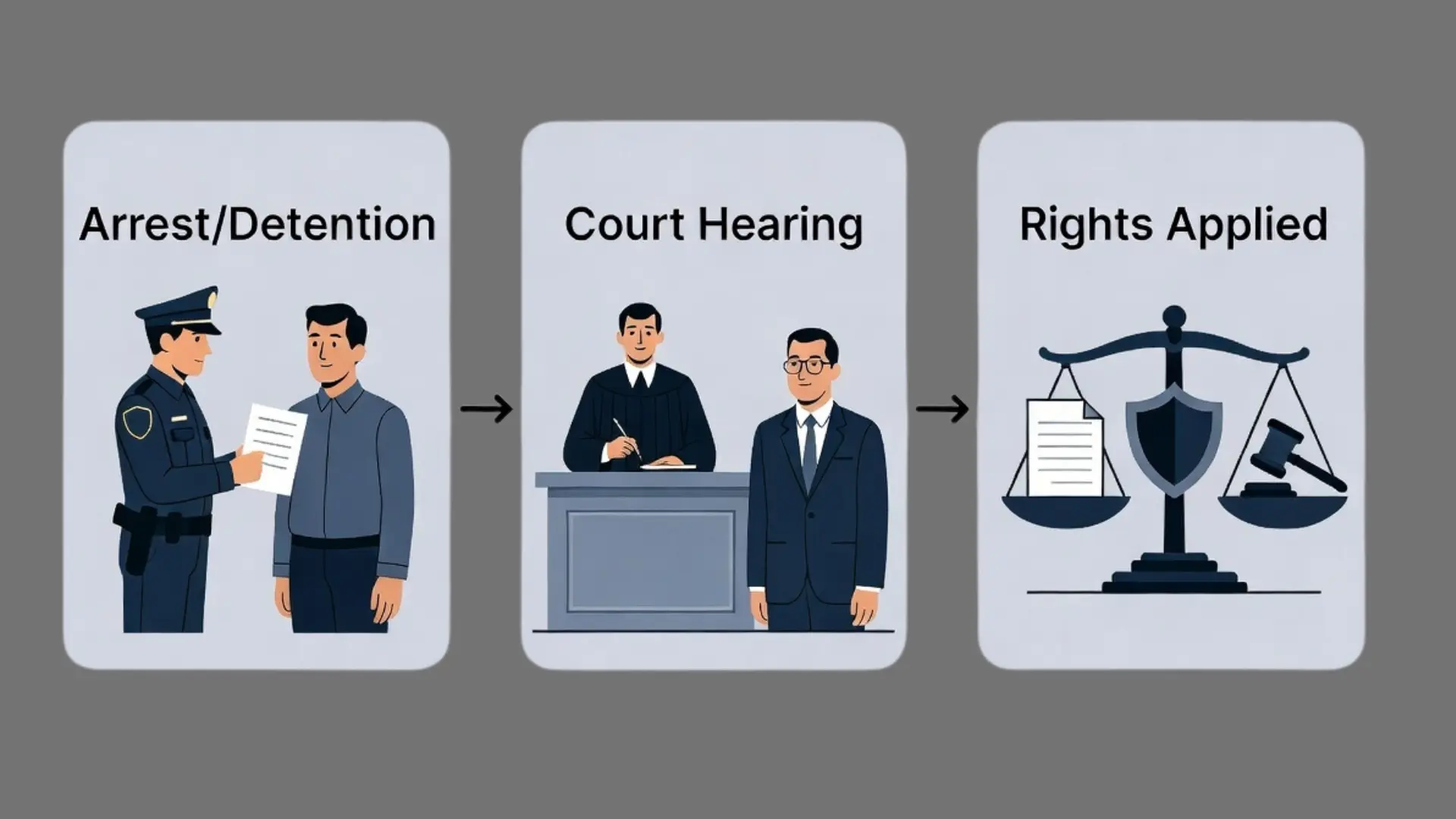
Instead of abstract theory, these real situations show how Constitutional Rights actually work for undocumented immigrants. These practical scenarios connect legal concepts with everyday enforcement and landmark court decisions.
Scenario 1: Facing Deportation in Court
In Pereira v. Sessions (2018), the Supreme Court addressed a situation in which a Notice to Appear (NTA) failed to include essential details, such as the hearing date and time. The Court ruled that such an incomplete notice does not meet legal requirements and violates due process protections.
In practice, this means an NTA must clearly state the time, date, and location of the hearing before proceedings can move forward.
The case is then reviewed by an immigration judge through the official EOIR system, where the individual has an opportunity to respond.
Scenario 2: Interaction with Law Enforcement
In United States v. Martinez-Fuerte (1976) and later rulings, courts clarified the limits of law enforcement authority, especially in immigration-related encounters.
While officers may approach a residence or initiate contact, entry into a private home requires a valid judicial warrant signed by a judge, not just an administrative ICE warrant.
In practice, residents have the right to verify the type of warrant, using guidance from organizations like NILC.
Individuals can refuse access and rely on rights awareness resources such as the ACLU.
Scenario 3: Access to Public Education
In Plyler v. Doe (1982), the Supreme Court addressed whether states could deny public education to children based on immigration status.
The Court ruled that access to K-12 education cannot be denied, reinforcing that such restrictions violate equal protection principles.
In practice, this means children are allowed to enroll in public schools regardless of status.
During enrollment, institutions cannot require proof of immigration status, allowing students to access education without additional legal barriers.
Key Differences Between Expedited and Formal Removal
One of the most consequential distinctions in immigration law is the difference between expedited and formal removal. The process that applies directly determines how many constitutional protections are available.
| Feature | Expedited Removal | Formal Removal Proceedings |
|---|---|---|
| Court Hearing | No hearing before a judge | Full hearing before an immigration judge |
| Process Speed | Very fast | Slower and more detailed |
| Who It Applies To | Recent entrants or border cases | Individuals with longer U.S. presence |
| Right to Appeal | Very limited | Appeals generally allowed |
| Legal Protections | Fewer protections | More due process protections |
What Do The Rights of Non-Citizens Mean in Practice Right Now?
Constitutional rights for non-citizens exist as a legal framework, but the practical reality is more constrained than the framework alone suggests.
ICE arrest rates more than doubled between early 2024 and mid-2025.
Funding for legal representation programs for unaccompanied minors was cut, leaving tens of thousands without counsel.
The Board of Immigration Appeals issued a precedential ruling in late 2025 restricting bond hearings for individuals who entered without inspection.
None of this changes the constitutional baseline. But it does mean that the distance between a right existing on paper and a person being able to exercise it has grown significantly.
Access to an attorney, early awareness of rights, and acting before enforcement escalates remain the most effective tools available.
After working with immigration cases for over a decade, the pattern I see most consistently is this: people who understand their rights before an encounter, even in a basic way, navigate the system with far better outcomes than those who learn them in crisis.
The Constitution provides the foundation, but what you do with it depends heavily on preparation.
Conclusion
The constitutional framework for non-citizen rights has been built over many years of Supreme Court decisions, and it is more protective than most people realize.
The gap between what the law guarantees and what people actually know they’re entitled to is real, and it costs families dearly.
After years of guiding clients through these processes, I can say this clearly: the moment someone knows their rights, really knows them, they stop making the decisions that hurt them most.
Whether it’s opening a door they didn’t have to open, or missing a filing window because they assumed deportation was inevitable, confusion in immigration law is never abstract.
If you or someone you know is navigating an immigration matter, don’t rely on assumptions. the law is more nuanced and more protective than the headlines suggest.
FrequentlyAsked Questions
Do Non-Citizens Have the Right to Remain Silent During Immigration Questioning?
In many situations, individuals can choose not to answer questions about their immigration status, especially when interacting with law enforcement. However, the context of the interaction can affect how this right is applied.
Are Undocumented Immigrants Allowed to Work Legally in The United States?
Work authorization is not automatically granted based on presence alone. Only individuals with approved immigration status or specific permits can legally work, although some may apply for authorization under certain programs.
Can Immigration Authorities Detain Someone Indefinitely?
No, detention is subject to legal limits. Courts have ruled that individuals cannot be held for an unreasonable period without review, and extended detention often requires additional legal justification.