
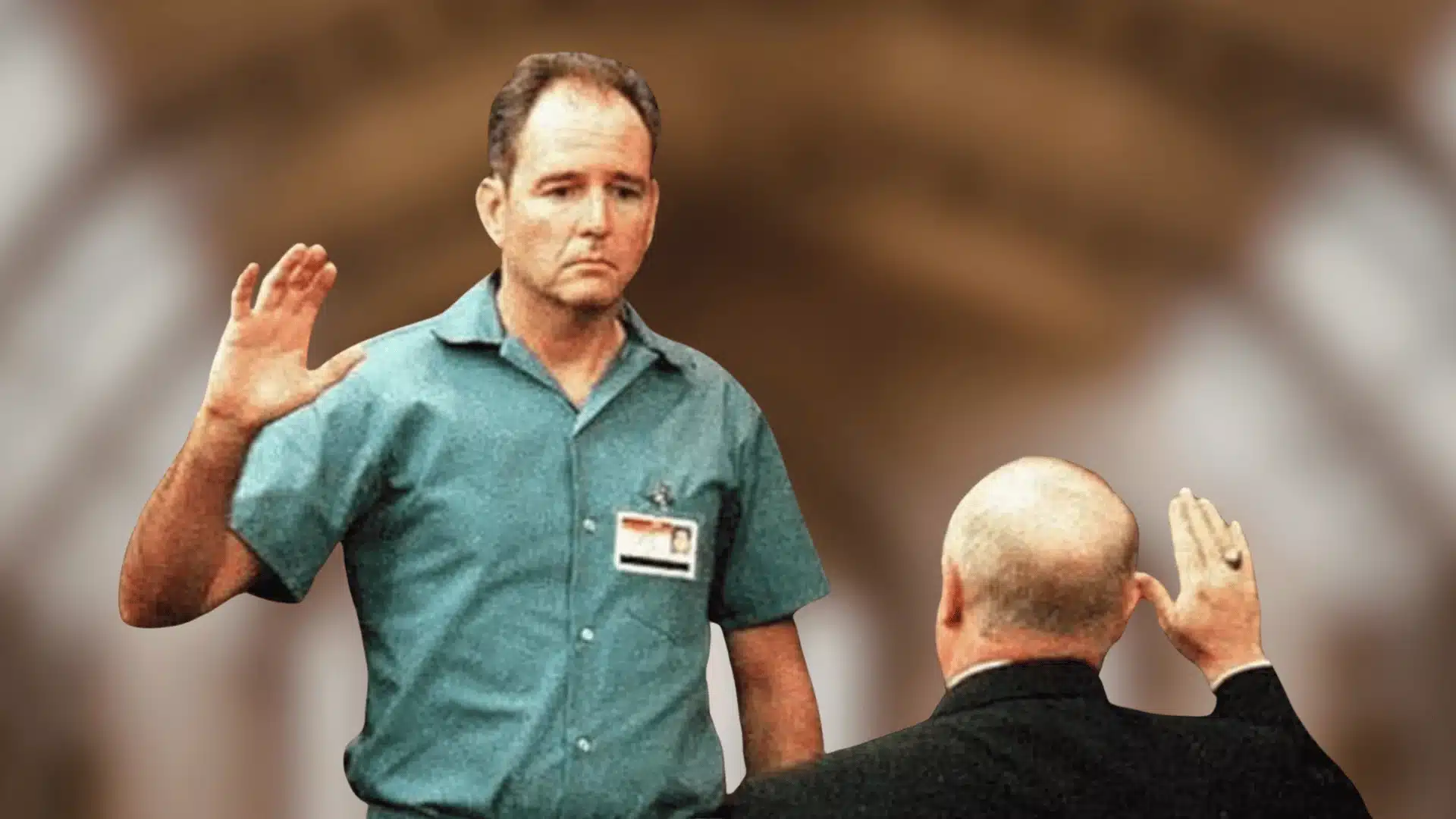
I have sat across from people charged with serious crimes, reviewed evidence files, and listened to explanations for violence that most people never hear outside a trial setting.
But the Gainesville Ripper case, the story of Danny Rolling, is one that stops me for different reasons.
Not because of its brutality alone, but because of how many points along the way something could have changed, and nothing did.
In August 1990, something happened in Gainesville, Florida, that the college town was completely unprepared for. Students fled mid-semester. Parents drove through the night.
And for weeks, no one could say with certainty who was responsible or whether it was over. The name Danny Rolling would not be publicly confirmed for months.
But when it was, the details that emerged painted a picture far more complex than the headlines suggested, one that stretched back years before Gainesville and involved a pattern that investigators had never fully connected.
As a Florida criminal defense attorney, I have followed the legal record of this case closely, and the procedural failures are as instructive as the crimes themselves. Let’s get into the story.
Who Was Danny Rolling?
Daniel “Harold” Rolling was born on May 26, 1954, in Shreveport, Louisiana. His father, James Rolling, was a Shreveport police lieutenant, a detail that carries a particular irony given what his son would eventually become.
The Rolling household was defined by fear. James physically abused his wife and both sons repeatedly, sometimes tying Danny and his younger brother together outside as punishment.
Danny’s mother was hospitalized for a nervous breakdown when Danny was in third grade.
His cousin later told the South Florida Sun-Sentinel that the abuse was completely unpredictable; it could switch on and off with no warning.
Teachers described Danny as having an inferiority complex with poor impulse control. He dropped out of high school, joined the Air Force briefly, married young, and cycled through jobs and petty crime.
His adult record before 1990 included burglary and robbery convictions, the kind of escalating pattern that, in my experience, rarely resolves without intervention and rarely stops on its own.
By his own admission at trial, voyeuristic behavior started early, and his fantasies became increasingly violent through his teenage years.
Just months before arriving in Florida, Rolling shot his father in the face and stomach in what appeared to be a murder attempt. His father survived, losing sight in one eye. Rolling fled Louisiana shortly after.
The 1990 Gainesville Murders
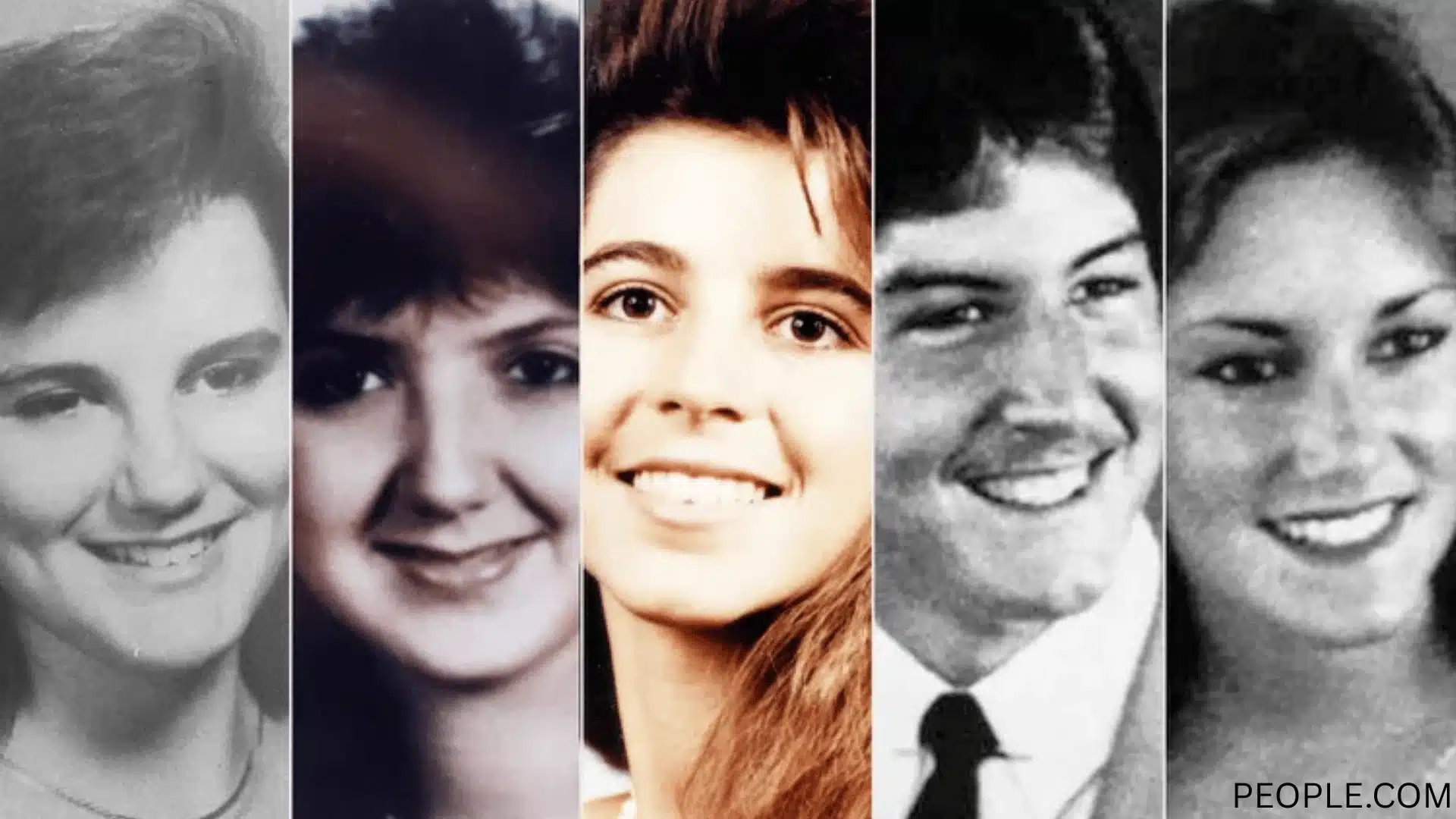
Image Source-People.com
Rolling arrived in Gainesville in mid-August 1990 as the University of Florida’s fall semester began. He was living at a nearby campsite in the woods.
Between August 24 and August 27, he killed five people across four locations near campus.
His victims were Sonja Larson (18) and Christina Powell (17), roommates killed in their shared apartment; Christa Hoyt (18), a Santa Fe College student whose body was found decapitated; and Tracy Paules (23) and Manuel Taboada (23), friends sharing a nearby unit.
What distinguished these crime scenes, and what investigators noted immediately, was their deliberateness.
Rolling posed his victims’ bodies and made efforts to clean and stage each scene. That level of choreography in a crime scene is not the hallmark of a purely impulsive offender.
It speaks to planning, however disorganized the overall criminal profile may otherwise appear.
The community response was immediate. Students left campus in large numbers. The governor deployed FDLE agents and state troopers. Residents who stayed double-locked their doors and stopped trusting strangers.
One Gainesville local who lived through it described those weeks as a “fearful time” where people assumed the killer could be anywhere.
Why Was He Called “The Gainesville Ripper”?
The nickname came from the press, not law enforcement. Reporters drew a deliberate parallel to Jack the Ripper based on the mutilation and posing of Rolling’s victims.
The name spread through national television coverage within days.
Locally, the term was and still is largely rejected. Gainesville residents have long preferred “the Gainesville student murders”, keeping focus on who was lost rather than who did it.
In my view, that distinction is worth taking seriously. The way a case gets named shapes how it gets remembered, and in this case, the community has consistently pushed back against a framing that centers the killer.
The Investigation and Arrest
The early investigation took a costly wrong turn. Police initially focused on Edward Humphrey, a troubled 18-year-old who lived near campus.
He was held for weeks as a person of interest based on behavioral concerns, not evidence.
He was completely innocent, and his prolonged treatment as a suspect was one of the more troubling aspects of the case.
From a constitutional standpoint, the Humphrey situation raises real Fourth Amendment concerns.
Under Florida v. J.L (2000) and the broader framework established in Terry v. Ohio, reasonable suspicion must be grounded in articulable facts, not proximity, eccentricity, or public perception.
Humphrey lacked the evidentiary markers that justify extended detention as a suspect.
That an innocent person was scrutinized for weeks while a dangerous offender remained free is a systemic failure, not just an investigative misstep.
The real break came from a Louisiana woman named Cindy Juracich.
She had heard a radio report about the Gainesville murders while driving through the Florida Panhandle and recognized similarities to an unsolved homicide she connected to Rolling.
In November 1990, she called Crime Stoppers. “It would not let me rest,” she later said.
Rolling was already in custody at that point, arrested September 7, 1990, for robbing a supermarket in Ocala, 40 miles south of Gainesville, just ten days after the last two victims were found.
DNA testing in 1991 confirmed his involvement in the Gainesville killings and linked him to the earlier Louisiana homicide as well.
This sequence, civilian tip, then DNA confirmation, was not unusual for the era.
Forensic DNA profiling had only recently become admissible in Florida courts, and its application in the Rolling case was among the earliest high-profile uses of the technology in a capital context in the state.
The Confession and Trial
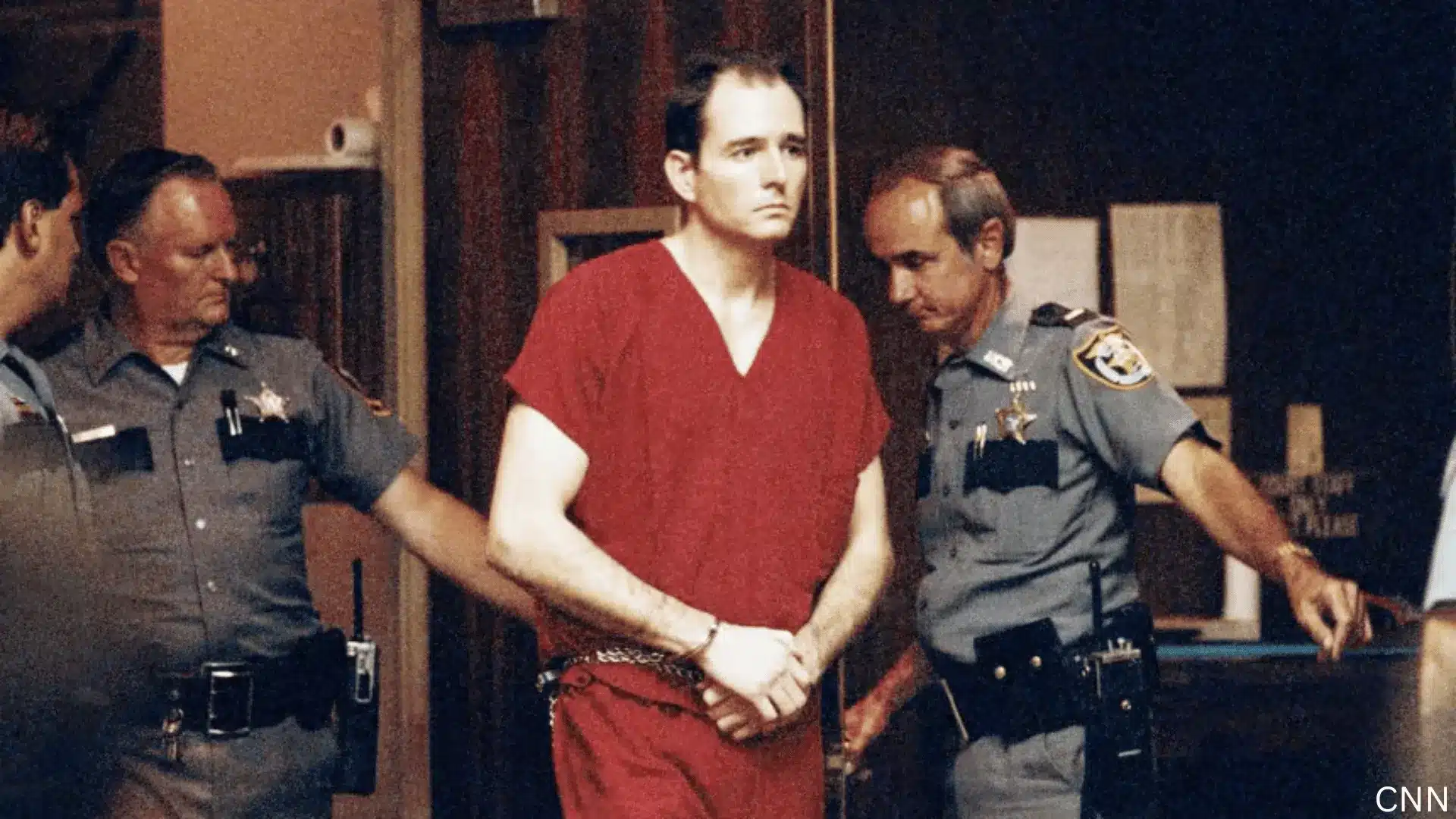
Image Source:CNN US
Rolling’s trial opened in February 1994. Before jury selection finished, he entered guilty pleas to all five Gainesville murder counts. The timing of that plea matters procedurally.
Entering a guilty plea before a jury is seated ends the selection process and moves the case directly to the penalty phase.
In capital cases, this maneuver can carry strategic weight; it removes the question of guilt from the jury’s hands entirely and forces the focus onto mitigation.
Whether that was a deliberate legal strategy or Rolling’s own decision is a detail the public record does not fully resolve, but it is not an uncommon choice when the evidence is overwhelming, and defense counsel is managing what comes next.
I have sat with clients in similar positions, with overwhelming evidence and no viable defense on the merits, and the conversation almost always turns to what a jury will hear at sentencing, not whether they will convict.
His confession was specific; he directed investigators to evidence buried near his campsite: the Ka-Bar knife used in the murders, jewelry taken from victims, and tools used to break into apartments.
He also admitted to a triple homicide committed in Shreveport, Louisiana, in November 1989, bringing his total confirmed victim count to eight.
Before sentencing, Rolling told the court: “I’ve been running from first one thing and then another all my life, whether from problems at home, or with the law, or from myself.”
That framing, violence as something that happened to the defendant rather than something they chose, is not uncommon in penalty phase closing statements.
Courts do not accept it as a substitute for culpability, and neither should the record.
In my experience in Florida courtrooms, that framing, violence as something that happened to the defendant rather than something they chose, is not uncommon. Courts do not accept it, and neither should the record.
He was sentenced to death on all five counts.
A Florida judge separately ruled that profits from a book Rolling co-wrote with true crime writer Sondra London would be seized by the state under Florida’s Son of Sam law, codified in Florida Statute § 944.512, which bars convicted criminals from profiting off accounts of their crimes.
Rolling was executed by lethal injection at Florida State Prison on October 25, 2006.
What Motivated Danny Rolling?
Rolling’s explanation at trial was a mix of claimed childhood trauma, a self-diagnosis of multiple personalities, and a stated obsession with Ted Bundy, who had been executed in Florida less than two years before the Gainesville spree.
Rolling reportedly wanted to surpass Bundy’s notoriety. Clinical psychologist Harry Krop, who examined Rolling in January 1991, found no evidence of multiple personalities.
What he did find was significant underlying anger and a personality marked by violent mood swings, impulsive behavior, narcissism, and antisocial tendencies.
Rolling’s girlfriend testified that he had avoided therapy because, as he put it, “if my dad finds out what I said, he’ll kill me.” These are documented facts, not narrative embellishment.
Forensic psychologists consistently flag them in this case, not as justification for what Rolling did, but as part of the clinical picture that sentencing courts are required to consider under Eddings v. Oklahoma, 455 U.S. 104 (1982), which established that mitigating evidence of a difficult background must be weighed at capital sentencing, even when it does not excuse the crime.
The convergence of that background with untreated mental illness and an escalating criminal record is what separates Rolling’s trajectory from others who experienced difficult childhoods without turning violent.
Chronic, unpredictable abuse, the kind documented in the Rolling household, has measurable effects on impulse regulation and threat response.
That is not a defense. But it is part of the factual record of how someone arrives at the choices Rolling made.
Impact on Gainesville and Beyond
The murders directly changed campus safety policy, better lighting, updated dormitory access controls, and expanded security patrols at UF and Santa Fe College.
More significantly, they pushed a long-overdue conversation about off-campus student housing, which had existed entirely outside campus security infrastructure before 1990.
From a legal standpoint, the case also quietly influenced how Florida institutions think about premises liability and duty of care for students living off campus.
While no landmark civil ruling emerged directly from the Gainesville murders, the university’s response, documented policy changes, and infrastructure investment, reflect a recognition that the legal landscape around student safety had shifted.
The case also had an unexpected cultural reach. In 1994, screenwriter Kevin Williamson watched an ABC News documentary about the Gainesville Ripper while house-sitting alone.
He noticed an open window that he didn’t remember opening. That moment became the emotional seed for the screenplay that would eventually become Scream (1996), one of the most commercially successful horror franchises ever.
A mural on 34th Street in Gainesville honors the five victims by name. The community has spent more than three decades making sure that is what gets remembered.
Common Myths and Misconceptions
The case includes several widely misunderstood points that become clearer when broken down against the actual facts.
| Claim | Reality |
|---|---|
| Rolling was quickly identified as the killer | He was not, and the investigation stalled while an innocent man was treated as the main suspect |
| The case was solved through active investigation | The breakthrough came from a civilian tip, not forensic work or ongoing police efforts |
| Rolling acted purely on impulse | Evidence shows both planning and impulsive behavior, including staged scenes and attempts to destroy evidence |
| Scream is loosely inspired | The connection is direct, with the creator citing a documentary based on the case as inspiration |
| Edward Humphrey was a minor figure | He was publicly suspected for weeks, causing lasting personal and reputational damage |
Conclusion
The Gainesville Ripper case reshaped how Florida universities approached student safety, exposed how easily crimes across state lines go unconnected, and seeded one of the most recognized franchises in horror history, all without most people knowing the origin.
Danny Rolling’s name is well-known in true crime circles. What matters more is that Sonja Larson, Christina Powell, Christa Hoyt, Tracy Paules, and Manuel Taboada are not reduced to a footnote in his story.
If this case raised questions for you about criminal law, how charges are built, or how Florida’s legal system handles capital cases, feel free to explore the other articles on this site.
And if you are dealing with a criminal charge in Florida and want to understand your rights, speaking with a defense attorney early makes a real difference.
If you want to better understand how cases like the Gainesville Ripper are investigated and prosecuted, taking time to study similar cases can offer valuable insight into how the system actually works.
Frequently Asked Questions
Was Danny Rolling Ever on Death Row with Other Famous Killers?
Yes. Rolling spent 12 years on death row at Florida State Prison, which has housed some of the most high-profile capital cases in US history.
During that time, he sold paintings and co-authored a book, the profits of which were ultimately seized by the state.
Did Danny Rolling Show Remorse?
His courtroom statement suggested awareness of his own patterns, “running from first one thing and then another”, but fell short of genuine accountability.
He also wrote and spoke publicly about the crimes while on death row in ways that prioritized his own narrative, which courts and the state of Florida pushed back against directly through the Son of Sam ruling.
Why Did It Take So Long to Connect Rolling to The Shreveport Murders?
The Shreveport and Gainesville killings were in different states with no formal task force connecting them.
The similarities, posing of victims, tape residue, and vinegar used to clean scenes, only became visible when a Florida investigator traveled to Louisiana after the civilian tip named Rolling.
Cross-jurisdictional gaps in criminal investigation were a known systemic problem in this era.
How Did the Gainesville Murders Change Florida Law?
Beyond campus safety policy updates, the case contributed to Florida courts applying the Son of Sam statute more aggressively.
The ruling against Rolling and Sondra London’s book deal set a precedent for how Florida handles convicted killers seeking to profit from their crimes through media deals or publishing.
Was Edward Humphrey Ever Compensated for Being Wrongly Suspected?
The public record does not reflect a formal civil settlement or court judgment arising from Humphrey’s treatment as a suspect.
His situation did not produce the kind of legal remedy that a provable wrongful arrest might trigger, in part because he was never formally arrested for the murders.
He was held on a separate assault charge and investigated in connection with the student killings.
The distinction between being formally charged and being publicly named as a person of interest is significant, and it is one that the legal system does not always handle cleanly.