

Ever noticed people say DWI and DUI like they mean the same thing? That can be confusing, especially when different states use these terms in different ways.
The wording on a charge can have a bigger impact than most people realize, making it worth understanding what each term actually means.
When I first looked into DWI vs DUI, I assumed they were interchangeable everywhere. It didn’t take long to realize that the rules change from state to state.
Some states use a single term, while others treat them as separate offenses with distinct legal meanings and consequences.
If you’re trying to make sense of the terminology or understand what applies where you live, this guide explains the key differences in a clear, straightforward way.
What Do DUI and DWI Actually Stand For?
DUI stands for Driving Under the Influence, while DWI stands for Driving While Intoxicated or Driving While Impaired, depending on the state.
Both refer to operating a vehicle when alcohol, drugs, or a combination of substances affects your ability to drive safely.
These charges aren’t limited to alcohol. They can also apply to illegal drugs, prescription medications, and even over-the-counter medicines if they impair your driving.
For example, driving after taking a sleep aid or opioid pain medication could result in a DUI or DWI charge.
In states that distinguish between the two, DUI usually covers a broader range of impairment, while DWI often refers to a higher or measurable level of intoxication, such as a blood alcohol concentration (BAC) at or above the legal limit.
That distinction can determine which charge a prosecutor files and the penalties that may follow.
Because every state writes its impaired driving laws differently, there isn’t a single nationwide definition of DUI or DWI.
DWI vs DUI: Are They the Same Thing?
The short answer is no, but the exact difference depends on how your state defines impaired driving offenses.
States generally follow one of three approaches: they use only DUI, only DWI, or both terms with different legal meanings.
| State Approach | What it Means | Example States |
|---|---|---|
| DUI Only | One impaired driving charge | California, Florida |
| DWI Only | One impaired driving charge | New Jersey, Minnesota |
| DWI More Serious | Higher BAC or confirmed intoxication | New York, Texas |
| DUI More Serious | Higher BAC or adult-driver charge | Maryland |
| DUI for Underage Drivers | Any detectable alcohol under 21 | Texas, Arkansas |
In states that use both terms, one offense often applies to a higher BAC or greater impairment, while the other may cover lower impairment levels or specific groups of drivers, such as those under 21.
The exact definitions vary by state. That’s why knowing how your state defines these terms matters. The label on the charge can affect the penalties, legal process, and your driving record.
Other DUI-Related Acronyms You Should Know
DUI and DWI aren’t the only impaired driving terms used in the U.S. Several states use different acronyms based on how their laws define impaired driving.
While the names vary, they all refer to offenses involving operating or driving a vehicle while impaired.
- OWI (Operating While Intoxicated): Used in Iowa, Michigan, and Wisconsin. “Operating” is broader than driving, so a person may be charged even if the vehicle is stationary with the engine running, as long as they’re in physical control.
- OUI (Operating Under the Influence): Used in Massachusetts and Maine. Like OWI, it applies to operating or controlling a vehicle while impaired, not just driving it.
- DWAI (Driving While Ability Impaired): Used in New York and Colorado. It generally covers a lower level of impairment than DUI or DWI. In New York, it commonly applies when a driver’s BAC is between 0.05% and 0.07%.
- DUII / OVI: Oregon uses DUII (Driving Under the Influence of Intoxicants), while Ohio uses OVI (Operating a Vehicle Impaired), which can apply to both motorized and certain non-motorized vehicles.
Although the terminology varies from state to state, impaired driving remains a criminal offense with serious legal consequences.
If you’ve ever wondered when a routine traffic stop becomes something more serious, understanding the difference between Detained vs Arrested helps explain the legal threshold officers must meet before a stop escalates into an arrest.
How Can BAC Affect a DUI or DWI Charge?

BAC (Blood Alcohol Concentration) measures the percentage of alcohol in your bloodstream.
It is the primary chemical measure used to determine legal intoxication. In states that distinguish between DUI and DWI, BAC can also influence which charge is filed.
For most drivers, 0.08% BAC is the legal limit in every state except Utah, which lowered its limit to 0.05% in 2018. According to the NHTSA, Utah saw a measurable decline in fatal alcohol-related crashes after the change, though no other state has adopted the same limit.
Some drivers are held to stricter standards:
- Commercial Drivers (CDL holders): The federal BAC limit is 0.04%. A first conviction typically results in a one-year CDL disqualification, while a second can lead to a lifetime disqualification.
- Drivers under 21: Every state has zero-tolerance laws, with allowable BAC limits generally ranging from 0.00% to 0.02%.
In states that use both terms, BAC often determines whether a driver is charged with DUI or DWI. A BAC of 0.08% or higher may lead to a DWI, while a lower BAC combined with clear signs of impairment may result in a DUI.
Can you be charged with a BAC below 0.08%? Yes. In many states, drivers can still face DUI or DWI charges if officers have evidence that alcohol or drugs impaired their ability to drive, even when their BAC is below the legal limit.
Refusing a chemical test can trigger automatic penalties under implied consent laws, separate from the DUI or DWI charge itself.
Understanding what probable cause is helps explain when an officer can lawfully stop a driver and request that the driver submit to these tests.
What Penalties Can You Expect for a DUI or DWI?
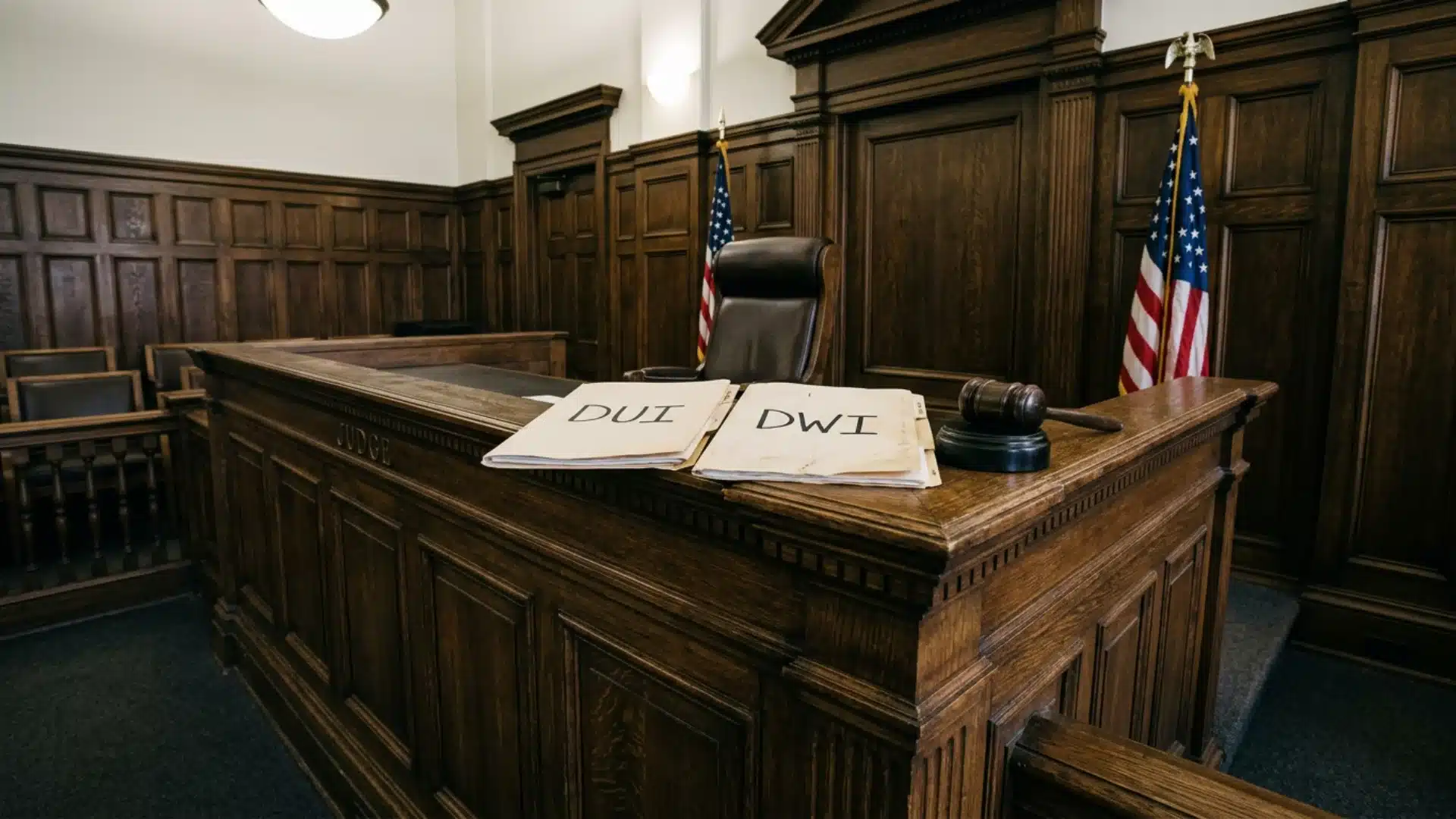
While DUI and DWI laws differ by state, most penalties follow a similar structure.
The exact consequences depend on factors such as your BAC, whether it’s a first or repeat offense, and whether the incident involved injuries, property damage, or a minor passenger.
1. Financial Penalties and License Suspension
A first DUI or DWI conviction often results in fines ranging from a few hundred dollars to more than $2,000, plus court costs, administrative fees, and other surcharges.
Most states also suspend driving privileges for 90 days to one year after a first offense.
Repeat convictions usually bring larger fines, longer license suspensions, and, in some states, permanent license revocation.
2. Jail Time, Ignition Interlocks, and Court Requirements
Many states impose mandatory jail time, even for first-time offenders, although probation may replace or reduce incarceration in some cases.
Courts also commonly require an ignition interlock device (IID), which prevents a vehicle from starting until the driver passes a breath test.
In addition, completing an alcohol education or treatment program is a standard requirement after many DUI or DWI convictions.
3. Long-Term Consequences of a Conviction
The effects of a DUI or DWI often continue long after court proceedings end.
Insurance premiums typically increase, and the conviction may remain on your driving or criminal record for years.
Repeat offenses carry much harsher consequences, with many states treating a third offense as a felony, potentially leading to multi-year prison sentences and lasting criminal penalties.
For a closer look at how BAC levels influence charges and the penalties that follow, see Legal Alcohol Limit.
Disclaimer:This Section Covers General Information About Impaired Driving Penalties. Specific Penalties Vary by State, Jurisdiction, and the Facts of Each Case. This is Not Legal Advice. If You are Facing a Charge, Consult a Licensed Attorney Before Taking Action.
Possible Defenses in DWI or DUI Cases
Possible defenses in DWI or DUI cases depend on what happened before, during, and after the arrest.
A defense is not about ignoring the charge. It is about checking whether the law was followed and whether the evidence is reliable.
- The traffic stop was not legal: Police usually need a valid reason to stop the vehicle.
- Testing was not done correctly: Breath, blood, or urine tests must follow proper steps.
- The device was not maintained: A breath test machine may be questioned if it was not checked or calibrated.
- The officer made mistakes: Errors in reports, instructions, or procedure can matter.
- Medical issues can affect the results: some health conditions may alter signs of impairment or test results.
- The person was not actually impaired: Driving behavior and evidence may not prove impairment.
Defense options depend on the facts, evidence, and state law.
When to Talk to a Lawyer After a DUI or DWI Charge?
Many people assume a first-time DUI or DWI is minor enough to handle without legal help or that pleading guilty is the quickest way to move on.
In many cases, neither is true. The decisions made early in a case, including how evidence was collected and whether the traffic stop was lawful, can significantly affect the outcome.
- The Details of Your Charge Matter: A DUI and a DWI don’t always carry the same legal meaning. Your state’s laws, BAC level, prior offenses, whether you refused chemical testing, and the circumstances of the stop all play a role in the defense options available.
- The Evidence Can Be Challenged: A charge is not a conviction. Field sobriety tests, breathalyzer results, blood test procedures, and the legality of the traffic stop can all be challenged. Understanding DUI Checkpoint Legal may also help determine whether the stop and the evidence obtained were lawful.
- An Accident Can Lead to Additional Legal Claims: If the incident resulted in injuries or property damage, you may also face civil claims alongside the criminal case. Because these proceedings are separate and can move forward at the same time, getting legal advice early is often the best way to protect your rights.
Seeking legal guidance soon after a DUI or DWI charge can help you understand your options and make informed decisions before the case progresses.
Conclusion
When I first started comparing DWI vs DUI, I thought the difference would be straightforward.
Instead, I found that the legal consequences can vary widely depending on the charge and the circumstances of the case. Some states use the terms interchangeably, while others assign them different legal meanings and penalties.
Regardless of the label, a DUI or DWI charge can have lasting consequences, from license suspension and higher insurance costs to a permanent criminal record.
Knowing the difference before you ever need it can help you make more informed decisions if you or someone close to you is ever charged.
Knowing what the charge means, how BAC affects it, and what your rights are can help you make better decisions if you ever have to deal with an impaired driving case.
Frequently Asked Questions
Can a DWI or DUI Charge Be Reduced or Dismissed?
Yes, in some cases. A lawyer may challenge the traffic stop, BAC test, field sobriety tests, or how evidence was handled. If the prosecution cannot prove the charge, it may be reduced or dismissed.
Does a DUI or DWI show up on a Background Check?
Yes. A DUI or DWI conviction usually appears on criminal background checks and driving records. How long it stays visible depends on state law, the type of charge, and whether expungement is available.
Can You Get a DUI for Prescription Medication?
Yes. You can be charged with DUI or DWI if prescription medication impairs your ability to drive safely. The issue is impairment, not whether the medication was legally prescribed.
If I Were Charged in One State, Does It Count in Another State?
Usually, yes. Many states share DUI and DWI records through interstate agreements. An out-of-state conviction may count as a prior offense and lead to harsher penalties for a new charge.