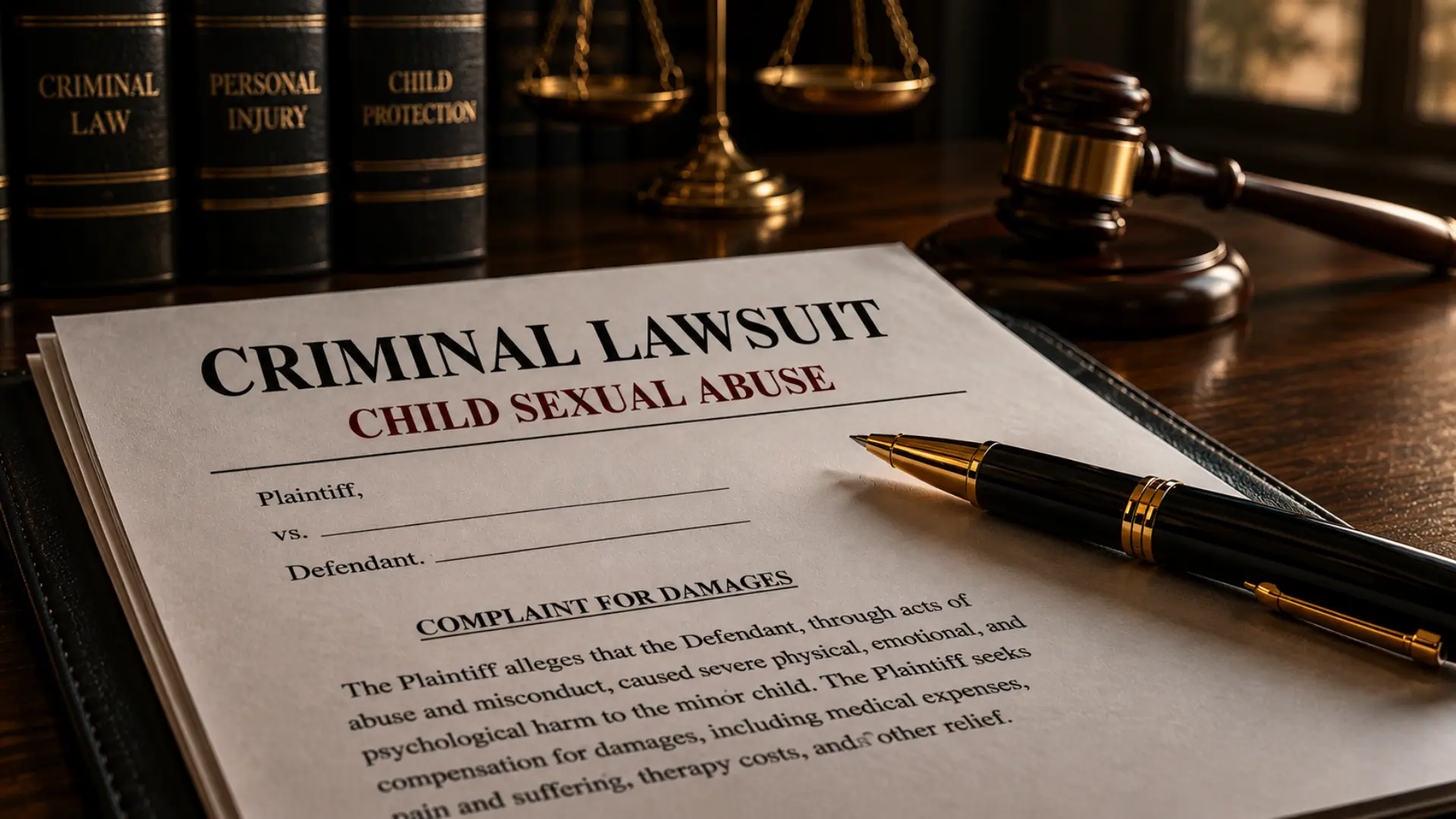
Finding the right child sexual abuse lawyer can feel overwhelming when a survivor or family is already dealing with fear, confusion, and pain.
A lawyer in this area helps explain legal rights, review what happened, collect evidence, and identify who may be responsible.
In many cases, a civil claim can be filed against the abuser and against an institution, such as a school, church, youth group, or care facility, if it failed to protect a child.
A child abuse attorney can also explain filing deadlines, compensation options, and the difference between a civil lawsuit and a criminal case.
This guide explains how these claims work and when legal help may be needed for survivors and families seeking accountability and support.
What Does a Child Sexual Abuse Lawyer Actually Do?
A child sexual abuse lawyer helps survivors and families understand their legal rights after abuse.
The lawyer reviews what happened, explains whether a civil claim may be possible, and gathers evidence such as reports, records, messages, witness statements, and past complaints.
The lawyer may also look at whether an institution, such as a school, church, youth program, foster care agency, or care facility, failed to protect the child.
In a civil case, the goal is usually to seek compensation for therapy, medical care, emotional harm, pain, suffering, and other losses.
A child abuse attorney also handles deadlines, paperwork, negotiations, and court steps, so survivors can focus on healing and support.
Types of Legal Claims Related to Childhood Sexual Abuse
Childhood sexual abuse can give rise to a variety of criminal charges, depending on the facts of the case and the laws of the jurisdiction.
- Civil claim against the abuser: A survivor may file a civil claim against the person who committed the abuse to seek compensation for emotional harm, therapy costs, medical needs, and other losses.
- Institutional negligence claim: Schools, churches, youth groups, foster care agencies, or care facilities may be responsible if they ignored warning signs, failed to act, or allowed unsafe access to children.
- Failure to report claim: Some cases involve adults or organizations that had a legal duty to report suspected abuse but failed to contact the proper authorities.
- Negligent hiring or supervision claim: An institution may face a claim if it hired, retained, or supervised someone carelessly, especially when past complaints or red flags were known.
- Criminal case connection: A criminal case is handled by prosecutors, not survivors, but the evidence or outcome may still affect a related civil claim.
What Survivors Can Recover in a Civil Case
A civil lawsuit against an abuser or liable institution focuses on financial compensation for the harm the survivor has experienced. In personal injury cases involving childhood sexual abuse, damages may include:
- Medical and therapy costs: Compensation for past and ongoing mental health treatment, counseling, psychiatric care, and any related medical expenses.
- Lost income and earning capacity: Damages for wages lost due to the effects of the abuse, as well as reduced earning ability over time where the harm has affected the survivor’s career or employment.
- Pain and suffering: Compensation for the physical and emotional distress caused by the abuse, including anxiety, depression, post-traumatic stress disorder, and other documented psychological harm.
- Restitution from institutional defendants: When schools, churches, employers, or youth organizations share liability, survivors may recover directly from those institutions in addition to or instead of the individual abuser.
- Punitive damages: In cases where the defendant’s conduct was especially egregious or where an institution deliberately concealed abuse, courts may award additional damages to punish that behavior.
According to RAINN, a child is identified as a victim of sexual abuse every nine minutes in the United States. The long-term impact of that abuse is well-documented. Survivors are entitled to seek compensation that reflects the full scope of those harms, not just the immediate ones.
Who Can Be Held Liable in a Child Sexual Abuse Case?
In a child sexual abuse case, liability may extend beyond the person who committed the abuse. A child sexual abuse lawyer may review whether a school, church, daycare, youth program, foster care agency, medical facility, or employer failed to protect the child.
These organizations may be responsible if they ignored complaints, hired someone without proper checks, failed to supervise staff, or allowed unsafe contact with children.
In some cases, supervisors, administrators, caregivers, or mandatory reporters may also be involved if they knew about warning signs and did nothing.
Every case depends on the facts, evidence, and state law, so a child abuse attorney can help identify all responsible parties.
How Do Civil and Criminal Claims Differ?
Survivors often have questions about how criminal proceedings relate to civil lawsuits. While both may arise from the same abuse, they are separate legal processes that can move forward independently of one another.
| Criminal investigation/case | Civil claim |
|---|---|
| The prosecutor brings charges on behalf of the state | Survivor brings the claim as the plaintiff |
| Survivor typically participates as a witness | Survivor controls the lawsuit and legal strategy |
| Requires proof beyond a reasonable doubt | Requires proof by a preponderance of the evidence |
| May result in prison time, probation, treatment requirements, or sex offender registration | Seeks financial compensation for the survivor’s harm |
| Focuses on punishment and public safety | Focuses on accountability and compensation |
| A conviction can support a civil case | Can proceed even without charges, after an acquittal, or when the perpetrator is deceased, if other liable parties remain |
A criminal conviction can strengthen a civil lawsuit, but it is not a prerequisite. Survivors may still pursue civil claims even when prosecutors decline to file charges or a criminal case does not result in a conviction.
For more context on how personal injury settlement amounts work in civil cases, this overview of personal injury settlement amounts explains how courts and attorneys typically approach damages calculations.
Criminal Investigation and Prosecution: What the Process Looks Like
Understanding the general sequence of a criminal child sexual abuse case can help victims, families, and witnesses know what to expect. While procedures vary by jurisdiction, most cases follow a similar path:
- Reporting the abuse: A report is made to law enforcement, child protective services, or another authorized agency. Reports may come from victims, family members, mandatory reporters, or other witnesses.
- Criminal investigation: Law enforcement officers and investigators gather evidence, conduct interviews, review records, collect physical or digital evidence, and work with forensic specialists when appropriate.
- Prosecutorial review: Prosecutors evaluate the available evidence to determine whether criminal charges can be supported and which offenses to file.
- Filing of criminal charges: If sufficient evidence exists, formal charges are filed against the accused. The defendant is then required to appear before the court and respond to the allegations.
- Pretrial proceedings: The parties engage in motion practice, review of evidence, witness preparation, and other legal matters. Courts may address issues involving the admissibility of evidence, witness testimony, and procedural matters.
- Plea negotiations or trial: Some cases are resolved through plea agreements, while others proceed to trial. At trial, prosecutors must prove the defendant’s guilt beyond a reasonable doubt.
- Sentencing and post-conviction proceedings: If the defendant is convicted, the court imposes a sentence that may include imprisonment, probation, fines, treatment requirements, and sex offender registration. Appeals or other post-conviction proceedings may follow.
For survivors also dealing with broader family law questions, understanding types of child custody can be relevant where abuse intersects with custody or guardianship proceedings.
Qualities to Look for in a Child Sexual Abuse Attorney
Not every criminal defense lawyer has experience handling child sexual abuse allegations. When evaluating attorneys, consider the following:
- Relevant experience: Look for an attorney who regularly handles child sexual abuse and other serious felony cases.
- Trial skills: Choose someone with substantial courtroom and jury trial experience.
- Forensic knowledge: The attorney should understand forensic interviews, digital evidence, and expert testimony.
- Clear communication: Legal strategies, risks, and case developments should be explained in plain language.
- Privacy protections: A qualified attorney should take steps to protect confidential and sensitive information.
- Investigative resources: Strong defense teams often work with investigators and forensic experts.
- Responsiveness: Your attorney should be accessible, prepared, and willing to answer questions.
What Colorado Survivors Need to Know

Colorado has made significant changes to its laws governing the prosecution of child sexual abuse offenses.
In recent years, the state has expanded the ability of prosecutors to pursue charges in certain cases involving sexual offenses against children.
However, the applicable statute of limitations depends on several factors, including the specific offense charged, the age of the victim, and when the alleged conduct occurred.
Some serious sexual offenses involving children may be prosecuted at any time (no statute of limitations), while other offenses remain subject to statutory filing deadlines.
Colorado law also provides certain exceptions and extensions that can affect when charges may be brought (e.g., DNA evidence exceptions).
Because these cases are highly fact-specific, several issues commonly arise:
- The type of offense matters: Different crimes carry different limitation periods. Serious felony “sex offenses against a child” (as defined in C.R.S. § 18-3-411 ) generally have no time limit.
- The victim’s age may affect deadlines: Certain statutes extend (or eliminate) prosecution timelines for offenses involving minors.
- New evidence can be significant : DNA evidence, witness statements, and other evidence may impact a prosecutor’s ability to proceed (including tolling or removing limitations in some cases).
- Law changes can affect older cases: Amendments to criminal statutes may influence how limitation periods are calculated. Key reference: C.R.S. § 16-5-401 (Limitation for commencing criminal proceedings)
Note : This section provides general information about Colorado law and is not legal advice . Criminal statutes and procedures can change, and the outcome of any case depends on its specific facts and circumstances.
When Should Survivors Contact a Child Abuse Attorney?
Survivors should contact a child abuse attorney as soon as they feel ready to ask questions about their rights. Early legal help can protect evidence, locate records, identify witnesses, and explain whether a civil claim may be possible.
A lawyer can also review whether an institution, such as a school, church, daycare, youth group, or care facility, failed to protect the child.
Survivors do not always need a criminal conviction before seeking compensation in a civil case. State deadlines can also affect how much time someone has to file.
Speaking with a lawyer early can help survivors understand options, avoid mistakes, and make informed choices with privacy and support.
Conclusion
Child sexual abuse cases require careful legal guidance, privacy, and a clear understanding of both civil and criminal processes.
Survivors may have options even when criminal charges are not filed, because a civil claim can focus on compensation and accountability.
A child sexual abuse lawyer can review evidence, identify responsible people or institutions, and explain deadlines under state law.
The right legal support can also help families avoid confusion during a painful time and make decisions with greater confidence.
If abuse has affected you or someone you love, speaking with a child abuse attorney can be an important step toward answers, recovery, and holding responsible parties accountable.
Frequently Asked Questions
Can a Survivor File a Civil Lawsuit Even if the Abuser Was Never Convicted?
Yes. Civil claims operate under a lower burden of proof than criminal cases. A survivor does not need a criminal conviction to succeed.
Who Can Be Sued in a Civil Child Sexual Abuse Case?
A civil lawsuit can name the individual abuser and any institution that shared responsibility for allowing the abuse to occur.
What Damages can a Survivor Seek?
Damages may include therapy costs, medical care, emotional distress, pain and suffering, lost income, and future care needs.