
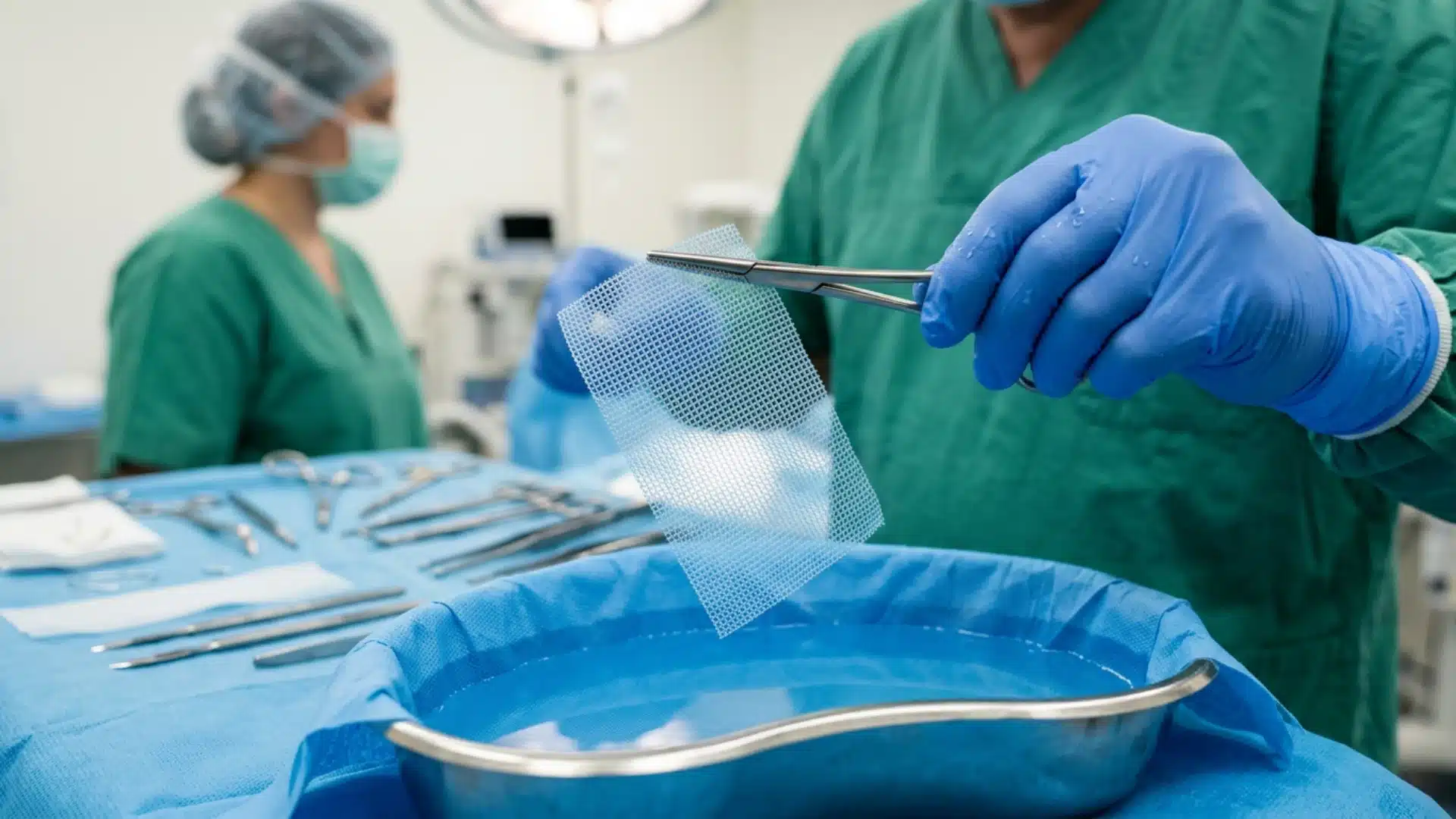
A mesh lawsuit can help injured patients hold medical device manufacturers accountable when a surgical mesh implant causes serious complications.
These claims often involve hernia mesh or pelvic mesh and may argue that the device was defectively designed, poorly manufactured, or sold without proper warnings about known risks.
Recovering from mesh surgery is hard enough. When chronic pain, infections, or a second corrective procedure get added on top, it can feel like your case is just one more thing on a long list. If that sounds familiar, a mesh lawsuit may be worth exploring.
Many people file a hernia mesh lawsuit to seek compensation for medical bills, lost income, pain, and other losses. This guide explains who may qualify, how cases work, what the Bard hernia mesh settlement means in 2026, and what steps to take next.
What is a Mesh Lawsuit?
A mesh lawsuit is a product liability claim filed against a medical device manufacturer after a surgical mesh implant causes serious complications or fails to perform as intended.
These claims generally focus on whether the manufacturer designed, manufactured, or marketed the product in a way that put patients at unnecessary risk.
Unlike a medical malpractice case, which is filed against a healthcare provider for negligent care, a mesh lawsuit typically targets the company that made or sold the implant.
Plaintiffs often argue that the manufacturer failed to provide adequate safety warnings, used a defective design, or released a product that was unreasonably dangerous.
When successful, a mesh lawsuit may help injured patients recover compensation for medical expenses, lost income, pain and suffering, future treatment costs, and other losses tied to the implant.
Types of Mesh Lawsuits
Although surgical mesh is used in different medical procedures, most product liability claims fall into two main categories.
Hernia Mesh Lawsuits
A hernia mesh lawsuit involves implants used to reinforce weakened abdominal tissue during hernia repair surgery.
While many patients recover without complications, some experience problems such as mesh migration, infection, bowel obstruction, adhesion, mesh shrinkage, or a recurring hernia that requires additional surgery.
These lawsuits often claim that the mesh was defectively designed, manufactured, or sold without adequate warnings about known risks.
Several major manufacturers, including C.R. Bard, Ethicon, Covidien, and Atrium Medical, have faced extensive litigation over certain hernia mesh products.
Pelvic or Vaginal Mesh Lawsuits
Pelvic or vaginal mesh lawsuits involve devices implanted to treat pelvic organ prolapse (POP) or stress urinary incontinence (SUI), conditions that primarily affect women.
Many claims allege that the mesh eroded into surrounding tissue or caused chronic pelvic pain, infections, painful intercourse, urinary complications, nerve damage, or other long-term injuries.
Large-scale litigation against manufacturers such as Ethicon, Boston Scientific, C.R. Bard, and Coloplast has resulted in significant settlements, although new claims continue to arise.
While these cases share many legal principles with hernia mesh lawsuits, they often involve different medical issues, manufacturers, and litigation histories.
Companies Involved in Mesh Litigation
Several medical device manufacturers have faced lawsuits over specific surgical mesh products alleged to have caused serious complications.
In hernia mesh litigation, companies such as C.R. Bard (Becton Dickinson), Covidien, Ethicon, and Atrium Medical have been named in thousands of claims.
In pelvic or vaginal mesh litigation, major defendants include Ethicon, Boston Scientific, C.R. Bard, and Coloplast.
Plaintiffs generally allege that certain mesh products were defectively designed, improperly manufactured, or sold without adequate warnings about known risks.
Although these lawsuits involve different products and manufacturers, the legal issues are often similar, focusing on whether the companies failed to provide patients with reasonably safe medical devices.
Legal Basis for Mesh Lawsuits
Most mesh lawsuits are filed under product liability law, which allows injured patients to seek compensation for harm caused by defective medical devices.
It also helps to understand the types of Tort Liability, as these claims often rely on strict liability, negligence, or failure-to-warn theories.
Under strict liability, a manufacturer may be held responsible for a defective product even without proving negligence.
Many lawsuits also reference the FDA’s 510(k) clearance process, under which certain mesh products entered the market without new clinical trials because they were considered substantially similar to existing devices.
The legal theory depends on the facts and the laws of the state where the case is filed.
Common Complications that Lead to a Mesh Lawsuit
Many mesh lawsuits begin after patients develop serious complications from a hernia mesh or pelvic mesh implant. According to FDA hernia mesh safety data, commonly reported hernia mesh complications include:
- Mesh migration: The implant moves from its original position, causing pain or requiring another surgery.
- Bowel obstruction: Mesh sticks to tissue or organs, blocking the intestines.
- Infection: Bacteria form around the mesh, sometimes months or years after surgery.
- Adhesion: Mesh attaches to nearby tissue or organs, causing scar-like restrictions and discomfort.
- Mesh shrinkage: Some mesh products contract over time, pulling on tissue and causing pain.
- Hernia recurrence: The repair fails, and the hernia comes back.
- Organ perforation: Mesh erodes into nearby organs, creating a medical emergency.
Pelvic or vaginal mesh can cause additional problems, including mesh erosion, pelvic pain, painful intercourse, urinary issues, nerve damage, and long-term sexual dysfunction.
Some complications appear years after surgery. If symptoms develop later, it may be worth asking a doctor whether the mesh could be involved.
Disclaimer: This section is for general information only and is not medical advice. speak with a doctor if you have symptoms after mesh surgery.
Recent Lawsuit Updates: Where Mesh Litigation Stands Today
Mesh litigation is active and moving on multiple fronts. Here’s where the major cases stand as of mid-2026.
1. Bard Hernia Mesh Settlement
In October 2024, Becton Dickinson agreed to settle nearly 38,000 Bard hernia mesh lawsuits in a global settlement framework expected to exceed $1 billion.
The settlement uses a tiered, points-based payout system, where compensation depends on documented injury severity rather than a flat amount for every claimant.
A Qualified Settlement Fund was established to manage payments, with a court-approved escrow agent and lien administrators overseeing distributions to Medicare, Medicaid, and private insurers.
As of June 2026, roughly 23,500 to 24,100 Bard-specific cases remain pending in the federal MDL (MDL 2846), which includes both opt-out claims and new filings from patients who only recently connected their symptoms to the mesh.
2. Covidien Litigation
Covidien’s hernia mesh MDL (MDL 3029) is moving on a separate track and has not reached a global settlement.
The first federal bellwether trial involving Covidien’s Symbotex mesh has faced multiple scheduling delays through 2026, with court orders addressing expert testimony and pretrial motions.
Roughly 2,300 to 2,400 Covidien cases remain pending. Outcomes from this bellwether trial may shape how future Covidien settlements are valued.
3. Pelvic and Vaginal Mesh Litigation
Pelvic and vaginal mesh litigation is more fragmented. Major MDLs against Ethicon and Boston Scientific have largely settled, but new individual claims continue to surface as complications from older implants appear years after surgery.
This is why legal guidance still matters even after a global settlement. Some claimants may get a faster, lower payout through a settlement fund, while others with stronger documentation may do better pursuing a case individually.
Do You Qualify for a Mesh Lawsuit?

You may qualify for a mesh lawsuit if you had a hernia, pelvic, or vaginal mesh implant and later suffered serious complications linked to that device.
In most cases, eligibility depends on three key points: you received a surgical mesh implant, developed a serious injury or complication, and are still within the legal deadline to file.
The strongest claims often involve revision surgery to remove, replace, or repair failed mesh. This creates clear medical evidence connecting the implant to the injury.
You may still have a case if the mesh remains in your body, but you have ongoing, documented symptoms such as chronic pain, infection, hernia recurrence, mesh erosion, or the need for continued treatment.
What Can Help Support Your Mesh Lawsuit?
Certain records and case details can make it easier to show that your injury is connected to the mesh implant.
Common eligibility signs include:
- Hernia Mesh Surgery on or after January 1, 2006
- Pelvic or Vaginal Mesh Implant with Recent Complications
- Revision Surgery or Ongoing Medical Care
- Medical Records Linking Your Symptoms to the Mesh
- Filing Within Your State’s Statute of Limitations, Often 2 to 3 Years from when the Injury Was Discovered
A recalled product does not require a claim to be filed. Many mesh lawsuits involve devices that were never officially recalled.
If you do not know your mesh brand, your doctor or surgical facility may be able to find the product name and unique device identifier in your medical records.
What If You Do Not Know Your Mesh Brand?
You can still start the review process even if you do not know the exact mesh brand. Many patients are not told the name of the product after surgery.
Your doctor, hospital, surgical facility, operative report, implant sticker sheet, or medical device records may identify the product name, manufacturer, lot number, or unique device identifier.
If you cannot get those records yourself, a product liability attorney may be able to request them and determine whether your implant is linked to active mesh litigation.
What Evidence Do You Need for a Mesh Lawsuit?
Strong evidence makes it easier to connect your implant to your injury. The most helpful records usually show what product was used, what complications developed, and how those complications affected your health and daily life.
- Surgical records showing when and where the mesh was implanted
- The mesh brand, manufacturer, lot number, or unique device identifier
- Revision surgery records, if the mesh was removed, replaced, or repaired
- Doctor’s notes linking your symptoms to the mesh implant
- Imaging reports, lab results, or infection records
- Prescription records and treatment history
- Proof of lost wages or reduced ability to work
- Medical bills for follow-up care, surgery, or rehabilitation
The stronger the medical paper trail, the easier it may be to show that the implant caused or contributed to your injuries.
What Compensation Can You Recover?
Compensation in a mesh lawsuit may include both financial losses and personal harm caused by the implant injury.
Economic Damages can cover medical bills, revision surgery, rehabilitation, future treatment, and lost wages. Non-economic damages may include pain and suffering, reduced quality of life, emotional distress, and, in pelvic mesh cases, sexual dysfunction or psychological harm.
For Hernia Mesh Claims, Personal Injury Settlement amounts from prior cases suggest that many documented claims involving revision surgery may range from $65,000 to $80,000 before attorney fees.
More serious cases involving permanent damage, multiple surgeries, or severe complications may reach $1 million or more.
Some Jury Verdicts have been higher, including a $4.8 million verdict for Bard Ventralex mesh in Rhode Island and a $500,000 verdict in an Ohio Bard case.
For Pelvic or Vaginal Mesh Claims, estimates often range from $150,000 to $450,000 for well-documented injuries. Cases involving permanent disability or loss of sexual function may be valued higher.
How to File a Mesh Lawsuit?
Filing a Mesh Lawsuit is a step-by-step process, and strong documentation matters. Here’s how it typically works:
- Get Medical Attention and Document Everything: If you are having symptoms, see a doctor as soon as possible. Medical records that connect your pain, infection, recurrence, or other complications to the mesh implant are the foundation of your claim.
- Preserve All Surgery Records: Try to collect the mesh brand, unique device identifier, operative notes, hospital records, and any communication from your surgeon. If you cannot find these details, your attorney may be able to request them.
- Report Your Complications to the FDA: The FDA’s MedWatch Reporting system allows patients to submit adverse event reports. This does not start a lawsuit, but it creates a formal record of the complication.
- Consult a Product Liability Attorney: Most Mesh Lawsuit Firms Offer Free Consultations and Work on a Contingency Basis, Meaning You Pay No Upfront Fees. An Attorney Can Review Whether Your Case Belongs in an Existing MDL or Should Be Filed Separately.
- Your Attorney Files the Complaint: Many Mesh Claims are consolidated into federal md ls, where discovery is shared while each case remains separate. If no MDL applies, your attorney may file directly in state court.
The Contingency Fee Structure can make legal action more accessible for people already facing medical bills.
When Should You Call a Lawyer?

You should call a lawyer if you have had revision surgery to remove, replace, or repair a mesh implant. That is one of the clearest signs of product failure and provides strong medical documentation for a potential claim.
You should also consider legal help if you have chronic pain lasting more than a few months after surgery, recurring infections, bowel problems that began after the procedure, or sexual pain or dysfunction after pelvic mesh implantation.
Even if your symptoms seem manageable now, waiting too long can affect your right to file. Statutes of limitations vary by state, and the deadline often starts when you discovered, or reasonably should have discovered, that the mesh caused your injury.
A free case review can help you understand whether you may qualify and what options are still available to you.
Conclusion
If you are dealing with mesh complications, you still have options. mesh litigation remains active, with major settlements, ongoing md ls, and new cases continuing as patients report long-term injuries from hernia, pelvic, and vaginal mesh implants.
I know it can feel overwhelming to think about legal action while managing pain, medical bills, or uncertainty about what went wrong. But you do not have to handle it alone.
If you suspect your implant caused serious complications, a free case review can help you understand your options before legal deadlines expire.
A case review can help you understand whether you may qualify and what steps are available before legal deadlines expire.
Have you dealt with mesh complications, or are you unsure whether your symptoms might qualify? Share your experience or questions in the comments below.
Frequently Asked Questions
Can I Still File a Hernia Mesh Lawsuit if Bard Already Settled?
Yes, the Bard Settlement did not end all claims, and new cases or opt-out claims may still be filed depending on your situation.
What is the Difference Between an MDL and a Class Action Lawsuit?
In a class action, plaintiffs usually share one outcome. In an MDL, cases are grouped for efficiency, but each claim remains separate, and compensation depends on individual injuries.
How Long Does a Hernia Mesh Lawsuit Take to Resolve?
A Hernia Mesh Lawsuit can take months to several years, depending on your case details, documentation, and whether it is part of an MDL or filed individually.
Does It Matter Which Brand of Mesh I Received?
Yes, different brands follow different legal paths, and your doctor or medical records can help identify the mesh used.