
You have just lost a spouse, a parent, or the person you bought a home with.
While you are still processing the grief, someone asks, “What happens to the house now?” Suddenly, legal terms and paperwork feel overwhelming.
If you are searching for two names on a deed, one person dies, you are likely trying to find clear answers during a difficult time.
The good news is that the outcome is not random. It depends on how the property was owned.
In this guide, you will learn the three types of joint ownership, what transfers automatically, what requires legal steps, the tax implications you cannot afford to ignore, and what to do if complications arise, such as shared ownership with someone you did not choose.
Understanding How Jointly Owned Property Works?
When two people own a house together, they each hold a legal interest in the same property, but that interest is defined by the deed’s terms.
Joint ownership does not automatically mean equal control, automatic inheritance, or shared decision-making in every situation.
The specific language on the deed determines whether ownership transfers instantly to the surviving owner or becomes part of the deceased owner’s estate.
State property laws also play a role in how rights and responsibilities are handled.
One detail that catches many families off guard: if the deed is completely silent on ownership type, most states default to tenancy in common for non-spouses, meaning no automatic transfer to the survivor.
Married couples in many states receive different default treatment, often presumed to hold as tenancy by the entirety.
That default presumption can be rebutted by other evidence, but it controls the starting point for any legal analysis.
Before focusing on probate or taxes, it is essential to understand that joint ownership is a legal arrangement, and the structure of that arrangement controls what happens next.
What Happens if Two Names Are on a Deed & One Person Dies?

Everything depends on how the deed is written. Before doing anything else, review the document and identify the ownership structure.
Joint tenancy with right of survivorship means both owners hold equal, undivided interests in the entire property. The key feature is survivorship.
When one owner dies, the surviving owner automatically becomes the sole owner. In most states, probate is not required. Look for phrases like joint tenants or right of survivorship.
Tenants in common(TIC) means each owner holds a separate share, which can be unequal. There is no survivorship.
When one owner dies, their share passes under their will or state intestacy laws, which usually require probate.
Tenancy by the entiretyis available in many states and is reserved exclusively for married couples. Each spouse holds 100% ownership rather than a divided share, and the right of survivorship is built in.
When one spouse dies, the surviving spouse automatically becomes the sole owner, without probate.
This ownership type also provides a layer of creditor protection; if only one spouse owes a debt, creditors generally cannot force a sale of property held as tenancy by the entirety.
Quick Tip: Check your deed for phrases like joint tenants, right of survivorship, or tenants in common. No copy available? Search your county recorder’s office website for free records.
Joint Tenancy vs. Tenants in Common vs. Tenancy by the Entirety
Choosing between joint tenancy and tenancy in common is not just paperwork. It directly decides who inherits the property and whether probate becomes necessary.



What Does Right of Survivorship Mean?
Right of survivorship is a legal feature attached to certain forms of joint property ownership.
It means that when one co-owner dies, their share of the property automatically transfers to the surviving owner.
This transfer occurs immediately by operation of law, not through a will or probate, in most states. The deceased owner’s heirs do not inherit that share, even if a will says otherwise.
In fact, the right of survivorship overrides conflicting will provisions entirely. If the deed says survivorship, the deed wins.
Right of survivorship is commonly found in joint tenancy and tenancy by the entirety. The key is precise wording on the deed.
If the document does not clearly include survivorship language, the automatic transfer rule does not apply.
Scenario A: If Your Deed is Joint Tenancy
If the deed states joint tenancy with right of survivorship, the transition is usually straightforward.
Legally, the surviving co-owner becomes the sole owner immediately upon the other owner’s death.
Although ownership transfers automatically, there are still a few important administrative steps you must complete to protect your title and avoid future legal or financial issues.
- Obtain multiple certified copies of the death certificate. Most banks, lenders, and agencies will require originals.
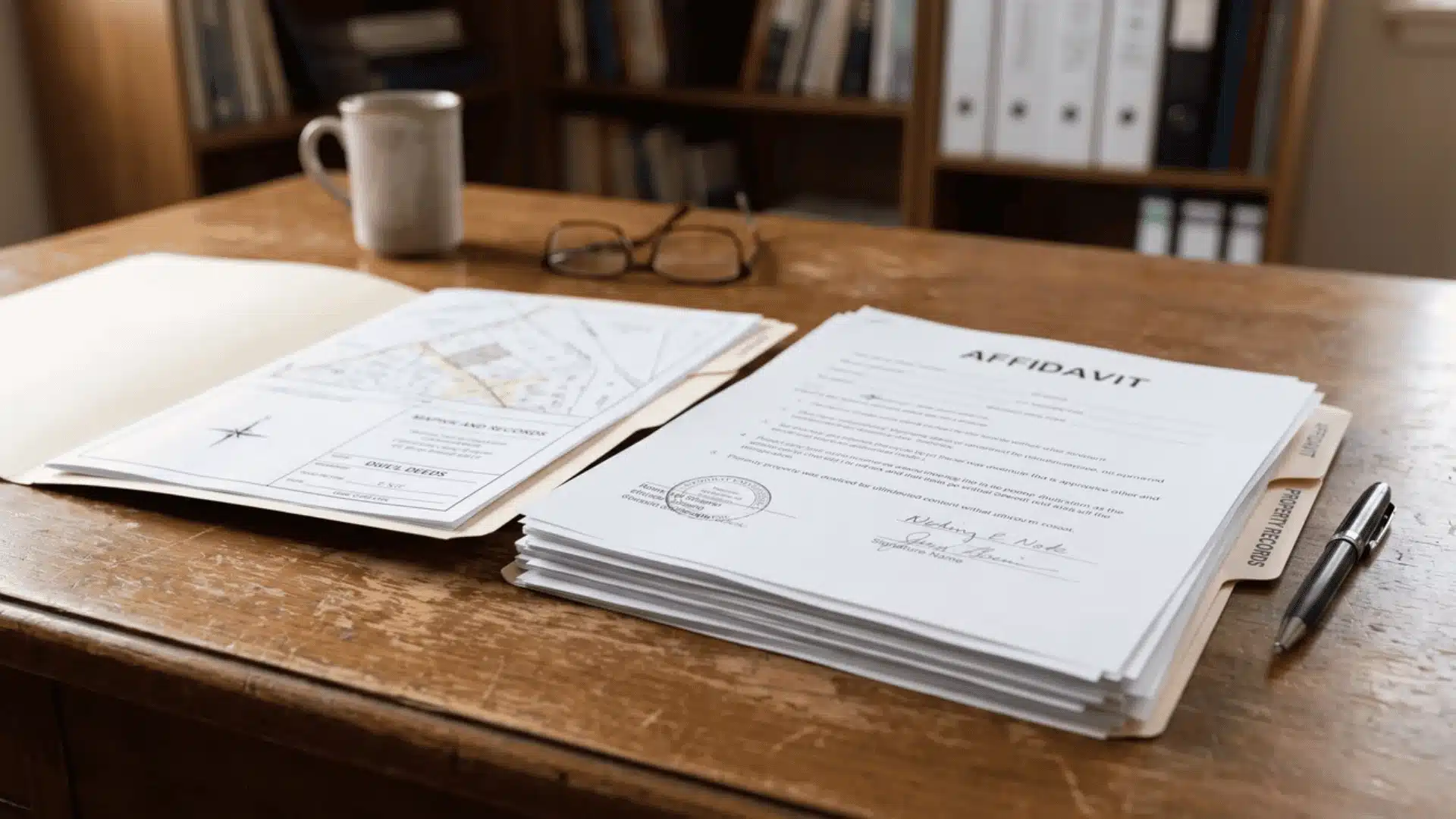
- Prepare and record an Affidavit of Survivorship, also known as an Affidavit of Death of Joint Tenant, with the county recorder’s office to clear the title.
- Update the official property records to reflect sole ownership.
- Notify your mortgage lender. Under the federal Garn St Germain Act, lenders generally cannot demand full repayment solely because one borrower died.
- Update your homeowner’s insurance policy to reflect the ownership change.
Heads Up: Even if probate is avoided, tax consequences may apply, especially regarding step up in basis for capital gains. Consult a CPA before selling.
Scenario B: If Your Deed is Tenancy in Common
This is where things often become complicated, especially if the deceased owner did not leave a clear, up-to-date will.
What happens legally is that The deceased co-owner’s share becomes part of their estate. It passes according to their will.
If there is no will, it transfers under your state’s intestacy laws. Probate is usually required to legally transfer that ownership interest.
The surviving co-owner may suddenly find themselves sharing ownership with individuals they never intended to, such as adult children from a prior relationship, siblings, or extended relatives.
What Are the Surviving Co-Owners ’ Options?

When a tenancy-in-common arrangement leads to unexpected co-ownership, the surviving owner is not powerless, but every option requires careful financial and legal consideration.
1. Buyout
One practical solution is negotiating a buyout with the heir or heirs who inherited the deceased owner’s share.
This allows the surviving co-owner to regain full control of the property. The price is typically based on fair market value, often supported by a professional appraisal.
A written agreement and a properly recorded deed transfer are essential to legally finalize the transaction.
2. Sell the Property
If all parties agree, selling the property may be the simplest path forward.
The home is listed, sold, and the proceeds are divided according to each owner’s percentage interest.
This option avoids long-term conflict and ongoing shared responsibilities. However, cooperation is key, since all co-owners must consent to the sale terms and closing process.
3. Partition Action
When no agreement can be reached, any co-owner has the legal right to file a partition lawsuit. A court may order the property physically divided or, more commonly, sold, with the proceeds split among the owners.
Partition actions are governed by state law, and several states, including California, which reformed its partition statutes in 2022 under the Uniform Partition of Heirs Property Act, have introduced rules designed to protect co-owners from being forced into unfavorable sales.
Even with those protections, partition litigation is expensive, time-consuming, and hard on families. It remains a last resort.
Clients who proactively consult a probate and estate attorney before co-ownership disputes escalate almost always reach faster and less costly resolutions than those who wait until litigation becomes the only option.
Do You Have to Go Through Probate?
This is one of the biggest concerns people have, and the answer depends entirely on how the property was owned.
If the home was held in joint tenancy, tenancy by the entirety, or community property with right of survivorship, probate is generally not required. Ownership transfers automatically to the surviving owner.
However, if the property was held as tenants in common, the deceased owner’s share usually must go through probate unless a living trust or similar estate planning tool was in place.
A Transfer-on-Death (TOD) deed, available in a growing number of states, is another tool worth knowing. It allows a property owner to name a beneficiary directly on the deed, so that the property passes to that person at death without probate, similar to how a beneficiary designation works on a life insurance policy.
It does not affect ownership during life and can be revoked or changed at any time.
Probate is the court-supervised process of distributing a deceased person’s assets. It can take months and sometimes longer, but many states offer simplified procedures for smaller estates.
Understanding how a house held in trust transfers after death can help families decide whether a revocable living trust makes more sense than relying on deed language alone.
Tax and Financial Considerations

Before selling, refinancing, or restructuring ownership, carefully review the financial consequences. These can significantly affect your long-term outcome.
1. The Mortgage
If both co-owners were on the loan, the surviving borrower remains fully responsible for payments.
Under the Garn St Germain Depository Institutions Act, 12 U.S.C. § 1701j-3, lenders generally cannot call the loan due solely because of a borrower’s death.
However, payments must continue. If the loan was only in the deceased owner’s name, consult a HUD-approved housing counselor or attorney to evaluate assumption or refinancing options.
2. Capital Gains
Under Internal Revenue Code Section 1014, inherited property typically receives a step-up in basis to its fair market value on the date of death.
If a home purchased for $150,000 is worth $400,000 at death, the inherited portion is reset to the current value.
This reduces potential capital gains tax if you later sell. The tax savings can be substantial, especially in appreciating real estate markets.
The step-up applies only to the inherited share. If you were already a co-owner, your original cost basis for your portion remains unchanged.
Understanding which shares received the step-up and which did not becomes critical before any sale.
3. Estate and Property Tax
According to the Internal Revenue Service (IRS), the federal estate tax applies only to estates exceeding $15 million in calendar year 2026, so most families are unaffected.
However, some states impose their own estate or inheritance taxes with lower thresholds. In addition, certain states may reassess property taxes (such as California’s Proposition 19) after a transfer at death.
Property tax reassessment is another practical concern that varies sharply by state.
California’s Proposition 19, effective since 2021, significantly changed the rules around parent-child transfers, limiting the property tax exclusion that families previously relied on.
Other states have similar provisions worth reviewing before any transfer is finalized.
Spousal transfers are often treated differently from non-spousal transfers. Always verify state-specific rules before making decisions.
Pro Tip: Do not rush into selling or refinancing until you have consulted a CPA or qualified tax advisor.
Special Situations You Should Know
Certain ownership arrangements create complications that many people do not anticipate. These situations often lead to disputes if the deed language and documents are not aligned.
- Unmarried Partners: No automatic survivorship unless the deed states joint tenancy with right of survivorship. Otherwise, the deceased partner’s share passes to legal heirs, not the surviving partner.
- Parent and Adult Child: Outcome depends on title. Joint tenancy transfers automatically. Tenants in common send the deceased’s share through probate. The order of death can change results.
- Business Partners: Usually tenants in common. Without a buy-sell agreement, heirs may inherit the deceased partner’s share, creating operational issues.
- Out of State Property: Transfer is governed by the state where the property is located. Separate probate proceedings may be required.
When the Deed Was Never Updated After a Prior Death?
This situation comes up more often than people expect. If the first joint tenant’s death was never formally cleared from the title records, official records may still list both original owners, even if both are now deceased.
Before the property can be transferred to the current rightful owner, the title must be cleared of the first deceased owner’s name, in accordance with the applicable state procedures.
This creates additional paperwork but is entirely resolvable with the right legal guidance.
What You Should Do Now?
The smartest move is to review your property documents before any emergency forces quick decisions.
Start by pulling out your deed and confirming exactly how the property is titled, since that wording controls what happens at death.
If the title does not reflect your intentions, consult a real estate attorney about re-titling the property properly. Make sure you clearly address your share in any co-owned real estate to prevent confusion.
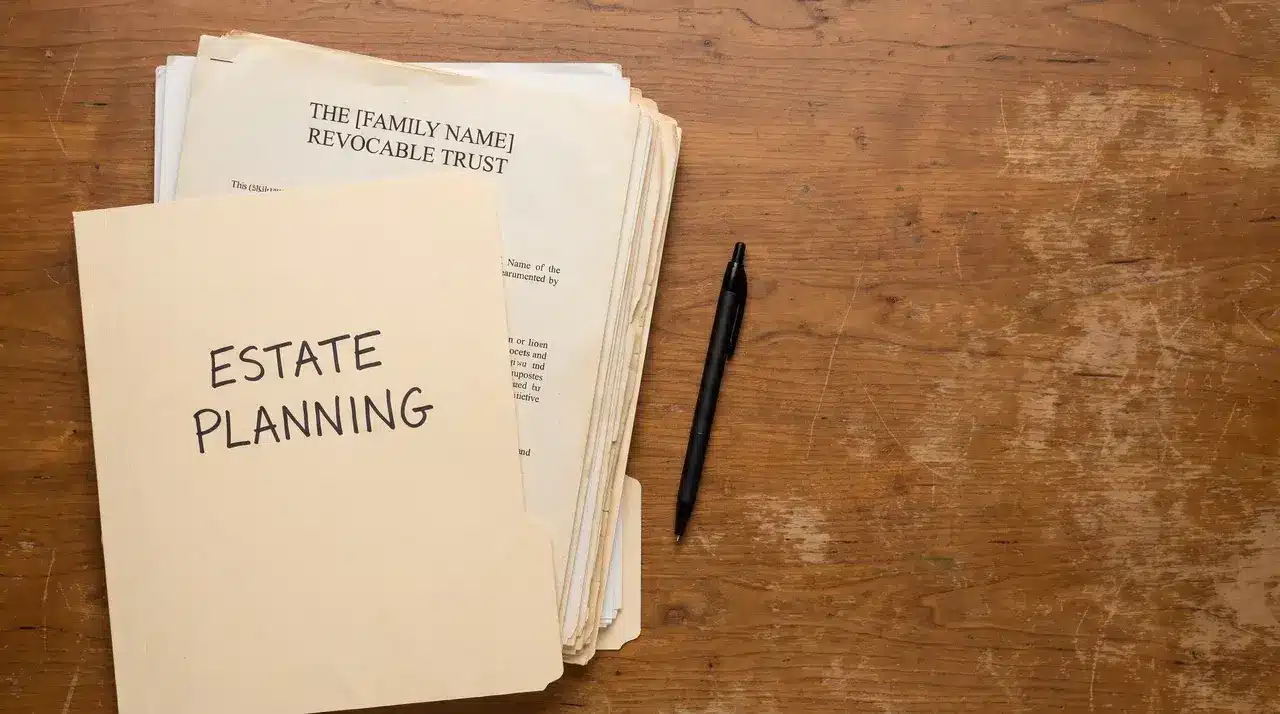
You may also consider creating a revocable living trust to avoid probate and simplify future transfers.
Finally, if you already hold property with someone and are unsure whether the deed language reflects what you actually intended, it is worth the investment of a single consultation to find out.
Re-titling a property while both owners are alive is a straightforward process. Untangling a title dispute after death is not.
Store your deed and estate documents in a secure yet accessible place and inform a trusted person of their location.
Conclusion
When it comes to two names on a deed, one person dies, the outcome is never random. It depends entirely on how the property was titled and whether proper planning was done in advance.
Joint tenancy can allow a smooth transfer, while tenancy in common may lead to probate and unexpected co-ownership.
Mortgages, taxes, and state-specific laws also play a major role in what happens next.
The key is clarity. Review your deed, understand your ownership structure, and plan ahead to avoid unnecessary legal stress.
If you still have questions or want to share your experience, drop your comments below and join the conversation.
Frequently Asked Questions
What Happens to a Jointly Owned House when One Person Dies?
It depends on the type of joint ownership. If the deed includes a right of survivorship through joint tenancy or tenancy by the entirety, the surviving owner automatically becomes the sole owner, without probate.
If the deed reflects tenancy in common, the deceased owner’s share passes through their estate, either by will or state intestacy laws, and probate is typically required. The deed language is the controlling document.
Can a Will Override What the Deed Says?
Generally, no. When a right of survivorship is on the deed, it overrides contrary will provisions.
The property does not pass through the deceased owner’s estate, so the will has no effect on it. This is one of the most important reasons to review both your deed and your will together; they need to work in the same direction.
What if The Deed Does Not Specify the Type of Ownership?
State law fills the gap. Most states presume tenancy in common for non-spouses and tenancy by the entirety for married couples when the deed is silent.
Since a tenancy-in-common default means no automatic survivorship, this can have major consequences for an unmarried co-owner who assumed they would inherit.
Reviewing your deed with an attorney before any crisis arises is the most reliable way to confirm your position.