
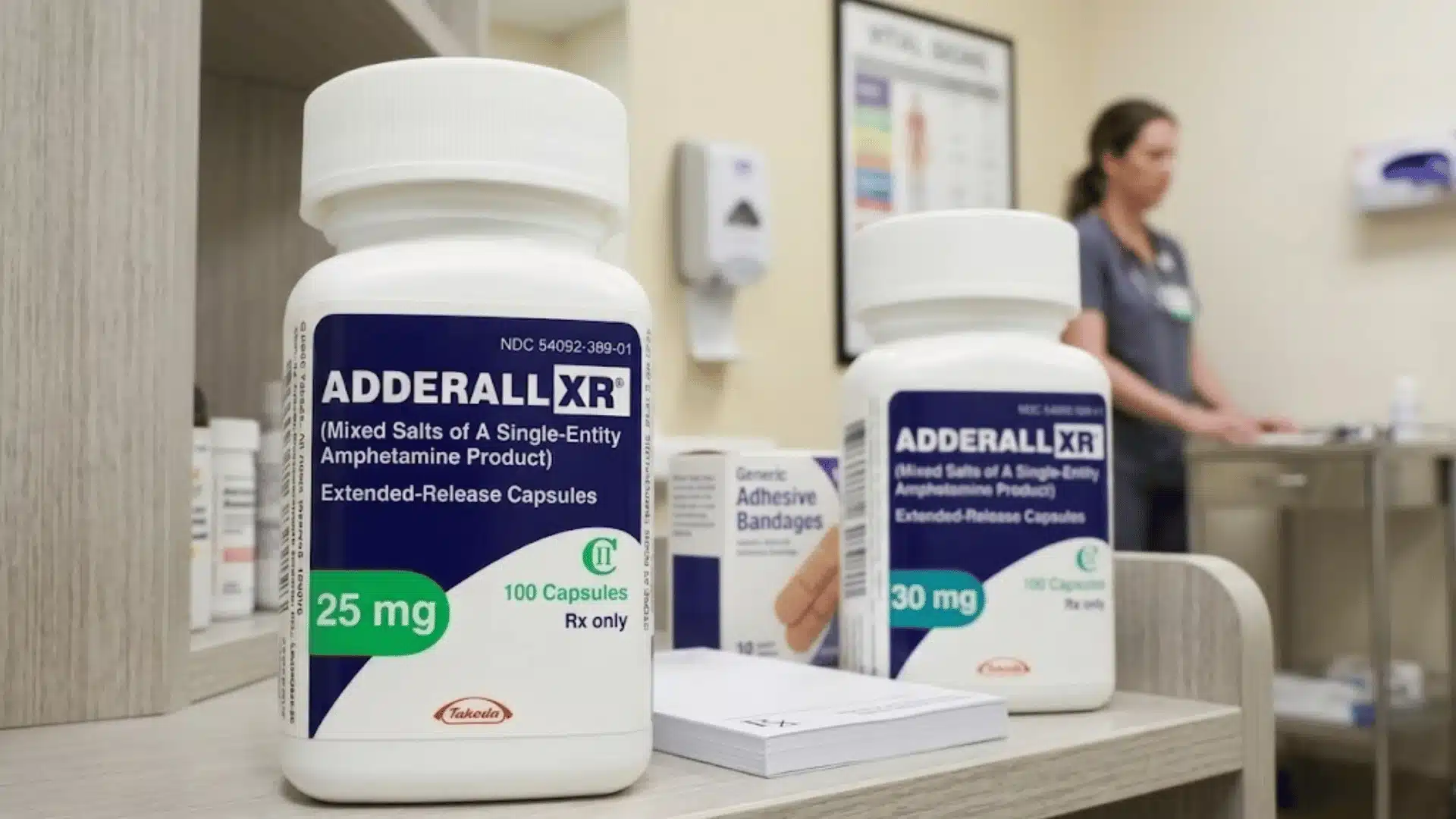
Every year, people end up facing criminal charges over a small orange pill they never imagined could land them in serious legal trouble.
The question of whether Adderall is illegal does not have a simple yes or no answer, and that gap between what people assume and what the law actually says is exactly where charges happen.
It is a legitimate, widely prescribed medication for millions of people, and at the same time, one of the most tightly regulated controlled substances in the country. Whether what you are holding is legal depends on details most people have never considered.
The circumstances that lead to an Adderall-related charge rarely look like what most people picture when they hear the phrase “drug arrest.” A college student shares a pill with a roommate before finals.
Someone carries their medication in a weekly pill organizer rather than in the pharmacy bottle. A prescription runs out, and a few leftover pills stay in the medicine cabinet. None of these situations feels criminal.
But depending on your state and what an officer finds, they can be treated as one under both state and federal law.
Understanding exactly where those legal lines are drawn,and what charges can follow when they are crossed,is the focus of this blog.
Legal Disclaimer: This article is for general informational purposes only and does not constitute legal advice. Laws vary by state and are subject to change. If you are facing criminal charges related to Adderall or any controlled substance, consult a licensed criminal defense attorney in your jurisdiction before taking any action.
Why is Adderall a Controlled Substance?
The Drug Enforcement Administration (DEA) classifies Adderall as a Schedule II controlled substance under the federal Controlled Substances Act. Schedule II is not a middle-ground category.
It is the same tier as cocaine, methamphetamine, and fentanyl.
What that classification means, legally, is that the federal government recognizes Adderall has an accepted medical use but also carries a high potential for abuse and severe psychological or physical dependence.
Because it is a Schedule II drug, Adderall is one of the most tightly regulated prescription medications in the country. Doctors cannot call in a refill. Every new supply requires a fresh written prescription.
Pharmacies are required to log every dispensing transaction. That level of oversight is not accidental. It reflects how seriously federal and state law treat this drug, regardless of whether the person holding it has a diagnosis or not.
Is Adderall Illegal?
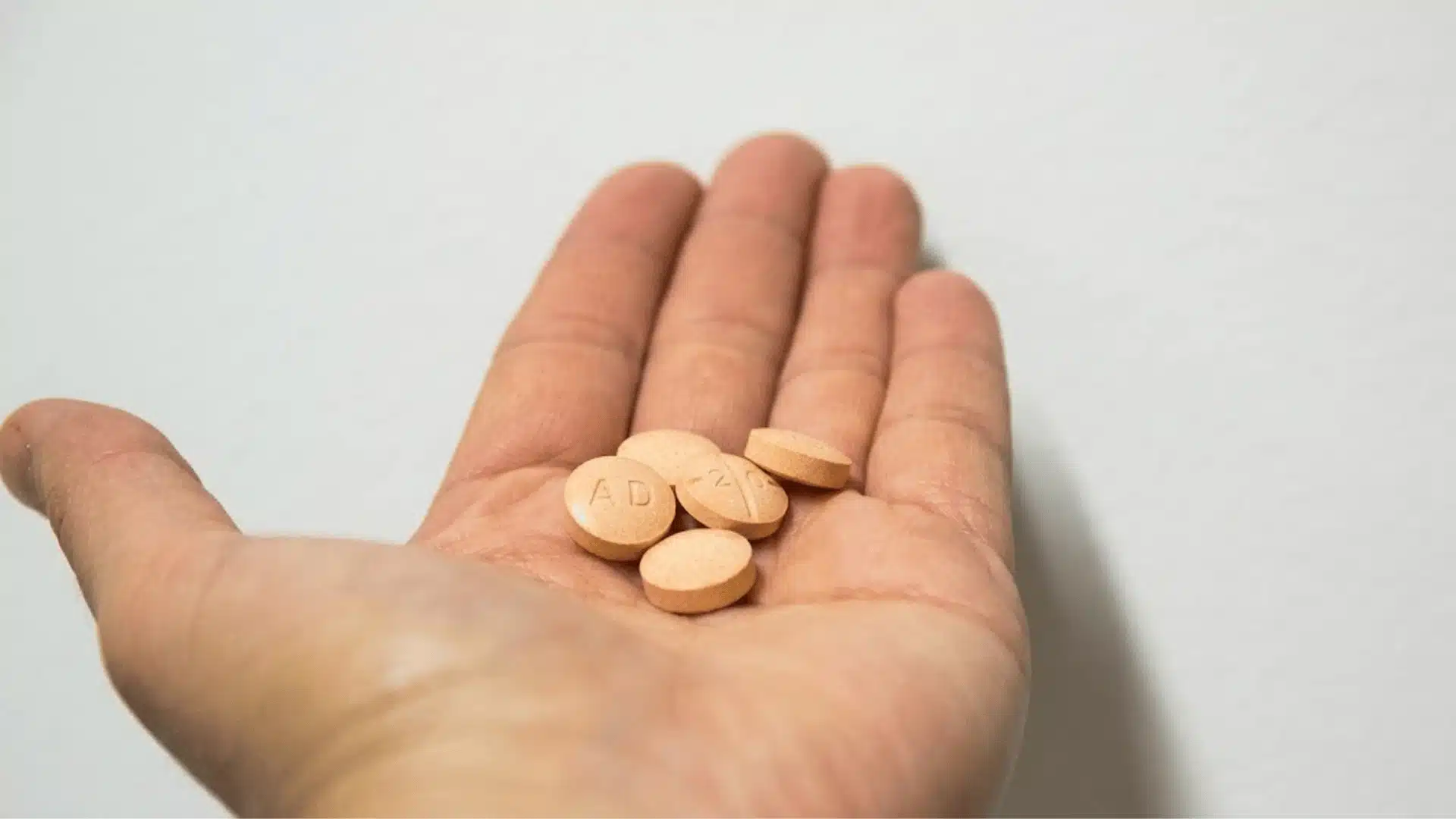
People often ask whether Adderall is a controlled substance as if the answer might be open to debate. Under federal law, it is not illegal.
Adderall is legal when you have a current, valid prescription in your name and you are using it within the scope of that prescription. Outside of those conditions, possessing it is illegal under federal law and the laws of all 50 states.
No state has decriminalized unprescribed Adderall possession, and having a personal ADHD diagnosis does not, by itself, create any legal right to carry it.
There are no exceptions. No state has decriminalized unprescribed Adderall possession.
It is also illegal to possess Adderall when any of the following apply:
- Your prescription has expired.
- You have more pills than your prescription authorizes.
- You are carrying pills outside the original labeled pharmacy bottle (in many states, including Florida and Texas).
- You are using someone else’s prescription, even if you have ADHD yourself.
That last point trips up a lot of people. Having the same diagnosis as the person who was prescribed the medication does not make it legal for you to take it.
The prescription is personal. Once it is in your possession without your name on the bottle, you are in violation of the law in every state in the country.
What Charges Can You Actually Face?
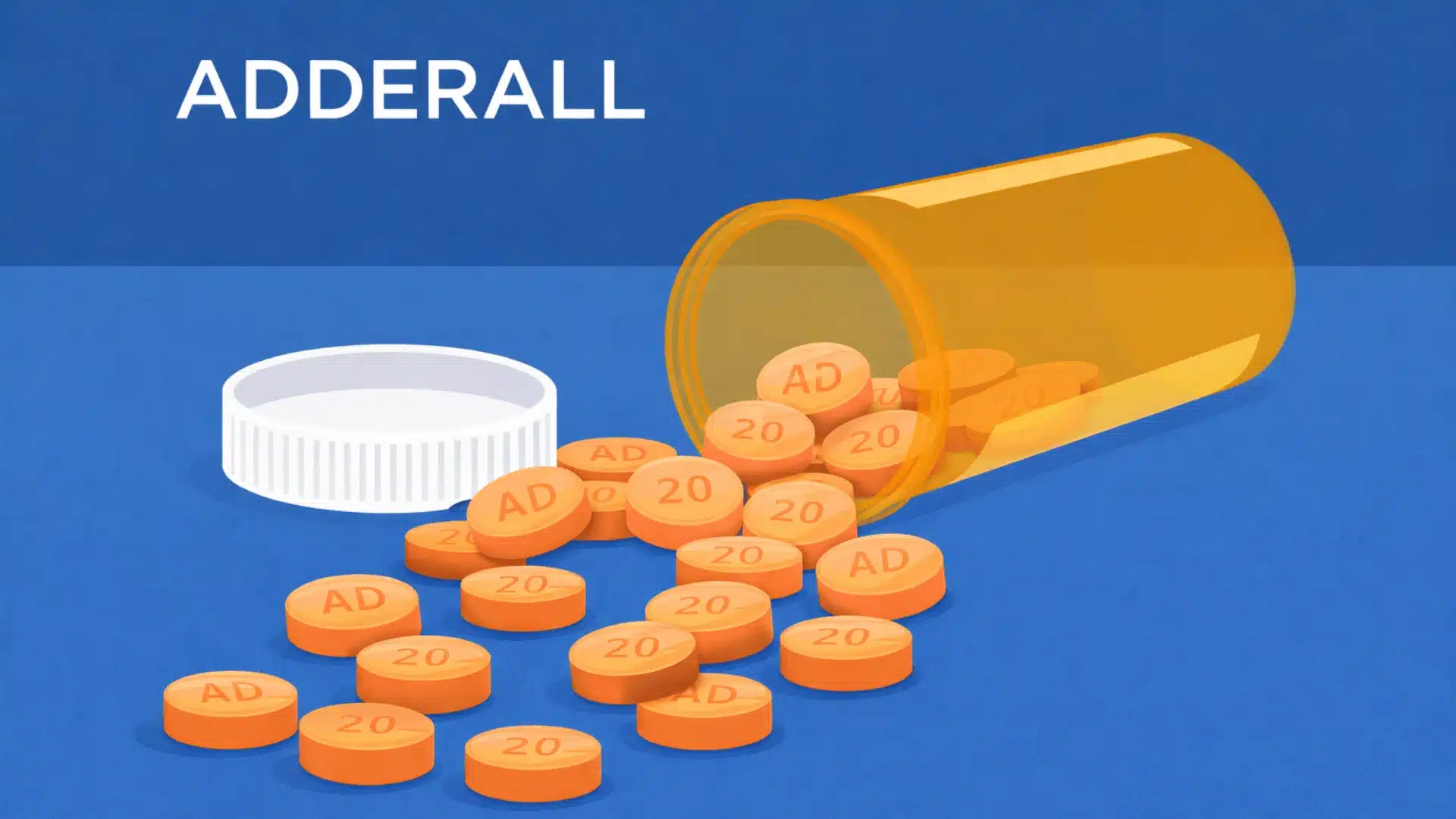
The specific charges and penalties depend on three things: your state, the quantity of Adderall found, and what the prosecution believes your intent was.
1. Simple Possession (Personal Use)
This is the charge for being found with Adderall without a valid prescription, in an amount that suggests personal use. Penalties vary sharply by state.
Florida classifies it as a 3rd-degree felony, punishable by up to 5 years in prison and a $5,000 fine.
California treats it as a misdemeanor, with penalties of up to 1 year in county jail and a $1,000 fine. In Texas, it is a state jail felony, punishable by up to 2 years in prison and a fine of up to $10,000.
New Jersey charges it as a 3rd-degree crime, with penalties of up to 5 years in prison and fines of up to $35,000.
For students, an Adderall possession charge can also trigger academic disciplinary proceedings that run parallel to the criminal case, including suspension or expulsion under most university codes of conduct, before a single court date has been set.
Florida treats simple possession far more harshly than most people expect. In my experience handling drug cases in Florida courts, clients often come in assuming they will get a fine and some community service.
That assumption can be costly. A third-degree felony is still a felony. It stays on your record and can affect your ability to get a job, hold a professional license, or qualify for housing.
2. Possession With Intent to Distribute
If the quantity found is large, if it is individually bagged, or if there is cash, a scale, or text messages suggesting sales, prosecutors can charge possession with intent to distribute. This is where charges escalate fast.
In Florida, intent to distribute Adderall can be charged as a second-degree felony, carrying up to 15 years in prison, or a first-degree felony, carrying up to 30 years.
If the distribution happened near a school, college, or area where minors are present, federal law doubles the maximum sentence and the maximum fine.
That means federal felony penalties of up to 40 years and fines of up to $10 million in the most serious cases.
3. Sharing Adderall: The Charge Most People Do Not See Coming
This is one of the most misunderstood areas of drug law. Giving a single Adderall pill to a friend, a classmate, or even a family member is considered distribution under both Florida law and federal law.
It does not matter if money changed hands.
It does not matter if you were trying to help. Under Florida Statute 893.13, sharing a controlled substance prescription, including Adderall, with anyone is a third-degree felony punishable by up to five years in prison.
I have seen college students face charges for handing a pill to a roommate before an exam. They genuinely thought they were doing something minor.
The person sharing had no idea they had just committed a felony, and the person receiving had no idea they were in possession of a controlled substance without a prescription.
4. The Pill Bottle Problem: A Trap Almost Nobody Knows About
Even if you have a legitimate prescription, carrying Adderall outside its original pharmacy-labeled bottle can result in a possession charge in several states, including Florida and Texas.
Florida Statute 893.13(6)(a) allows charges when a controlled substance is found without proper labeling, even if you can later prove you had a valid prescription.
The standard advice for anyone who takes prescription stimulants: keep your medication in the original labeled bottle at all times when you leave the house.
A pill organizer is convenient until you’re detained or stopped, and the officer finds it with no way to confirm that a prescription exists.
5. Doctor Shopping: A Related Felony Charge
Doctor shopping is what the courts call it when someone visits multiple physicians or pharmacies to obtain multiple prescriptions for the same controlled substance.
Florida Statute 893.13(7)(a)(8) makes it a third-degree felony to withhold information from a prescriber about having received the same or a similar controlled substance from another practitioner within the previous 30 days.
Law enforcement uses prescription monitoring databases to flag these patterns.
If you filled an Adderall prescription from one doctor and then obtained another without disclosing the first, that pattern alone can trigger a criminal investigation under both state and federal law.
6. Prescription Fraud and Forgery
Separate from doctor shopping, obtaining Adderall through a forged or altered prescription is its own federal felony.
Under 21 U.S.C. § 843, it is a federal crime to obtain or attempt to obtain a controlled substance through fraud, misrepresentation, forgery, deception, or subterfuge.
A first-offense conviction under this statute carries up to four years in federal prison. A second offense, or a conviction for someone with a prior felony drug record, carries up to eight years.
What surprises clients in these cases is how quickly investigators get there.
Florida pharmacies are required to verify controlled substance prescriptions against the Prescription Drug Monitoring Program database, and any prescription that does not match the prescribing physician’s records is flagged immediately.
Federal vs. State Charges: Which One Applies?
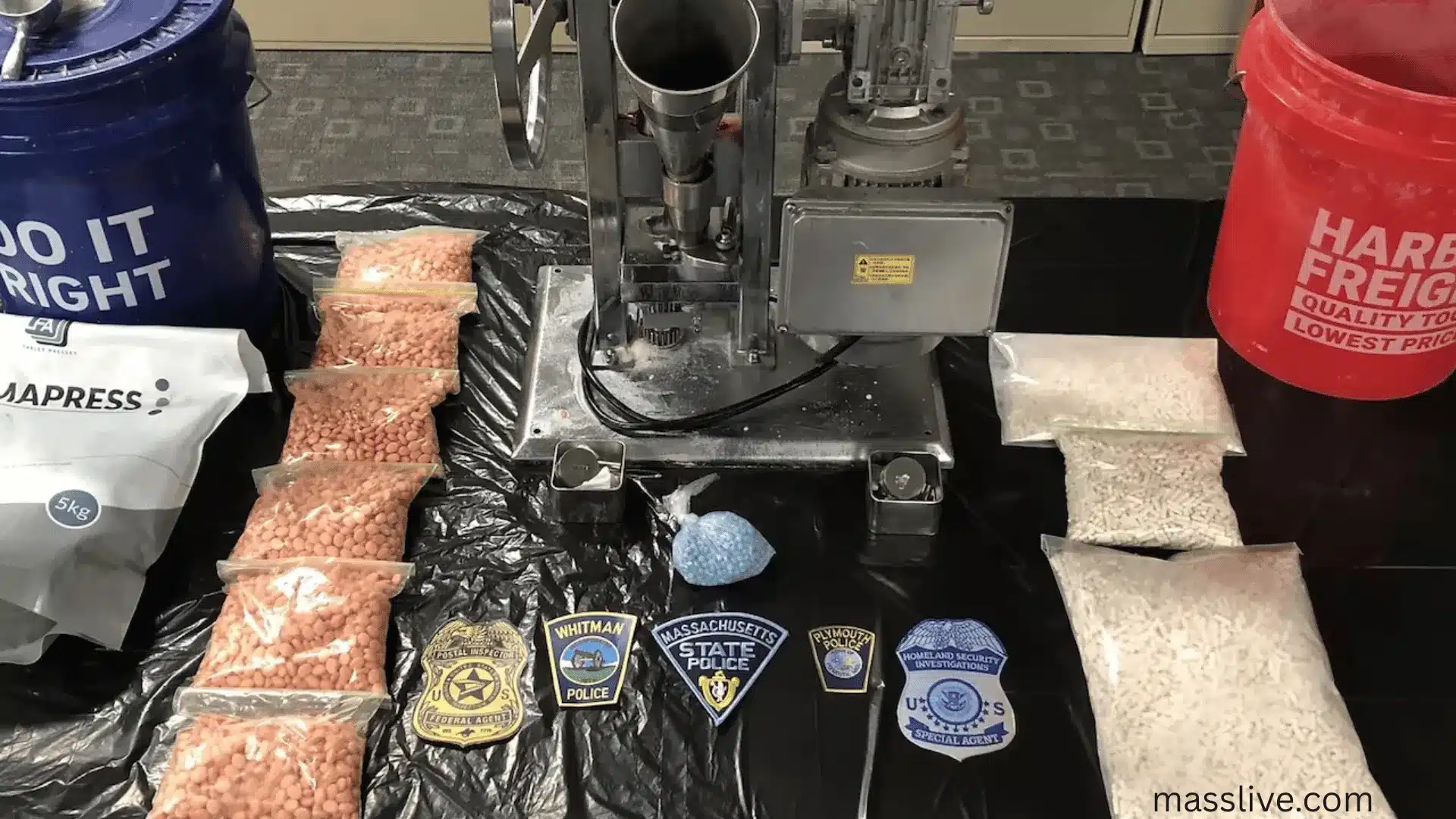
Image Source:masslive.com
Most Adderall possession cases are prosecuted at the state level. Federal charges tend to apply when the case involves distribution across state lines, large quantities, trafficking, or proximity to schools.
Under 21 U.S.C. § 841, federal distribution of Schedule II substances carries severe baseline penalties, and federal sentencing guidelines leave less room for leniency than most state courts.
First-time federal offenders caught with simple possession without a prescription can face up to one year in prison and a $1,000 fine under 21 U.S.C. § 844.
That is a floor, not a ceiling, and federal charges of greater severity carry mandatory minimum sentences that significantly limit a judge’s discretion at sentencing.
Counterfeit Pills and Federal Drug Risks
A 2024 bust uncovered fake Adderall and Xanax pills laced with fentanyl and meth, highlighting how possession cases can quickly escalate into serious federal charges.
When substances are tied to trafficking or cross-state distribution, penalties intensify under federal law.
Even what appears to be simple possession may carry far greater legal consequences if linked to counterfeit or contaminated drugs.
Can You Beat the Charge? Common Legal Defenses
Yes, and they work. The most effective defenses I have seen used successfully in Adderall cases include the following:
- Unlawful search and seizure: Whether law enforcement had established probable cause for the search is often the first question a defense attorney will examine. If the search violated your Fourth Amendment rights, the evidence may be suppressed. No evidence, no case.
- Valid prescription not immediately available: If you had a legitimate prescription but did not have the bottle on you, documentation can sometimes lead to a dismissal, though this is not guaranteed and depends heavily on the state and the prosecutor.
- Lack of knowledge: If you genuinely did not know the pills were in your bag or vehicle, and that can be credibly demonstrated, knowledge is an element the prosecution must prove.
- Constructive possession issues: If the Adderall was found in a shared space and multiple people had access, prosecutors must affirmatively prove the drug was yours.
First-time offenders in many states may also qualify for pretrial diversion programs, drug court, or deferred adjudication.
These routes can result in a full dismissal if the defendant completes requirements like counseling or community service.
Whether you qualify depends on your state, your record, and the specific charge you are facing.
Conclusion
Adderall occupies a legal space that catches people off guard precisely because it looks like any other prescription medication.
The same pill that is completely legal in one person’s pocket can result in a felony charge for the person standing next to them.
The difference almost always comes down to paperwork, a valid prescription, an original bottle, and a name that matches.
Those details matter far more than most people realize until they are already facing a charge. What makes these cases particularly unforgiving is how quickly options narrow once the process moves forward.
Diversion programs, charge reductions, and suppression arguments are all possibilities, but they close fast.
The people who come out of these situations with the best outcomes are almost always the ones who acted early, understood what they were facing, and did not say anything to law enforcement before speaking with an attorney.
If you are in that position right now, the most important thing you can do is get a clear picture of where you stand before making any decisions.
An Adderall charge, even a first offense, can follow you for years.
Before you accept any terms, respond to investigators, or assume the situation will resolve itself, speak with a criminal defense attorney who handles drug cases in your state.
A free case review takes minutes and could significantly change the outcome.
Should Adderall be legal or illegal without a prescription? Drop your opinion in the comments and join the conversation.
Frequently Asked Questions
Does Having an ADHD Diagnosis Protect You Legally if You Are Caught with Someone Else’s Adderall?
No. A personal diagnosis has no legal standing. Prescriptions are tied to a named individual, and possessing controlled substances under someone else’s name is a violation regardless of your medical history or condition.
Can a Prescription from Another Country Make Adderall Legal to Carry in the United States?
No. Foreign prescriptions are not recognized under the Controlled Substances Act. Adderall brought into the U.S. without a valid American prescription is illegal under federal law and may result in charges beyond simple possession.
Does the Amount of Adderall You Have Change What Charge You Face?
Yes, significantly. Quantity is a primary factor prosecutors use to determine charges. Larger amounts, especially combined with packaging, cash, or text messages, can shift a simple possession charge to possession with intent to distribute.
What is the Difference Between a Diversion Program and a Conviction for an Adderall Charge?
Diversion, if completed successfully, results in full dismissal and no conviction on your record. A conviction is permanent and affects employment, housing, and licensing. Eligibility depends on the charge severity and your prior criminal history.