
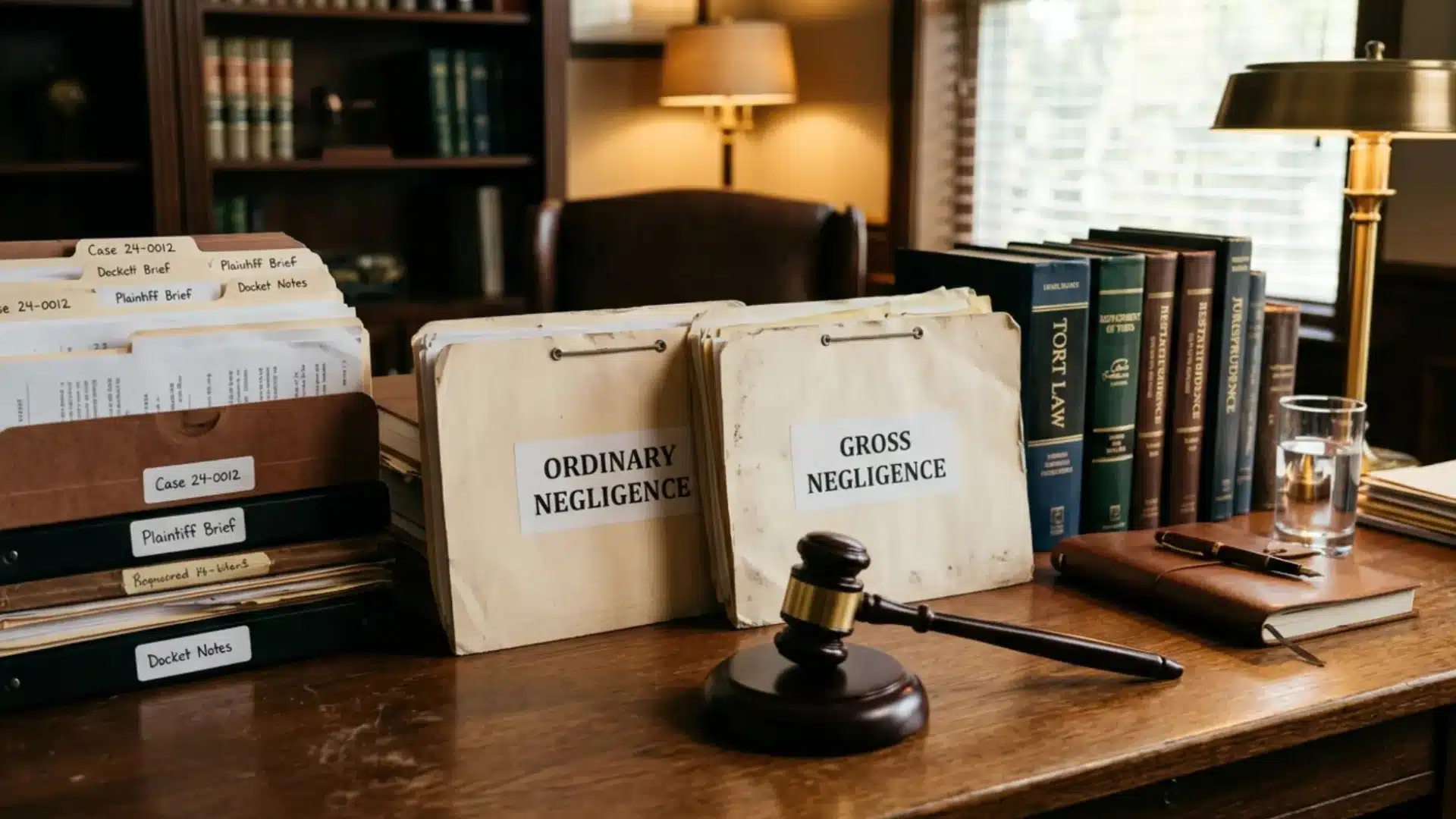
Gross negligence vs negligence is about how careless someone was and how far their actions went beyond normal behavior.
Both terms deal with careless conduct, but they do not always mean the same thing in a legal claim.
Negligence can be a simple failure to use reasonable care, while gross negligence points to conduct that is much more serious.
This difference can affect damages, insurance, and waivers.
A gross negligence claim may lead to more serious damages in some cases; insurance coverage can become harder to obtain when the conduct appears very reckless, and a waiver may not provide the same protection as it would for ordinary negligence.
That is why the label matters. It can change how a claim is viewed and what legal options may stay open.
What is Negligence?
Negligence is a failure to use the level of care a reasonable person would use under the same circumstances.
It does not require any intent to cause harm. A person can be negligent simply by not paying enough attention or by failing to take a basic precaution.
To understand how negligence fits within civil law, it helps to know the types of torts and how courts categorize wrongful conduct.
For a negligence claim to succeed, four elements must all be present:
- Duty of care: The defendant had a legal obligation to exercise reasonable care toward the plaintiff.
- Breach of duty: The defendant failed to meet that obligation through their actions or inaction.
- Causation: That failure directly caused the plaintiff’s injury.
- Damages: The plaintiff suffered actual harm, such as medical bills, lost income, or pain.
A grocery store employee who fails to clean up a spill and a shopper who slips is a common example. The employee did not want anyone to get hurt. They simply did not act when they should have. That is ordinary negligence.
What is Gross Negligence?

Gross negligence is a significantly higher level of carelessness. It is not a simple oversight.
Gross neglect of duty occurs when a person or organization is aware that their conduct creates a serious risk and chooses to proceed anyway, showing a conscious disregard for the safety of others.
Courts look for three things when evaluating whether conduct rises to gross negligence:
- Awareness of the risk: The defendant knew their action or inaction posed a serious danger.
- Deliberate choice: They chose to act (or not act) despite that knowledge.
- Extreme indifference: Their behavior showed a complete disregard for the consequences to others.
Someone who drives drunk is not simply failing to pay attention. They know the risk. They get behind the wheel anyway. That kind of decision is what gross negligence looks like in practice.
Gross Negligence vs Negligence: The Main Difference
The comparison comes down to how careless the conduct was and how much danger the person ignored.
| Point of Comparison | Negligence | Gross Negligence |
|---|---|---|
| Level of carelessness | Ordinary carelessness or a simple failure to act with reasonable care | Extreme carelessness that shows a serious lack of concern for safety |
| Risk involved | The risk may be real, but it is often linked to a mistake or poor judgment | The risk is usually clear, serious, and easy to see |
| Legal threshold | The injured person must show that someone failed to use reasonable care | The injured person must show conduct that went far beyond normal carelessness |
| Damages | May lead to payment for medical bills, lost income, property damage, and pain and suffering | May lead to more serious damages, and in some cases, punitive damages may be considered |
| Insurance impact | Insurance is more likely to cover negligence claims, depending on the policy | Insurance coverage may be more disputed, especially if the conduct was very reckless |
| Example situation | A driver checks a message for a second and rear-ends another car | A driver speeds through a school zone while texting and ignores children crossing |
The Legal Threshold Between Negligence and Gross Negligence
The dividing line between negligence and gross negligence comes down to one word: awareness.
A person who fails to notice a hazard and someone who notices it and ignores it are in very different legal positions.
Negligence cases focus on whether the defendant failed to exercise reasonable care.
Gross negligence cases require proof that the defendant’s conduct went well beyond carelessness into conscious indifference to risk. The evidentiary standard also shifts between the two.
In negligence cases, the plaintiff must prove their claim by a preponderance of the evidence, meaning it is more likely than not that the defendant was at fault.
How Damages May Differ?
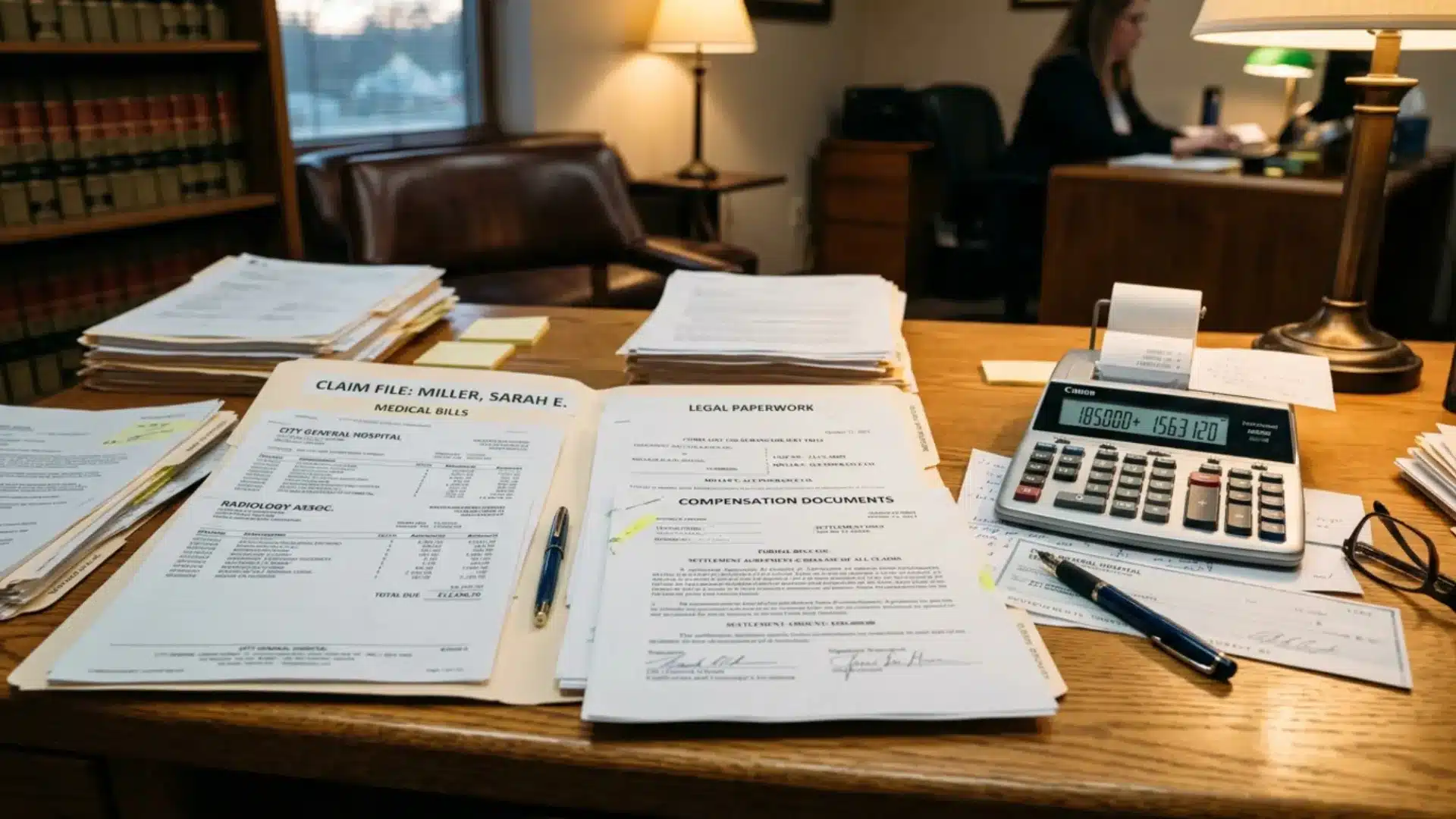
One of the most important differences between negligence and gross negligence is the impact it can have on the compensation available in a personal injury claim.
The classification of the defendant’s conduct often determines not only the amount of damages that may be recovered but also the types of damages a court may award, something that directly affects personal injury settlement amounts in real cases.
In cases involving negligence, injured parties are generally limited to compensatory damages, which are intended to reimburse them for actual losses, including:
- Medical expenses, both current and future
- Lost wages and reduced earning capacity
- Pain and suffering
- Property damage
- Emotional distress
When a defendant’s conduct rises to the level of gross negligence, the potential recovery may expand beyond compensatory damages.
Courts may also award punitive damages, which are designed to punish particularly reckless behavior and discourage similar conduct in the future.
However, obtaining punitive damages requires a higher standard of proof. The injured party must present clear and convincing evidence that the defendant acted with gross negligence, intentional misconduct, or a conscious disregard for the safety of others.
When Do Punitive Damages Apply?
Punitive damages are not available in every case involving gross negligence. Courts look at how reprehensible the conduct was and whether the defendant had prior notice.
Cases most likely to result in punitive awards include:
- A driver with multiple prior DUI convictions who causes a serious crash while intoxicated again
- A manufacturer that concealed a known product defect from regulators and the public to protect profits
- A healthcare provider who performed a procedure while under the influence or deliberately falsified records
- A property owner who ignored repeated safety complaints that eventually led to a serious injury
Real-World Examples Side by Side
The table below shows how the same general situation can fall on either side of the line, depending on what the defendant knew and when.
| Situation | Negligence | Gross negligence |
|---|---|---|
| Car accident | Driver distracted by music misses a stop sign | A driver with two prior DUIs gets behind the wheel drunk and causes a crash |
| Premises liability | Store employee forgets to put up a wet floor sign after mopping | The property owner receives multiple written complaints about a broken staircase railing and takes no action for months |
| Medical malpractice | Physician prescribes an incorrect dosage due to a charting error | A surgeon operates while intoxicated or alters records to conceal a mistake, conduct that goes well beyond standard medical malpractice cases. |
| Product liability | The manufacturer ships a product with an undetected defect | Manufacturer’s internal tests reveal a defect; management decides to ship anyway to meet a deadline |
| Trucking accident | The driver misjudges a turn because of poor road visibility | Trucking company knowingly dispatches a fatigued driver who exceeded federal hours-of-service limits |
The pattern is consistent. Negligence involves a failure to catch or prevent something. Gross negligence involves knowing the problem existed and proceeding regardless.
Does Insurance Cover Gross Negligence?
Insurance often covers negligence because many policies are designed to cover accidents, mistakes, and careless acts. Gross negligence can be harder.
Insurers may argue that the conduct was too reckless for coverage, or that a policy exclusion applies.
Some policies also exclude intentional acts, so the insurer may look closely at whether the harm came from extreme carelessness or something closer to intentional behavior.
Punitive damages can create another issue. Some states or policies limit coverage for them, even when other types of damage are covered.
Business cases can be more complex because employee conduct, company rules, safety training, and policy language may all matter.
Before paying or denying a claim, the insurer will usually investigate the facts, review the policy, and decide whether the conduct fits within coverage.
When Should You Call a Personal Injury Attorney?

If you believe the other party knew about the risk that injured you, getting an attorney involved early is not just useful. It can determine whether your case is built solely on compensatory damages or whether punitive damages are worth pursuing.
Evidence of gross negligence can disappear. Internal safety reports get destroyed. Emails get deleted. Witnesses become harder to locate.
There are a few specific situations where calling an attorney should not wait:
- The at-fault party is a company or employer with a documented safety history
- You believe the other party was warned about the risk before the incident
- The injuries are severe or long-term
- A loved one died because of the incident
- You have been offered a quick settlement, but you are unsure about it
Determining which standard applies to your case affects the strategy from the start. It affects what evidence gets collected, what claims get filed, and how a case is valued in settlement negotiations. Getting that assessment wrong early can limit what is recoverable later.
Conclusion
The difference between Negligence and gross negligence is not merely a matter of legal terminology.
It determines what your case is worth and what legal path is available to you. Negligence reflects a failure to be careful.
Gross negligence reflects a decision to ignore a known danger entirely. Courts treat those two things very differently, and so does the resulting compensation.
If you or someone close to you was hurt and you believe the other party knew about the risk beforehand, you may have grounds for a stronger claim than you realize.
Have you ever seen a situation where someone ignored a clear safety risk? Share your thoughts in the comments below.
Frequently Asked Questions
Can Gross Negligence Lead to Criminal Charges in Addition to a Civil Lawsuit?
Yes, in some cases. When gross negligence causes serious injury or death, prosecutors may file criminal charges alongside any civil lawsuit.
Can a Liability Waiver Protect a Defendant from a Gross Negligence Claim?
Generally, no. Courts in most states refuse to enforce liability waivers against gross negligence. A waiver can limit exposure for ordinary carelessness, but it cannot legally release a party from responsibility for conduct that was reckless or showed conscious disregard for safety.
Does the Same Accident Qualify as Ordinary or Gross Negligence Depending on the State?
Yes. States define gross negligence differently, and the legal threshold varies. What qualifies as gross negligence in one state may be treated as ordinary negligence in another.
How Long Do I Have to File a Gross Negligence Claim?
The statute of limitations for personal injury claims, including those involving gross negligence, varies by state. In many states, it ranges from one to three years from the date of injury.