
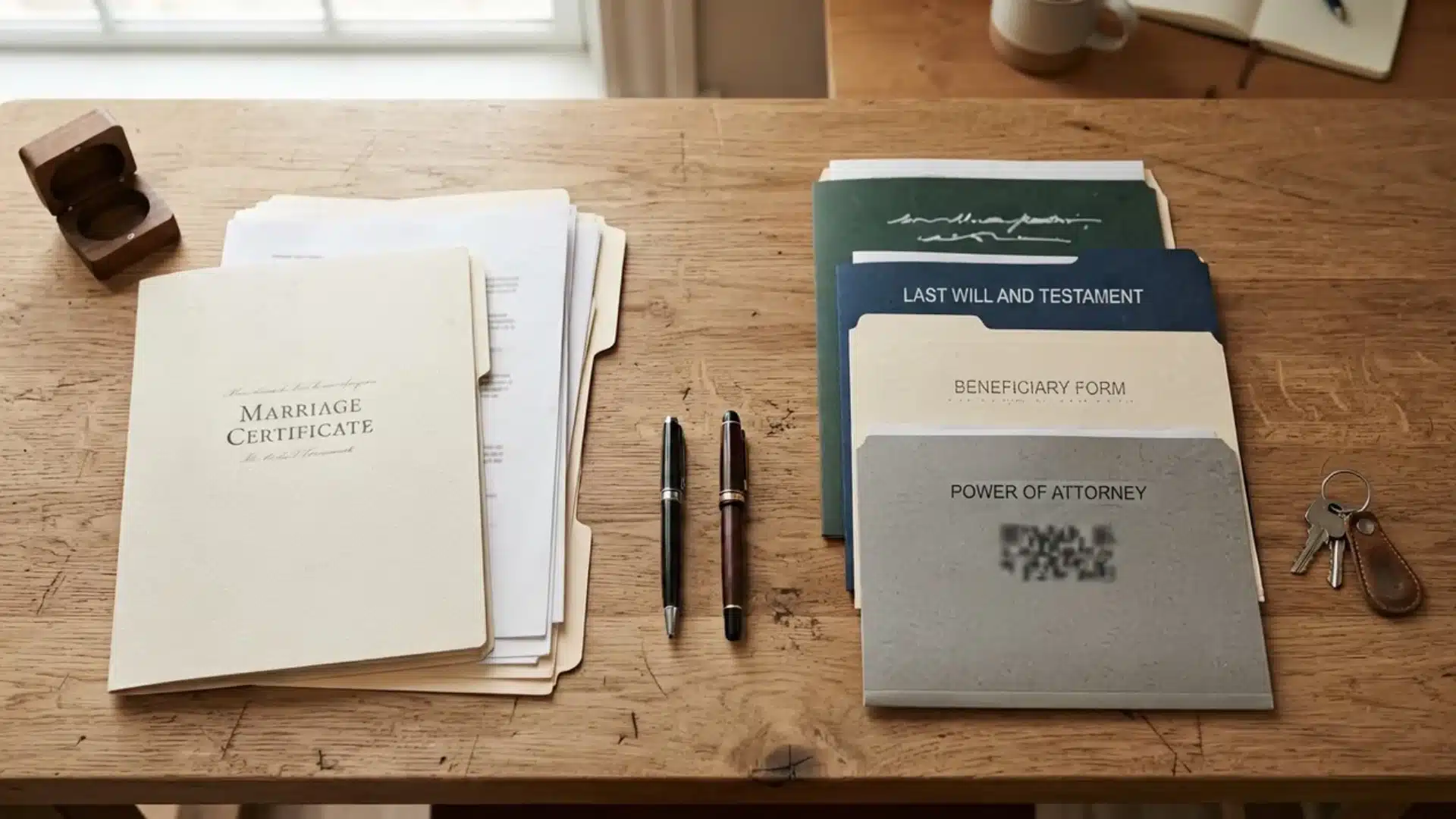
Choosing between a domestic partnership and marriage can feel simple until you look at the legal side.
You may share a home, bills, and long-term plans, yet the law may treat your relationship very differently. The domestic partnership vs marriage question affects more than relationship status.
It can shape taxes, health benefits, property rights, inheritance, medical decisions, and what happens if you separate or move elsewhere.
As a paralegal who has spent over a decade helping attorneys prepare filings, I have seen couples assume one registration form covers everything, only to find major gaps later.
Understanding where each option helps, where it falls short, and which protections require separate documents can help you choose what fits your life.
What Does Domestic Partner Mean?
A domestic partner is usually an unmarried adult in a committed relationship with another adult. You may live together, share bills, and handle daily responsibilities as a couple.
Still, living together does not automatically create a legal domestic partnership.
The term may describe your personal relationship, a workplace benefit status, or a formally registered partnership.
Common requirements may include:
- Shared Residence: You usually need to live at the same address.
- Committed Relationship: The relationship must be ongoing, not temporary.
- Financial Responsibility: You may need proof of shared expenses or financial support.
- Minimum Age: Both partners must meet the legal age requirement.
- Marital Status: Neither person can usually be married to someone else.
- Registration: Certain rights require forms filed with an employer or government agency.
Check the written rules yourself before relying on the label. Meeting an employer’s definition of a domestic partner may provide insurance, but not inheritance, property, or state-level rights.
Domestic partnerships did not start as a matter of preference.
Many state and local governments created the status because same-sex couples could not legally marry until nationwide marriage equality took effect in 2015.
Some couples still choose a domestic partnership today for reasons beyond that history, but the option exists largely because of that earlier legal gap.
Domestic Partnership vs Marriage: What is the Main Difference?
The biggest difference is how far the legal protections extend. Marriage is recognized federally and across states, while domestic partnership rights depend on a specific state, city, county, or employer.
Those benefits can change significantly by location. Here is a simple comparison:
| Issue | Marriage | Domestic Partnership |
|---|---|---|
| Federal Recognition | Recognized for federal purposes | Generally not treated as marriage |
| State Recognition | Recognized across states | Depends on state and local law |
| Federal Tax Filing | Joint or separate married returns | Usually individual returns |
| Inheritance | Many automatic spousal rights | Often depends on local law or planning |
| Health Benefits | Commonly available | Depends on the employer or plan |
| Ending the Relationship | Requires divorce or annulment | Process depends on registration rules |
| Moving Elsewhere | Status remains recognized | Benefits may change or disappear |
This difference matters when life stops being simple. Hospital care, death, relocation, and separation can quickly expose missing protections.
Marriage creates a legal package with many automatic rights. A domestic partnership usually provides selected rights rather than the full package.
How Do Legal and Financial Rights Compare?

Marriage grants many rights automatically, while domestic partners often need separate documents to create similar protection.
Daily life may feel identical under either relationship, but the legal results can be very different during taxes, illness, separation, or death.
1. Federal and State Recognition
Marriage receives federal recognition and generally remains valid when spouses move between states.
Domestic partnerships work differently because their rights depend on the state, city, county, or employer that created them.
A registration accepted in one area may provide few protections elsewhere. Employer benefits can also disappear after a job change or policy update.
Before relying on domestic partner status, check:
- State Laws: Confirm whether statewide registration exists.
- Local Rules: Review city or county requirements.
- Employer Policy: Check current benefit eligibility.
- Portability: Ask whether rights continue after moving.
- Policy Changes: Confirm whether benefits can be withdrawn.
The same term does not guarantee the same rights everywhere, so confirm it in writing. Always read the exact law or policy.
2. Taxes and Employee Benefits
Married couples can file federal taxes jointly or separately. Registered domestic partners cannot file as married solely because of their partnership status.
Tax reporting may become more complicated in community property states such as California, Texas, and Arizona, where income earned by either partner may need to be divided between both tax returns.
Employer-paid health coverage for a partner may also count as taxable income to the employee unless the partner qualifies as a tax dependent.
Important points include:
- Federal Filing: Domestic partners usually file separate returns.
- Community Income: Some states require income allocation.
- Form 8958: Certain partners may need this IRS allocation form.
- Health Coverage: Employer contributions may become taxable.
- Tax Dependents: Different rules may apply.
- Final Liability: Marriage does not always reduce taxes.
I recommend comparing both situations with a qualified tax professional before choosing based on benefits or expected savings.
3. Inheritance and Estate Rights
A surviving spouse usually receives inheritance protections under state law, even without a will. Domestic partners may not receive those same rights unless local law clearly provides them.
This is where planning mistakes can become expensive. Naming your partner on one account does not control every home, vehicle, bank account, or retirement asset.
Domestic partners may need:
- A valid will
- Updated beneficiary forms
- A revocable living trust
- Financial power of attorney
- Health care authorization
- Clear ownership records
These documents cannot reproduce every protection marriage provides. Still, they can reduce disputes, delays, and confusion.
Review every major asset separately. No single document covers the entire estate.
4. Property, Debt, and Financial Responsibility
Marriage can affect property ownership, debt, support duties, and asset division after divorce.
Domestic partners may receive similar treatment in some states, but ordinary contract rules apply elsewhere.
The name on the title and the source of purchase funds can strongly affect ownership. Shared payments alone may not create equal rights.
Protect yourself by reviewing:
- Property Titles: Confirm who legally owns each asset.
- Purchase Records: Track each partner’s contribution.
- Written Agreements: Clearly state ownership shares.
- Payment Duties: Explain who covers which expenses.
- Separation Terms: Decide how property will be divided.
- Joint Debts: Remember that lenders can pursue every signer.
Put these terms in writing early, before a dispute forces the issue. Private promises may not protect either partner against a lender or legal dispute.
How Are Marriage and Domestic Partnerships Ended?

Marriage legally ends through divorce or annulment. Simply separating or moving into different homes does not end the marriage or remove shared legal responsibilities.
Divorce gives couples a formal court process for dividing property and debts.
It may also cover financial support, parenting time, and child custody when children are involved.
Ending a domestic partnership depends on where it was registered, and the process can look closer to a legal separation than a simple form.
Some partnerships can be closed with an administrative form, while others require a court process similar to divorce. Property, debt, support, or parenting issues can complicate matters.
Before separating, collect:
- Registration Certificates
- Property Deeds and Vehicle Titles
- Bank and Investment Statements
- Loan and Credit Agreements
- Insurance and Beneficiary Forms
- Estate Planning Documents
I would not assume moving out ends the relationship legally. Leases, mortgages, cards, and joint accounts remain active until they are formally changed or closed.
How Does a Civil Union Compare to Both?
A civil union sits between a domestic partnership and marriage in some states.
It gives couples many of the same legal protections as marriage at the state level, but like a domestic partnership, it stops at the state line and carries no federal recognition.
Key points to check:
- State Availability: Civil unions exist only in states that created the status.
- State-Level Rights: Some civil unions grant inheritance, property, and support rights similar to marriage.
- Federal Recognition: None. Federal tax and benefit rules follow marriage, not civil union status.
- Dissolution: Ending a civil union usually requires a court process similar to divorce.
- Conversion: Some states automatically converted existing civil unions into marriages after marriage became legal nationwide.
If your state offers a civil union, compare its exact rights against both marriage and a domestic partnership before choosing. The name alone does not tell you what protections you will receive.
Which Option May Fit Your Situation?

Neither option works for every couple. The right choice depends on the protections you need and the responsibilities you are willing to accept.
Think about your future plans, not only the relationship label.
Moving, having children, buying property, paying taxes, handling medical decisions, and planning an estate can all affect your choice.
1. When Marriage Usually Provides More Protection
Marriage may suit you when you want broader legal recognition and more consistent rights between states.
It may provide:
- Federal Tax Filing Choices
- Federal Spousal Benefits
- Inheritance Protections
- Retirement and Survivor Benefits
- Medical Decision Rights
- Formal Property Division
- Possible Immigration Benefits
These protections have conditions. Marriage can also create shared financial duties, including responsibility for certain joint tax debts.
2. When a Domestic Partnership May Be Enough
A domestic partnership may work when you mainly need employer or local benefits and do not want to marry.
Possible benefits include:
- Employer Health Insurance
- Hospital Visitation
- Limited Medical Authority
- Local Housing Benefits
- Certain State or City Protections
Always read the registration rules and benefit policy carefully. The status may provide fewer protections than expected. Employer-paid coverage may also count as taxable income, increasing the actual cost.
3. What to Check Before Deciding
Focus on what would happen during a medical emergency, death, relocation, job change, or separation.
Ask:
- Can you file taxes together?
- Can your partner inherit automatically?
- Who makes medical decisions?
- Who receives the home after death?
- How are debts divided?
- Will the status remain valid after moving?
- How is the relationship legally ended?
- Which benefits depend on employment?
Legal status may not cover everything. Wills, beneficiary forms, property agreements, and powers of attorney can fill some gaps. A local attorney and tax professional can explain the effect on your situation.
Conclusion
Domestic partnership vs marriage is not only about what your relationship is called.
It is about what happens when taxes, property, health care, inheritance, benefits, or separation become real issues.
Marriage usually provides broader, more portable legal protection, while a domestic partnership may cover only certain local or employer-based benefits.
That does not make one choice right for every couple. It means you need to match the legal status to your life, your plans, and the risks you want covered.
Before choosing either option, review your state rules, update key documents, and speak with a local attorney or tax professional so you know exactly what protections you have.
Frequently Asked Questions
Is a Domestic Partner the Same as Being Married?
No. A domestic partner shares a household with someone under a status registered through a state or employer, not a marriage license. Domestic partnerships generally skip the automatic federal rights that come with marriage.
Can a Domestic Partner Be Your Boyfriend or Girlfriend?
Not automatically. Someone only becomes a legal domestic partner once the relationship is registered with a city, state, or employer offering the status. Dating or living together alone doesn’t create legal protections.
Is a Domestic Partnership the Same as a Common-Law Marriage?
No. A recognized common-law marriage treats a couple as legally married without a license, once state requirements are met. A domestic partnership is a separate, narrower status that always requires formal registration.
Do Domestic Partners Automatically Inherit From Each Other?
Not usually. A married spouse typically inherits automatically if their partner dies without a will. A domestic partner usually doesn’t, and needs a will, trust, or beneficiary designation instead.