
Someone posted false claims about you online. Maybe a coworker spread lies at work, or a former business partner published fake reviews.
The damage feels instant, but fixing it takes real legal skill.
The worst part? Most people have no idea where to start. They Google for hours, read confusing legal terms, and still feel lost.
I get it, as the legal system was not built to be simple, and defamation law is one of the trickiest areas out there.
That is exactly why having the right defamation attorney matters so much. A good lawyer does more than file paperwork.
They protect your name, fight for fair compensation, and handle the stress so you do not have to carry it alone.
I wrote this article to break it all down in plain, easy language. No legal jargon, no fluff, just real, useful information to help you take the right next step.
What is Defamation Under U.S. Law?
Defamation is a false statement presented as fact that damages someone’s reputation. It falls under tort law, allowing victims to sue for damages. There are two main types:
- Libel: It refers to written or published false statements. Social media posts, news articles, blog comments, and online reviews all fall under this category.
- Slander: It refers to spoken false statements made to a third party. A coworker telling others that someone committed a crime they did not commit is one example.
According to the First Amendment Encyclopedia, both libel and slander require a false statement that harms someone’s reputation and is shared with others. A defamation attorney can clarify which type applies to a case.
It is also worth knowing the distinction between defamation per se and defamation per quod.
Defamation per se refers to statements so harmful on their face that courts presume damages without requiring the plaintiff to prove specific financial loss.
Common categories include false accusations of criminal conduct, statements that someone has a loathsome disease, and false claims that damage a person in their profession or trade.
Defamation per quod covers statements that require additional context or explanation to understand why they are damaging, and in those cases, the plaintiff must prove actual harm.
When Do You Need a Defamation Attorney?
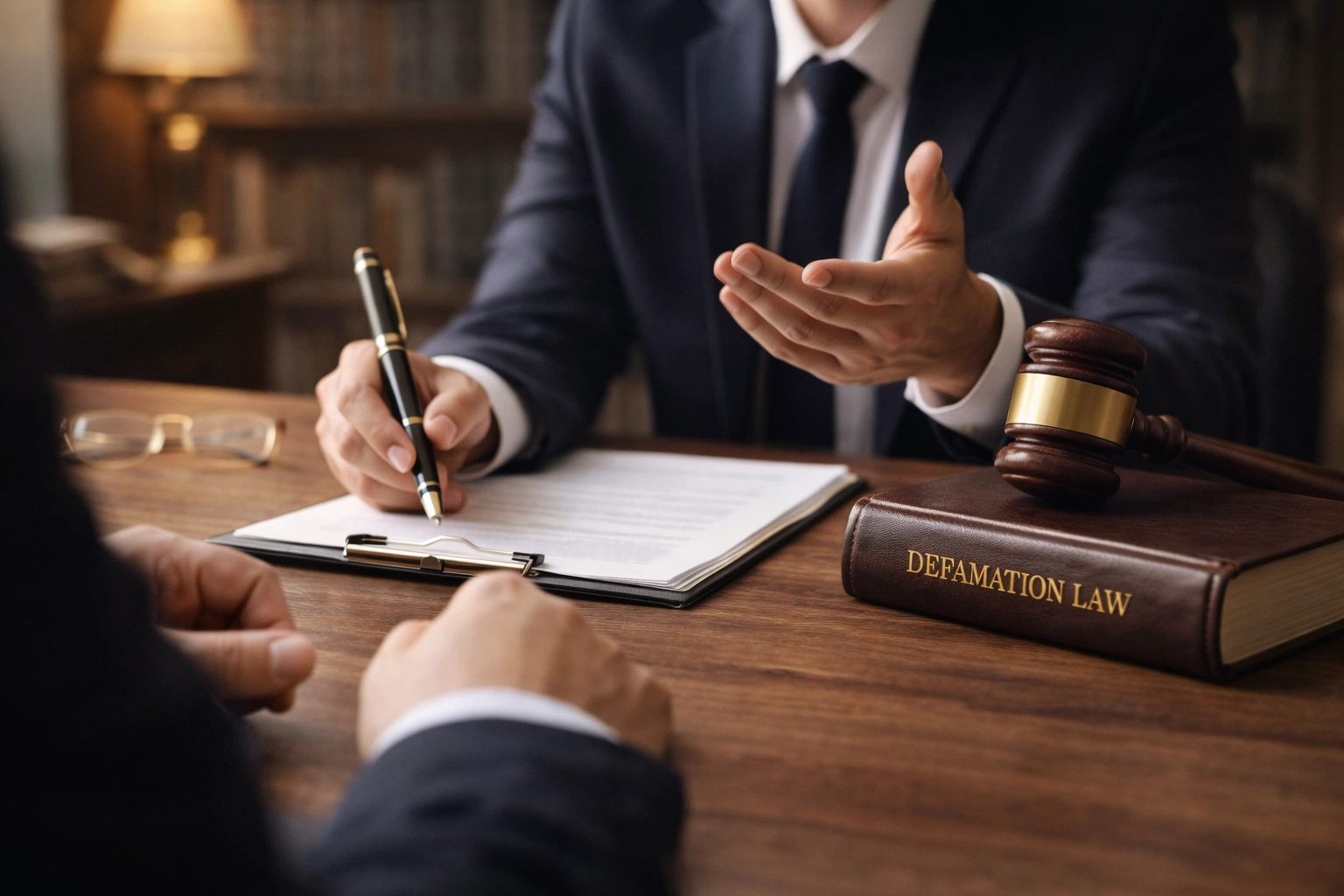
A defamation attorney is vital when false statements harm a person’s career, business, or reputation, particularly online.
Legal action may be necessary if the false statement causes financial losses.
Most states impose a statute of limitations of one to three years for defamation claims, and the clock typically starts running from the date the statement was first published, not from when the victim discovered it.
Early legal involvement preserves evidence and prevents a winnable case from expiring.
Most states have a statute of limitations of 1 to 3 years for defamation claims. Early legal involvement helps preserve evidence and meet deadlines.
Internet defamation, or cyber-libel, includes false statements on social media and review platforms.
An experienced lawyer can subpoena platforms, identify anonymous posters, and quickly collect digital evidence to strengthen your case.
In practice, the first call I make in most online defamation matters is not to a courthouse, it is to the platform. A well-drafted cease and desist letter, backed by the credible threat of litigation, resolves a meaningful number of these cases before formal proceedings ever begin.
People underestimate how much leverage a letter on attorney letterhead actually carries, particularly against private individuals who have no legal representation of their own.
What Does a Lawyer for Defamation Do?
A defamation lawyer oversees the entire legal process, from the initial consultation through a potential trial, if necessary.
The process starts with a case evaluation to determine if the claim is legally sound and worth pursuing.
Following this, the lawyer files the lawsuit within the applicable statute of limitations in the appropriate jurisdiction.
During the investigation phase, both parties exchange information through written questions known as interrogatories and conduct depositions.
Most civil cases resolve before trial, as settlement is common in U.S. litigation. If a settlement cannot be reached, the lawyer will then provide representation during the trial.
How to Prove a Defamation Case?
Proving a defamation case requires more than showing that a statement was hurtful or offensive. The focus is on demonstrating that a false statement was presented as fact, caused harm, and was made with the required level of fault.
- Publication To A Third Party: The statement must have been communicated to at least one person other than the plaintiff, whether verbally, in writing, or through digital platforms.
- Identification Of The Plaintiff: The statement must clearly refer to the plaintiff, either by name, image, or enough detail that others can reasonably identify them.
- False Statement Presented As Fact: The claim must be untrue and stated as a fact, not merely an opinion or subjective expression.
- Fault On The Defendant’s Part: The defendant must have acted negligently or with actual malice, depending on the plaintiff’s status and jurisdiction.
- Proof of Harm: The plaintiff must show measurable damage, such as reputational loss, financial harm, or emotional distress resulting from the statement.
Public Figures vs Private Individuals
The law treats public figures and private individuals differently in defamation cases. The standard of proof changes based on who was defamed.
Understanding how civil litigation works more broadly can help set realistic expectations for the defamation lawsuit process, from filing through discovery and a potential trial.
| Factor | Private Individual | Public Figure / Official |
|---|---|---|
| Standard of Proof | Negligence | Actual malice |
| What Must Be Proven | The speaker failed to use reasonable care to check the truth | The speaker knew the statement was false or acted with reckless disregard for the truth |
| Legal Origin | State common law, affirmed in Gertz v. Robert Welch, Inc. (1974) | U.S. Supreme Court, New York Times Co. v. Sullivan (1964) |
| Difficulty Level | Lower bar to meet | Much higher bar to meet |
| Examples | Everyday citizens, small business owners | Celebrities, politicians, government officials |
How to Choose the Right Defamation Attorney?
Picking the best lawyer requires careful thought. Defamation law is a niche area, and not every attorney has the right background for it.
- Specialized Attorneys: Choose legal experts in defamation and First Amendment cases who have a demonstrated history of successful outcomes.
- Communication Style: Defamation cases involve sensitive details. Lawyers should respond promptly, explain legal terms, and keep clients updated throughout the process.
- Fee Structure: Defamation attorneys may charge by the hour or on a contingency basis; get a clear cost breakdown upfront.
- Reputation in the Legal Community: Check reviews, testimonials, and bar records. A good defamation attorney will have positive feedback and a clean record.
Types of Damages in a Defamation Case
A successful defamation lawsuit can result in financial compensation for the victim. Courts in the U.S. recognize 3 main types of damages:
| Damage Type | What It Covers |
|---|---|
| General Damages | Harm to reputation, emotional distress, shame, and personal suffering |
| Special Damages | Measurable financial losses like lost wages, lost business, and medical bills |
| Punitive Damages | Extra compensation is meant to punish the defendant for extreme or malicious behavior. |
Common Defenses Against Defamation Claims
Defamation claims are not absolute, and several defenses can protect individuals from liability. Courts recognize that not all statements that harm reputation are unlawful.
- Truth as a Defense: A defamation claim fails if the statement’s overall message is mostly true, not 100% accurate.
- Opinion Defense: Opinions like “I think this restaurant is terrible” are protected speech, but combining them with false factual statements can lead to legal liability.
- Privilege Defense: Certain statements in specific contexts are legally protected from defamation claims under “privilege.”
- Anti-SLAPP Laws: Laws in over 30 states enable defendants to dismiss defamation cases infringing on free speech, often making plaintiffs responsible for the defendant’s legal costs if successful.
Conclusion
False statements can cause serious, lasting damage to a person’s career, livelihood, and personal life.
The legal system offers meaningful tools to fight back, but those tools work best when used early and by someone who knows how to use them.
This article covered what defamation means under U.S. law, how to prove each element of a claim, what a lawyer for defamation actually does at each stage of the process, the defenses the other side may raise, and what to prioritize when choosing legal representation.
The key is to act quickly, preserve all evidence, and work with an attorney who specializes in these cases rather than one who treats defamation as a side matter.
State-specific rules on statutes of limitations, Anti-SLAPP exposure, and damages caps vary significantly and can dramatically affect what remedies are available.
Have you or someone you know faced a situation like this? Share your experience in the comments below.
Frequently Asked Questions
How Much Does a Defamation Attorney Cost?
Hourly rates for defamation lawyers range from $200 to $500+ per hour, depending on location and experience. Some attorneys work on a contingency fee basis, getting paid only if the case is won.
Can I Sue for Defamation on Social Media?
False statements on social media platforms such as Facebook, Instagram, X, or Reddit can constitute libel. The legal elements remain the same, and a defamation attorney can help identify anonymous posters through subpoenas.
Is Defamation Hard to Prove?
Yes, you must show that the statement was false, published, harmful, and made in fault. Strong evidence and a skilled defamation attorney make it possible.