
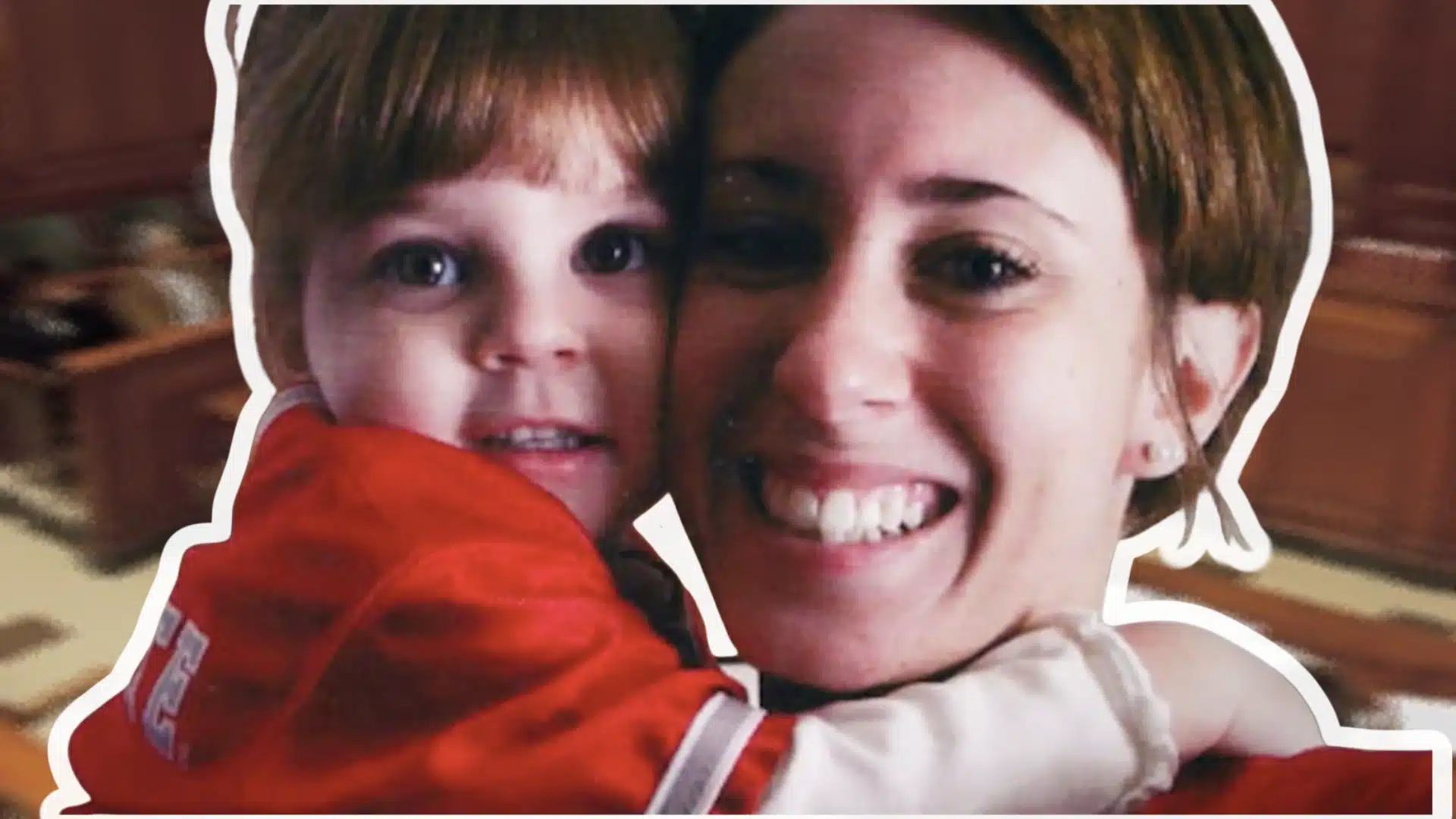
I remember where I was when the verdict came in. I was between hearings at the Orange County courthouse, the same building where Casey Anthony had appeared countless times, and the reaction in the hallway was immediate.
Shock, anger, disbelief. A few attorneys nodded quietly. They understood what had just happened, even if they didn’t like it.
That split reaction, fury from the public, reluctant acknowledgment from lawyers, is exactly what makes the Casey Anthony case unlike almost anything else in modern American legal history.
If you’ve searched “who is Casey Anthony” or landed here trying to piece together what actually happened, here is the full story.
Not the cable news version. The timeline, the evidence, the legal strategy, the verdict, and what it genuinely means when a jury says not guilty, even when the public says otherwise.
Who is Casey Anthony?
Casey “Marie” Anthony was born on March 19, 1986, in Warren, Ohio. She grew up in Orlando, Florida, raised by her parents, George and Cindy Anthony.
George had worked as a police officer before becoming a security guard; Cindy was a nurse. By most accounts, it was a close household, though one with real friction, particularly during Casey’s teenage years.
Casey never finished high school. In 2005, at 19, she gave birth to a daughter named “Caylee Marie Anthony“, born on August 9. The identity of Caylee’s father was never publicly shared.
In the 2022 Peacock docuseries Casey Anthony: Where the Truth Lies, Casey claimed for the first time that she had been raped at a party and did not know who Caylee’s father was, a detail she had never disclosed publicly or at trial.
Caylee was largely raised in the Anthony family home, while Casey lived there too, though neighbors and friends later described Casey as more focused on her social life than on her parental responsibilities.
What Happened in June 2008?
June 15, 2008, Father’s Day, was reportedly the last day Caylee was seen alive by anyone outside Casey. Following an argument at the family home, Casey left with Caylee and never returned.
For 31 days, no one outside of Casey claimed to have seen Caylee. Casey told family members the toddler was with a babysitter.
She was out at nightclubs, posted photos on social media smiling with friends, and even entered a “hot body” contest at a local bar.
On July 3, while her daughter was, by all accounts, already dead, she got a tattoo that reads “Bella Vita,” Italian for “beautiful life.”
That tattoo became one of the most-cited pieces of behavioral evidence at trial and remains one of the most recognizable details of the entire case.
On July 15, 2008, Cindy Anthony received a call about a family car that had been towed and abandoned. When she and George retrieved it, the smell from the trunk was unmistakable.
George, with his law enforcement background, later said he immediately recognized it as decomposition. Cindy called 911 that same night. She told the operator the car smelled like there had been a dead body in it.
Casey, when pressed on Caylee’s whereabouts, said a babysitter named “Zenaida Fernandez-Gonzalez” had kidnapped her on June 9, nearly five weeks earlier.
The Investigation of the Casey Anthony Case
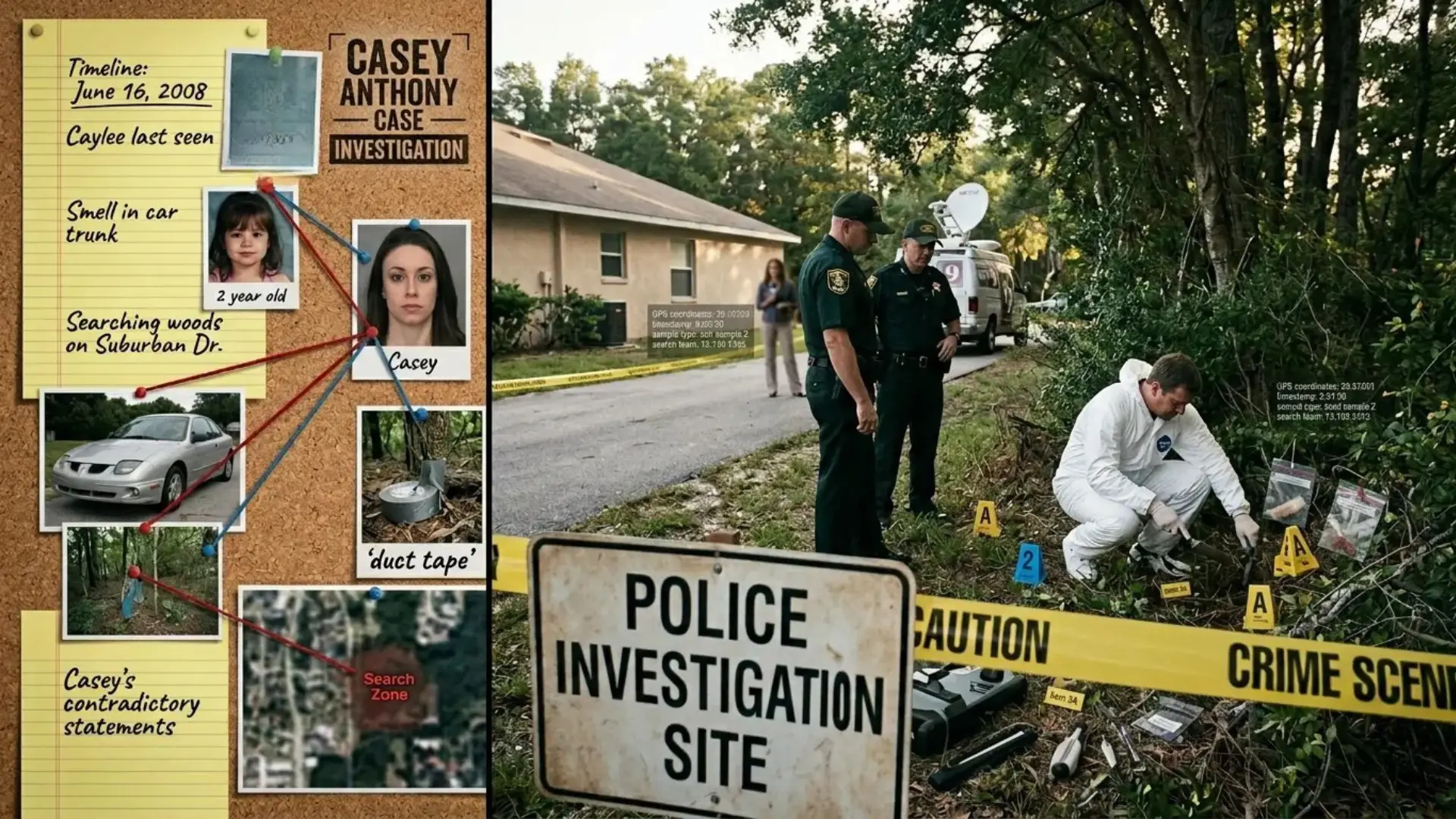
Police moved quickly, and Casey’s story fell apart just as fast.
Investigators visited the apartment where the babysitter supposedly lived. It had been vacant since February. No one by that name had ever lived there.
Casey then led police to Universal Studios, claiming she worked there. She didn’t.
Within 24 hours of the 911 call, she was taken into custody, and understanding the difference between being detained and placed under formal arrest matters here, because Casey’s initial detention quickly escalated to criminal charges.
Forensic evidence pulled from the car’s trunk pointed in one direction:
- Chloroform traces: Chemical compounds consistent with chloroform were detected in the trunk lining.
- Decomposition hair: A strand of hair consistent with Caylee’s DNA showed visible signs of decomposition.
- Air sample analysis: Researchers from the University of Tennessee, the institution that runs the renowned “body farm” forensic research facility, analyzed an air sample from the trunk and confirmed the presence of human remains.
- Computer searches: The family computer showed searches for “foolproof suffocation” and “how to make chloroform”. However, as would become significant at trial, defense experts later challenged the software used to reconstruct the browser history. Cindy Anthony testified under oath that she had conducted the chloroform searches herself, claiming she had been looking up “chlorophyll” after her dogs ate bamboo leaves and the browser had autocompleted to “chloroform.” Prosecutors were skeptical, but her testimony introduced enough ambiguity that jurors could not cleanly attribute those searches to Casey alone.
In October 2008, Casey was arrested again, this time on a charge of first-degree murder. Prosecutors announced they would seek the death penalty.
In December 2008, a utility worker found a bag near the Anthony home, less than half a mile away.
Inside were skeletal remains later confirmed through DNA to be Caylee Anthony. She was found with duct tape near her skull, a blanket, and items traced back to the Anthony household.
The utility worker, Roy Kronk, later filed a defamation lawsuit against Casey’s defense team, claiming that her attorneys had accused him of being involved in Caylee’s death.
This claim illustrated how aggressively the defense pursued alternative suspects even after the trial concluded.
Beginning of the Trial & Why it Ended?
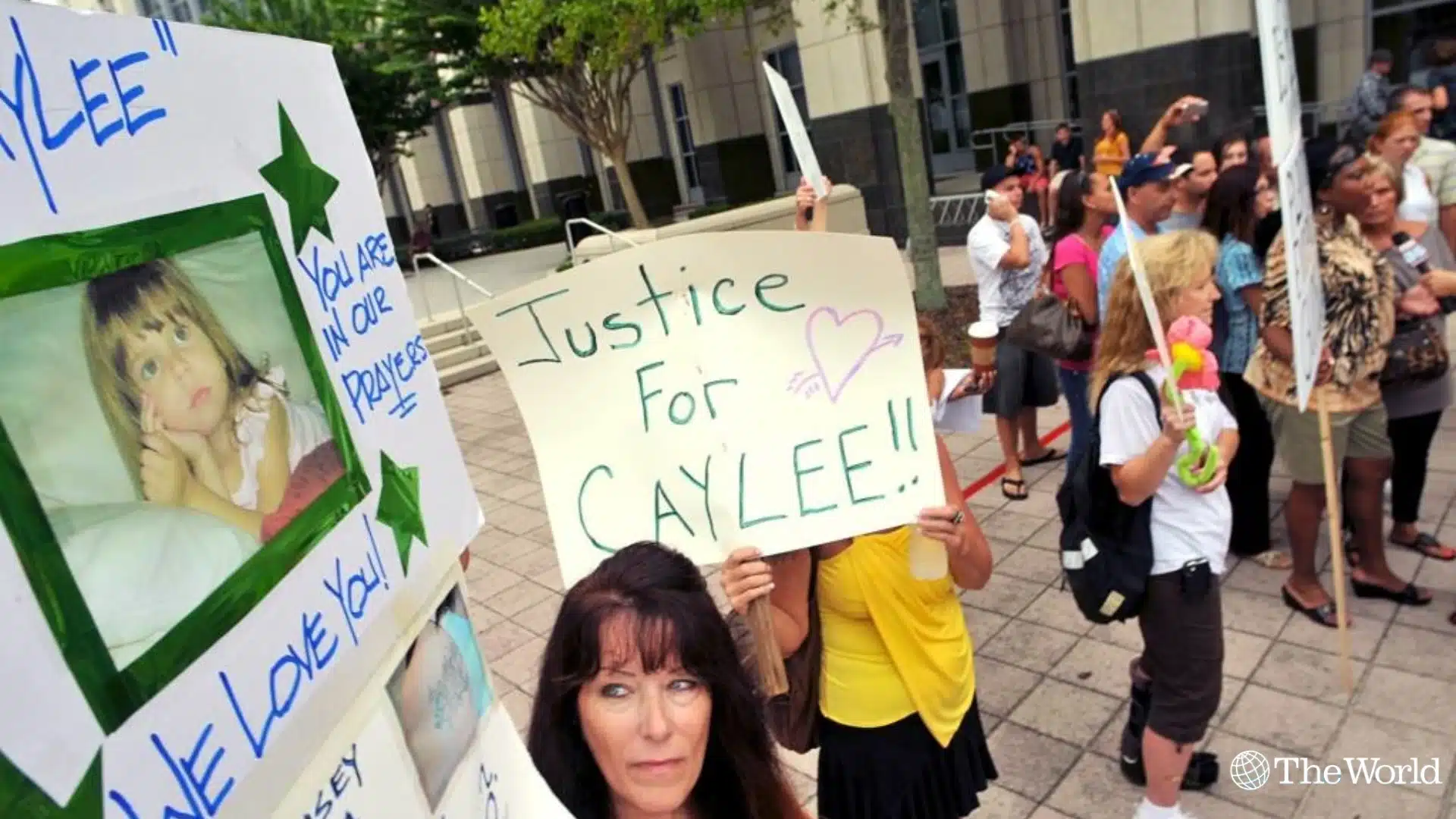
The trial began in May 2011, nearly three years after Caylee disappeared. Because of the extraordinary pretrial publicity, jury selection was moved to Clearwater, Florida.
Jury selection was moved to Clearwater, Florida, and took several weeks.
The prosecution’s theory was straightforward: Casey used chloroform to subdue Caylee, suffocated her, and then disposed of the body to free herself from the responsibilities of motherhood.
They pointed to her behavior during the 31 days, the computer searches, the forensic evidence from the trunk, and her pattern of lying.
The defense, led by attorney Jose Baez, took a different approach entirely.
In his opening statement, Baez claimed Caylee had accidentally drowned in the family’s backyard pool on June 16 and that George Anthony had found the body and helped cover it up.
Baez also alleged that Casey had been sexually abused by George as a child, which he argued explained her dysfunctional behavior and compulsive lying. None of these allegations was proven at trial.
The prosecution relied heavily on circumstantial evidence. From a legal standpoint, that’s not inherently weak, but it requires every piece to connect cleanly.
Baez’s opening, in particular, is still dissected in law schools for its willingness to make explosive claims without the evidence to back them up.
For anyone interested in how defense attorneys structure their closing arguments in high-stakes cases, the Anthony trial offers one of the most studied examples in recent American criminal history.
And here is where the Casey Anthony case ran into real trouble: the cause of death was never established. No one could prove how Caylee died.
The duct tape could not be linked to Casey forensically. The chloroform evidence was challenged. The computer search reconstruction software was disputed under oath.
Dr. Jan Garavaglia, the medical examiner who testified for the prosecution, confirmed Caylee had been murdered but was unable to determine the exact cause of death, a critical gap the defense exploited throughout closing arguments.
After 33 days of testimony and more than 400 pieces of evidence entered into the record, the jury deliberated for about 10 hours.
On July 5, 2011, they returned a verdict: not guilty on all charges of first-degree murder, aggravated child abuse, and aggravated manslaughter.
Casey was convicted on four counts of lying to law enforcement.
Why Was Casey Anthony Acquitted?
It is the question that still makes people furious. But from a defense standpoint, the jury’s decision wasn’t irrational. It was legally sound.
“Reasonable doubt” doesn’t mean the jury thought Casey was innocent. It means the prosecution didn’t prove guilt to the standard the law requires.
In Florida, as in all U.S. jurisdictions, the burden of proof rests entirely with the state. The defense does not have to prove anything.
All Baez had to do was introduce enough uncertainty, and between the undetermined cause of death, the disputed forensic software, and Cindy Anthony’s chloroform testimony, he did exactly that.
There was no direct evidence placing Casey at the scene of a specific act. The forensic evidence was challenged credibly by defense experts. The jury had no clean story of what happened, only that something terrible did.
Marcia Clark, the O.J. Simpson prosecutor, said after the verdict that juries sometimes interpret reasonable doubt too narrowly.
A number of legal analysts argued that the state overcharged by seeking the death penalty, which may have made jurors more cautious about conviction.
The logic is familiar in capital cases: when the consequence is execution, jurors apply an even higher threshold of certainty, and on purely circumstantial evidence, that threshold is especially hard to clear.
The so-called “CSI effect“, the tendency of jurors conditioned by forensic crime dramas to expect DNA, fingerprints, and laboratory certainty before convicting, was also widely discussed in the aftermath.
When jurors expect hard science and a case delivers only behavioral evidence and contested lab results, acquittals become more likely regardless of how damning the circumstances appear.
None of this means justice was served for Caylee. It means the system worked as designed, even when the outcome felt wrong to millions of people.
I’ve had clients ask me whether the Casey Anthony verdict means the system is broken.
My answer is always the same: it means the system is doing what it was built to do, which is to force the government to prove its case before it can take a person’s freedom.
That’s a principle worth protecting, even when individual outcomes are hard to accept.
The Role of Media in the Casey Anthony Case
It is impossible to fully understand the Casey Anthony case without accounting for the role of cable television and social media in shaping public perception before a single witness was sworn in.
Nancy Grace, whose HLN show was the primary driver of national coverage, consistently referred to Casey as the “Tot Mom” and made little effort to conceal her view of Casey’s guilt.
A media psychologist at the time noted that the public had been whipped into a frenzy wanting revenge for a “poor little adorable child” and that by the time the trial began, the court of public opinion had already rendered its verdict.
Grace’s audience rose more than 150 percent during the trial period, and HLN achieved its most‑watched hour in network history while broadcasting the reading of the verdict.
This matters legally because intense pretrial media saturation affects jury pool quality, influences public expectations of evidence, and can create a gap between what a jury is permitted to decide on the law and what the public demands based on emotional coverage.
The Casey Anthony verdict was shocking to the public in part because the public had been tried to a different standard, one that did not require proof beyond a reasonable doubt.
The Legal Legacy
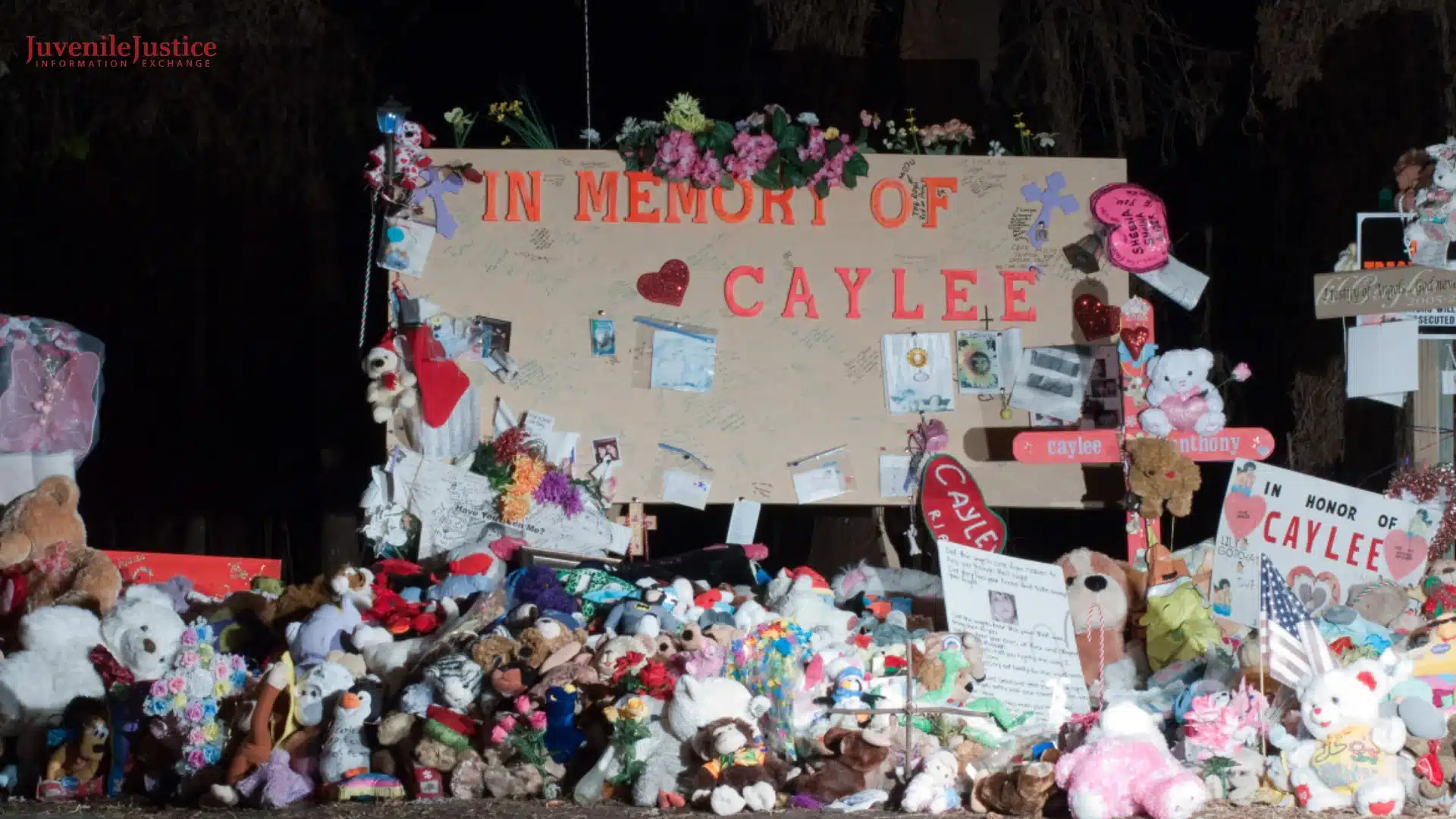
One concrete thing came out of the case: legislative change. Several U.S. states passed versions of “Caylee’s Law” in the years following the trial. Florida, where the case originated, was among the states that acted.
Under these statutes, a parent or guardian who fails to report a missing child within a specific timeframe commits a felony, not a misdemeanor.
The specifics vary by state, but the intent is clear. What Casey did, waiting 31 days to report Caylee missing, should never go uncharged again.
It is one of the rare instances where a case that ended in acquittal still produced a meaningful legal outcome.
The courtroom could not deliver accountability, so the legislature stepped in. The case also carries a lasting double jeopardy implication that many people overlook.
Because Casey was acquitted of murder, she cannot be retried for Caylee’s death, not for new evidence, not for a confession, not for anything disclosed later.
Under the Fifth Amendment, acquittal is final. Whatever Casey says publicly about what happened, the criminal justice system is closed on this question.
Sentencing and Release
Casey was sentenced to four years in prison for the lying charges, but she had already served nearly three years in pretrial detention.
Because Florida law allows credit for time served, and because she had earned good behavior credits, the way her sentences ran meant she walked out of custody just 12 days after the verdict.
She was released on July 17, 2011, just 12 days after the verdict. She was also ordered to pay approximately $217,000 in investigative costs to the state of Florida. She later filed for bankruptcy.
Where is Casey Anthony Now?
For years, Casey kept an extremely low profile. She lived with Patrick McKenna, the private investigator who led her defense team’s investigation.
She filed for bankruptcy, became estranged from her parents, and rarely appeared in public.
In a 2017 interview with the Associated Press, she said she didn’t know how Caylee died and claimed she slept fine at night, a statement that did little to soften public opinion toward her.
In November 2022, Casey broke her public silence in a significant way: she appeared on camera for the first time since the trial in a three-part Peacock docuseries titled Casey Anthony: Where the Truth Lies.
In it, she walked back the trial’s central defense theory.
Rather than claiming Caylee drowned accidentally in the family pool, the story Baez presented to the jury, Casey alleged that her father, George, had appeared holding a wet, lifeless Caylee and told her everything would be fine.
She also claimed she listened to him out of fear rooted in years of alleged sexual abuse. George Anthony denied all of these claims and declined to participate in the documentary.
One of the trial’s actual jurors responded publicly, noting that the defense had said Caylee drowned in the pool, “but now she’s saying she didn’t.”
The docuseries renewed public debate without resolving any of the underlying facts.
In 2025, Casey reappeared on TikTok, announcing herself as a “legal advocate.” She said she wanted to help people understand the justice system and give a voice to those who need it.
The move was met with immediate backlash. Brad Conway, the attorney who represented her parents during the trial, said publicly that Casey has nothing credible to offer in terms of legal guidance.
As a practicing attorney, I’ll say this plainly: surviving a criminal trial, even a high-profile one, doesn’t qualify someone to guide others through the legal system. Those are two very different things.
Conclusion
The Casey Anthony case doesn’t have a clean ending. There was no confession, no definitive cause of death, and no moment where the full truth came out in a courtroom.
What it does have is a two-year-old girl who died, a mother who lied about it for over a month, and a legal system that, by its own rules, could not convict without sufficient proof.
That’s a hard thing to sit with. It was hard for the jurors who voted to acquit.
It was hard for the public watching from home. And years later, it’s still hard, especially when Casey surfaces again as though the past is simply behind her.
But the case left something real behind: Caylee’s Law, a sharper national conversation about media influence on criminal trials, and an honest reckoning with what “reasonable doubt” actually means in a courtroom versus what it means on social media.
What do you think? Did the jury make the right call, or did the system fail Caylee? Did the prosecution overreach by pursuing the death penalty on circumstantial evidence, or was the evidence strong enough to convict?
Drop your thoughts in the comments below.
Frequently Asked Questions
Did Casey Anthony Take a Lie Detector Test?
Yes. Early in the investigation, Casey agreed to a polygraph administered by a private examiner hired by her own team. She reportedly failed it. The results were never admitted at trial since polygraph results are generally inadmissible in Florida courts.
Who Was Zenaida Fernandez-Gonzalez?
A real woman whose name Casey used as the fictional babysitter “Zanny.” The actual Zenaida had no connection to the Anthonys whatsoever. She later filed a defamation lawsuit against Casey for using her name and identity in the fabricated kidnapping story.
Did Casey Anthony Profit from Her Story?
She attempted to. After her release, Casey sought to sell her story and photographs but faced widespread public and advertiser backlash. Most deals fell through. She eventually filed for bankruptcy, listing significant debts and minimal assets.
What Happened to Casey Anthony’s Defense Attorney Jose Baez?
Baez went on to represent other high-profile clients after the trial, including Aaron Hernandez. He built a reputation as a go-to attorney for controversial, media-heavy criminal cases and has since written a book about the Anthony trial.
Can Casey Anthony Be Retried for Caylee’s Murder?
No. Casey Anthony was acquitted of all murder charges on July 5, 2011.
Under the Double Jeopardy Clause of the Fifth Amendment to the U.S. Constitution, a person cannot be tried twice for the same crime after an acquittal.
This means that regardless of any new evidence, admissions, or claims made in documentaries or interviews, the criminal case is permanently closed. Casey Anthony cannot be charged with Caylee’s murder again.