
ABOUT THE AUTHOR




A news alert says someone was charged with murder, and the story moves on without saying which kind. That gap matters more than it seems, because the exact charge decides whether a defendant is looking at a few years or a life sentence. Degrees of murder exist because not every killing carries the same level of planning, intent, or danger to others, and the law sorts that out before punishment is decided. Reading a headline correctly starts with understanding how that sorting works, beginning with what separates one degree from the next. What are Degrees of Murder? Murder degrees are a legal classification system that ties the severity of a charge to the level of intent and premeditation behind a killing, and how that system works depends on which state you’re in. Not every killing is treated the same under the law. Murder is a specific category of homicide, and the degree attached to a murder charge tells you how much planning and intent the prosecution believes was involved. Most states use a first- and second-degree structure. A handful recognize a third degree. Federal law uses only two. Some states skip degree labels entirely and use their own naming system. What is First-Degree Murder? First-degree murder is defined by premeditation, and it has two legally distinct paths to that charge, both carrying the most serious penalties the law allows. Most people picture one version: someone plans a killing and carries it out. But a person can also face first-degree murder without ever intending to kill anyone. 1. Premeditated Murder Premeditation doesn’t require days of planning. It requires that the intent to kill existed before the act, even briefly. Courts look for evidence that the defendant made a decision and then acted on it. Killing by poison qualifies. So does lying […]

Movies and TV shows love a defendant who goes free on an insanity plea, but that picture rarely matches what happens in a real courtroom. Judges do not treat a mental health diagnosis as proof of anything on its own, and a documented history of illness does not erase criminal responsibility by itself. The definition of insanity that courts actually apply is a narrow legal test tied to one specific moment: what the defendant understood when the crime happened. That single detail explains why the defense is rare, why it is hard to win, and what a court can still do next. What is the Definition of Insanity? The legal definition of insanity means a defendant had such a severe mental disease or defect that they could not understand their actions or recognize that those actions were wrong. The court applies this test only to the exact moment the crime occurred. A diagnosed mental illness alone is not enough. The American Psychiatric Association’s own position on the insanity defense treats it as a legal judgment, not a clinical one, grounded in whether the defendant’s mental state was substantially impaired at the time of the offense. Someone may have serious symptoms and still understand what they are doing. The real question is whether the condition prevented clear understanding when the offense happened. Courts also require evidence beyond the defendant’s statement. A judge may order a psychiatric evaluation, and a forensic psychiatrist or psychologist can explain the person’s mental condition to the court. In many cases, the defense must prove insanity. The prosecution does not always have to prove that the defendant was sane from the beginning. What are the Legal Tests for Insanity? US courts have used several insanity tests, although the following three are among the most commonly discussed standards. 1. The […]

A shouting match outside a bar. A neighbor calling the police because a party will not quiet down. Both scenes can end with the same surprise: someone facing a criminal charge they never expected. People ask what disorderly conduct is, and why one law seems to cover so many different situations. The short answer is that lawmakers built it to be flexible, which is exactly what makes it confusing for the person on the receiving end. Here you’ll learn what the charge actually requires, where the law draws the line around protected speech, and what happens once someone gets charged. You will also see how these cases get challenged and what tends to stay on the record afterward. What is Disorderly Conduct? Disorderly conduct is a low-level crime that exists in some form in almost every state. It covers public behavior that disturbs the peace, creates a safety concern, or causes alarm, annoyance, or disruption for others. The law does not always require someone to have planned trouble on purpose. In many states, reckless behavior that creates a risk of disturbing others can also lead to a charge. Here is the part that trips most people up. Every state writes its own version of this law, so the wording and the behaviors it covers can look different depending on where it happens. One state may focus mainly on public annoyance or alarm. Another may include broader situations involving noise, fighting, or interference with public order. That difference is a big reason this conduct gets called a catch-all charge. Even so, the behavior still has to meet the legal standard set by that state. Why Such Laws are Considered Broad or “Catch-All” Offenses? The catch-all reputation comes from how these laws are written and applied, not from any single type of […]
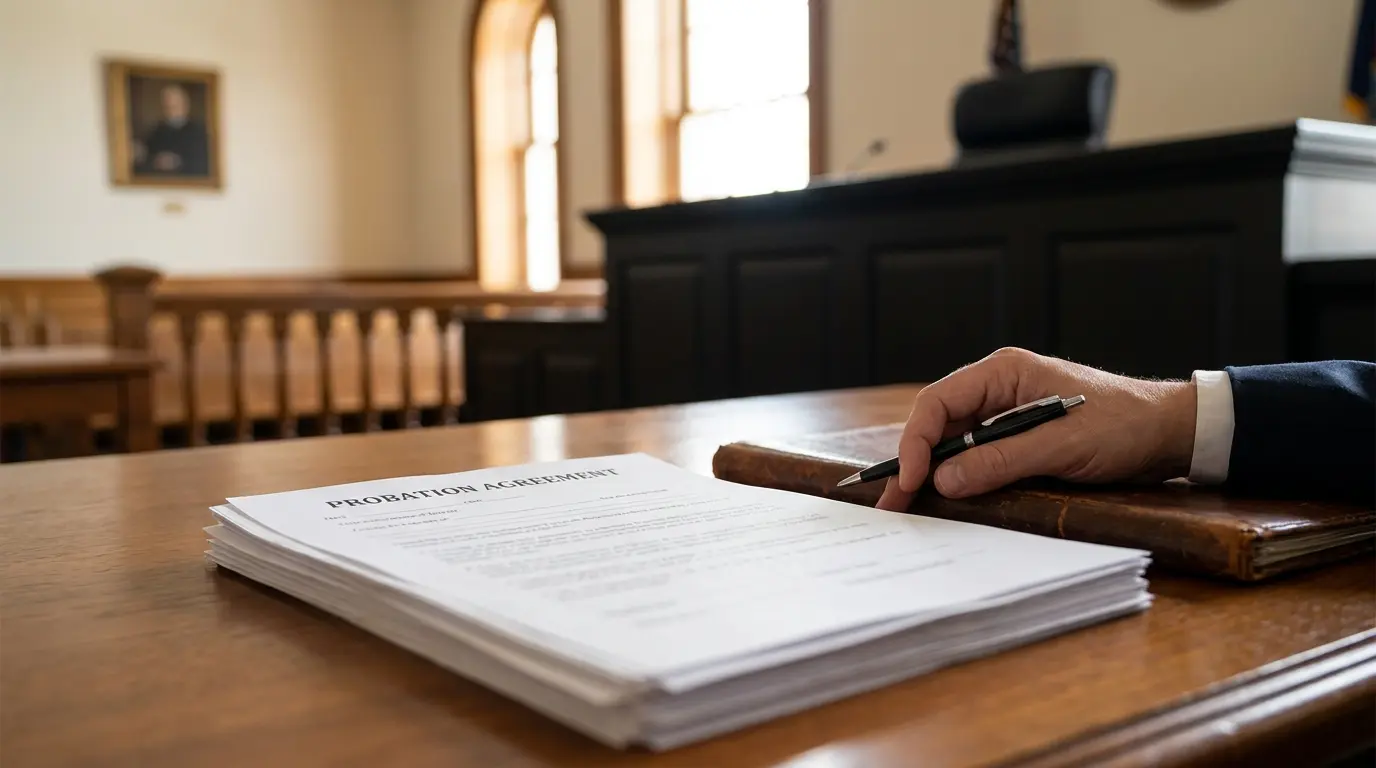
Probation comes up more often than people expect, and it rarely means the same thing twice. It can follow a court decision, show up during a trial period at work, or appear after a rough semester at school. Each version carries its own rules, but the core idea stays the same: you get a supervised chance to improve instead of a harsher outcome. As a paralegal who has spent over a decade helping people make sense of court paperwork, I still see the same confusion come up again and again. People often assume it only applies to criminal cases. Here is what it actually means, the types you may run into, and what a judge weighs before granting one. What Does Probation Mean? Probation is a supervised trial period that lets someone avoid a harsher outcome by meeting specific conditions over time. It shows up in courtrooms, workplaces, and schools, and the exact rules shift depending on where it applies. In criminal law, it means staying out of jail or prison while following court-ordered terms. At work, it means proving you are the right fit for a role, or correcting a specific performance issue before a deadline. In school, it means raising your grades back above a required threshold before time runs out. None of this is the same as getting off easy. Every version comes with real, enforceable conditions, and missing them can bring back the exact consequence you were trying to avoid. What Does Being on Probation Mean? Being on probation means a specific finding already happened. Someone determined you were responsible for something, whether that is a crime, a workplace issue, or a drop in grades. But you were not locked up, fired, or expelled. You are being supervised instead of removed, which is the actual trade […]

If you have unfiled returns sitting untouched, the fear can grow faster than the actual problem. In more than a decade of defense work, I have watched clients lose sleep over one missed year because they assumed prison was the next step. So can you go to jail for not filing taxes, or does the IRS usually handle it another way? The answer depends less on the missed deadline and more on what your actions show. This post looks at where civil penalties end and criminal exposure begins, and why tax evasion jail time involves far more than owing money or filing late. Once you understand that line, the situation becomes easier to face. Can You Go to Jail for Not Filing Taxes? Yes, you can go to jail for not filing taxes, but only when prosecutors prove the violation was willful. An honest mistake, missed deadline, or cash shortage usually leads to civil penalties instead. The government must show you knew about the filing duty and chose to ignore it. Missing several years may attract attention, but the number alone does not prove criminal intent. One overdue return doesn’t put someone on the path to prison, though plenty of people assume it does. That fear is usually far ahead of the facts. Forgetfulness, illness, poor records, or financial trouble can explain why filing stopped. Those problems still need attention, but they are different from deliberately hiding income or avoiding the IRS. The key issue is what your actions show, not simply how much you owe. When Does Not Filing Taxes Become a Crime? Not filing becomes a criminal issue when you knew a return was required and chose not to file it. That is where the word willful starts to matter. Investigators usually build that conclusion step by step: […]

Few legal terms carry as much history and confusion as sodomy. Its meaning changes across states, eras, and the legal context where you encounter it. What governments once used to police private life between consenting adults now carries a much narrower meaning in modern American law and legal practice. To understand the term, it helps to see how religious doctrine became criminal law, and how those laws later collapsed under constitutional scrutiny and overreach challenges. Today, the term still appears in some laws, but its scope varies widely. Always check the specific jurisdiction before relying on any dictionary definition alone. What Does Sodomy Mean? Sodomy is a legal and religious term for anal sex, oral sex, or acts that don’t lead to reproduction. It’s one of the few legal terms that started as a theological judgment. The word comes from Sodom, a city in the Bible. That origin matters more than it might seem. In practice, this is one of the most common points of confusion people run into when researching a case that uses the term. Most legal language is designed to be neutral. This word wasn’t. It arrived in law already carrying a moral verdict, and that shaped how governments used it for centuries. In British and Commonwealth English, the equivalent term is buggery. It covers the same conduct and appears in the same kinds of criminal codes. Sodomized is the verb form; it means an act of sodomy was performed on someone. In practice, you’ll almost always see it in police reports, court documents, or news coverage of sexual assault cases. What Acts Does Sodomy Cover? The short answer is: it depends on where you are. Most legal definitions include anal sex and oral sex. Some also include bestiality. But not every jurisdiction includes all three, and […]

Raise your right hand, swear to tell the truth, and every word after that carries legal weight. Lying under oath sounds like it should always lead to criminal charges, yet most sworn statements that turn out wrong never become a criminal case at all. Courts do not punish every mistaken memory or fuzzy recollection. The line between an honest slip and a felony depends on three narrow legal tests that many people rarely hear explained in plain language. Understanding where that line sits changes how a person should think about testimony, sworn documents, and the risk of signing them. Understanding Lying Under Oath Lying under oath is legally called perjury. It refers to making a false statement after taking a formal oath or affirmation to provide truthful information. The term applies to spoken testimony and written statements, including statements made during trials, depositions, affidavits, and other sworn legal documents. The oath requirement is what separates perjury from everyday dishonesty. A false statement made casually or outside a formal sworn setting generally does not qualify. For example, raising your right hand before testifying or signing a notarized affidavit counts as a formal oath; a private conversation, a text message, or an unsworn statement to police typically does not. People often use the words “lying” and “perjury” as if they mean the same thing, but the legal standards are much narrower. What Are the Legal Elements of Perjury? Perjury requires three main elements: a valid oath, an intentional false statement, and materiality to the legal matter involved. These requirements must exist together because failing to prove even one element can prevent a statement from meeting the legal definition of perjury. 1. Statement Made Under Oath The statement must be made after a person has been formally sworn in or affirmed to provide […]

The reasonable suspicion definition explains the legal standard police use before a brief stop. I want you to know it is about facts, not simple feelings. I have seen many people confuse this rule with a hunch or probable cause, but you should know that each standard gives police different powers legally. When you learn how courts review these stops, I think the limits become much clearer because officers must explain specific facts behind their actions, too. Here, I will show you what reasonable suspicion means, how it works, and why I believe knowing your rights helps you understand police encounters with confidence. What is the Reasonable Suspicion Definition? Reasonable suspicion is a legal standard that lets police briefly stop and question you. It has to be based on real facts, not just a feeling. An officer can’t stop you because something felt off. They need to point to specific things they saw or heard. This standard comes from the Fourth Amendment. It’s meant to protect you from being stopped for no real reason. The rule was set in a Supreme Court case called Terry v. Ohio. That’s why these stops are often called Terry stops. It’s important to know this only covers a brief stop. It doesn’t give police the power to arrest you or search your things. What Facts Make Suspicion “Reasonable”? Reasonable suspicion isn’t about one big red flag. It’s built from small details that add up to something worth checking out. Courts look at the whole picture together, not just one single moment in time. Below, we’ll break down how that comes together. The Totality-of-Circumstances Test Judges never judge one fact by itself. They weigh every detail together, as one connected picture, before deciding if it’s enough. A person near a closed shop at night means […]

A single moment of fear can turn into a criminal charge or a lawsuit, depending on what a court decides you were allowed to do. Self-defense laws set the boundary between protecting yourself and facing prosecution for using force. That boundary is not about how scared you felt. Courts look at what you reasonably believed, how much force you used, and whether your state expects you to retreat before fighting back. Nevada, New York, and dozens of other states apply these rules in strikingly different ways. This guide walks through the legal tests that decide a self-defense claim, the doctrines that reshape them state by state, and where the protection runs out. What is Self-Defense Under the Law? Self-defense is a legal defense used after force occurs. You admit using force, then argue that the law justified your actions under the circumstances. It can apply in criminal and civil cases. The same incident may lead to criminal charges and a separate lawsuit seeking financial damages later. Self-defense generally requires an attempted or imminent threat of harm. A threat from the past or one expected later usually does not qualify legally. Feeling threatened alone is not enough. A judge or jury must decide whether your response met the legal standard based on the circumstances involved. What Self-Defense Laws Require You to Prove? Self-defense isn’t just one rule. It’s a handful of separate tests, and you need to pass all of them. Miss even one, and the whole claim can fall apart. Here’s what each part actually looks at. 1. Reasonable Belief of Imminent Harm You must genuinely believe immediate harm is about to happen. That belief also needs to seem reasonable based on circumstances surrounding you at that moment. Courts consider whether another reasonable person would recognize the same danger. Personal […]

After a crime, many people say, “I want to press charges,” but the legal process is more complex than it sounds. So who actually decides whether someone gets prosecuted, and how much say does the victim really have? The answer often surprises people. Victims can report the crime and provide evidence, but only the prosecutor can decide whether to file criminal charges. In this guide, you’ll learn what that phrase really means, who makes the final call, and what role victims and attorneys play throughout the case. What Does Pressing Charges Mean? The phrase pressing charges is common, but it makes the legal process sound more personal than it actually is. In a criminal case, the government, not the victim, files the charges. That’s why cases are titled State v. [Defendant] or People v. [Defendant], not [Victim] v. [Defendant]. When someone says they want to press charges, they usually mean they reported a crime and want the offender held accountable. In short, pressing charges means reporting a crime and cooperating with law enforcement, while the prosecutor decides whether to file criminal charges. A victim can report the crime, provide evidence, testify, and express their wishes. However, they cannot guarantee that charges will be filed or dropped. Can You Press Charges on Someone Yourself No. A private citizen cannot walk into a courthouse and file a criminal charge the way they might file a civil complaint. That power sits with the prosecutor’s office in nearly every jurisdiction in the country. Here is what a victim can and cannot do: File a police report: This starts the investigation and creates an official record of what happened. Give a statement: Police and prosecutors rely on this account to build the case against a suspect. Request an outcome: A victim can tell a prosecutor […]