When someone dies without a will, families are often left trying to prove who should receive the property.
That can feel even harder when a house is involved, and the deed still shows the deceased person’s name. An affidavit of heirship can help identify the legal heirs without going through full probate in some cases.
But it does not work for every estate, every asset, or every state. A small mistake in names, signatures, or filing rules can delay the process.
I will explain what this document does, when it is used, what it must include, and where its limits begin.
What is an Affidavit of Heirship?
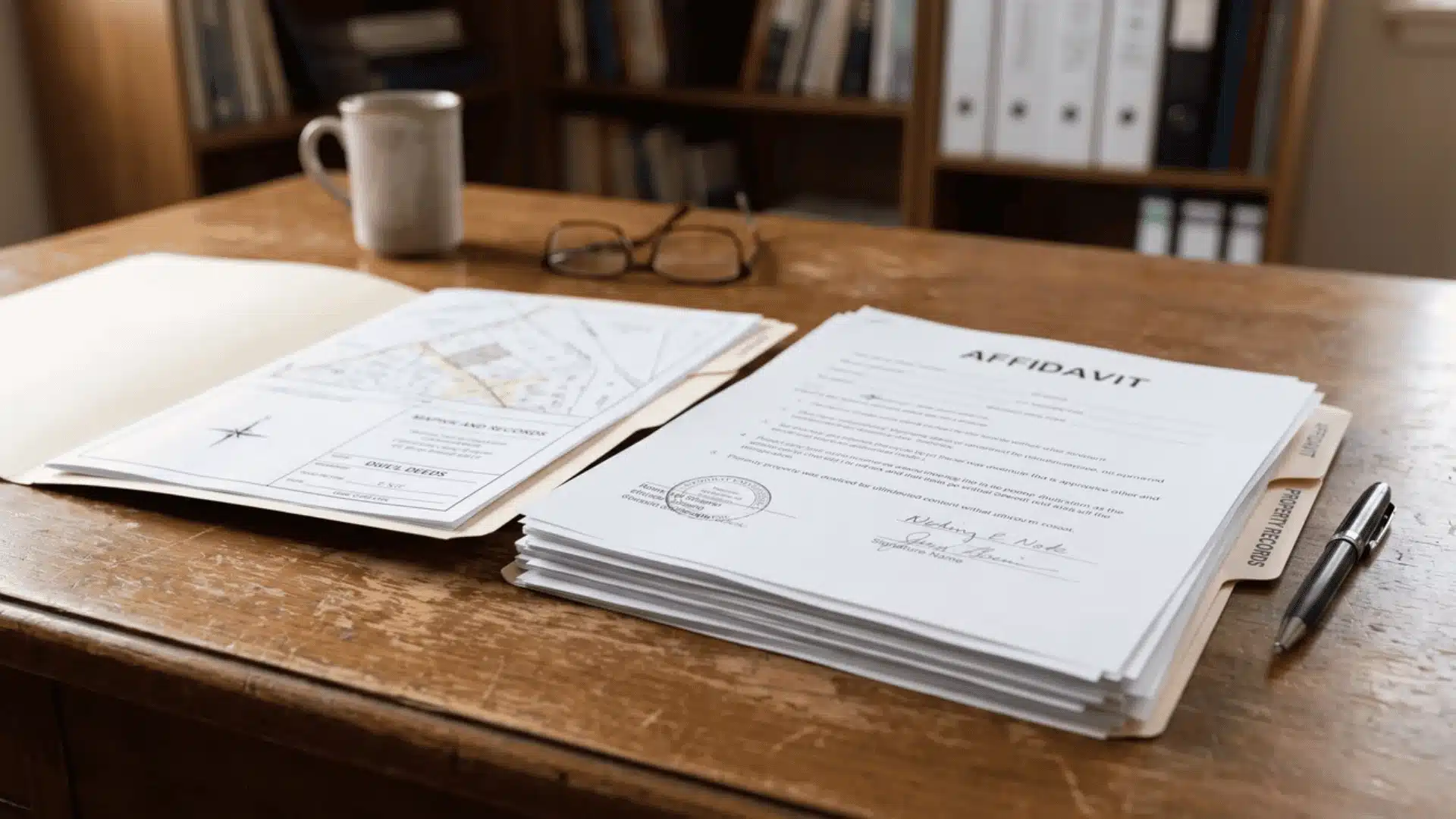
An affidavit of heirship is a legal document that identifies the heirs of a deceased person. It records family details to show who may inherit the estate.
Families often use an affidavit of heirship when someone dies without a valid will, a situation state law calls dying intestate.
When a person dies intestate, state intestacy laws determine who counts as an heir, and the affidavit documents that outcome to help transfer real estate ownership without a lengthy probate process.
In my own practice, this document works best when the property has a simple, low-conflict ownership history.
Once more than one branch of a family has a plausible claim, an affidavit alone rarely settles things for good. Not every type of asset transfers this way, and the document doesn’t work identically everywhere.
Its legal effect depends on state laws and the property involved.
When is an Affidavit of Heirship Used?

Families commonly use an affidavit of heirship when someone dies without a will and heirs need to prove their inheritance rights.
It documents family relationships and helps identify who may legally inherit the deceased person’s property.
| Situation | How an Affidavit of Heirship Helps |
|---|---|
| Someone Dies Without a Will | Helps identify legal heirs when a person dies without a valid will. It documents relationships with spouses, children, and other relatives to show who may inherit. |
| Real Estate Transfer | Helps establish ownership rights when heirs need to transfer a deceased person’s property. Property records may require proof of heirship before ownership changes are recognized. |
| Small or Uncontested Estates | It can simplify inheritance matters when heirs agree on ownership and there are no major disputes over the deceased’s assets. |
| Proving Family Relationships | Creates a written record of the deceased person’s family history, helping show the connection between heirs and the estate. |
An affidavit of heirship does not work the same way in every state. The requirements and legal effect depend on local laws, the type of property involved, and the situation of the estate.
What Information Does an Affidavit of Heirship Include?
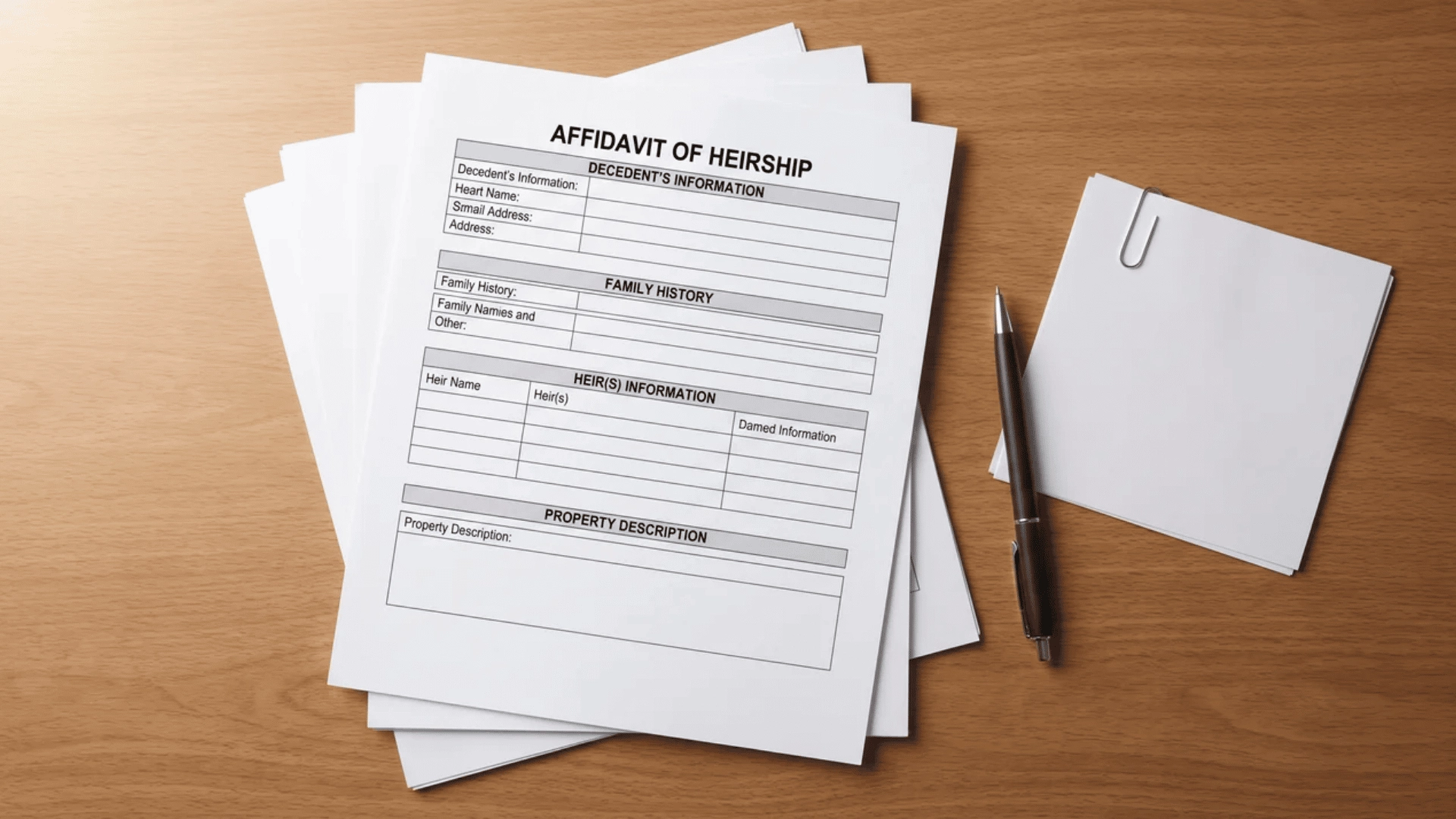
An affidavit of heirship must include three key categories of information: the deceased person’s details, family and marital history, and a statement confirming death without a valid will.
The document should identify the deceased with details like full name, last address, date of birth, and date and place of death. These records connect the affidavit to the correct estate.
It must also include a complete family history, covering spouses, former spouses, children, and other relatives.
Marriage, divorce, or death records help identify everyone who may have inheritance rights.
When multiple children or descendants are involved, some states divide shares using per stirpes distribution, so getting the family tree exactly right matters as much as spelling the names correctly.
The affidavit should state that the person died without a valid will, allowing the heirship process to apply. Missing family details or incorrect information can later create ownership disputes.
How Do You Complete and File an Affidavit of Heirship?
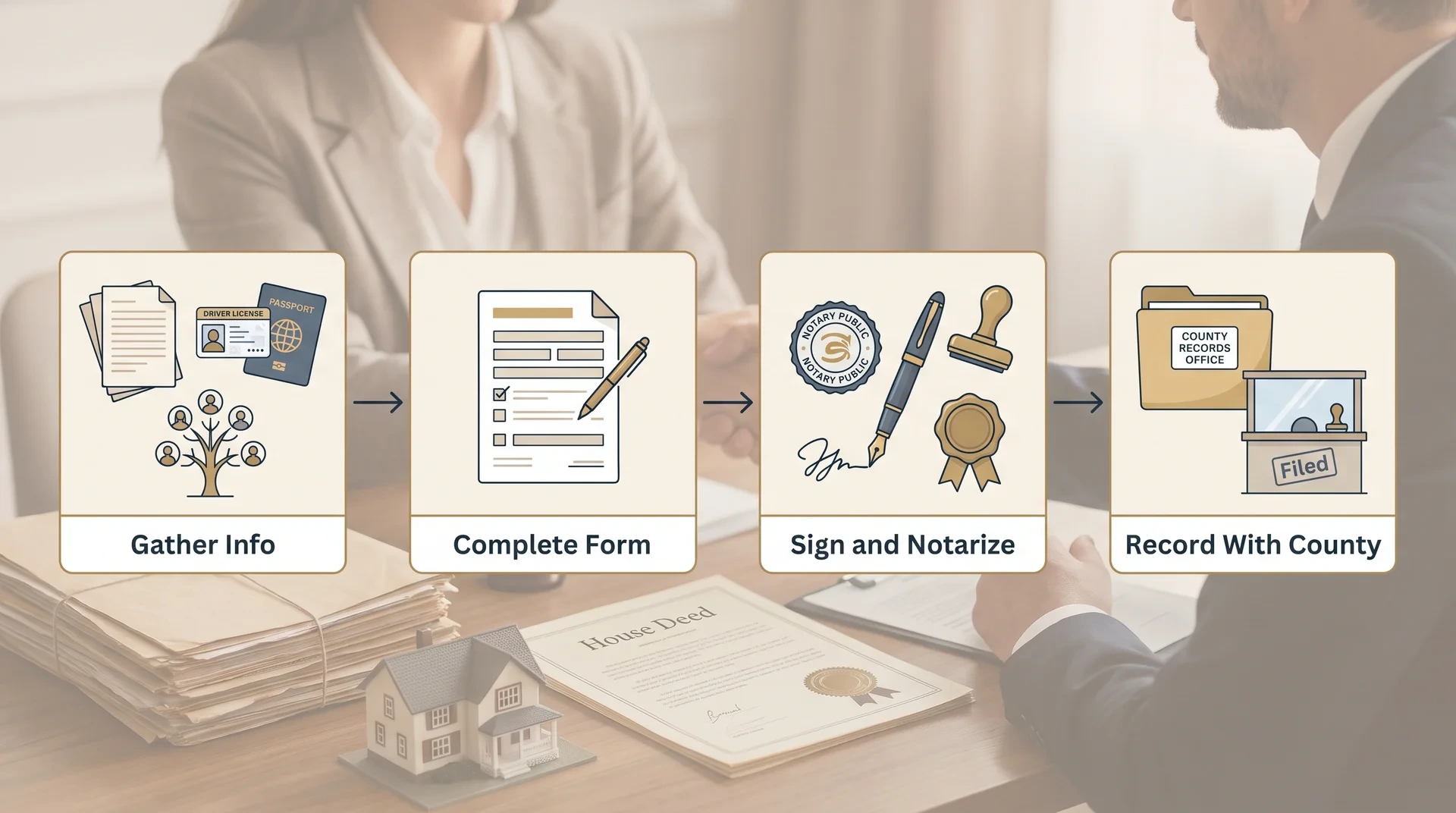
Completing an affidavit of heirship requires gathering accurate information, preparing the document, completing required signatures, and filing it with the proper office when needed.
The exact requirements may differ based on state and county rules.
Step 1: Gather Required Information
Collect details about the deceased person, heirs, and property involved. This includes personal information, family relationships, and ownership records needed to complete the affidavit accurately.
Step 2: Complete the Affidavit Form
Fill out the affidavit with details about the deceased person, surviving relatives, marital history, and estate information. Review every entry carefully to avoid missing important family details.
Step 3: Sign and Notarize the Document
The affidavit is typically signed by a disinterested person, someone familiar with the deceased’s family history who has no financial interest in the estate, such as a longtime family friend or neighbor.
If no disinterested person is available, a family member who will not personally benefit from the outcome may sign instead.
A notary public verifies the signature, and some states may also require witness signatures.
Step 4: Record the Affidavit With the County
Submit the completed and notarized affidavit to the appropriate county records office when required.
This step matters even more when only one spouse’s name appears on the original deed, since what happens when a deed owner dies often hinges on whether the affidavit was properly filed.
An affidavit of heirship helps create a record of inheritance rights by identifying heirs and family connections. Following each step carefully can reduce delays and simplify property transfers.
In the cases I have handled, the affidavit gets sent back far more often because an interested party signed as the witness than because of a typo in the paperwork.
Does an Affidavit of Heirship Follow the Same Form Everywhere?
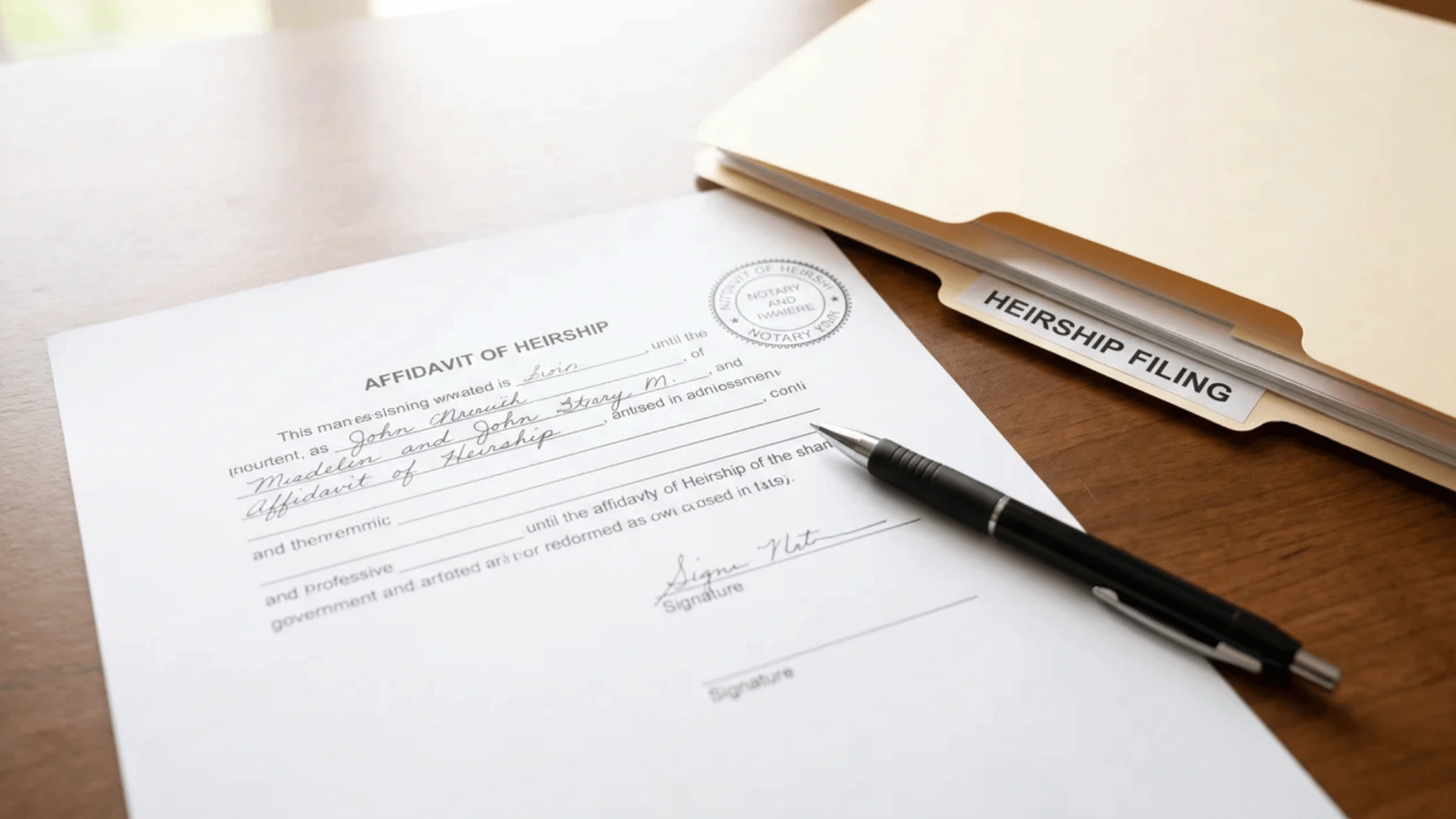
No single, universal affidavit of heirship form works in every state. Witness requirements, notarization rules, and the exact statutory wording a county will accept all vary by jurisdiction.
A generic downloadable template can look complete and still get rejected, or worse, get accepted and later challenged, because it does not match your state’s specific requirements.
Checking with your county recorder’s office or a local estate attorney before filing is a safer path than relying on a form built for a different state.
Texas is one of the states where this document appears often in real estate practice.
Under Texas Estates Code Chapter 203, an affidavit on file in the county’s deed records for five years serves as prima facie evidence of heirship in a dispute over title to the property.
Other states set different filing periods, require a different number of witnesses, or do not recognize the affidavit at all for certain property types, which is exactly why a form written for one state rarely transfers cleanly to another.
Why and When is an Affidavit of Heirship Used?
Identifying heirs and transferring certain assets without a full probate process is the main job of an affidavit of heirship.
It can reduce time and costs for simple, uncontested estates. The main reason families choose this option is to avoid lengthy court procedures when ownership is clear.
However, the process can vary based on the asset involved.
For real estate, the affidavit is usually recorded with the county clerk or land records office to update ownership details.
Property transfers often require this recorded document.
Vehicles may require a state-specific form instead of a general affidavit, while banks and financial institutions may have their own procedures. Each asset type follows different requirements.
What are the Limitations of an Affidavit of Heirship?
An affidavit of heirship can simplify certain inheritance matters, but it does not replace all estate procedures. Its effectiveness depends on the property type and state laws.
The document is often used for real estate transfers, but it may not cover other assets like financial accounts or personal property.
Banks and brokerages typically require their own small-estate affidavit or a letters-of-administration order before releasing funds, regardless of what a real estate-focused affidavit of heirship states.
Some cases may still require probate, and it is worth talking to a probate lawyer before assuming the affidavit alone will be enough.
Unknown heirs, family disagreements, or incorrect information can create problems during the process.
Mistakes in family history may delay acceptance or affect ownership claims.
The biggest mistake I see families make is treating the affidavit as if it settles everything, when in reality it only settles the real estate piece of the estate.
Conclusion
An affidavit of heirship can make a simple inheritance situation easier, but it should not be treated as a complete estate solution.
Its main value is creating a record of heirs, family history, and possible property rights when someone dies without a will.
That can help with real estate transfers, especially when the family agrees and the ownership history is clear. Still, state rules, witness requirements, county filing rules, and asset type all matter.
Banks, disputed heirs, or unclear property records may still require probate or another legal step.
Before relying on this document, check your local rules, review the family history carefully, and speak with an estate or probate attorney if anything feels uncertain.
Frequently Asked Questions
Who Prepares an Affidavit of Heirship?
An affidavit of heirship is usually prepared by an heir, an attorney, a title company, or someone who personally knew the deceased person’s family history. Whoever completes it must provide accurate names, dates, and relationships, since a title company or county office can reject the affidavit later if the family history turns out to be incomplete or wrong.
Does an Affidavit of Heirship Transfer Property?
An affidavit of heirship does not transfer property by itself. It creates a documented record of the legal heirs, which title companies and county offices can then rely on to recognize a change in ownership. Whether it is enough on its own, or whether further steps like a deed or probate are needed, depends entirely on state law and the property involved.
Is an Affidavit of Heirship the Same as Probate?
No, an affidavit of heirship and probate are different processes. An affidavit can sometimes help a family avoid probate for a straightforward real estate transfer, but it does not replace a court proceeding. Disputes among heirs, unclear ownership, or state rules that require court involvement can still force an estate into full probate regardless of the affidavit.
How Much Does an Affidavit of Heirship Cost?
Costs vary depending on who prepares the affidavit and where it gets filed. Notary fees and county recording fees are the most common expenses, and both are usually modest on their own. Hiring an attorney to draft or review it adds cost but reduces the risk of a rejected filing, and costs rise further for a complicated estate with multiple heirs or disputed facts.