
Most people assume setting up a family trust means handing your money to someone else. It does not.
A family trust is one of the most misunderstood tools in estate planning, and the confusion usually starts with who actually controls the assets once the paperwork is signed.
That question matters more than the buzzwords around avoiding probate or protecting your family, because control is where most of the myths live.
Here is what actually changes once you set one up: who owns the assets, when control shifts to someone else, and why a trust and a will are not the same safety net.
What is a Family Trust?
A family trust is a legal setup that holds assets for the people you name, usually your spouse or kids. It’s not its own separate legal category.
In most cases, it’s just a living trust with a family focus. That’s an important distinction to keep in mind.
You’ll hear “family trust” and “living trust” used like they mean the same thing. Most of the time, they do. That’s where a lot of the confusion starts.
People assume “family trust” is some special product with its own rules. It isn’t. It’s the same tool, built around who you’re planning for.
Family Trust vs. Living Trust vs. Testamentary Trust vs. Irrevocable Trust
A family trust is not a separate legal category. It is a label placed over one of the trust types below, and which one it is changes how much control you keep and whether probate is actually avoided.
Here is how the main types compare:
| Trust Type | When It Takes Effect | Can You Change It? | Avoids Probate? |
|---|---|---|---|
| Family Trust (usually a living trust) | While you’re alive | Yes, if revocable | Yes, if properly funded |
| Revocable Living Trust | While you’re alive | Yes, anytime | Yes, if properly funded |
| Irrevocable Trust | Once created or funded | No, generally locked in | Yes, plus stronger creditor protection |
| Testamentary Trust | Only after you die | No, set by the will | No, it is created through probate |
A revocable family trust gives up the least control but also the least protection, since the law still treats those assets as yours while you’re alive.
An irrevocable trust trades that flexibility for stronger asset protection. A testamentary trust skips none of the probate process, since it only exists after a will has already gone through court.
Who Controls and Owns the Assets?
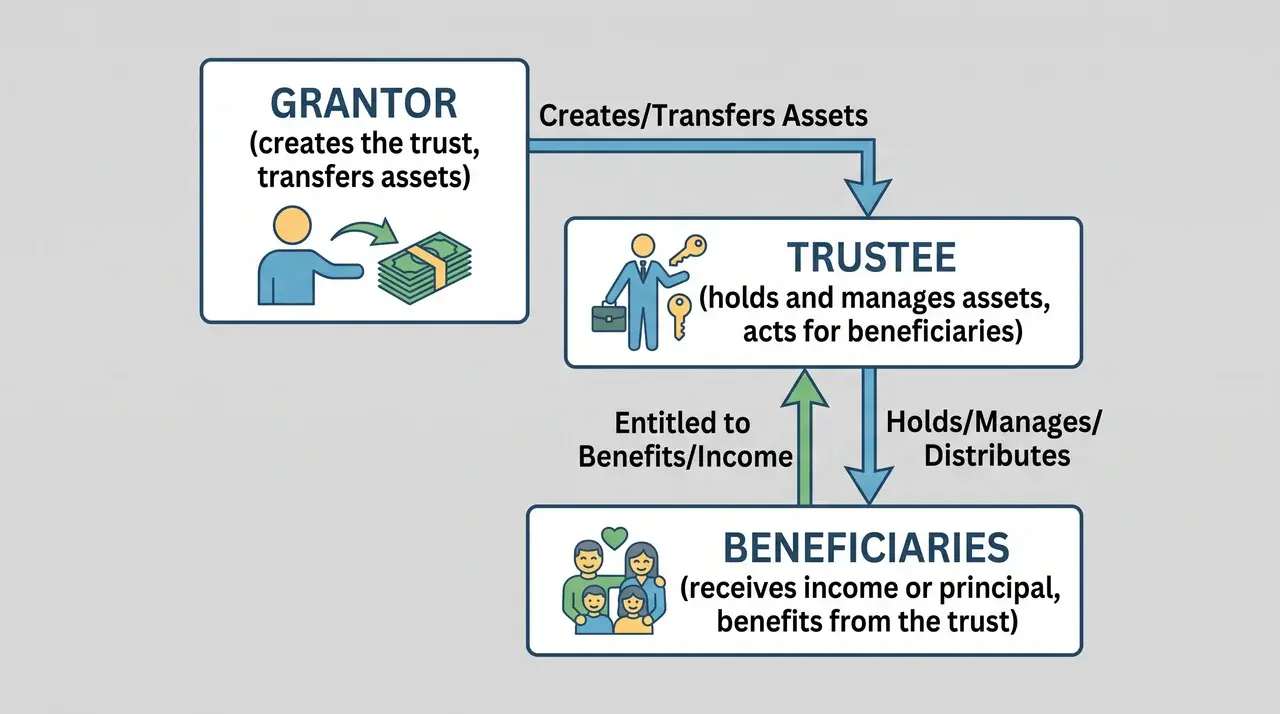
You still control everything; that’s the short answer. Setting up a family trust doesn’t hand your assets to anyone else while you’re alive.
Grantor, Trustee and Beneficiaries
People often mix these two up, but they answer to different documents and follow very different processes.
- Grantor: The person who creates the trust and decides how the assets should be managed and distributed. In a revocable trust, the grantor usually keeps control during their lifetime.
- Trustee: The person who manages the assets in the trust and follows the grantor’s instructions. In a revocable trust, the grantor is often also the trustee.
- Beneficiaries: The people or organizations chosen to receive assets from the trust. They do not control the trust while the grantor is alive and receive assets based on the trust terms.
Successor Trustee vs. Executor
Three roles make a family trust work, and knowing who does what clears up most of the confusion about control.
| Successor Trustee | Executor |
|---|---|
| Manages a trust after you die or if you can no longer handle your affairs. | Handles the instructions in your will after you die. |
| Chosen by you when creating the trust. | Chosen by you in your will. |
| Follows the trust instructions and manages assets for beneficiaries. | Handles the probate process and distributes assets according to the will. |
| Usually works without court involvement because the trust avoids probate. | Works through probate court to settle the estate. |
| Only applies when assets are placed in a trust. | Applies when assets are distributed through a will. |
What a Family Trust is Not?
A family trust can make estate planning easier, but it is often misunderstood. Knowing what it does not do helps you avoid costly mistakes:
- A family trust is not a will: A will still goes through probate court, while a properly funded trust can avoid probate and keep the process more private and faster.
- A family trust is not always revocable: A revocable trust can be changed while you are alive, but control ends after death or when the trust is made irrevocable.
- You cannot always change trust terms later: Once the trust becomes irrevocable, you generally cannot modify terms or remove assets from it.
- A trust does not work automatically: Assets must be moved into the trust’s name as part of setting up a family trust correctly. If property or accounts are not retitled, they may still go through probate.
- A trust only protects funded assets: Creating the document alone is not enough. The assets must be properly transferred for the trust to work as intended.
Understanding these limits helps you set up your trust correctly and make sure your assets are handled the way you intended.
Family Trust Advantages and Disadvantages

A family trust works best when the benefits match your situation. For smaller or simpler estates, the added cost and maintenance may not always be necessary.
| Trust Feature | Advantage | Disadvantage or Limitation |
|---|---|---|
| Probate avoidance | A properly funded trust can help assets pass to beneficiaries without going through probate court. | Assets that are not included in the trust may still go through probate. |
| Trust funding requirements | Moving assets into the trust allows the trust to control and distribute those assets according to your instructions. | Funding requires extra steps, such as changing property titles and updating account ownership. Missing this step can reduce the trust’s benefits. |
| Privacy | A trust generally keeps estate details private because it does not go through the same public probate process. | Creating a trust requires more planning and paperwork than a basic will. |
| Inheritance control | You can set rules for when and how beneficiaries receive assets, including delayed or staged distributions. | More control can require more detailed instructions and future updates. |
| Incapacity planning | A successor trustee can manage trust assets if you become unable to handle them yourself. | Choosing the wrong trustee can create conflicts or management problems. |
| Estate organization | A trust can give family members clearer instructions and make asset distribution easier. | A trust requires ongoing maintenance as assets, laws, and family circumstances change. |
| Asset protection limits | A revocable trust keeps assets flexible because you can usually change or cancel it during your lifetime. | That same flexibility means a revocable trust usually does not protect assets from creditors or lawsuits while you are alive. |
For larger estates or families needing more control, the structure can provide valuable advantages.
Why a Family Trust Matters?

Beyond avoiding probate, a family trust affects privacy, timing, and upkeep in ways worth weighing before you set one up.
- Avoids probate: A family trust can help keep assets out of probate court, making the transfer process faster and more private for your family. Probate costs vary widely by state and by how the estate is titled, and can include court filing fees, appraisal costs, and attorney fees, according to the American Bar Association’s public guide to probate costs.
- Controls inheritance timing: You can set rules for when and how beneficiaries receive assets, such as delaying payouts until they reach a certain age.
- Keeps details private: Unlike wills, which become public during probate, trust details usually remain private after your death.
- Requires proper funding: A trust only works when assets are transferred into it. Accounts, property, and other assets must be properly retitled.
- Needs clear instructions: Beneficiary terms should be specific to avoid confusion about how assets should be managed and distributed.
- Takes more effort to create: Setting up a trust usually requires more time, planning, and cost compared with creating a simple will.
- Requires ongoing updates: You need to review the trust when your assets, family situation, or wishes change.
- Does not provide automatic asset protection: A revocable trust does not protect assets from creditors or lawsuits while you still control it. If asset protection is the main goal, other ways to protect assets from lawsuits may fit better than a revocable trust alone.
Conclusion
A family trust is not about giving up control right away. It is about setting clear rules for how your assets should be handled if you die or can no longer manage them.
You can keep control during your lifetime with a revocable trust, but the trust only works well when assets are properly funded into it.
A trust can help avoid probate, keep family matters private, and guide how beneficiaries receive property or money. Still, the right setup depends on your assets, family needs, and state laws.
Speak with a licensed estate attorney before creating one, and make sure every important asset is handled correctly.
Frequently Asked Questions
What is the Downside of a Family Trust?
Setting one up costs money upfront, and it takes ongoing work to maintain. You also have to retitle assets into the trust’s name for it to actually function. If it stays revocable, it won’t protect you from creditors or lawsuits. You’re still legally in control, so the law treats the assets as yours.
Who Owns the Money in a Family Trust?
While you’re alive, you still control the assets, especially with a revocable trust. It works a lot like owning the property yourself. Once you die or can’t manage things anymore, a successor trustee steps in. They manage the assets for your beneficiaries, but don’t own them personally.
What is the Main Purpose of a Family Trust?
The main goal is passing assets to your family without probate court. Probate is public and often slow; it also lets you set conditions on inheritance. That matters most when heirs are minors or not ready to manage money on their own.
What Happens to a Family Trust when Someone Dies?
The trust usually becomes irrevocable once the grantor dies; a successor trustee takes over, not an executor. That trustee distributes the assets based on the trust’s terms. None of it has to pass through probate court.