The moment your biometrics appointment ends, a quieter part of the immigration process begins. There are no big announcements, no instant answers, and often no clear sign of movement for days or even weeks.
Still, important work may already be happening behind the scenes. Your fingerprints, identity details, and case file begin moving through different layers of review, and what happens next can shape the timing of your application.
For many applicants, this stage feels uncertain because every case moves differently and each form follows its own path. Some people wait for an interview notice.
Others wait for a card, a decision, or another request from USCIS.
This blog post breaks down what may happen after biometrics, why delays occur, and when legal help may be worth considering.
What is a Biometrics Appointment?
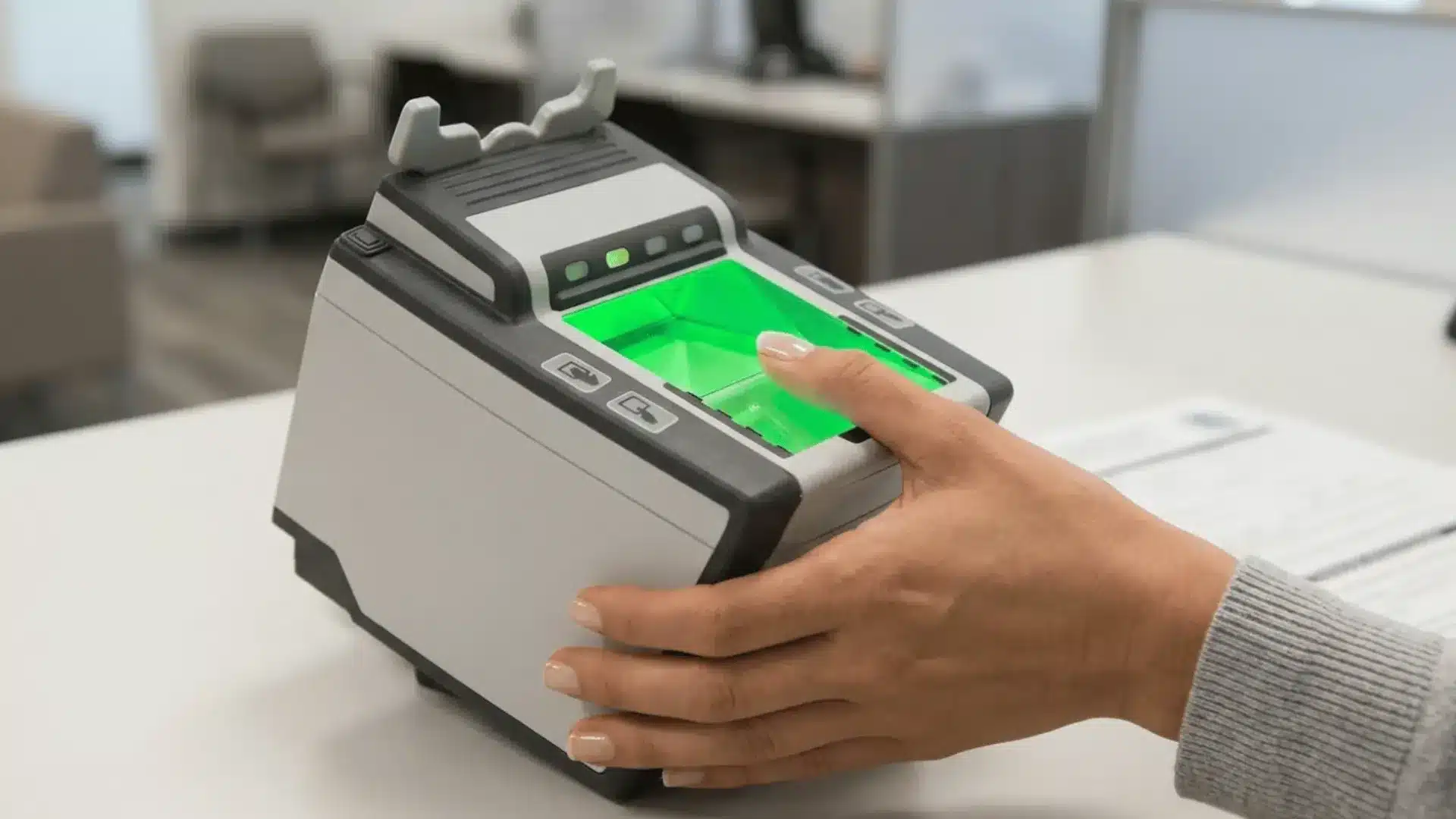
A biometrics appointment is a scheduled visit where USCIS collects your fingerprints, photograph, and signature.
USCIS uses this information to confirm your identity and run required background checks before continuing with your immigration application.
The appointment is usually quick and does not include questions about your case.
Staff at the application support center verify your appointment notice and ID, collect your biometric information, and send it for screening.
USCIS uses biometrics to check criminal history, confirm identity, compare government records, and help prevent immigration fraud.
For most applicants, this is a routine step, but it must be completed before the case can move forward to review, an interview, card approval, or a final decision. The appointment itself usually lasts 15-30 minutes.
What Happens After a Biometrics Appointment at USCIS?
Your fingerprints go directly to the FBI’s Next Generation Identification (NGI) system, which replaced the IAFIS.
The FBI checks those prints against criminal records, outstanding warrants, and immigration violation records. Most results come back clean within days to a few weeks.
At the same time, USCIS runs a name-based check through FBI databases and cross-references your information with Department of Homeland Security (DHS) records.
These checks run in parallel, so you are not waiting for one to finish before the other begins. One thing many applicants overlook: your fingerprint biometrics results are generally valid for 15 months.
If your case is still pending after that window closes, USCIS may ask you to come in for another biometrics appointment before it proceeds.
This is more common for cases with long processing timelines and is not a sign that something went wrong.
How Long After Biometrics Does USCIS Review Your Case?
USCIS biometrics updates usually appear within weeks, but the time to the next major case decision varies widely by application type, visa category, service center, and current workload.
| Topic | Typical Timeline | What it Means |
|---|---|---|
| FBI fingerprint check | Days to a few weeks | Most results return quickly to USCIS. |
| Name-based check | Can take longer | Delays possible with common names or matches needing manual review. |
| USCIS account update | Usually 2-3 weeks | Status often changes to “Case is being actively reviewed.” |
| Green card (I-485) | Several months to over a year | Varies by visa category and service center. |
| Employment-based (EB-1 / EB-2) | Generally faster | Often quicker than family-based cases. |
| Family-based (siblings/adult children) | Considerably longer | Longer waits due to visa availability. |
| Green card renewal (I-90) | 8-14 months | Varies by filing method and service center. |
Next Steps After Biometrics for Different Immigration Applications
The step that follows background checks is not the same for every applicant. It depends on the form you filed.
- Green card via adjustment of status (I-485): Most applicants are scheduled for an in-person interview at a local USCIS field office. Family-based cases almost always require this step. Some employment-based cases are interview-waived and decided directly by a service center.
- Naturalization (N-400): An interview is required. USCIS schedules it after background checks are complete.
- Employment Authorization Document (I-765): No interview is required. The card is issued once processing is complete, usually within a few months of filing.
- DACA renewal: No interview is required. USCIS reviews the application and issues a decision by mail.
- Advance Parole (I-131): No interview in most cases. Approval can take longer than an EAD and is often issued separately.
If you filed both an I-485 and an I-765 together, you may receive your work permit before your green card interview is scheduled. This is normal, USCIS processes them on separate timelines.
What Happens During a Green Card Interview After Biometrics?
For most I-485 applicants, the interview notice arrives several months, commonly 5 to 12+ months, after the biometrics appointment, though this varies significantly by field office, visa category, and current USCIS workload.
The interview takes place at a local USCIS field office.
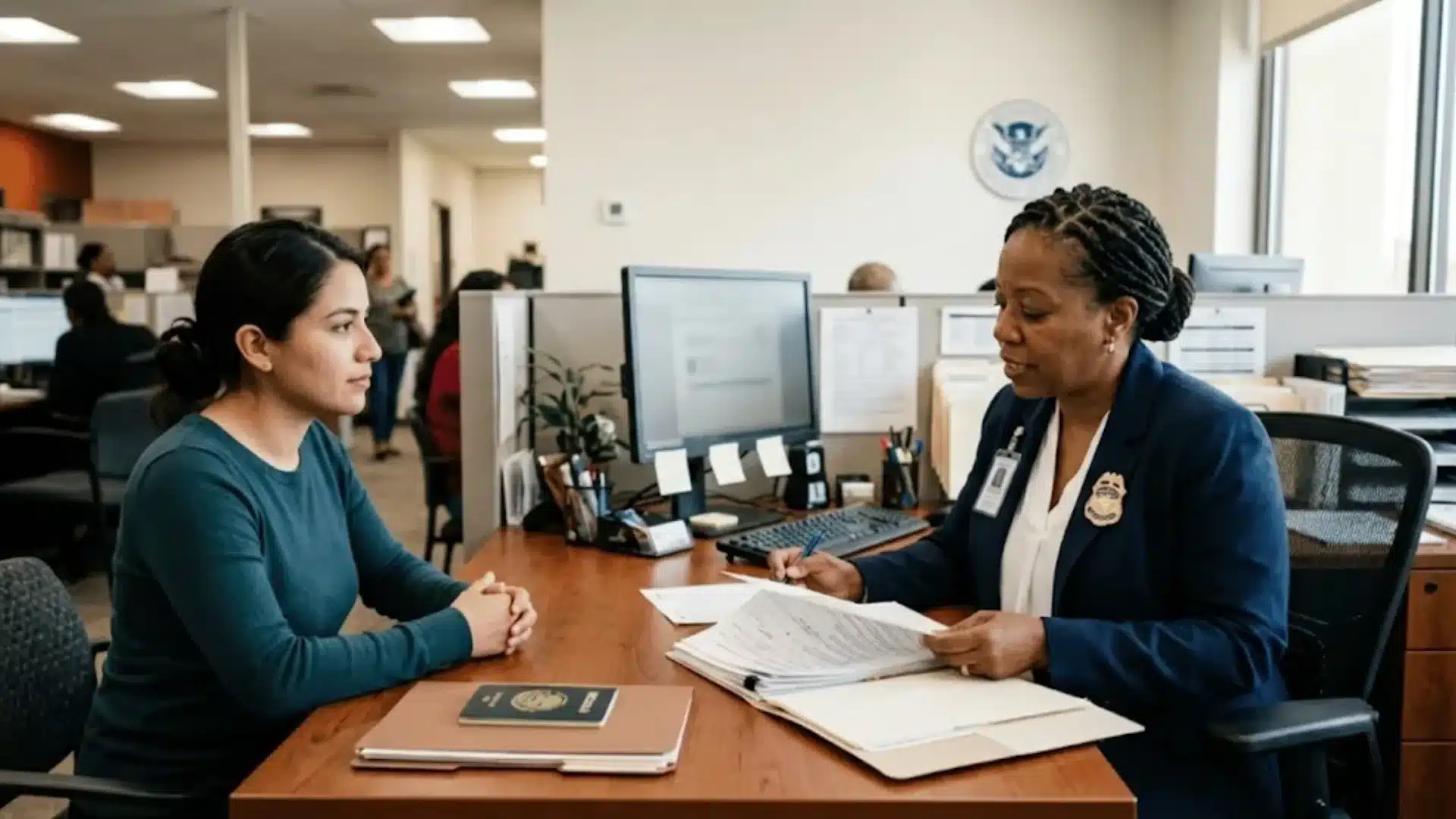
A USCIS officer reviews your application, asks questions about your background, your relationship (for family-based cases), and any information in your file that needs clarification.
This officer has full access to your case file, unlike the biometrics appointment, where no questions about your application are asked.
You should bring original documents to your interview, including your passport, any evidence submitted with your application, and any documents USCIS specifically requests in the interview notice.
If you want to know what questions to prepare for, immigration interview questions cover what officers typically ask in family-based and adjustment-of-status cases.
If you are adjusting status inside the U.S., your interview is at a domestic field office.
Consular processing happens abroad at a U.S. embassy or consulate. Interviews are generally 20-40 minutes long.
When does USCIS Flag an Issue After Biometrics?
Not every case moves from biometrics straight to an interview or approval. USCIS may issue one of the following:
1. Request for Evidence (RFE)
An RFE is a formal USCIS request for additional documentation when submitted materials are insufficient to approve the application.
It includes a response deadline, and missing it can result in denial.
Applicants sometimes underestimate how much the quality of an RFE response matters; an incomplete reply or one that doesn’t directly address the officer’s concern can be just as damaging as not responding at all. Seek legal guidance before you reply.
2. Notice of Intent to Deny (NOID)
This is more serious. USCIS issues a NOID when the evidence on file points toward denial but gives you a final opportunity to respond. The response window is typically short.
This is not the time to handle the process without help. A NOID response must directly answer the officer’s concerns, include strong supporting evidence, and be submitted before the deadline.
Missing details or weak explanations can make approval much harder.
3. Request for Additional Biometrics
If your biometrics expired before USCIS completed processing, you will receive a new appointment notice. Attend it because missing it delays your case and could result in abandonment.
Bring the appointment notice and valid identification, then follow the same process as before.
A second biometrics request does not always mean something is wrong; it often happens because processing took longer than expected.
4. Administrative Processing
In some cases, USCIS places a file into administrative processing, a separate review track triggered by certain national security flags or immigration history patterns.
There is no published timeline for this track, and standard case inquiry tools rarely surface useful information while it is active.
If your case has been silent for well beyond the normal processing window, an immigration attorney can help you assess whether a congressional inquiry or a Writ of Mandamus in federal court is appropriate.
Steps to Take While Waiting for a USCIS Decision
Most of the post-biometrics process happens without any action on your part. But there are steps you can take to avoid unnecessary complications.
- Keep your mailing address updated. USCIS sends notices by mail. A missed notice because of an outdated address can lead to a missed deadline or a missed appointment.
- Check your case status regularly. Log in to your USCIS online account or use the case status tracker at uscis.gov with your receipt number. Changes in status are often the first sign that something is happening.
- Save all notices and receipts. Keep physical and digital copies of every document USCIS has sent you, including the original receipt notice, biometrics notice, and any correspondence.
- Prepare for a possible interview. Even if your interview is months away, it is worth reviewing your application and gathering original versions of documents you submitted as copies.
- Gather supporting documents. For family-based cases, that includes joint financial records, lease agreements, and photos. For employment-based cases, it includes offer letters and employment records.
- Respond quickly to any official request. RFEs and NOIDs come with firm deadlines. Do not wait.
- Never miss a scheduled appointment. Missing a biometrics appointment or interview without rescheduling can result in USCIS treating your application as abandoned.
Preparing strong supporting documents, such as letters of recommendation, can strengthen your case. See our guide to letters of recommendation for immigration.
When to Call an Immigration Attorney?
You do not need an attorney for every step of the immigration process, but there are situations where going without one creates real risk.
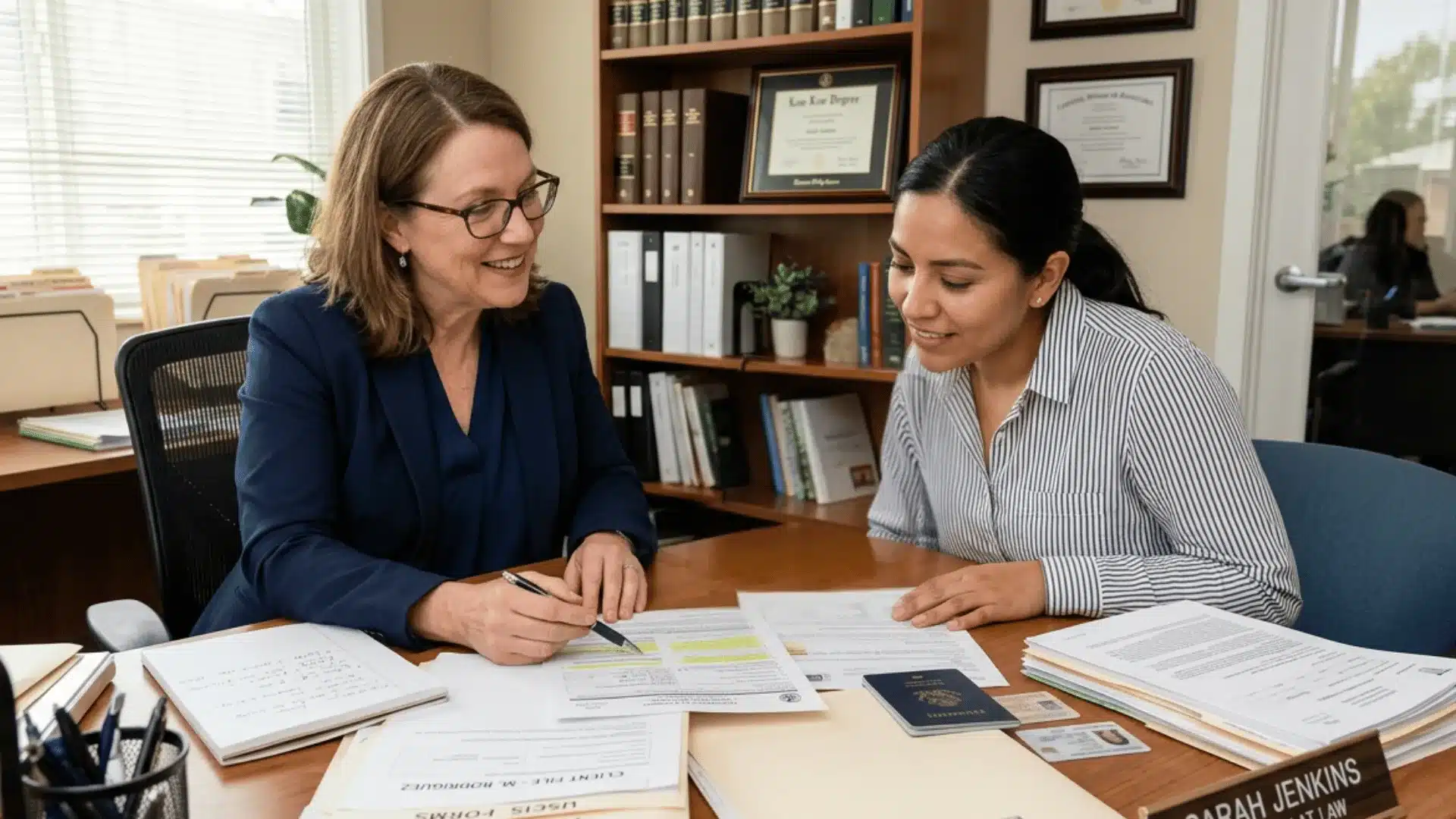
Consider speaking with an immigration attorney: if you received an RFE or NOID and are unsure how to respond, or if your case has been pending much longer than the published processing time and USCIS has not responded to your inquiry.
You should also consider legal help if you have any criminal history, including arrests that did not lead to a conviction.
You may also need legal guidance if you missed your biometrics appointment, received a denial notice, have complex family circumstances, prior immigration violations, or a prior removal order.
An attorney can help you understand your options, timing, and what evidence may strengthen your case.
Common Reasons for Delays After Biometrics
Processing times vary; some applicants wait months with no visible case activity. The most common reasons include:
- Pending background checks: Name matches in FBI databases trigger manual review, which adds time.
- High case volume: USCIS had nearly 12 million pending cases at the end of Fiscal Year 2025, according to Manifest Law. High demand slows every category.
- Missing evidence: If your original filing had incomplete documentation, an officer may pause your case before issuing an RFE.
- Name or identity verification issues: Similar names, past name changes, or inconsistencies between documents can require additional review.
- Interview scheduling delays: Field offices schedule interviews based on their capacity. Some offices have longer wait times than others.
- Administrative processing: Certain national security or immigration history flags move cases to a separate administrative review track. There is no set timeline for this.
- Errors or incomplete forms: A mistake in your original application, even a minor one, can stall a case while USCIS seeks clarification.
- Service center workload: Some USCIS service centers and field offices have heavier backlogs than others.
If your case has been quiet for longer than the published USCIS processing time for your form and field office, that is when it is reasonable to submit a case inquiry.
Conclusion
The biometrics appointment is not the end of your immigration process.
It is the point where USCIS begins a deeper review of your case, including background checks, officer review, and, depending on your application type, an interview or final decision.
While much of this stage happens behind the scenes, staying organized, checking your case status, saving notices, and responding quickly to USCIS requests can help you avoid unnecessary delays.
If your case has stalled, you received an RFE or NOID, missed an appointment, or are unsure what your next step should be, consider getting legal guidance before taking action.
Have you already completed your biometrics appointment? Comment below with your application type and how long you have been waiting.
Frequently Asked Questions
Can I Travel After My Biometrics Appointment?
It depends on your immigration status and whether you have valid travel permission, such as Advance Parole. Leaving the U.S. without the right travel document can affect some pending applications, especially adjustment of status cases.
Can USCIS Deny My Case Because of the Biometrics Results?
Yes. If the FBI background check returns a serious criminal record or immigration violation, USCIS may deny the application or issue a NOID before denying. Most background checks come back clean, but any issue in the results becomes part of the officer’s review of your file.
Do I Need to Attend Another Biometrics Appointment if My Case Takes Too Long?
Possibly, biometric results are valid for 15 months. If your case is still pending when that window expires, USCIS may send a new appointment notice. Attend it promptly to avoid further delays.
What Happens if I Miss My Biometrics Appointment?
Missing the appointment without rescheduling can lead USCIS to consider your application abandoned and deny it. If you missed it, act immediately. Log in to your USCIS online account and request a reschedule, or contact the USCIS Contact Center at 800-375-5283.