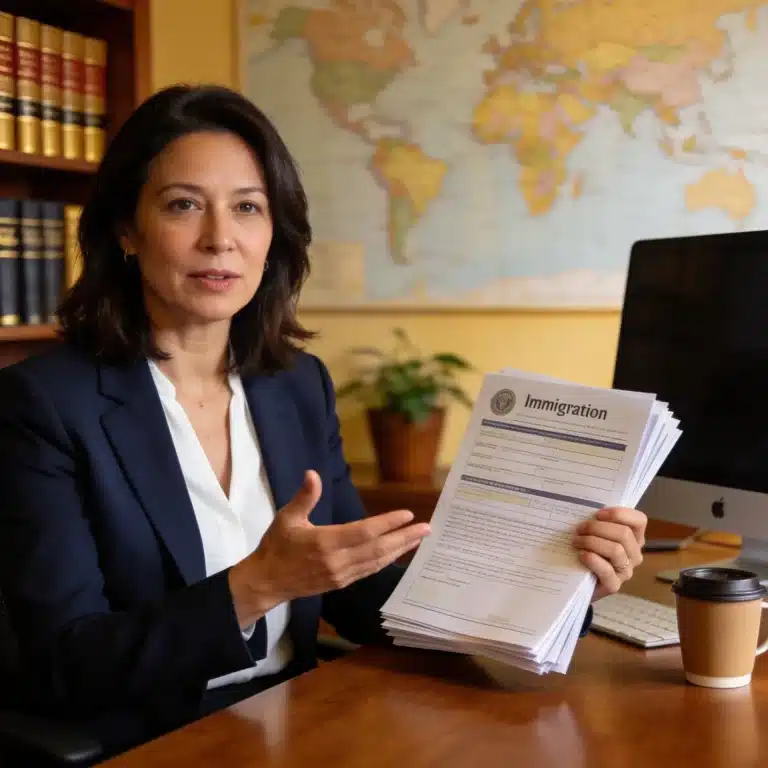
Starting the green card process can feel confusing when medical rules and USCIS forms enter the picture.
One part that many applicants need to complete is the immigration medical exam, which helps USCIS confirm that a person meets health-related rules for admission to the United States.
This step is not just a regular doctor’s visit. It must follow USCIS guidance, use the right form, and be completed by an approved civil surgeon.
In this blog, you will learn what the exam includes, who needs it, which USCIS form is required, how to find the right doctor, what documents to carry, and how the sealed form should be sent to USCIS.
I will also cover common mistakes so you can understand the process without getting lost in legal terms.
What is the Immigration Medical Exam?
The immigration medical exam is a health check required for many people applying for a green card in the United States.
It is not the same as a normal yearly checkup because it must follow USCIS rules and be done by a USCIS-designated civil surgeon.
USCIS asks for this exam to make sure an applicant does not have certain health conditions that could affect eligibility under U.S. immigration law.
The exam helps check medical history, physical health, vaccination records, and signs of specific communicable diseases.
It may also include tests for conditions listed in the official medical exam rules. The goal is not to judge overall fitness.
It is mainly used to confirm that the applicant meets the health-related requirements for the green card process.
Who Needs to Take the Immigration Medical Exam?

The immigration medical exam is required for many people seeking lawful permanent residence in the United States.
Whether the exam is needed depends on the type of immigration benefit being requested and where the application is being processed.
The groups that commonly need the exam include:
- Adjustment of Status applicants filing Form I-485 inside the United States
- Immigrant visa applicants going through consular processing outside the United States
- Refugees and asylum seekers applying for a green card in certain situations
- Some special immigrant categories that require proof of meeting health-related requirements
For applicants already in the United States, the exam is usually completed with a USCIS-designated civil surgeon.
Those applying abroad generally attend an appointment with a panel physician approved by the U.S. Department of State.
Since requirements can vary by benefit type, applicants should always review the latest USCIS instructions for their specific case before submitting forms or scheduling an appointment.
USCIS Form I-693: The Main Form You Need
Form I-693 is the official document used to record the results of the immigration medical exam. Its full name is Report of Immigration Medical Examination and Vaccination Record.
USCIS uses this form to check whether an applicant meets the health-related rules for permanent residence.
The applicant fills out basic personal details and signs the required parts, while the USCIS-designated civil surgeon reviews the medical history, checks vaccination records, completes the exam, records test results, and signs the form.
The doctor must be approved by USCIS because not every physician is allowed to complete this form for immigration cases.
The civil surgeon’s signature confirms that the exam followed USCIS and public health instructions.
After that, the completed form is usually sealed in an envelope for USCIS. Applicants should not open that sealed envelope.
Critical policy updates (2024–2025)
Several important changes have taken effect recently. If you read an older guide, it may already be outdated on these points:
- December 2, 2024: Form I-693 must now be submitted at the same time as Form I-485. You can no longer file I-485 first and submit the medical form later.
- January 22, 2025: COVID-19 vaccination is no longer required for immigration medical exams. USCIS removed it from the list of required immunizations.
- June 11, 2025: Form I-693 is now valid only while the associated Form I-485 is actively pending. If your application is denied or withdrawn, the I-693 is no longer valid. You will need a new exam if you reapply.
- July 3, 2025: USCIS will only accept the 01/20/25 edition of Form I-693 for any form signed on or after that date. Using an older edition is grounds for rejection.
Always download the current form directly from the USCIS website. The edition date appears at the bottom of each page.
How to Find a USCIS-Designated Civil Surgeon?


Before scheduling a medical exam, applicants must make sure the doctor is approved by USCIS. A simple way to do this is by using the USCIS Find a Civil Surgeon tool available on the USCIS website.
The search tool allows users to find authorized doctors by entering a ZIP code, city, or state.
Before attending the appointment, it is helpful to bring:
- A government-issued photo ID
- Vaccination records, if available
- Medical records related to past health conditions
- Any documents requested by the civil surgeon’s office
A regular family doctor may not qualify to perform the exam because USCIS only accepts results from designated civil surgeons for most applicants inside the United States.
These doctors receive authorization to complete Form I-693 and follow specific immigration medical guidelines. Using an unauthorized doctor could lead to delays or the need to repeat the exam.
What Happens During The Exam?
The appointment usually follows a standard process where the doctor reviews health information, performs basic checks, and records the findings on the required form.
- Medical History Review: The civil surgeon reviews past illnesses, treatments, medications, hospital visits, and any health conditions that may be relevant to the examination.
- Physical Exam: A general physical examination is conducted to assess overall health and identify any medical concerns that require further evaluation.
- Required Tests: Depending on USCIS and public health requirements, the doctor may order tests for specific communicable diseases and other conditions covered by immigration rules.
- Vaccination Review: Existing vaccination records are checked to determine whether all required vaccines have been received or if additional documentation is needed.
- Possible Follow-Up: If vaccination records are incomplete or test results require clarification, the civil surgeon may request extra documents, vaccinations, or additional medical visits before completing the form.
What Vaccinations are Required?
Vaccination requirements follow the CDC and Advisory Committee on Immunization Practices (ACIP) schedules. Required vaccines are based on the applicant’s age and medical history.
Standard required immunizations include MMR (measles, mumps, rubella), varicella, tetanus and diphtheria, hepatitis B, hepatitis A, polio, influenza, and others based on age group.
As of January 22, 2025, COVID-19 vaccination is no longer required. If an older checklist or guide includes it, that information is outdated.
Medical waivers for individual vaccines are only available in limited circumstances, generally where a CDC-approved contraindication applies.
The civil surgeon handles this determination. Do not skip vaccines without discussing a documented contraindication with the civil surgeon beforehand.
How to Submit Form I-693 to USCIS?
Form I-693 should be submitted to USCIS in the way that matches the applicant’s case. When possible, applicants filing Form I-485 can submit the completed Form I-693 with their adjustment of status application.
This may help USCIS review the case without asking for the medical form later.
If the form is not submitted with Form I-485, USCIS may ask for it through a request or during the green card interview.
In that case, you would bring the sealed envelope to the green card interview or send it per USCIS instructions.
The signed form must stay inside the sealed envelope given by the civil surgeon. Applicants should not open the packet, even to check the pages. USCIS may reject the form if the seal is broken or the packet looks changed.
Common Mistakes to Avoid
Small mistakes can delay the case, so applicants should check each step carefully before sending Form I-693 to USCIS.
- Wrong Doctor: Going to a regular doctor instead of a USCIS-designated civil surgeon can make the exam invalid for most adjustment cases.
- Opened Envelope: The sealed envelope from the civil surgeon should stay closed. USCIS may reject it if the seal is broken.
- Old Form Version: Using an outdated or wrong version of Form I-693 can lead to problems, so applicants should use the latest USCIS form.
- Missing Vaccine Records: Incomplete vaccination records may lead to extra shots, more paperwork, or a follow-up visit.
- Ignoring USCIS Instructions: Not following form rules, filing steps, or interview notices can cause delays or a request for more evidence.
Conclusion
The medical exam is one of the main steps in many green card cases. It helps USCIS review health-related requirements, vaccination records, and the form needed for the application.
The process is usually simple when applicants use the right doctor, bring the right records, and keep the sealed envelope closed.
The immigration medical exam should always be handled through official USCIS guidance because rules, forms, and filing steps can change.
Before booking an appointment, I would check that Form I-693 is the latest version and confirm that the doctor is still listed as a USCIS-designated civil surgeon.
This small check can help avoid delays, repeat visits, or rejected paperwork.
Still unsure about one step in the medical exam process? Drop your question in the comments, and let us know where you are in your green card journey.
Frequently Asked Questions
How Much Does the Medical Exam Cost?
The cost is not set by USCIS. Each civil surgeon sets their own fee, so prices can vary by location, clinic, tests, and vaccines.
How Long is Form I-693 Valid?
Form I-693 validity can depend on USCIS rules in place at the time of filing. Applicants should check the latest USCIS guidance before submitting it.
Can Health Insurance Cover the Exam?
Some parts may be covered, but many clinics treat it as a separate immigration service. Applicants should ask the clinic about payment before booking.