
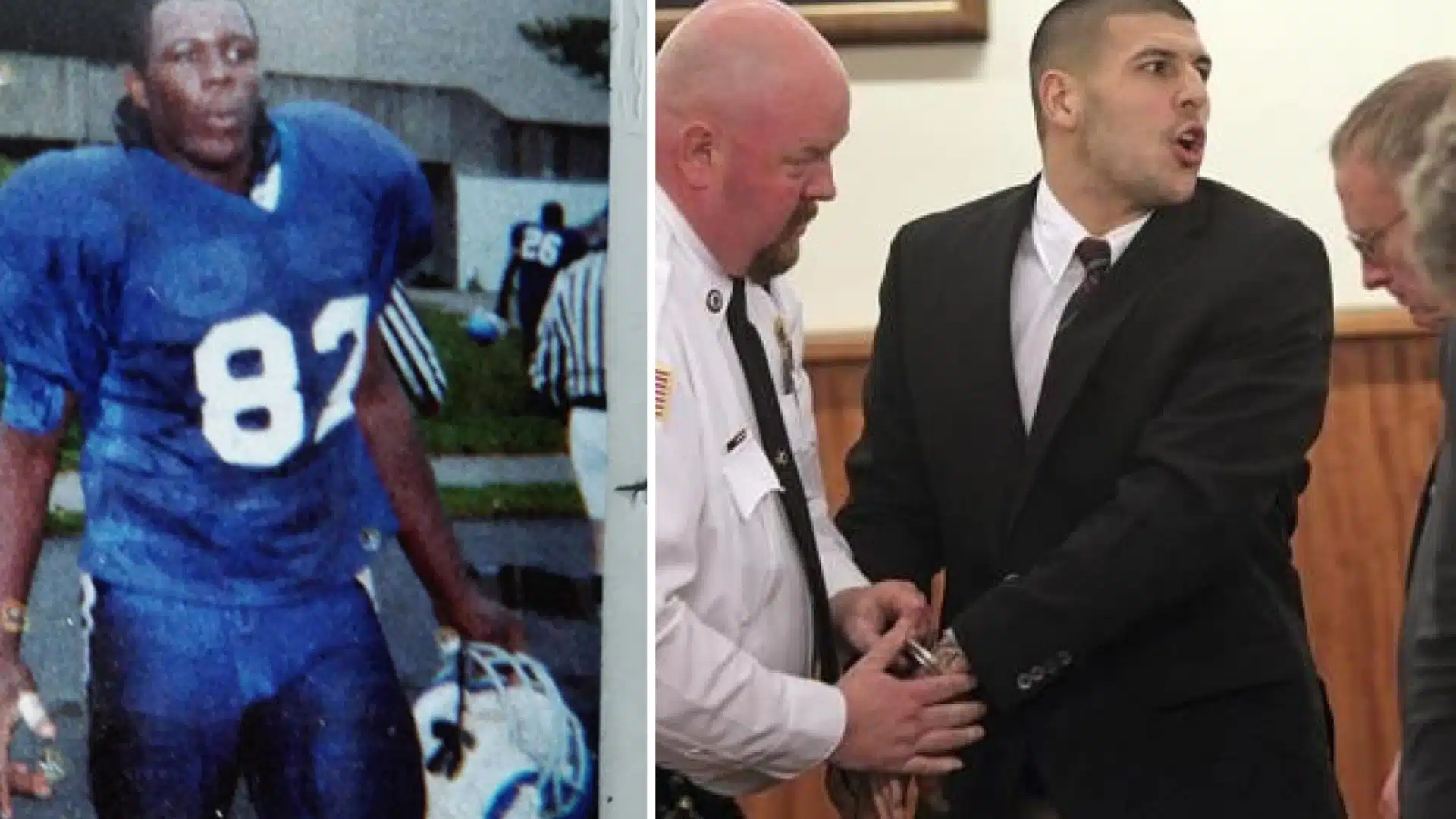
Aaron Hernandez had a $40 million NFL contract, a Super Bowl appearance, and one of the most promising careers in football.
Then Odin Lloyd, a semi-pro linebacker connected to him through family, was found shot to death in an industrial park about a mile from Hernandez’s home.
The question behind the case still pulls readers in is, why did Aaron Hernandez kill Odin Lloyd?
Prosecutors argued the killing was tied to paranoia, broken trust, and Hernandez’s fear that Lloyd had become a liability.
From a criminal defense perspective, that distinction matters because the state did not need one perfect motive to win. It needed jurors to believe the timeline, conduct, and evidence pointed in the same direction.
Aaron Hernandez and Odin Lloyd: Who They Were
Aaron Hernandez was a New England Patriots tight end whose public image looked like a success story. He had money, fame, and a major role on one of the NFL’s most visible teams.
Odin Lloyd lived outside that spotlight. He played semi-pro football for the Boston Bandits and was dating Shaneah Jenkins, the sister of Hernandez’s fiancée, Shayanna Jenkins.
That relationship brought Lloyd into his personal circle. He was not a stranger or a rival.
He was someone Hernandez had spent real time around, someone who moved through the same spaces as the people Aaron trusted most.
That connection made the case more disturbing. Prosecutors had to explain why a famous athlete would turn on someone so closely tied to his family life.
The Friendship Between Aaron Hernandez and Odin Lloyd
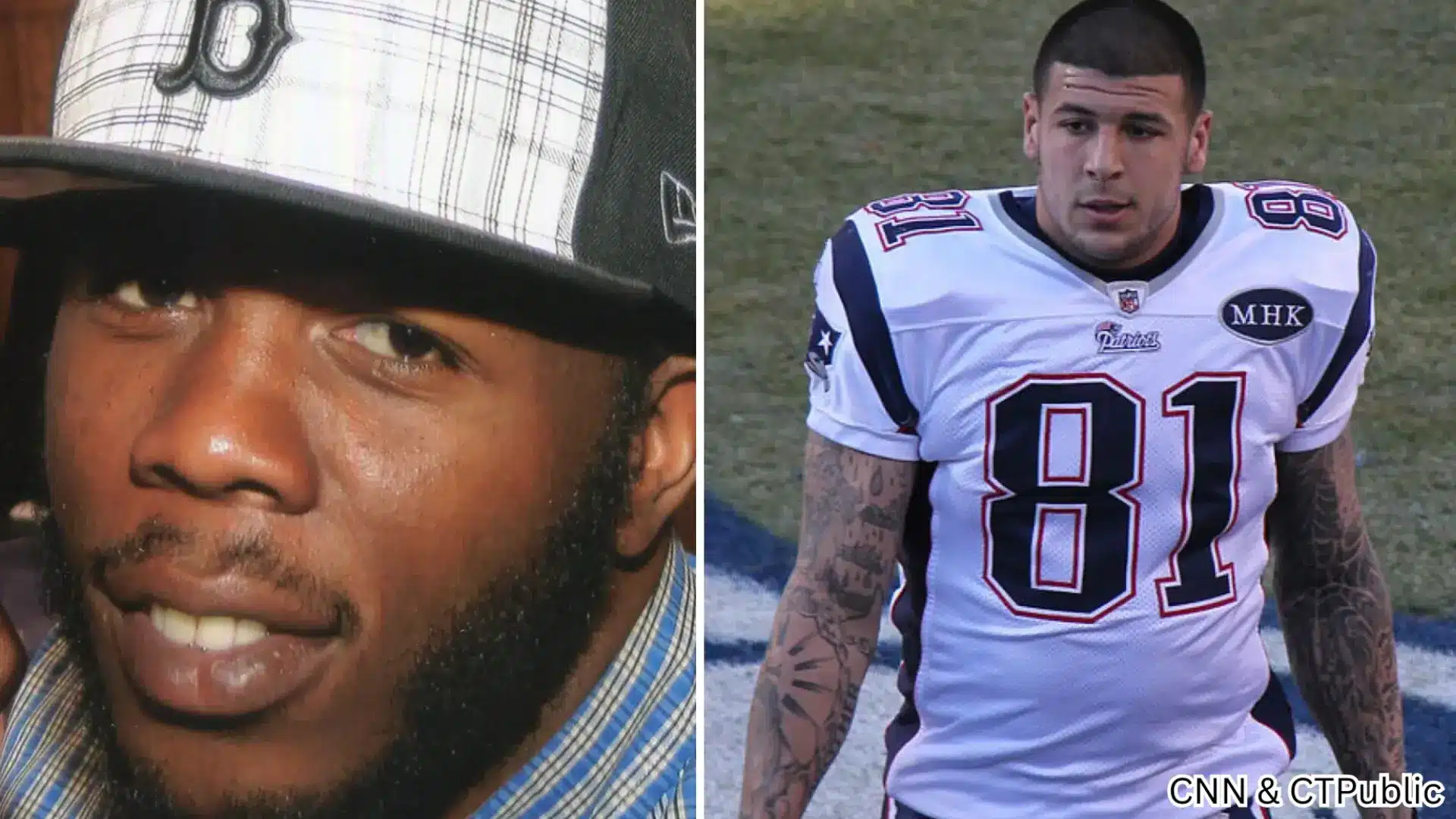
The friendship between Aaron Hernandez and Odin Lloyd appeared casual but close enough to matter. They spent time together, knew some of the same people, and were linked through the Jenkins family.
Lloyd’s killing stood out for exactly that reason. He had no obvious reason to be afraid. His final text messages suggest confusion, not certainty that he was being driven somewhere to die.
For prosecutors, the challenge was not only proving who was involved.
They also needed to help jurors understand why the relationship broke so quickly. The Aaron Hernandez–Odin Lloyd case was never really about a single argument.
It was about trust, secrecy, and what happens when someone decides another person knows too much.
What Prosecutors Said Triggered the Killing?
Two events, prosecutors argued, turned Hernandez’s suspicion into action. Both involved the same thing: the fear that Lloyd had become a loose end.
The Rumor Nightclub Incident
Two nights before the murder, Hernandez and Lloyd were at Rumor Nightclub in Boston. Prosecutors said Hernandez became angry after seeing Lloyd speak with men he associated with a prior 2012 double homicide.
That incident allegedly fed Hernandez’s suspicion and helped explain why he later viewed Lloyd as disloyal or dangerous.
The Secret Apartment and the Trust Breaking Point
Prosecutors also focused on Hernandez’s undisclosed Franklin apartment, where weapons and ammunition were allegedly stored. Their theory was that Lloyd knew about it.
The night before the killing, Hernandez texted associates from Connecticut and wrote, “You can’t trust anyone anymore,” a message prosecutors treated as a window into his mindset.
The Night Odin Lloyd Was Killed
Odin Lloyd was killed in the early morning hours of June 17, 2013, between 3:23 a.m. and 3:27 a.m. Prosecutors said Hernandez contacted Ernest Wallace and Carlos Ortiz, then picked Lloyd up in Boston around 2:33 a.m.
The group later drove toward an industrial park near Hernandez’s home in North Attleborough. Lloyd sent text messages to his sister during the ride, including “NFL” and “just so you know.”
Those messages were almost certainly meant as identification, a record of who he was with, in case something went wrong.
Something did. Lloyd was shot multiple times and found dead the following morning.
Those messages became some of the case’s most memorable details because they suggested Lloyd knew something felt off. Soon after, he was shot multiple times.
Leading Theories Behind Odin Lloyd’s Murder
Source: The New York Times
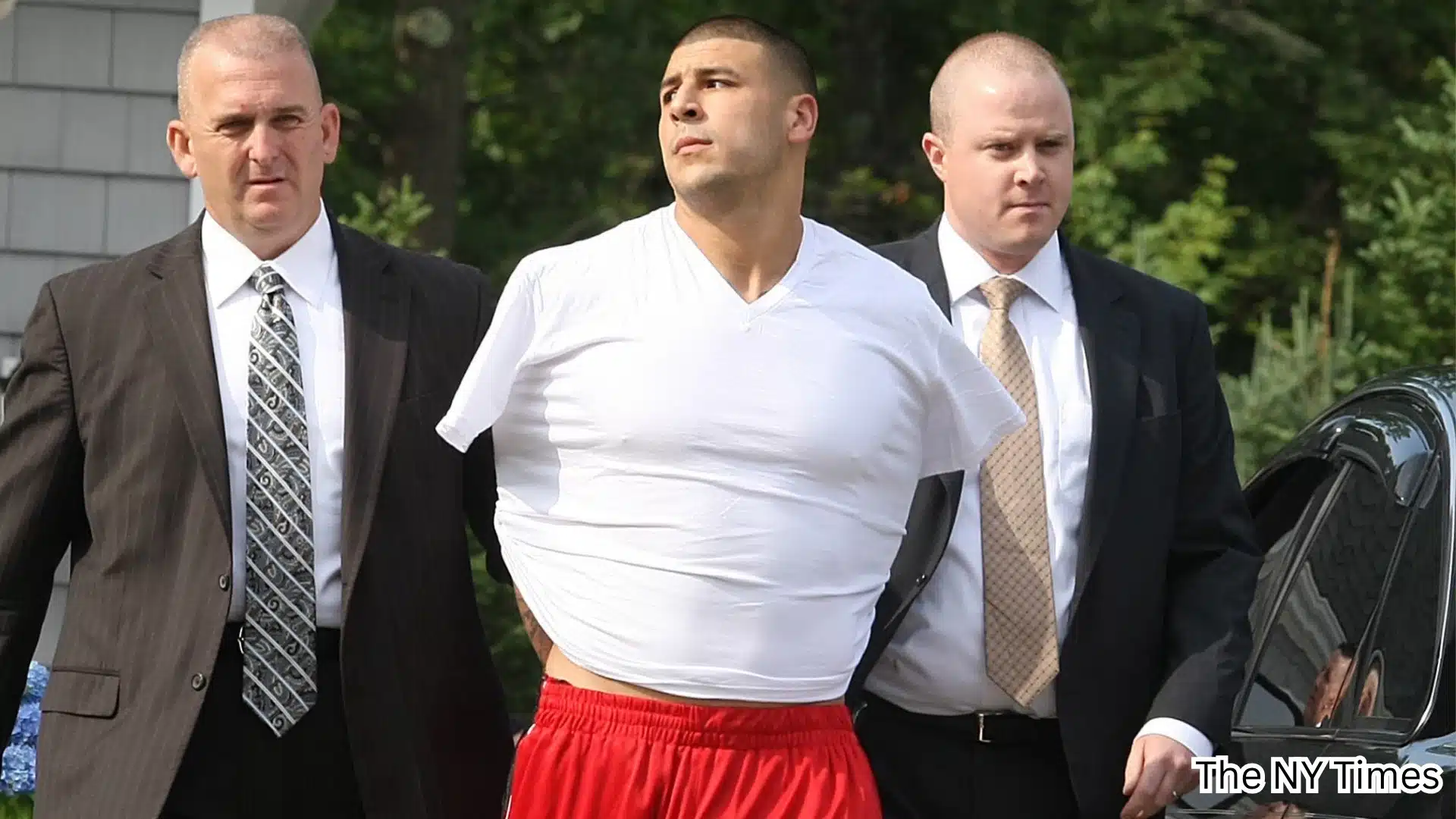
No confession was ever made. No single proven motive was locked down at trial.
What we have instead are the prosecution’s argument, a few competing theories, and some posthumous medical findings that raised more questions than they answered.
1. The Loyalty Betrayal Theory
The loyalty betrayal theory was the strongest prosecutorial narrative. Hernandez was portrayed not as someone who lost his temper, but as someone who made a calculated decision.
If Lloyd knew about Hernandez’s weapons, associates, or possible criminal exposure, then Hernandez may have seen him as someone who could no longer be trusted.
Under Massachusetts law, first‑degree murder requires proof of murder with deliberately premeditated malice aforethought, meaning the jury must find that the defendant intentionally decided to kill after a period of reflection.
The prosecution’s motive theory was built to support exactly that finding. Whether he hated Lloyd was beside the point. What mattered was whether he planned it.
Understanding how courts handle sentencing in first-degree murder convictions matters here because Hernandez received life without parole, not because of stacked charges, but because Massachusetts law mandates it for that conviction.
2. The Hidden Life Theory
Another theory is that Lloyd may have known sensitive information about Hernandez’s personal life, including claims about his sexuality, that Hernandez wanted kept private.
This idea circulated widely after the Netflix documentary series and received significant media attention. It was not argued at trial, was not supported by the evidence the jury heard, and should be treated as speculation.
It is worth understanding, because people encounter it constantly when researching the case, but it did not drive the conviction.
3. CTE and Drug-Induced Paranoia
After Hernandez died, Boston University researchers found Stage 3 Chronic Traumatic Encephalopathy, or CTE, in his brain.
CTE may be associated with impulse control, mood, and behavior issues, but it does not automatically explain or excuse murder.
That finding placed him among the most severely affected athletes examined at that stage of their lives.
CTE has been linked to impulse control problems, mood dysregulation, and paranoid behavior in some former players.
Whether it contributed to what happened with Odin Lloyd is genuinely unknowable; the diagnosis came after death, was never raised at trial, and carries no legal weight as a retroactive defense.
Reports about drug use and paranoia may add context for those who study the causes of violent crime, but they were not legal defenses at trial.
How the Aaron Hernandez Murder Case Was Prosecuted?
There was no confession. No eyewitness watched the shooting. What prosecutors built instead was a timeline so tight and so consistent that the absence of a smoking gun barely registered.
Cases built on circumstantial evidence are not inherently weaker than direct evidence cases. What makes them dangerous is accumulation.
The prosecution’s closing argument in the Hernandez trial was a study in connecting circumstantial dots, mapping each piece of evidence to the next until the defense’s alternative explanations looked increasingly implausible.
Building a First-Degree Murder Case Without a Confirmed Motive
Motive helps jurors understand a case, but under Massachusetts law, prosecutors are not required to prove motive as a standalone element of first-degree murder.
What they must prove is deliberate premeditation, that the defendant formed the intent to kill and acted on it.
Motive served a supporting role here. It explained the timeline, gave the jury a reason to believe the movements that night were planned rather than random, and made the evidence fit together coherently.
Key Evidence That Led to the Guilty Verdict
Key evidence included surveillance footage, phone records, text messages, shell casings, rental car records, and physical evidence from the industrial park.
Prosecutors also established through testimony and records that Hernandez was with Lloyd in the hours before the killing.
What made the case difficult to defend was not any single piece of that evidence but the consistency of all of it.
When surveillance footage, phone pings, and physical evidence all point in the same direction, a defense theory needs to offer a credible alternative, not just create doubt about individual items. That is a much harder task.
The Verdict, the Conviction, and What Happened After
Source:ABC7 Chicago
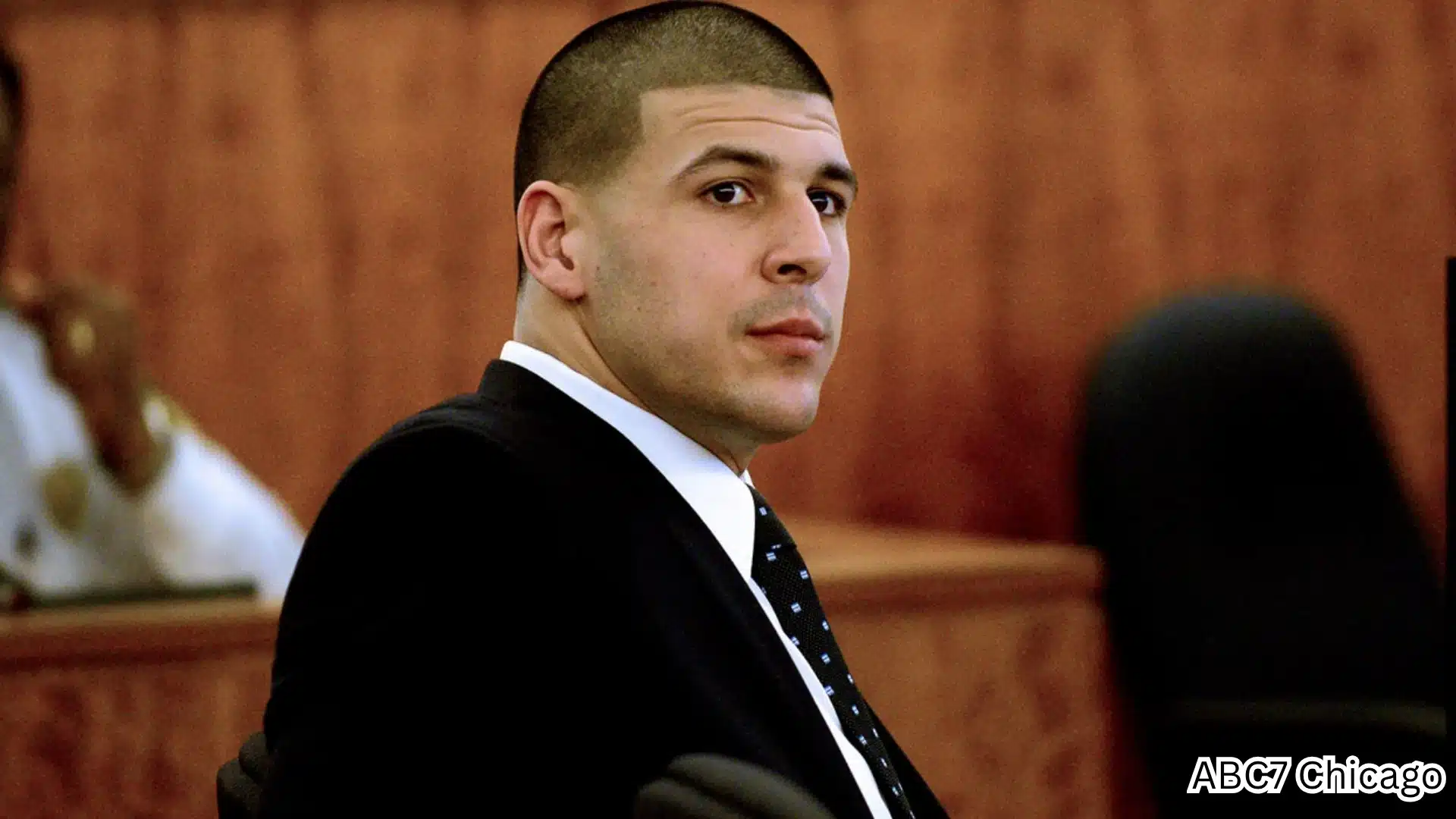
On April 15, 2015, Aaron Hernandez was convicted of first-degree murder for the killing of Odin Lloyd and sentenced to life in prison without the possibility of parole.
Two years later, in April 2017, Hernandez died by suicide inside his prison cell while his direct appeal was still pending.
What followed was a legal controversy most people outside Massachusetts had never encountered.
Under a doctrine known as abatement ab initio, his conviction was temporarily vacated because the appeal process had not been completed before his death.
The doctrine, rooted in the idea that a defendant who dies mid-appeal was never “finally convicted,” had the effect of legally erasing years of proceedings, at least temporarily.
That decision drew sharp public backlash, especially from Odin Lloyd’s family.
In March 2019, the Massachusetts Supreme Judicial Court reversed course, reinstated the conviction, and abolished the doctrine’s application to cases like this going forward. The conviction stands.
When Criminal Defense Representation Changes Outcomes
The Hernandez case shows why criminal defense strategy matters from the earliest stage of an investigation. That is exactly the right strategy in a case with no eyewitness and no confession.
His defense team challenged the state’s evidence, attacked the circumstantial nature of the case, and argued that prosecutors had not proven who fired the fatal shots. The lesson from a defense standpoint is about timing.
In serious criminal cases, early decisions can shape everything, from statements to police to evidence preservation to suppression motions to witness strategy to the trial narrative.
For defendants in Nevada, including Las Vegas, Henderson, Reno, and Clark County, the lesson is direct.
If you are under investigation or facing charges, speaking with a criminal defense attorney early can protect your rights before the case hardens around the prosecution’s version of events.
For families in the victim’s position, options like a civil wrongful death claim may remain available even after criminal proceedings close.
Conclusion
The question of why Aaron Hernandez killed Odin Lloyd still does not have one clean answer today. I think that is why the case feels so unsettling, even after the conviction and years of coverage.
You can follow the evidence, understand the verdict, and still wonder what was truly happening in Hernandez’s mind.
The strongest answer remains the one prosecutors gave, built around distrust, fear, secrecy, and the people around him.
Still, cases like this remind us that motive is often messy, especially when fame and private pressure collide. For readers, the hardest part may be accepting that a clear verdict does not always give full closure.
What do you think was the biggest factor in the Aaron Hernandez and Odin Lloyd case? Tell us, share with us in the comments below.
Frequently Asked Questions
Why Was Odin Lloyd Killed Near Aaron Hernandez’s Home?
Prosecutors argued the location helped connect Hernandez to the crime because Lloyd was found in an industrial park close to Hernandez’s North Attleborough home.
The area also became important because surveillance footage, vehicle movement, and phone records helped establish the timeline.
Who Were Ernest Wallace and Carlos Ortiz?
Ernest Wallace and Carlos Ortiz were Hernandez’s associates.
Prosecutors said Hernandez contacted them before Lloyd was picked up, and both men became part of the criminal case because they were allegedly present during key parts of the night Lloyd was killed.
Was Aaron Hernandez Convicted Based on Motive Alone?
No. Motive helped prosecutors explain the case, but the conviction rested on the broader evidence timeline, including digital, physical, and circumstantial evidence.