

The case involving Betty Gore and Candy Montgomery remains one of those true crime stories that is hard to scroll past.
I think part of the reason it still gets attention is that people do not just read it as an old Texas case.
They read it with questions, opinions, and a need to understand how something so disturbing could end the way it did.
Decades later, the case continues to draw attention not just because of the violence, but because of what a Texas jury decided to do with it, and why that decision remains legally coherent even if it feels wrong to many people.
From books and interviews to modern streaming adaptations, the case keeps resurfacing for new audiences who want to understand why it still feels so unsettled.
Who Were Betty Gore and Allan Gore?
Betty Gore, born in 1950, was a middle school teacher and a devout member of the First United Methodist Church of Lucas in Collin County, Texas.
She married Allan Gore, a technical specialist in the booming Dallas-Fort Worth technology corridor.
Together they settled into suburban life in Wylie, a small town east of Dallas, and had a daughter named Alisa. Betty was on maternity leave with their second child when the summer of 1980 arrived.
Allan worked in a sector that was pulling young families into the area by the thousands. Their church was the center of their social world, as it was for many of their neighbors.
Betty taught Sunday school. Allan played volleyball at church events.
To anyone watching from the outside, the Gores were a thoroughly ordinary Texas family, which is part of what makes this case so difficult to set down once you start reading it.
Candy Montgomery and the Beginning of the Affair
Candace “Candy” Montgomery moved to Wylie in 1977 with her husband Pat, an electrical engineer at Texas Instruments.
She was social, well-liked, and active in the church choir and Sunday school program. She and Pat had two children and, by her own description, a comfortable life that quietly bored her.
What Candy did next was direct in a way that stands out even now. After a church volleyball game in late 1978, she approached Allan Gore and asked, plainly, whether he would be interested in having an affair.
Allan said yes. The two spent several weeks designing the arrangement: set meeting days, split hotel costs, and no emotional attachment. They built an exit clause into the arrangement from the beginning.
The affair ran from December 1978 until October 1979, when Allan told Candy he wanted to recommit to his marriage with Betty after the birth of their second child.
Candy ended it the next day. Life in Wylie returned, on the surface, to what it had been.
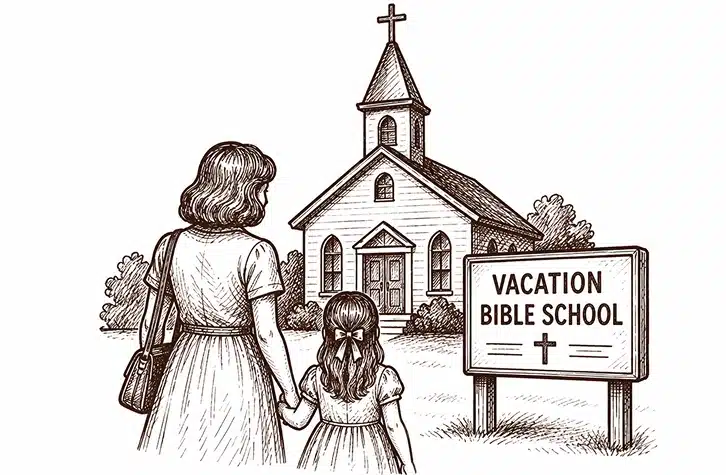
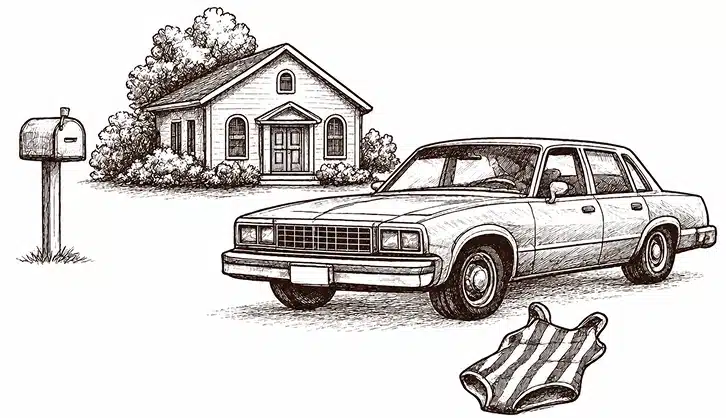
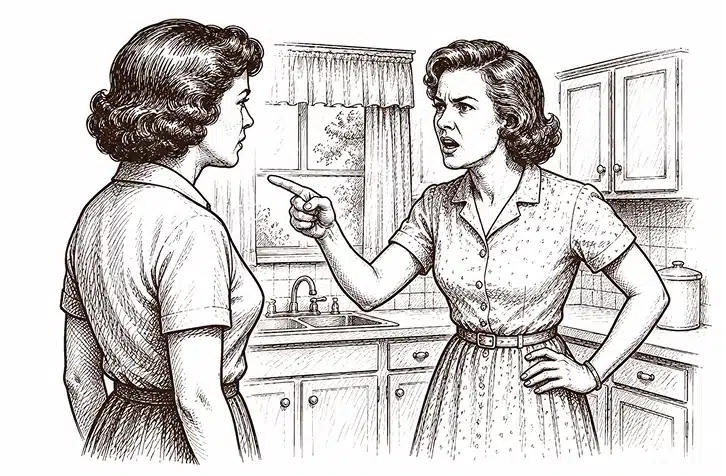
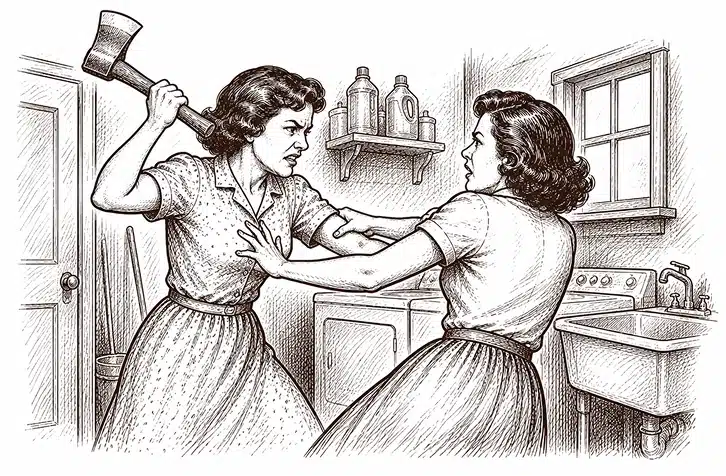
June 13, 1980: What Happened at the Gore House?
The events at the Gore house unfolded over a short period, but they became the center of the entire case.
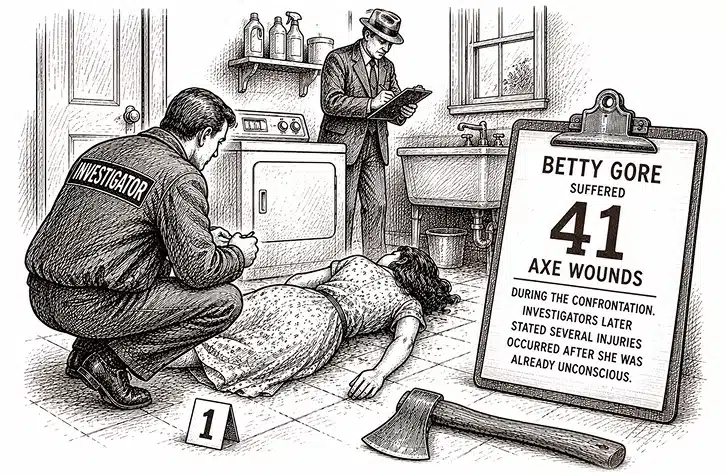
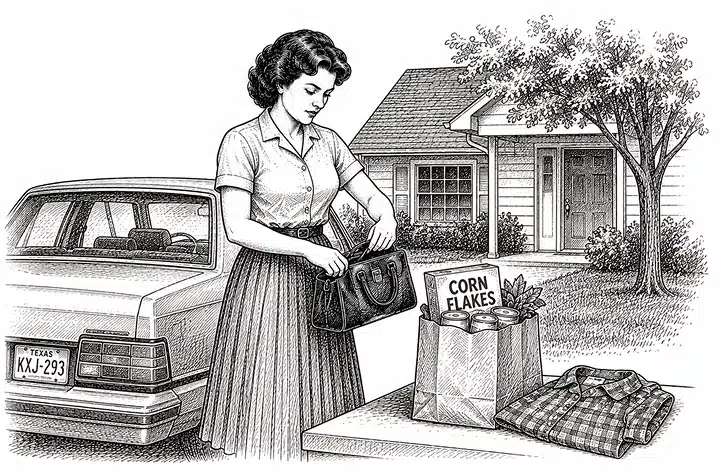
This timeline breaks down the key moments from Candy Montgomery’s arrival to the discovery of Betty Gore’s body.
The Investigation and Candy Montgomery’s Arrest
When investigators arrived at the Gore home, they had no clear suspect. Retired Collin County sheriff’s deputy Steve Deffibaugh described the scene as looking like something from a horror film.
Several officers privately linked the crime to the movie “The Shining,” which had been in theaters that spring.
The investigation changed direction when Allan Gore disclosed his affair with Candy Montgomery to detectives. Her fingerprints matched a bloody print recovered at the scene.
Two weeks after Betty’s death, on June 27, 1980, Montgomery was arrested and charged with first-degree murder.
The Murder Trial of Candy Montgomery
Candy Montgomery’s 1980 trial focused less on whether she killed Betty Gore and more on whether the killing legally qualified as self-defense. Both sides presented sharply different versions of the violent confrontation.
| Aspect | Details |
|---|---|
| Trial Start | Candy Montgomery’s trial began in October 1980 in McKinney, Texas. |
| Prosecution Argument | Prosecutors argued the killing could not be self-defense because Betty Gore was struck 41 times. |
| Defense Strategy | Defense attorney Don Crowder admitted Candy killed Betty but claimed it was self-defense. |
| Defense Claim | Crowder argued Betty picked up the axe first, leading to a struggle. |
| Psychiatric Testimony | The defense used psychiatric experts to explain why the attack continued beyond the initial blows. |
| Key Jury Question | The jury had to decide whether Candy acted in self-defense or used excessive violence. |
The Casey Anthony acquittal is frequently cited alongside this verdict when analyzing how burden-of-proof structures shape outcomes.
Betty’s alleged first move with the axe was the foundation of everything Crowder built. Under Texas law, once a defendant raises self-defense, the prosecution must disprove it beyond a reasonable doubt.
The Texas self-defense statute under Penal Code Section 9.31 sets out exactly what that standard requires. Crowder understood the burden and built his strategy around making it impossible to meet.
What Made Candy Montgomery’s Self-Defense Claim Legally Viable in Texas?
Under Texas Penal Code Section 9.31, a person is justified in using force when they reasonably believe that force is immediately necessary to protect themselves against another’s use of unlawful force.
Once a defendant raises self-defense at trial, the prosecution, not the defendant, must disprove that claim beyond a reasonable doubt.
This burden-shifting rule makes Texas one of the more defendant-favorable jurisdictions for self-defense claims, particularly in cases where the defendant admits to the act of killing but disputes the legal justification.
The defense team’s central argument was that Betty Gore reached for the axe first, which, if credited by the jury, satisfied the threshold required to invoke that statutory protection.
The psychiatric testimony then addressed a separate but connected question: why the force continued at the level it did after the initial threat was neutralized.
The Self-Defense Argument and Dissociative Reaction Testimony
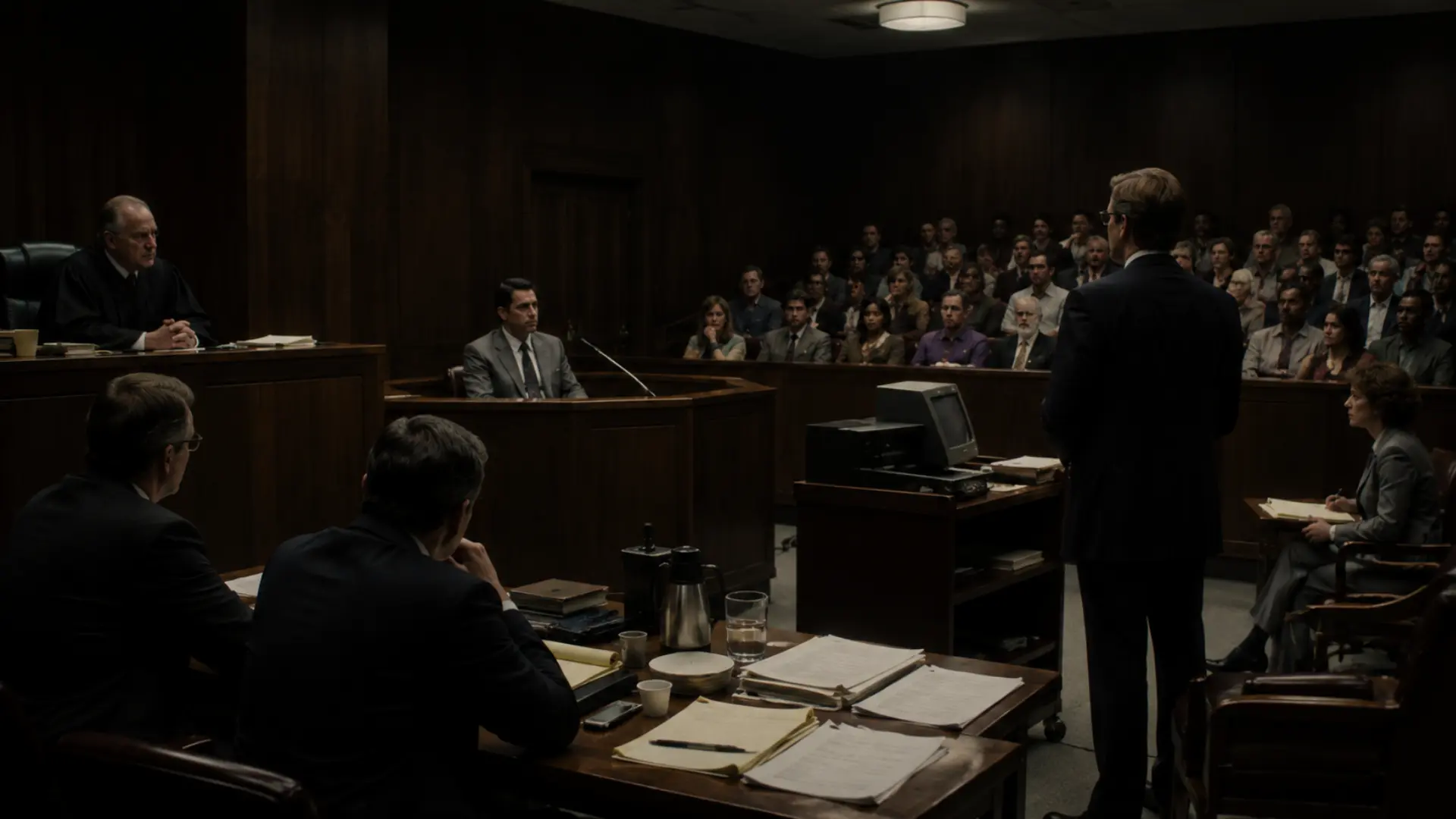
Candy Montgomery took the stand on October 23, 1980. She testified that Betty picked up the axe and struck her twice before she managed to take it away. When she tried to leave, Betty said she refused to let her go.
The prosecution’s counter was simple: if you have the axe and the door is open, you walk out.
A dissociative reaction is a mental state where a person acts without fully processing what they are doing in the moment. Memory of the event may be unclear or incomplete afterward.
At trial, psychiatrist Dr. Fred Fason testified that Betty saying “Shhh” triggered a buried childhood memory in Candy Montgomery.
He argued this sent her into a fugue-like state during the struggle, which helped explain the number of axe blows.
What the defense accomplished legally was more interesting than the hypnosis itself. By combining self-defense with a dissociative explanation for the blow count,
Crowder answered the one question the prosecution needed the jury to keep asking: “how is 41 strikes self-defense?“
The psychiatric testimony gave the jury a clinical framework. They did not have to simply dismiss the violence. They had a framework for why it happened the way it did.
Crowder also presented polygraph results supporting the truthfulness of Montgomery’s account.
Polygraph evidence remains inadmissible in most jurisdictions, and its scientific reliability is widely disputed among legal and forensic practitioners.
In Texas at the time, such results could be introduced under specific conditions with court approval.
The tactical decision to include them reinforced the defense’s broader credibility narrative without giving the prosecution a clean target to rebut.
The Final Verdict of Betty Gore’s Murder on October 30, 1980
The first argument in the case began on October 29, 1980. The jury of 9 women and 3 men began deliberating that afternoon.
The jury deliberated for 3 to 4.5 hours and returned. On October 30, 1980, the Judge gave the final verdict.
Not guilty. Not guilty of murder, and not guilty of the lesser charge of manslaughter.
Judge Ryan read the verdict into the record. The courtroom went quiet.
Outside, a crowd had gathered and was waiting. When Montgomery exited, spectators chanted “Murderer! Murderer!” as she passed.
Betty’s father, Bob Pomeroy, told reporters he was not happy with the outcome and that the family would never know what truly happened that morning.
Public Opinion and the Debate that Never Ended
The verdict divided people almost immediately. In Wylie and across Collin County, many who knew both families felt the outcome did not match the violence of the crime.
For them, 41 axe blows were difficult to reconcile with self-defense.
1. Why Did Many People Question the Verdict?
Several concerns kept the debate alive:
| Concern | Why it mattered |
|---|---|
| Number of blows | Many felt 41 strikes went far beyond stopping a threat. |
| Injuries after unconsciousness | The medical examiner found that several wounds occurred after Betty was already unconscious. |
| Psychiatric testimony | Some critics saw the dissociative reaction defense as too convenient and hard to verify. |
| Motive | Prosecutors argued that anger or fear of exposure may have driven the attack. |
| Burden of proof | Texas law required prosecutors to disprove self-defense beyond a reasonable doubt. |
2. Why Did Others Accept the Acquittal?
Some people accepted the acquittal because the jury believed Candy Montgomery’s version of events.
Her defense argued that Betty Gore picked up the axe first, which made the case less about whether Candy killed Betty and more about whether she acted in self-defense.
Candy also testified about the struggle in detail, and the defense used psychiatric testimony to explain why the violence continued beyond the first blows.
To the jury, that explanation appeared to create enough doubt about murder. One juror later said the panel believed Candy’s account of how the fight began.
Supporters of the verdict also pointed to the legal burden on prosecutors. Once self-defense was raised, the state had to disprove it beyond a reasonable doubt. The jury decided prosecutors had not met that standard.
3. Why Does the Case Still Get Attention?
The case still gets attention because the verdict never fully settled the public debate.
Candy Montgomery admitted to killing Betty Gore, yet she was acquitted after claiming self-defense. That gap between the physical evidence and the legal outcome keeps people returning to the story.
The 41 axe wounds remain the detail most readers struggle to reconcile with the jury’s decision.
The case also gained new audiences through the 1990 TV movie “A Killing in a Small Town,” Hulu’s “Candy,” and HBO Max’s “Love and Death.”
Each retelling brought the story back into public conversation. Decades later, people still discuss it because it raises hard questions about fear, violence, mental state, and where self-defense ends.
What Happened After the Trial?
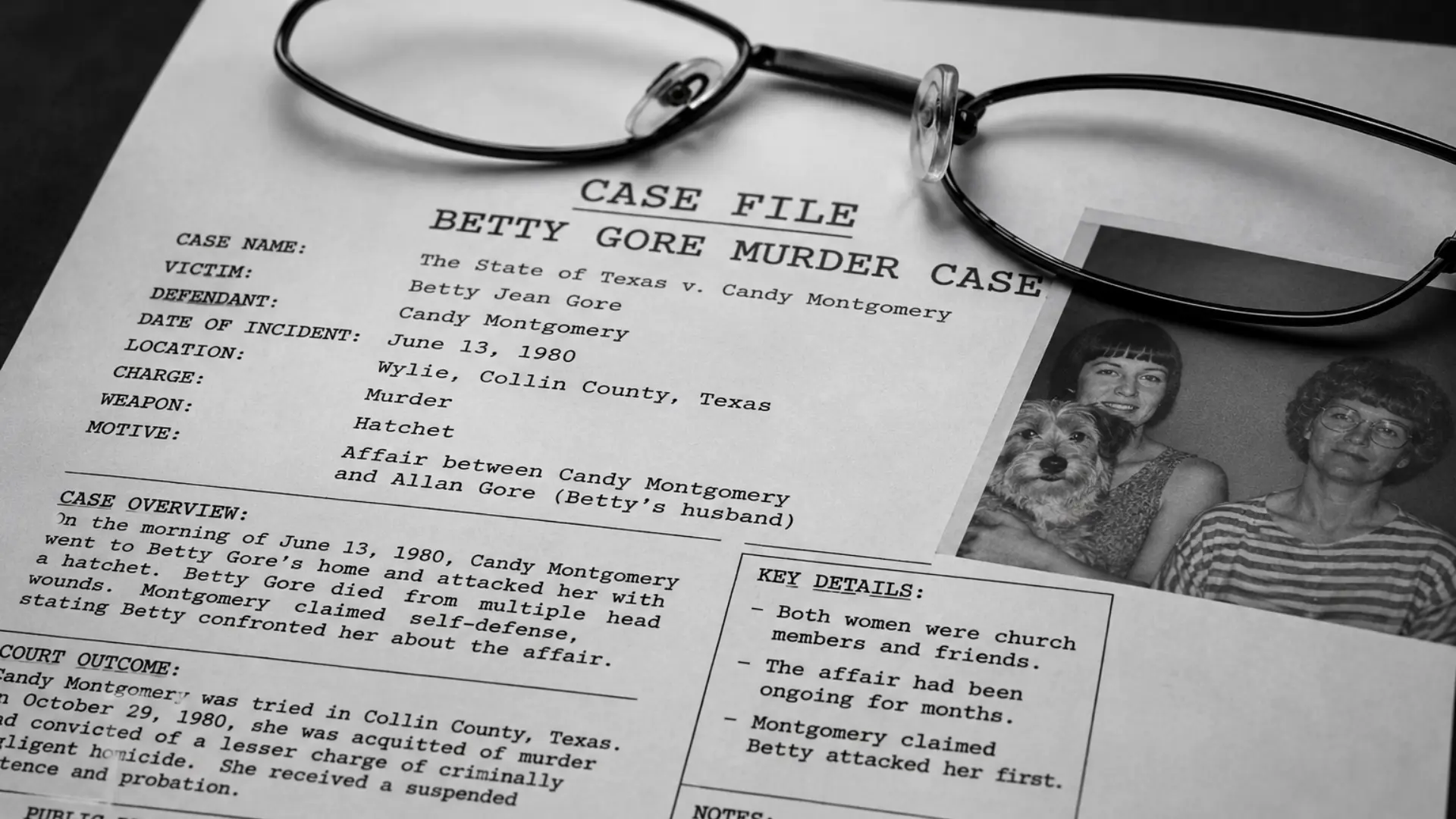
Candy Montgomery and her husband Pat left Texas three months after the verdict and relocated to Georgia, where her parents lived.
The marriage survived the trial but not the years that followed. They divorced in 1986. Candy rebuilt her life under her maiden name, Candace Wheeler.
By 1996, she had obtained a professional counselor license in Georgia and went on to work as a licensed family therapist.
Allan Gore remarried after Betty’s death. That marriage also ended in divorce. His two daughters, Alisa and the infant born just before Betty’s murder, were raised by Betty’s parents, the Pomeroys.
The Gore family home in Wylie changed hands. New families moved in. The town moved outwardly.
Betty Gore’s family was never fully satisfied with the legal outcome. Her father’s public comments after the verdict were measured but clear. The Pomeroys raising Betty’s children is the part of this story that rarely makes it into the headline summaries.
Two girls lost their mother on June 13, 1980, and spent their childhoods being raised by their grandparents, while the woman who killed her went on to build a career as a therapist.
That is the lasting shape of what the Betty Gore murder actually cost, and no verdict changes it.
Conclusion
The Betty Gore murder still leaves people with mixed feelings, even decades after the trial ended.
I think that is because the case is not only about one verdict, but also about how people understand fairness. You may look at it through the courtroom, while someone else may think first about Betty’s family.
That difference is why the story keeps returning through shows, books, and online debates. It does not need a loud ending, because the facts already carry enough weight.
What matters now is how readers think about law, doubt, family loss, and justice after knowing the story. Cases like this rarely leave everyone satisfied, and that is why the discussion still feels alive.
Which part of the Betty Gore case stayed with you the most? Tell us, share with us in the comments below.
Frequently Asked Questions
What Book Was Written About the Betty Gore Murder Case?
“Evidence of Love: A True Story of Passion and Death in the Suburbs” was written by Dallas journalists John Bloom and Jim Atkinson and published in January 1984.
The book examined the case and the events that followed the trial in detail. It later served as source material for at least one of the television adaptations.
Was Betty Gore’s Baby Home During the Murder?
Yes. Betty Gore’s infant daughter was reportedly inside the house when the killing happened.
Did Allan Gore Ever Speak Publicly About His Role in the Events?
Allan Gore testified at trial and gave interviews to Texas Monthly during and after the investigation. He acknowledged the affair and confirmed disclosing it to detectives.
After the verdict, he largely withdrew from public life, remarried, and eventually moved away from Wylie. His daughters were raised by Betty’s parents, the Pomeroys.