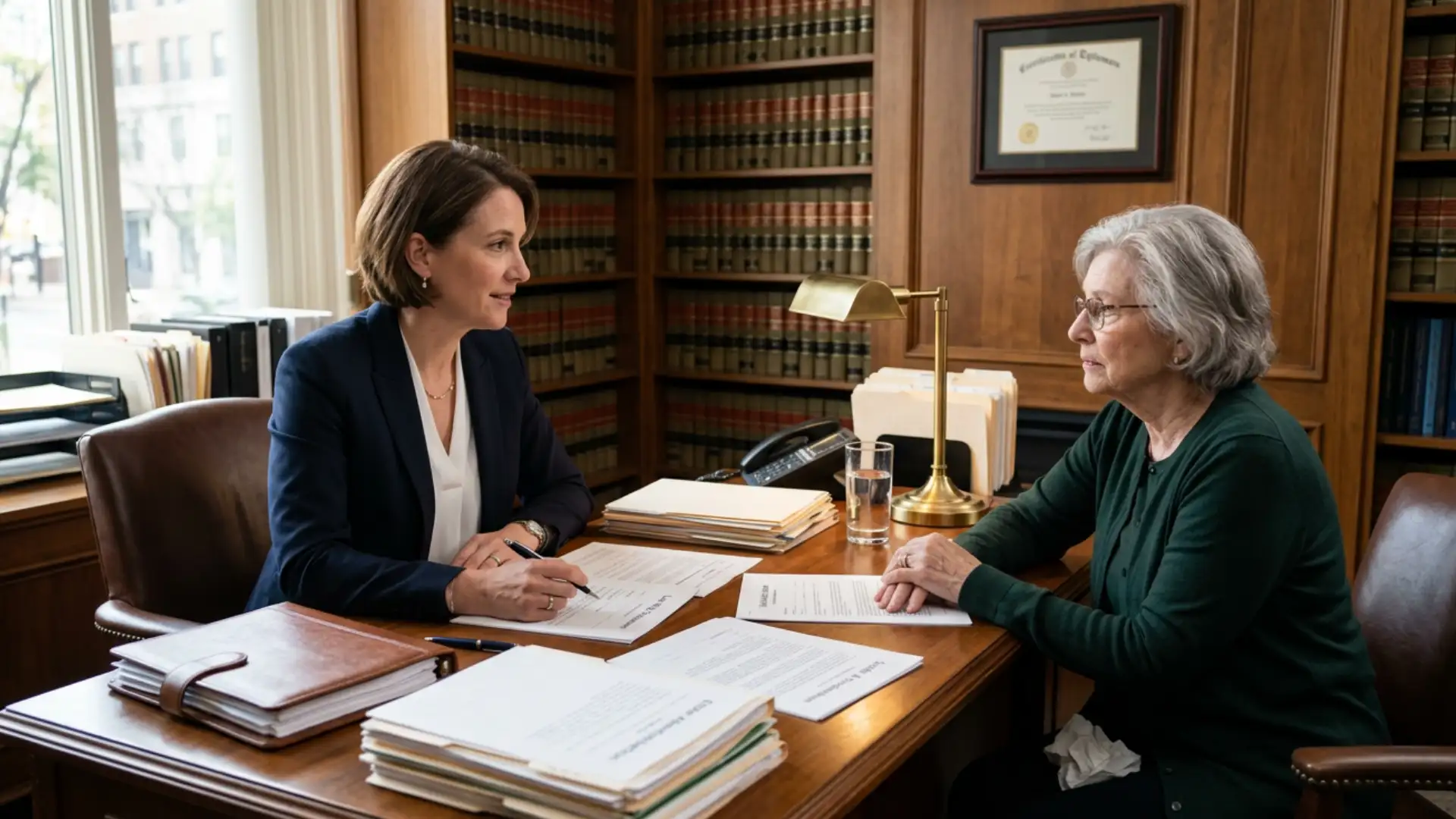

A power of attorney can create real stress when something feels off. Maybe a sibling is handling a parent’s money, bills are going unpaid, or the parent suddenly seems cut off from everyone else.
These situations raise hard questions, especially when family members do not agree on what is best.
That is when people often ask who can override a power of attorney and what steps are actually allowed.
The answer depends on the principal’s mental capacity, the wording of the document, and whether a court needs to get involved.
Ahead, this blog explains who has the authority to revoke or challenge a POA, what family members can and cannot do, when misuse becomes a serious concern, and when legal help may be needed to protect the principal’s interests.
What Does it Mean to Override a Power of Attorney?
Overriding a power of attorney (POA) means ending or replacing the authority granted to an agent. Legally, this is known as revocation.
Once a POA is revoked, the agent no longer has the right to make financial, healthcare, or other decisions on the principal’s behalf.
However, not everyone can override a POA simply because they disagree with the agent’s actions.
The ability to revoke or challenge a POA depends on who is seeking the change and whether the principal still has the mental capacity to make decisions. A spouse, adult child, or sibling cannot automatically cancel a POA.
It is also important to understand that a POA does not become invalid just because a copy of the document is destroyed.
If the agent and third parties have not been notified of the revocation, the agent may continue acting under the POA. To be effective, revocation must follow the proper legal steps and be communicated to all relevant parties.
Who Can Override a Power of Attorney?

A power of attorney can be overridden, but not by just anyone. The answer depends on who created it, whether that person still has mental capacity, and whether the agent is acting within the document’s limits.
- Principal: The person who made the POA can revoke it if they still understand the decision.
- Court: A judge can step in if there is abuse, fraud, pressure, or misuse of authority.
- Guardian or conservator: If appointed by the court, they may take over certain decisions. For a closer look at the differences, see our guide on conservatorship vs. guardianship.
- Successor agent: A named backup agent may act if the first agent resigns, dies, or is removed.
Family members usually cannot override a valid POA on their own. They can raise concerns, collect proof, and ask a court to review the agent’s actions.
How to Revoke a Power of Attorney as the Principal
If you created the POA and still have the mental capacity to make decisions, you can revoke it at any time. The process generally involves these steps:
- Prepare a Written Revocation. State that you are revoking the existing POA. Include your full legal name, the date of the original POA, the agent’s name, and a clear statement of revocation. Sign and date the document.
- Have It Notarized. Many states require or strongly recommend notarization to help ensure the revocation is legally enforceable and less vulnerable to disputes.
- Notify the Agent. Send the signed revocation to your agent, preferably by certified mail, so you have proof they received notice.
- Notify Third Parties. Banks, financial institutions, healthcare providers, and anyone relying on the original POA should receive a copy. Until they are notified, they may continue accepting the agent’s instructions.
- Record the Revocation if Necessary. If the POA was used for real estate transactions, you may need to file the revocation with the same county office where the original document was recorded.
Keep in mind that creating a new POA does not automatically revoke an older one unless the new document expressly states that all prior powers of attorney are revoked.
How Does Colorado Handle POA Revocation?
Colorado’s power of attorney laws are governed by the Uniform Power of Attorney Act, found in C.R.S. Title 15, Article 14, Part 7.
While the revocation process is generally similar to that of other states, there are several Colorado-specific rules worth knowing.
First, Colorado generally requires a revocation to be acknowledged before a notary public. Having the document notarized helps establish its validity and reduces the risk of future disputes.
Second, executing a new POA does not automatically revoke an existing one. To terminate a prior power of attorney, the new document should clearly state that the earlier POA, or all previously executed POAs, is revoked.
Finally, notice is critical. A revocation is not effective against an agent or third party who acts in good faith without actual knowledge that the POA has been revoked.
For that reason, it is important to notify not only the agent but also any banks, healthcare providers, or other institutions that may be relying on the original document.
Can Someone Else Override a Power of Attorney?

Family members often assume they can step in when they disagree with an agent’s decisions, but that is not usually how a power of attorney works.
A sibling cannot automatically remove an agent just because of a family dispute. The same applies when adult children disagree about a parent’s finances, healthcare, or living arrangements.
- Siblings can question suspicious actions and request a legal review.
- Adult children can seek court intervention if they believe the agent is acting improperly.
- Relatives can report concerns about neglect, financial abuse, or isolation.
- Family members can gather records and evidence to support a challenge.
Problems often arise when a parent is isolated from loved ones or appears to be pressured into decisions.
In those situations, a court may review the agent’s conduct and decide whether the power of attorney should remain in place.
When disputes involve multiple estate planning documents, it may also be helpful to understand how to contest a will as part of a broader legal strategy.
Warning Signs a Power of Attorney May Be Misused
Misuse of a power of attorney often becomes apparent through changes in a principal’s finances, property, or personal relationships.
According to the National Council on Aging, financial exploitation is one of the most common forms of elder abuse, making it important to recognize warning signs early.
Watch for:
- Unexplained Withdrawals or Transfers: Large or unusual transactions the principal cannot explain or did not authorize.
- Unpaid Bills Despite Available Funds: Routine expenses remain unpaid despite sufficient funds.
- Unexpected Changes to Legal or Financial Documents: Revisions to wills, deeds, beneficiary designations, or account ownership that primarily benefit the agent.
- Isolation from Family and Friends: The agent is restricting the principal’s access, particularly during financial discussions.
- Missing Assets or Property: Money, valuables, or property that cannot be accounted for.
If you notice several of these warning signs, seek legal advice as soon as possible. Financial exploitation can be difficult to undo once assets have been transferred, sold, or spent.
How to Challenge or Revoke a Power of Attorney?
Challenging or revoking a power of attorney starts with reviewing the document and understanding what authority the agent has.
If the principal still has legal capacity, they can usually cancel it through a written revocation and notify banks, healthcare providers, and other institutions.
If there are concerns about abuse, pressure, missing funds, or unusual decisions, those concerns should be documented with records, messages, statements, or witness details.
When the principal lacks capacity, or the agent refuses to act properly, family members may need to seek court help.
A judge can review the evidence, limit the agent’s authority, remove the agent, or appoint someone else to protect the principal’s interests.
What Happens After a POA is Overridden?

When a power of attorney is overridden, the next step depends on who took action and why. If the principal still has legal capacity, control may return to them after the POA is revoked.
They may also name a new agent through a fresh document. If the original document names a successor agent, that person may step in when the first agent is removed, resigns, dies, or becomes unable to serve.
In more serious cases, a court may appoint a guardian or conservator to manage personal, medical, or financial decisions.
The court may also keep supervision in place if there are concerns about abuse, missing money, or poor decision-making.
After that, banks, healthcare providers, and other institutions should be notified so they know who has legal authority going forward.
When to Consult an Attorney About a POA?
Legal advice can be valuable whenever there are questions about revoking, challenging, or protecting a power of attorney.
- Revoking a POA: An attorney can help draft the revocation correctly, follow state rules, and notify banks or agencies that relied on the old document.
- Concerns About a Loved One: Legal guidance can help when there are signs of pressure, isolation, neglect, confusion, or an agent blocking family contact.
- Challenging a POA in Court: An attorney can help prepare petitions, collect evidence, request records, and address guardianship or conservatorship issues if needed.
- Suspected Financial Exploitation: Quick legal action may help freeze accounts, trace missing funds, stop further misuse, or improve the chance of asset recovery.
- Protecting the Principal’s Interests: A lawyer can suggest safeguards, update documents, clarify agent duties, and reduce the chance of future disputes or abuse.
Conclusion
A power of attorney can be overridden, but the process depends largely on the principal’s mental capacity. If the principal remains competent, they can revoke the POA at any time.
If they no longer have capacity, court intervention may be necessary to remove the agent or appoint a guardian or conservator.
Family members cannot cancel a POA on their own, but they can raise concerns and petition the court when there is evidence of abuse, neglect, or financial misconduct.
Knowing your options early can help protect the principal’s interests and prevent more serious problems down the road.
If you are concerned about a power of attorney arrangement or need help creating, revoking, or challenging a POA, speaking with an attorney is often the best next step.
Frequently Asked Questions
Can a Family Member Override a Power of Attorney without Going to Court?
No. Family members cannot revoke or override a POA on their own. If they suspect misuse or abuse, they must petition a court for review.
Does a New Power of Attorney automatically revoke the Old One?
Not necessarily. In many states, including Colorado, the new POA must expressly state that prior powers of attorney are revoked. Otherwise, the earlier POA may remain valid.
Can a Power of Attorney Be Overridden After the Principal Dies?
No. A POA automatically ends upon the principal’s death. After that, authority passes to the executor of the estate or the trustee of any trust assets.
What is the Difference Between Revoking a POA and Establishing a Guardianship?
Revoking a POA is a voluntary action taken by a competent principal. Guardianship is a court-ordered arrangement that places decision-making authority with a court-appointed guardian, typically when the principal lacks capacity.