A funeral procession is one of the most solemn moments in a final farewell.
The slow line of vehicles, the quiet roads, and the shared sense of loss create an atmosphere that feels heavy yet respectful.
It is not just about moving from one place to another. It represents honor, unity, and a final act of dignity for the person who has passed away.
Many people want to understand what it truly means and how they should behave when they see one or take part in it. There is often confusion about the rules, customs, and proper conduct.
In this article, you will learn the meaning behind this tradition, why it holds importance in many cultures, and the right way to act whether you are participating or simply sharing the road.
What is a Funeral Procession?
A funeral procession is a line of vehicles that travels together from the funeral service to the burial site or crematorium.
The formal term for this organized movement is a “funeral cortège,” a phrase still used in legal writing and formal funeral documentation.
It is organized to honor the person who has passed away and to allow family and friends to arrive together.
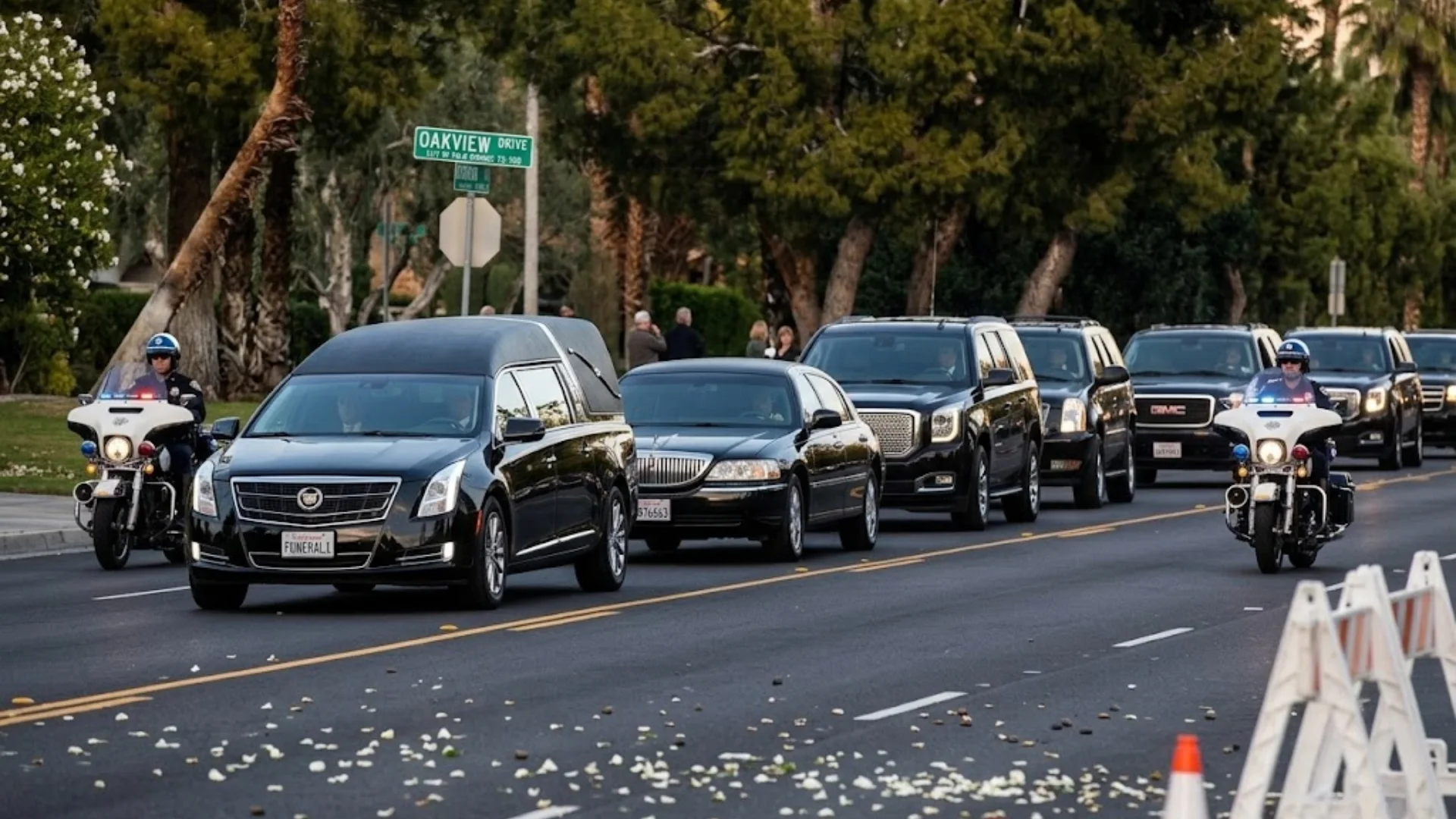
It usually begins with a lead vehicle, followed by the hearse carrying the casket. Close family members drive directly behind the hearse.
Unlike a regular convoy, this procession moves at a steady and respectful pace. Other drivers are expected to show courtesy and avoid cutting in line.
The purpose is not efficiency but unity, allowing everyone to share the final journey together in a calm and dignified way.
The last vehicle in the line is marked with 2 funeral flags and flashing hazard lights, a deliberate signal to other drivers that the procession has ended and normal traffic may resume.
On most local roads and back streets, procession vehicles typically travel between 20 and 30 mph.
On highways, that pace may rise to 50 or 55 mph, though the objective remains staying together as a group rather than matching the speed of surrounding traffic.
The Significance Behind a Funeral Procession
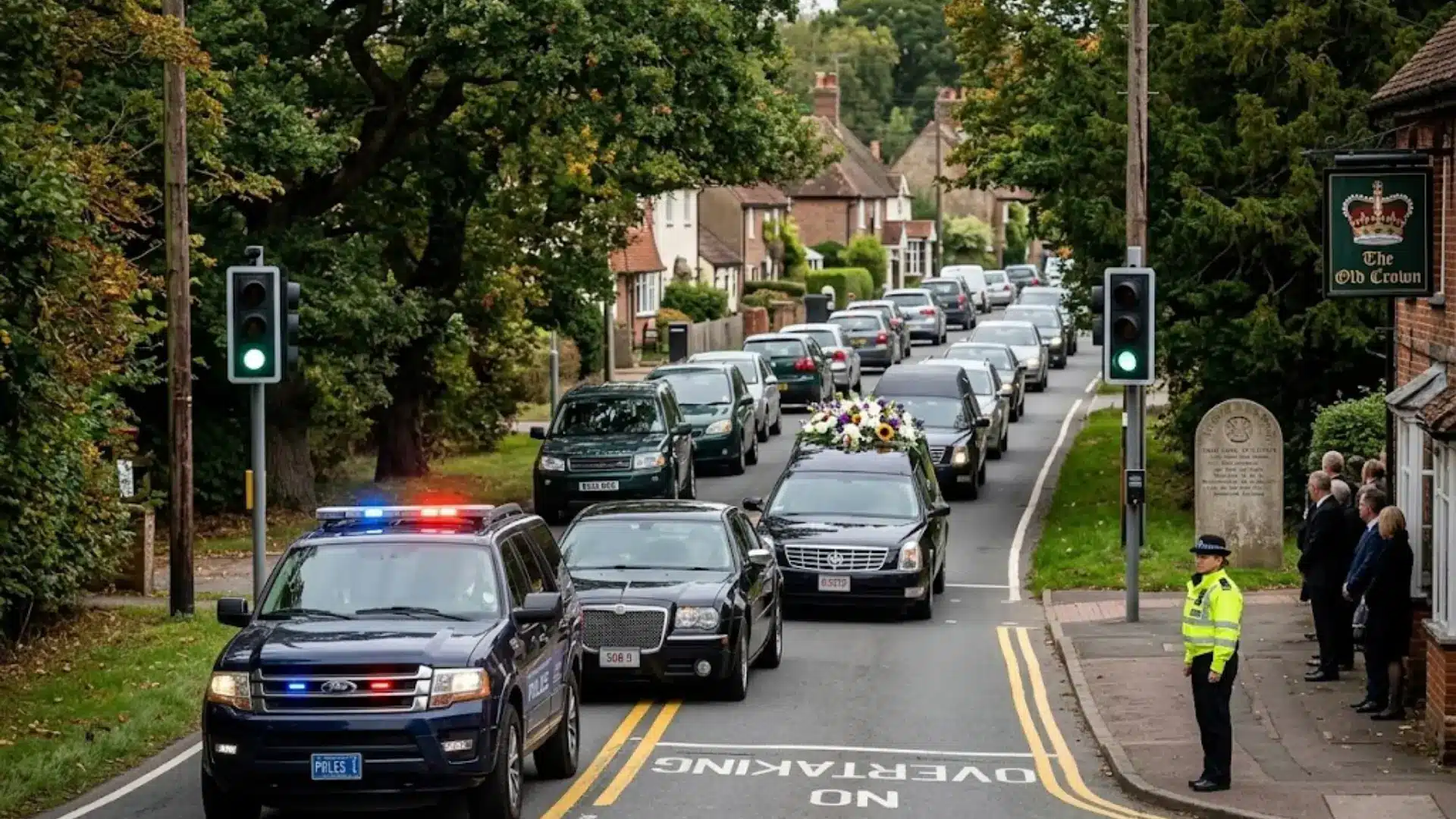
A funeral procession carries deep meaning beyond the visible line of cars. It serves as a symbol of respect for the person who has passed away, offering a final public tribute before burial or cremation.
The slow and orderly movement reflects dignity and honor. It also shows support for the grieving family.
Seeing friends, relatives, and community members follow the same route can provide comfort during a painful time. The shared journey reminds the family that they are not alone in their loss.
Funeral processions trace their origins to early civilizations, where communities gathered to escort the deceased to burial grounds as a collective act of mourning and reverence.
One of the most historically significant processions in American memory was President Abraham Lincoln’s two-week national funeral journey from Washington, D.C., in 1865, which played a direct role in popularizing embalming as a funerary practice across the country.
The form has evolved over centuries, but the underlying purpose has remained unchanged. In many cultures and religions, this tradition holds spiritual importance.
In New Orleans, for instance, the tradition takes a markedly different form, with jazz bands, dancing, and hundreds of community members joining the route, celebrating a life rather than only mourning a loss.
It is a reminder that grief has many shapes, and processions adapt to reflect them.
Others see it as fulfilling long-held customs. It also acts as a public acknowledgment of loss, allowing the wider community to pause and show quiet respect.
How is a Funeral Procession Organized?
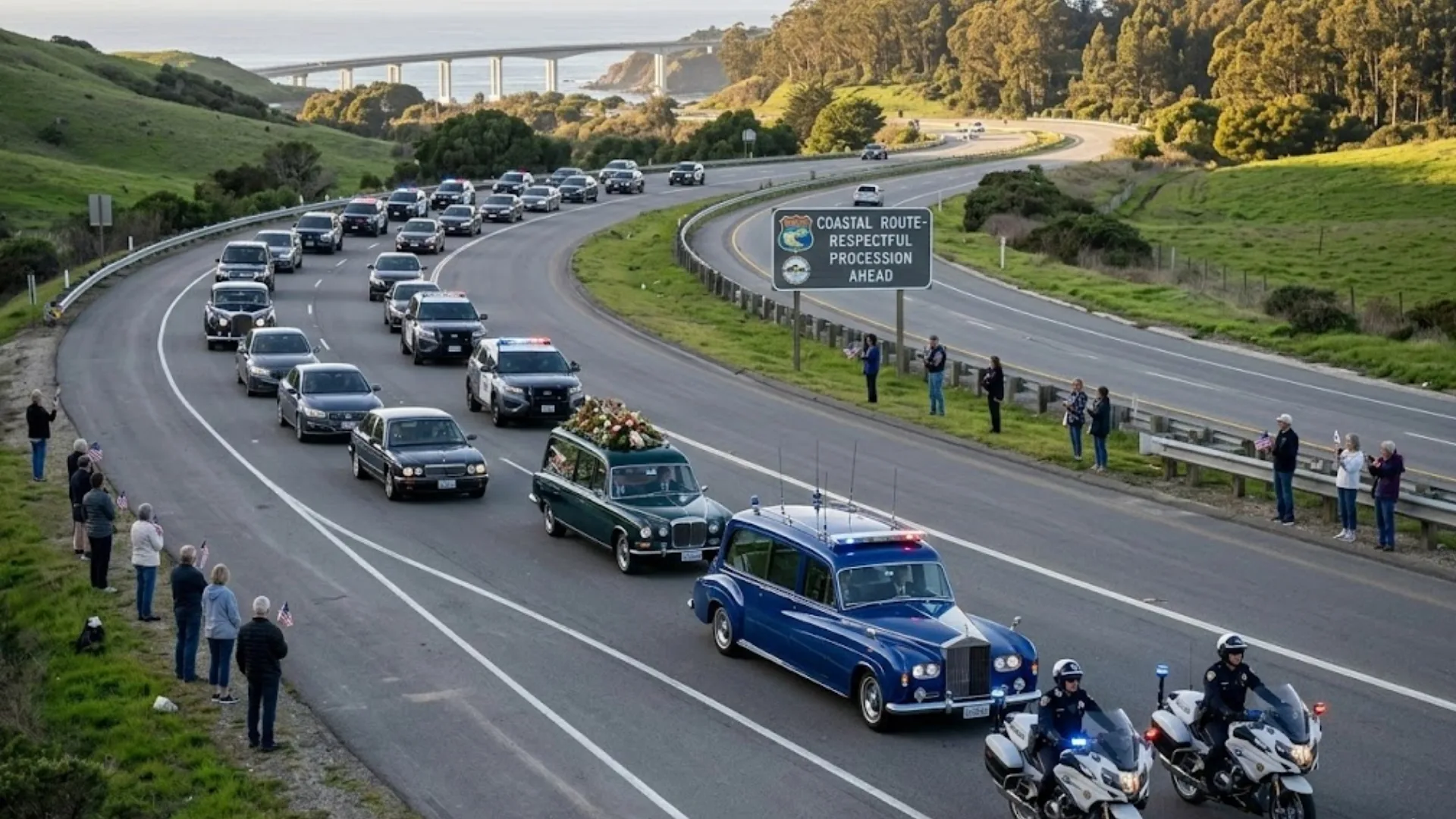
Careful planning ensures the journey remains orderly, respectful, and smooth for both participants and others sharing the road.
1. Lead Vehicle and Hearse
The procession usually begins with a lead vehicle, which may belong to the funeral director or a designated organizer. This vehicle guides the route and sets the pace.
Directly behind it travels the hearse carrying the casket. The hearse holds central importance, as it represents the person being honored.
Its position at the front reflects dignity and ensures that all other vehicles follow in proper sequence without confusion.
2. Order of Vehicles
Behind the hearse, immediate family members travel first, often in limousines or personal cars. Close relatives are followed by extended family and friends.
The order reflects closeness to the deceased, though exact arrangements can vary. Vehicles stay in a single line and maintain steady spacing.
This structured formation helps everyone arrive together and signals to other drivers that the group is part of one unified procession.
3. Police Escorts in Some Cases
In certain areas, police officers assist with traffic control during the procession. They may block intersections temporarily or help the line of vehicles pass through traffic lights without stopping.
This support is more common in larger cities or when the route is busy. Police presence adds safety and ensures the group remains together.
It also signals to other drivers that the event deserves patience and respect.
4. Use of Headlights and Flags
Participants often turn on their headlights, even during daylight hours, to identify their vehicles as part of the procession.
Some may display small flags or magnetic signs provided by the funeral home. These visual markers alert other drivers and reduce the risk of interruption.
The lights and flags create a clear and unified appearance, helping maintain order while emphasizing the solemn nature of the occasion.
What Should Other Drivers Do When They Encounter a Funeral Procession?
Encountering a funeral procession on the road can be confusing, especially for drivers unfamiliar with the etiquette and legal expectations.
As a civil rights attorney who has reviewed traffic stop cases and police procedure disputes, I can say that many drivers who cut into a funeral procession are often unaware that their actions may violate the law.
These situations require patience, awareness, and respect to avoid disruptions or potential violations.
- Yield to the procession: When a procession is moving through an intersection, allow all vehicles to pass, even if the traffic signal changes in your favor.
- Do not cut through the line: Avoid entering gaps between vehicles, as these spaces are often intentional or part of normal traffic flow.
- Wait at side streets: Treat the procession as having the right of way and remain stopped until it fully clears your path.
- Avoid aggressive behavior: Honking, speeding, or showing frustration can be considered disrespectful and may lead to traffic violations in some areas.
- Consider pulling over: In many places, drivers pull to the side as a sign of respect, though it is not always legally required.
- Pedestrians should wait: Do not cross the street through an active procession. Wait until all vehicles have passed.
- Exit safely if you join accidentally: If you unintentionally merge into a procession, pull over safely and allow the line to continue without disruption.
Funeral Procession Etiquette for Participants
Taking part requires patience, attention, and awareness of both courtesy and legal obligation at all times on public roads.
- Arrive 30-45 minutes early. Procession vehicles are lined up in the order they arrive. If you are a close family member and need to be near the front, early arrival is the only way to ensure your position.
- Follow the lead vehicle closely. Stay near the car in front of you; leaving large gaps invites outside vehicles to enter the line.
- Keep headlights on throughout. Even in broad daylight, this is the primary signal that identifies your vehicle as part of the procession.
- Know the red light rules before you leave. Some states allow procession vehicles to proceed through red lights once the lead car has cleared the intersection. Others do not. Ask the funeral director before the procession begins. This is a legal question, not just a courtesy one.
- Avoid phones and distractions. The pace is slow, and the stops are unpredictable. Distracted driving in a procession causes rear-end collisions and forces the line to brake.
- Do not leave the procession mid-route. People behind you may be relying on your vehicle to know where to go, especially out-of-town attendees unfamiliar with the cemetery’s location.
Funeral Procession Laws by State: What You Need to Know
There is no single federal law governing funeral processions. Rules are set at the state level, and they vary considerably.
| State | Right-of-Way at Red Lights? | Cutting In – Illegal? | Escort Required? |
|---|---|---|---|
| Texas | Yes, once the lead car enters | Yes | No, flags/lights are sufficient |
| Virginia | Yes (with escort) | Yes, 4 demerit points + fine | Police or amber/purple lights |
| Florida | Yes | Yes | No |
| California | No, must obey signals | No state law; local rules vary | Police officer required to override signals |
| New York | No, signals must be obeyed | No state law | Traffic officer required |
| Illinois | Yes, with an escort vehicle | Yes | Escort vehicle with lights |
| Maryland | Yes, if the lead car entered on green | Not explicitly stated | Headlights required |
| Alabama | City-level ordinances vary | Birmingham: Yes | No state law |
| Kansas | No state law | No state law | No state law |
| Kentucky | Yes, the escort can direct through signals | Yes | Escort vehicle with lights |
These state laws draw from general traffic statutes rather than a single unified code.
In Florida, Florida Statutes § 316.1974 specifically addresses procession right-of-way, establishing that once the lead vehicle lawfully enters an intersection, the remaining vehicles may follow regardless of traffic control signals, subject to yielding to emergency vehicles and complying with officer direction.
California takes a different approach; the California DMV Handbook instructs drivers not to interfere with a properly led procession but requires a peace officer to be directing movement at intersections before any right-of-way protections apply.
Funeral Procession Customs and Traditions Explained
Customs during a funeral procession can vary depending on culture and religion. Some traditions include prayers or blessings before the vehicles begin moving, while others follow specific routes that hold spiritual meaning.
- In certain communities, the procession may pass by the family home or a place that was important to the deceased.
- Alternative formats are increasingly common. Some families choose motorcycle escorts, particularly for veterans or motorcycle enthusiasts.
- Walking processions, where mourners accompany the casket on foot to a nearby burial site, offer a more intimate and personal tribute.
- Music is sometimes part of the journey, especially in cultures where songs honor the person’s life. In other cases, silence is maintained to reflect grief and respect.
The atmosphere often depends on religious beliefs and family wishes. Dress expectations also differ, though modest and dark clothing is common in many traditions.
Along the route, respectful behavior matters. Onlookers may remove hats, pause quietly, or stand still as the vehicles pass, showing public acknowledgment of loss.
Mistakes to Avoid During a Funeral Procession
Respectful conduct matters for everyone involved, not just drivers, since the atmosphere depends on shared awareness and thoughtful behavior.
- Disrupting the line: Cutting into the procession or stepping between vehicles interrupts the sense of unity and order.
- Using phones at key moments: Taking calls, texting, or scrolling during prayers or movement appears inattentive and disrespectful.
- Driving aggressively: Honking, overtaking, or rushing through traffic disrespects the solemn nature of the event.
- Ignoring guidance from organizers: Failing to follow instructions from funeral staff can lead to disorder along the route.
- Acting carelessly or loudly: Laughing, playing music, or casual behavior diminishes the solemn purpose of the occasion.
Conclusion
Funeral procession is a tradition that carries deep meaning and quiet dignity. It brings people together for one final journey, offering respect to the person who has passed and support to those left behind.
From knowing how it is organized to following proper etiquette and avoiding common mistakes, each small action helps preserve the solemn atmosphere.
There is no need to feel unsure when encountering one. A calm approach, patience, and simple courtesy go a long way.
Showing respect, whether participating or observing from the roadside, honors both the family and the memory of the deceased.
Moments like these remind everyone of shared humanity and compassion.
Have you ever wondered if you handled one the right way? Share your experience or thoughts in the comments below.
Frequently Asked Questions
Are You Required to Pull Over for a Funeral Procession?
In most U.S. states, drivers are not legally required to pull over for a funeral procession, though doing so is widely considered a respectful gesture. The primary legal obligation in most states is to yield, meaning you should not cut through the procession line or pull into traffic ahead of it.
Is It Illegal to Cut into a Funeral Procession?
In several states, including Virginia and Illinois, cutting into a funeral procession is explicitly illegal and can result in fines or demerit points.
Can Funeral Processions Run Red Lights?
Whether a funeral procession may legally proceed through a red light depends entirely on state law. In states like Texas, Florida, and Kentucky, vehicles in a procession may continue through an intersection after the lead vehicle has entered lawfully, even if the light changes during the crossing. In California and New York, procession vehicles must obey traffic signals unless a police officer is present and directing the movement. Before any procession, confirm the applicable rule with the funeral director for the specific state and route involved.
How Long Does a Funeral Procession Last?
The duration of a funeral procession depends on the distance between the service location and the burial or cremation site. Most processions last between 10 and 30 minutes.