
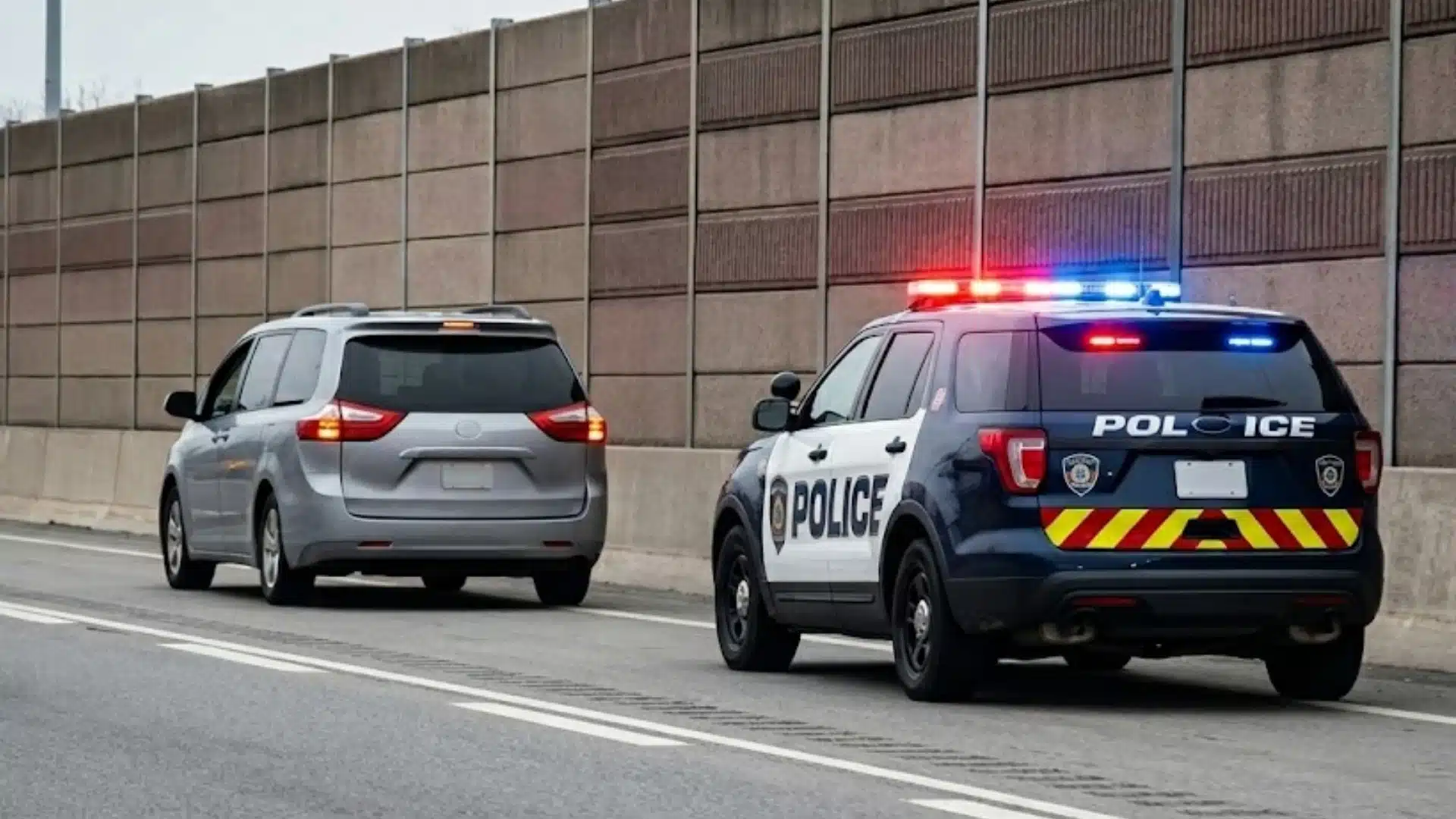
Being charged with evading arrest can have serious legal consequences, ranging from misdemeanor penalties to felony convictions depending on the circumstances.
Many people mistakenly believe that evading arrest, resisting arrest, and evading arrest detention are the same offense, but each charge involves different legal elements and potential penalties.
Prosecutors must prove specific facts to secure a conviction, including whether a person intentionally fled from a law enforcement officer who was attempting a lawful detention or arrest.
Understanding how these charges are defined, what evidence is required, and what defenses may be available is essential for anyone facing allegations related to evading arrest or detention.
What Does Evading Arrest Mean Under the Law?
Evading arrest means a person tries to avoid being stopped, detained, or arrested by a police officer.
In simple terms, it happens when an officer gives a clear order to stop, but the person runs away, drives off, hides, or otherwise avoids contact.
The charge can apply even when the arrest has not yet occurred, as long as the officer is attempting to make a lawful stop or arrest.
This offense can happen on foot, in a car, on a motorcycle, or by any other means. The facts matter because a small detail can change the charge.
Running away on foot may be treated differently from leading police on a vehicle chase. Speed, danger, injury, prior charges, and state law can all affect how serious the case becomes.
Evading Arrest Laws and Statutes

State laws do not always treat this offense in the same way. One state may focus on running from an officer, while another may have a separate rule for driving away during a stop.
This is why the exact statute matters before judging the charge.
Most statutes explain:
- What conduct is illegal, such as fleeing, hiding, refusing to stop, or driving away
- Who counts as a law enforcement officer under that state law
- Whether the person must know an officer is trying to stop, detain, or arrest them
- Whether the charge is treated as a misdemeanor or a felony
These details can change the whole case. A simple foot chase may carry one penalty, while a vehicle chase may lead to higher charges. The same act can also be named differently depending on the state.
Elements Prosecutors Usually Need to Prove
Prosecutors must prove certain facts before this charge can stand. These facts often decide whether the case is weak or strong.
1. The Officer Was Acting Lawfully
The officer must have been acting within the law when trying to stop, detain, or arrest the person.
This means the officer usually needs a legal reason for the stop. It may be based on a warrant, a traffic violation, a suspected crime, or another lawful ground.
If the stop itself was illegal, the charge can become harder to prove. Courts often look closely at what happened before the person allegedly fled.
2. Officer Tried to Stop, Detain, or Arrest the Person
The state must show that the officer made some clear attempt to stop, detain, or arrest the person.
This can include verbal commands, emergency lights, sirens, hand signals, or direct physical action. A vague action may not be enough.
The point is that the person must have been given a real chance to understand that the police wanted them to stop. Without that clear attempt, the case may have a serious problem with proof.
3. The Person Knew or Should Have Known it was an Officer
Prosecutors also need to show that the person knew, or reasonably should have known, that the person giving the order was a law enforcement officer.
This is usually easier to prove when the officer wore a uniform, drove a marked police car, used lights or sirens, or clearly identified themselves.
It may be harder when the officer was undercover or in an unmarked vehicle. Knowledge matters because a person cannot intentionally flee police without knowing police are involved.
4. The Person Fled, Drove Away, Hid, or Refused to Stop
The conduct must show some effort to avoid the officer. This may mean running away, driving off, hiding, locking a door, ignoring commands, or refusing to pull over.
The exact action can affect the charge level. A short delay may be viewed differently from a high-speed chase.
Prosecutors must connect the conduct to the officer’s attempt to stop or arrest the person, not just show that the person moved away.
5. The Action was Intentional
The state usually must prove that the person acted on purpose. Accidental conduct, confusion, fear, or failure to hear the command may weaken the case.
For example, a driver may not immediately notice police lights, or a person may not realize they are being ordered to stop.
Intent is often proven through behavior, such as speeding away, changing routes, hiding, or ignoring repeated commands. The stronger the facts, the easier it may be to argue.
Common Types of Related Charges
A person may face more than one charge when police claim they avoided, delayed, or fought against a lawful stop or arrest.
- Resisting arrest: This charge usually applies when a person uses force, threats, or physical refusal to stop an officer from making an arrest. It may include pulling away, struggling, pushing, or refusing to put on handcuffs.
- Obstructing justice: This can apply when a person blocks, delays, or interferes with police work. It does not always require running away. Giving false information or hiding evidence may also fall under this charge.
- Failure to stop: This charge often happens in traffic cases. It may apply when a driver does not pull over after police use lights, sirens, or another clear signal.
- Reckless driving: If a person drives dangerously while trying to get away, police may add a reckless driving charge. Speeding, weaving through traffic, or ignoring signals can support this charge.
- Fleeing and eluding: This charge is often tied to vehicle chases. It usually means the driver tried to escape after knowing the police wanted them to stop.
- Escape from custody: This applies when a person leaves after being arrested, detained, or held by law enforcement. It is usually treated more seriously than simply refusing to stop.
- Assault on an officer: If force is used against a police officer, this charge may be added. It can involve hitting, pushing, threatening, or causing injury during the stop or arrest.
How Do States Classify Evading Arrest?
Classification varies significantly across states, but a consistent pattern emerges: foot flight starts as a misdemeanor, vehicle flight typically triggers a felony charge, and aggravating factors increase penalties.
Here is how several major states handle the offense:
| State | Basic offense | Vehicle/aggravated offense | Source statute |
|---|---|---|---|
| Texas | Class A misdemeanor (foot) | State jail felony to 2nd-degree felony (vehicle/injury/death) | Tex. Penal Code § 38.04 |
| California | Misdemeanor up to 1 year (VC 2800.1) | Felony (wobbler) 16 months to 3 years (VC 2800.2) | Cal. Vehicle Code § 2800.1–2800.3 |
| Florida | Misdemeanor (basic) | Up to 5 years in prison if a failure to stop is ordered | Fla. Stat. § 316.1935 |
| Arizona | 0.75–2 years (1.5 years presumptive) | Enhanced for injury or reckless driving | A.R.S. § 28-622.01 |
| Illinois | Class A misdemeanor (under 1 year) | Class 4 felony if reckless or with aggravating factors | 625 ILCS 5/11-204 |
| Tennessee | Class E felony (vehicle, basic) | Class D to Class A felony, depending on risk and injury | Tenn. Code § 39-16-603 |
| Pennsylvania | 2nd-degree misdemeanor (foot, no injury) | 2nd-degree felony if death results | 75 Pa. C.S. § 3733 |
Tennessee stands out because even the basic vehicular offense is treated as a Class E felony, punishable by 1 to 6 years with a mandatory 30-day minimum.
That is a harder baseline than most other states.
California takes a different approach: the standard vehicular offense starts as a misdemeanor, but reckless evading becomes a “wobbler” that prosecutors can file as either a misdemeanor or a felony based on the specific facts.
Federal law adds another layer. Under 18 U.S.C. § 111, fleeing a federal officer requires proof of force, unlike most state statutes that require only intentional flight.
A defendant who ran from an FBI or DEA agent without using force may face state-level obstruction charges rather than a federal count.
Penalties and Possible Consequences
Penalties can change by state, charge level, and the facts of the case. A simple stop may lead to a lighter punishment, while a dangerous chase can lead to harsher consequences.
Common consequences may include:
- Jail or prison time: A misdemeanor may result in jail time, while a felony can result in prison time.
- Fines: Courts may order payment based on the charge and state law.
- Probation: Some people may serve probation instead of, or after, time in custody.
- License suspension: Driving cases can lead to a suspended license.
- Vehicle impoundment: Police may tow or hold the vehicle used.
- Criminal record: A conviction can affect work, housing, and background checks.
Repeat charges can bring higher penalties. If someone is hurt, prosecutors may add extra charges and seek stronger punishment.
Common Defenses to Evading Arrest Charges
Every evading-arrest case depends on the facts, and the same facts that support the charge often contain the seeds of a defense.
The most viable defenses include:
- No lawful basis for the stop: If the officer lacked probable cause to initiate the stop, the evading charge may be challenged. This defense is not available in resisting arrest cases but is specifically recognized in most evading statutes.
- Lack of knowledge: The defendant must have known the person pursuing them was a peace officer. A plainclothes officer in an unmarked vehicle with no visible badge or emergency lights creates a genuine knowledge issue.
- No intent to flee: Accidental failure to notice sirens, a medical emergency requiring immediate travel, or a carjacking situation where the defendant was acting under duress can all negate the intent element.
- Misidentification: Particularly in vehicle cases, if officers cannot identify the actual driver, the prosecution may not be able to prove beyond a reasonable doubt who was behind the wheel.
- Duress: A person forced to flee by a third party, such as a carjacking victim, did not form the voluntary intent required by the statute.
Body camera footage has become central to many of these defenses.
If the officer’s lights were not clearly activated, if signals were ambiguous, or if the stop lacked clear legal justification, that footage can either help or hurt your case significantly.
An attorney should review all available video before advising on a strategy.
What to Do if You Are Facing an Evading Arrest Charge?

An evading arrest charge should never be ignored, as even a misdemeanor conviction can affect employment, housing opportunities, and professional licensing.
Felony convictions can carry long-term consequences that follow a person for years.
Failing to address the case promptly may also result in an FTA arrest warrant, creating additional legal problems.
Anyone facing this charge should avoid discussing the incident with law enforcement without an attorney present, as statements can be used as evidence.
Early legal representation can help identify weaknesses in the prosecution’s case and challenge evidence obtained through an unlawful stop.
Evading arrest charges are often filed alongside offenses such as resisting arrest or reckless driving, making a thorough legal review essential.
Understanding the charges and available defenses is the first step toward protecting your rights and future.
Conclusion
An evading arrest charge can carry serious consequences, but every case depends on the specific facts, evidence, and circumstances surrounding the stop or detention.
Understanding the difference between evading arrest, resisting arrest, and evading arrest detention is essential when evaluating potential defenses and legal options.
The sooner you address the charge, the more opportunities you may have to protect your rights and challenge the prosecution’s case.
If you are facing an evading arrest charge, consulting an experienced criminal defense attorney can make a significant difference.
Have questions about evading arrest laws or defenses? Leave a comment below and join the conversation; we’d love to hear your thoughts.
Frequently Asked Questions
Is Evading Arrest Always a Felony?
Evading arrest is usually a misdemeanor when committed on foot but can become a felony if a vehicle is involved, the defendant has prior convictions, or someone is injured.
Can You Be Charged with Both Evading and Resisting Arrest at the Same Time?
Evading arrest means fleeing from law enforcement, while resisting arrest involves physically opposing an officer during an arrest. A person may face both charges if they flee and then resist after being caught.
Does the Unlawfulness of the Stop Matter in an Evading Arrest Case?
Yes. In many states, an evading arrest charge may fail if the officer lacked legal authority to make the stop or detention.
What Happens to Your Driver’s License After an Evading Arrest Conviction?
In many states, a vehicle-related evading-arrest conviction can result in a driver’s license suspension or revocation and possible vehicle impoundment.