
ABOUT THE AUTHOR



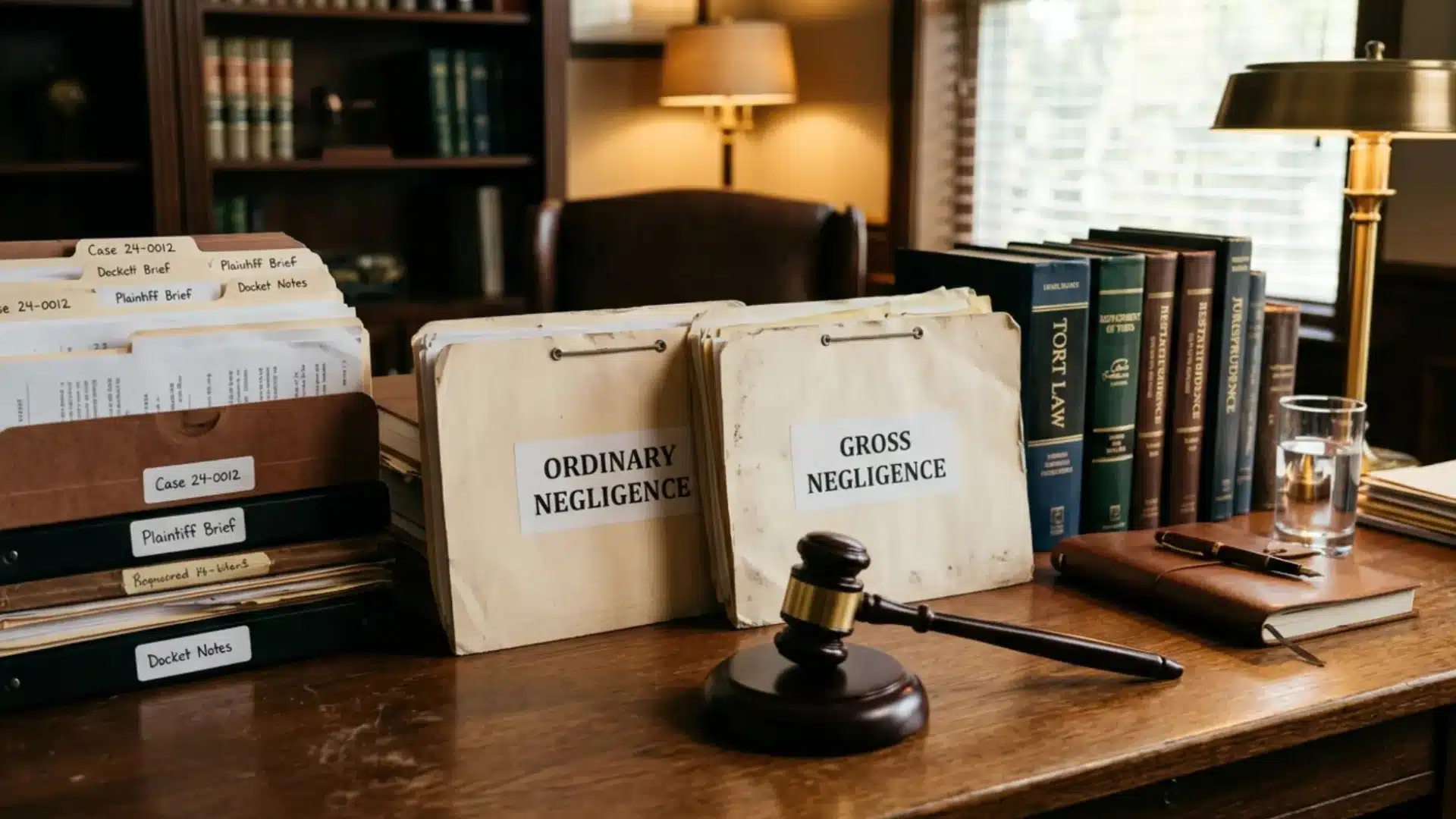
Gross negligence vs negligence is about how careless someone was and how far their actions went beyond normal behavior. Both terms deal with careless conduct, but they do not always mean the same thing in a legal claim. Negligence can be a simple failure to use reasonable care, while gross negligence points to conduct that is much more serious. This difference can affect damages, insurance, and waivers. A gross negligence claim may lead to more serious damages in some cases; insurance coverage can become harder to obtain when the conduct appears very reckless, and a waiver may not provide the same protection as it would for ordinary negligence. That is why the label matters. It can change how a claim is viewed and what legal options may stay open. What is Negligence? Negligence is a failure to use the level of care a reasonable person would use under the same circumstances. It does not require any intent to cause harm. A person can be negligent simply by not paying enough attention or by failing to take a basic precaution. To understand how negligence fits within civil law, it helps to know the types of torts and how courts categorize wrongful conduct. For a negligence claim to succeed, four elements must all be present: Duty of care: The defendant had a legal obligation to exercise reasonable care toward the plaintiff. Breach of duty: The defendant failed to meet that obligation through their actions or inaction. Causation: That failure directly caused the plaintiff’s injury. Damages: The plaintiff suffered actual harm, such as medical bills, lost income, or pain. A grocery store employee who fails to clean up a spill and a shopper who slips is a common example. The employee did not want anyone to get hurt. They simply did not act […]

A single moment of shared fault can change the outcome of an injury claim. That is why many accident victims search for what contributory negligence is. Before speaking with an insurer or attorney. This legal rule can prevent an injured person from receiving compensation if their own actions helped cause the accident, even in a small way. In states that still follow this strict standard, being only slightly responsible may be enough to lose the entire claim. This blog explains the meaning of contributory negligence in simple terms, how it works in personal injury cases, how it differs from comparative negligence, and why understanding fault rules can help protect your rights after an accident. What is Contributory Negligence? Contributory negligence means an injured person may lose the right to receive compensation if their own careless action helped cause the accident. It is one of the strictest fault rules in personal injury law because even a small share of blame can affect the entire claim. For example, if a person slips in a store but was not watching where they were walking, the store may argue that the person partly caused the fall. In states that still use this rule, partial fault can stop recovery completely, even when the other party was mostly responsible for the accident. This is why understanding fault, evidence, and statements after an accident is important before dealing with an insurance company or accepting any settlement offer. How Does Contributory Negligence Work in a Personal Injury Case? When a defendant raises contributory negligence as a defense, the burden shifts to proving that the injured party’s own behavior contributed to the accident. Even a small admission, a careless comment, or a detail in the police report can become the foundation of that argument. Here is how it plays […]

A medical mistake can turn a normal day into a mess of pain, bills, and unanswered questions. You may feel unsure about what went wrong, who is responsible, and whether Colorado law gives you a way to recover your losses. That confusion is normal, especially when doctors, hospitals, and insurance companies are involved. A medical negligence claim can help review what happened and whether the care fell below the accepted standard. In this blog, you will learn how these claims are handled under Colorado law, what a patient must prove, how deadlines work, why expert review matters, and what damages may be available. The goal is to make the process easier to understand, so you know what steps may come next. What Counts as Medical Negligence? Medical negligence means a health care provider failed to give care that a trained provider would usually give in the same situation. It is not enough that the treatment went badly. Some medical care carries risks, and a poor result does not always mean someone broke the law. Common examples can include: Diagnosis errors: A condition may be missed, delayed, or wrongly diagnosed, which can stop the patient from getting the right treatment on time Surgery mistakes: The wrong step may be taken during an operation, or a preventable error may cause extra harm during recovery Medication errors: The patient may receive the wrong drug, wrong dose, or wrong instructions, leading to side effects or new health problems Poor follow-up care: Test results, symptoms, or recovery problems may be ignored, leaving the patient without needed treatment or guidance Birth injuries: A mother or baby may be harmed when warning signs are missed, or delivery care is handled carelessly A legal claim usually depends on proof. The patient must show that the provider’s mistake caused […]
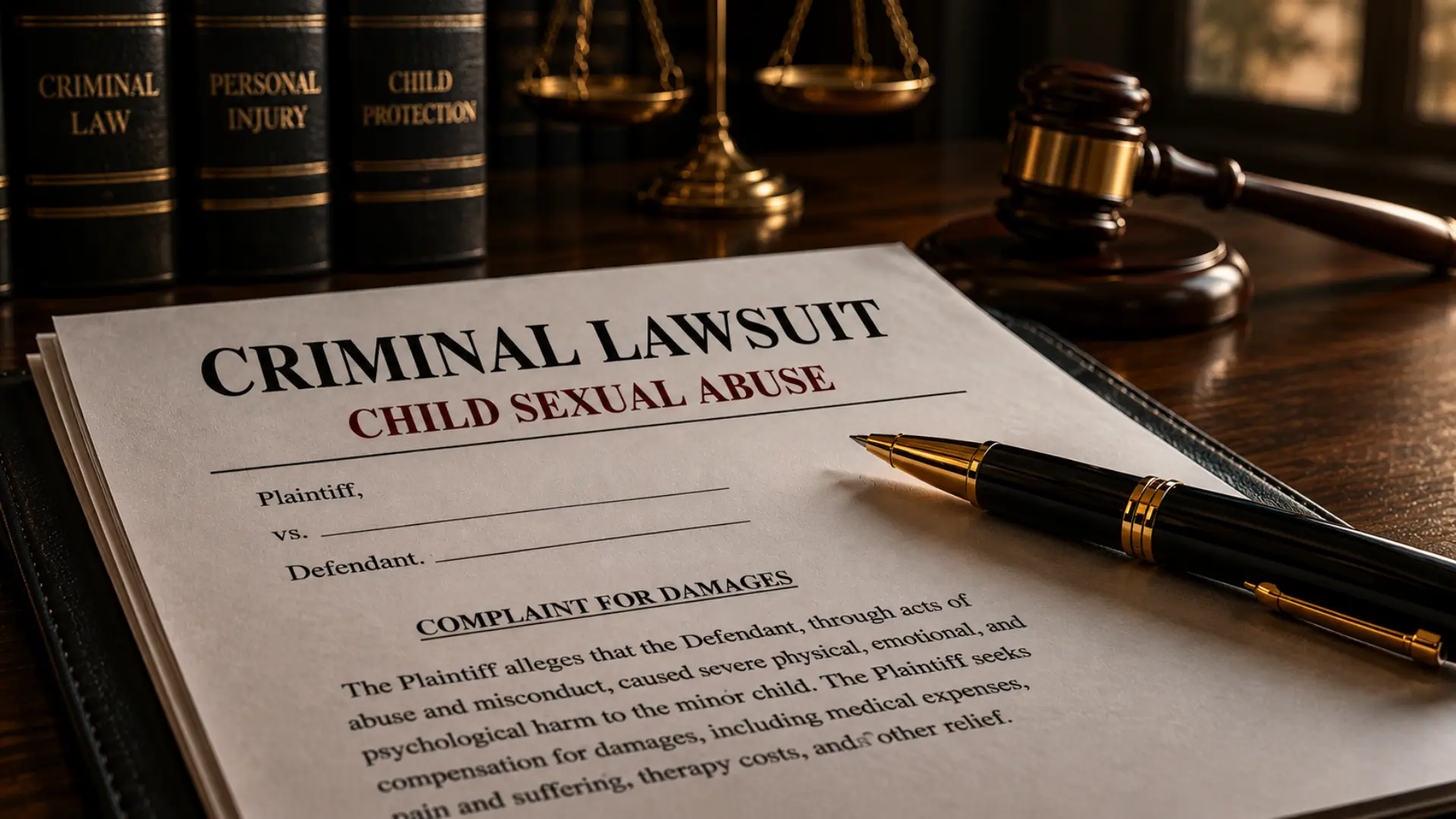
Finding the right child sexual abuse lawyer can feel overwhelming when a survivor or family is already dealing with fear, confusion, and pain. A lawyer in this area helps explain legal rights, review what happened, collect evidence, and identify who may be responsible. In many cases, a civil claim can be filed against the abuser and against an institution, such as a school, church, youth group, or care facility, if it failed to protect a child. A child abuse attorney can also explain filing deadlines, compensation options, and the difference between a civil lawsuit and a criminal case. This guide explains how these claims work and when legal help may be needed for survivors and families seeking accountability and support. What Does a Child Sexual Abuse Lawyer Actually Do? A child sexual abuse lawyer helps survivors and families understand their legal rights after abuse. The lawyer reviews what happened, explains whether a civil claim may be possible, and gathers evidence such as reports, records, messages, witness statements, and past complaints. The lawyer may also look at whether an institution, such as a school, church, youth program, foster care agency, or care facility, failed to protect the child. In a civil case, the goal is usually to seek compensation for therapy, medical care, emotional harm, pain, suffering, and other losses. A child abuse attorney also handles deadlines, paperwork, negotiations, and court steps, so survivors can focus on healing and support. Types of Legal Claims Related to Childhood Sexual Abuse Childhood sexual abuse can give rise to a variety of criminal charges, depending on the facts of the case and the laws of the jurisdiction. Civil claim against the abuser: A survivor may file a civil claim against the person who committed the abuse to seek compensation for emotional harm, therapy costs, […]

One unexpected accident can change everything in a matter of seconds, leaving you with medical bills, lost income, and endless questions about what to do next. In that stressful situation, finding the right personal injury lawyer becomes one of the most important decisions you’ll make. Yet with countless law firms advertising their services, it can be difficult to know which one will truly prioritize your case and keep you informed throughout the process. Many accident victims choose a firm based on a commercial or billboard ad, only to feel frustrated later by poor communication and a lack of support. Taking time to understand a firm’s experience, approach, and client reputation can help you make a more confident choice. In this blog, we explore Shane Smith Law’s services, attorneys, reviews, legal process, fees, and reasons to hire them. What is Shane Smith Law? Shane Smith Law is a personal injury firm founded by attorney Shane Smith after years of handling accident cases at a large Atlanta law firm. Unlike many firms, it focuses exclusively on personal injury cases, allowing its attorneys to develop deep knowledge and experience in this area of law. The firm serves clients across Georgia, North Carolina, and South Carolina (with licensing/support in additional states), with offices in Peachtree City, Georgia, and Charlotte, North Carolina. Its legal team brings over 50 years of combined personal injury experience and has handled thousands of cases. Shane Smith graduated from Georgia State University College of Law and managed more than 500 cases before launching his own practice, including serious truck accident and trial matters. He also served in the military, where he delivered legal briefings to service members, strengthening his ability to explain complex legal issues clearly and effectively. Shane Smith Law Practice Areas and Legal Services The firm’s work is […]

After an accident, the hardest part is often knowing who to trust. When I started looking into my legal options, I quickly realized that insurance companies are focused on protecting their bottom line, not maximizing my recovery. That’s why understanding your rights and choosing the right attorney can make a significant difference. In this guide, I take a closer look at Eisenberg Law Group PC Los Angeles personal injury attorney services, the types of cases the firm handles, and what injured victims can expect during the legal process. Founded in 1983, Eisenberg Law Group PC has represented thousands of clients across California and recovered more than $100 million in compensation. Whether you’re researching legal representation for a car accident, slip-and-fall, wrongful death, or another injury claim, this overview will help you understand the firm’s services and the next steps to consider. Who is Eisenberg Law Group PC? Eisenberg Law Group PC is a California personal injury law firm founded by Gary C. Eisenberg, a former insurance defense attorney whose experience helps the firm anticipate and counter insurance company tactics. He later partnered with Jason G. Eisenberg, who previously represented injury victims at one of California’s largest personal injury firms. With offices in Los Angeles, Ventura, and San Bernardino, the firm has handled more than 5,700 cases and recovered over $100 million for injured clients. Eisenberg Law Group PC works on a contingency fee basis, meaning clients pay nothing upfront and owe no legal fees unless compensation is recovered. Why the Insurance Background Matters for Your Case Most personal injury firms will tell you they know how insurance companies operate. Eisenberg Law Group PC can show you. Gary C. Eisenberg spent years as an insurance defense attorney before switching sides. That is not a marketing line; it describes real, practical knowledge […]

Damages in a legal case are not always meant to do the same thing. Some are used to repay a person for losses they can show, such as medical bills, lost pay, property damage, or pain caused by an injury. Others may be added when the defendant’s actions were especially harmful, reckless, or intentional. That is where compensatory vs punitive damages become an important difference to understand. In this blog, you will learn what each type of damage means, why courts award them, and how they may apply in a personal injury case. The blog will also explain the main differences between them, when both may be awarded, and why the facts of the case matter so much when deciding what damages may be available. What are Compensatory Damages? Compensatory damages are meant to repay an injured person for the losses caused by another party’s actions. The goal is to put the person as close as possible to where they were before the injury or damage happened. These damages can cover medical bills, including hospital care, doctor visits, therapy, medication, and other treatment costs. They may also include lost wages if the person missed work or could not earn the same income after the injury. Property damage can be included too, such as the cost to repair or replace a damaged car. In some cases, future care costs may be part of the claim if the injury needs long-term treatment. Compensatory damages may also cover pain and suffering, emotional distress, and the daily impact the injury has on someone’s life. What are Punitive Damages? Punitive damages are different from damages that repay a person for a loss. Their main purpose is to punish the defendant for serious misconduct and discourage similar behavior in the future. Courts may consider punitive damages […]

A scooter ride can change in an instant. One moment you’re following the rules of the road, and the next you’re dealing with injuries, medical bills, and an insurance company looking for ways to reduce your claim. When a fault is disputed, knowing your legal options becomes critical. After experiencing how quickly blame can shift following a scooter crash, I realized why working with a scooter accident attorney matters. Scooter accidents often involve complex liability, with responsibility potentially falling on drivers, scooter companies, property owners, or local governments. In Colorado, where scooter use has grown rapidly, understanding your rights and acting within strict legal deadlines is essential. Whether you’re facing serious injuries, lost income, or insurance disputes, experienced legal representation can help protect your claim and pursue the compensation you deserve. What a Scooter Accident Attorney Actually Does A scooter accident attorney handles the legal work that needs to happen quickly after a crash. The job starts with investigation, gathering police reports, reviewing surveillance footage, checking scooter maintenance records, and identifying every party who may share responsibility. Many riders assume the case only involves them and the driver. That assumption is often wrong. Scooter accidents frequently involve multiple liable parties: rental companies, manufacturers, property owners, and government agencies responsible for road conditions. An attorney examines all available evidence, determines how fault is shared, and builds a claim against each responsible party. Handling insurance communication is equally important. Insurers often contact injured riders within days of the crash. Early statements can be used to reduce or deny a claim. Having a scooter accident attorney manage those conversations protects your rights from the start. Why Scooter Accident Cases Are Legally Complex Scooter accident cases are often more complicated than standard vehicle collisions. A single claim may involve questions about vehicle classification, rental agreements, […]

One moment can split life into before and after. A crash, fall, medical mistake, or workplace accident can leave someone asking whether this is the worst injury ever. Not because of pain alone, but because everything suddenly feels uncertain. A catastrophic injury reaches far beyond the hospital room. It can affect walking, thinking, working, caring for family, or simply feeling like yourself again. For many people, the hardest part is not knowing what this injury means, what recovery may look like, or who can help when bills and stress begin to pile up. That is where understanding the term matters. It can also explain why speaking with a catastrophic injury lawyer may become important. What is a Catastrophic Injury? A catastrophic injury is a severe injury that changes a person’s life for a long time or forever. It can affect the brain, spine, limbs, organs, skin, or ability to move, work, speak, think, or care for daily needs. These injuries are different from minor injuries because the person may not fully recover, even after surgery, therapy, or long medical care. Examples include traumatic brain injury, spinal cord damage, paralysis, amputation, severe burns, and major organ damage. A catastrophic injury can also create emotional stress, high medical bills, lost income, and a need for help at home. In simple terms, it is an injury that does not just cause pain for a few weeks. It changes health, independence, family life, and future plans in a serious way. What Makes an Injury Catastrophic? A catastrophic injury is not judged only by how painful it is at the moment. It becomes catastrophic when the injury causes lasting damage, affects daily life, or changes the person’s future. Establishing the legal basis for a catastrophic injury claim usually comes down to proving negligence. Permanent damage: […]

In October 2016, 10-year-old Maya Kowalski was taken to a Florida emergency room with a documented diagnosis confirmed by specialists. Her family had medical records, treating physicians, and an existing treatment plan. Within 24 hours, the hospital reported her mother for suspected abuse. That is where the Maya Kowalski case began. Not in a courtroom or a Netflix documentary, but inside a hospital room where a mother pushed for the treatment her daughter’s doctors had prescribed, and the hospital decided that request raised red flags. Nearly a decade later, the legal fight is still not over. As a personal injury attorney, I have seen how quickly medical disputes can turn into institutional battles. This case raises a difficult question every family should understand: where does hospital authority end, and where do parental rights begin? What is the Maya Kowalski Case? Maya Kowalski is a young Florida woman whose family filed a civil lawsuit in 2018 against Johns Hopkins All Children’s Hospital (JHACH) in St. Petersburg. The lawsuit alleged that hospital staff falsely imprisoned Maya during a 2016 hospital stay, separated her from her parents without a proper legal basis, and subjected her to conditions that drove her mother, Beata Kowalski, to take her own life. The civil claims filed against JHACH and related defendants included: False imprisonment: Maya was held at the hospital for nearly three months under DCF custody without her parents’ consent Battery: Social worker Catherine Bedy was accused of inappropriately touching Maya during her stay Medical negligence: Dr. Sally Smith was accused of failing to properly evaluate and treat Maya’s confirmed CRPS diagnosis Wrongful death: the lawsuit alleged that the hospital’s conduct directly caused Beata Kowalski’s suicide Intentional infliction of emotional distress (IIED): the family alleged the hospital’s actions caused severe and foreseeable psychological harm Fraudulent billing: […]