
ABOUT THE AUTHOR




Ever noticed people say DWI and DUI like they mean the same thing? That can be confusing, especially when different states use these terms in different ways. The wording on a charge can have a bigger impact than most people realize, making it worth understanding what each term actually means. When I first looked into DWI vs DUI, I assumed they were interchangeable everywhere. It didn’t take long to realize that the rules change from state to state. Some states use a single term, while others treat them as separate offenses with distinct legal meanings and consequences. If you’re trying to make sense of the terminology or understand what applies where you live, this guide explains the key differences in a clear, straightforward way. What Do DUI and DWI Actually Stand For? DUI stands for Driving Under the Influence, while DWI stands for Driving While Intoxicated or Driving While Impaired, depending on the state. Both refer to operating a vehicle when alcohol, drugs, or a combination of substances affects your ability to drive safely. These charges aren’t limited to alcohol. They can also apply to illegal drugs, prescription medications, and even over-the-counter medicines if they impair your driving. For example, driving after taking a sleep aid or opioid pain medication could result in a DUI or DWI charge. In states that distinguish between the two, DUI usually covers a broader range of impairment, while DWI often refers to a higher or measurable level of intoxication, such as a blood alcohol concentration (BAC) at or above the legal limit. That distinction can determine which charge a prosecutor files and the penalties that may follow. Because every state writes its impaired driving laws differently, there isn’t a single nationwide definition of DUI or DWI. DWI vs DUI: Are They the Same Thing? […]

Probation gives people the chance to serve their sentence outside of jail. That freedom comes with conditions, and one of the most misunderstood involves travel. Many people assume they can take a short trip across state lines without consequences, or that international travel is simply off the table. Neither assumption is fully accurate. The challenge is that travel restrictions are not always as straightforward as people expect, which is why confusion around the topic is so common. The rules are more structured than that, and the consequences of getting them wrong are serious. This blog covers what the law actually requires, how decisions get made, and when it makes sense to involve an attorney. What is Probation? Probation is a court-ordered period of supervision. It allows a person to live in the community instead of serving time in jail or prison, or after serving part of a sentence. The court sets rules that must be followed during this period. These rules can include meeting with a probation officer, staying employed, avoiding new arrests, paying fines or restitution, taking drug or alcohol tests, and attending treatment or classes. Travel limits are also common. A person on probation may need approval before leaving the county, state, or country. The exact rules depend on the probation order and the type of case. If someone breaks these terms, it may be treated as a probation violation. That can lead to stricter rules, a court hearing, or possible jail time. Can You Leave the State on Probation? In most cases, whether you can leave the state on probation depends on whether you have permission first. Usually, a person on probation cannot travel outside the approved area without approval. Some probation orders limit travel outside the county, state, or court district. Others may allow short trips, […]

One heated moment can quickly turn into a legal problem that feels confusing, stressful, and difficult to explain. An assault charge may involve threats, physical contact, injury claims, or a situation where both sides tell very different stories. For many people, the hardest part is understanding what the charge means before thinking about penalties, court dates, or long-term consequences. Not every accusation is simple, and small details can change how the case is viewed. This blog post breaks the topic down in simple terms without rushing to conclusions. You will learn how assault is generally viewed, why the facts matter, how battery vs assault can differ, what defenses may be raised, and which rights are important after an accusation. What Does Assault Mean in a Criminal Case? In a criminal case, assault usually means more than just a fight or argument. It can involve causing physical injury, trying to hurt someone, threatening harm, or making another person fear immediate harm. In some cases, there may be visible injuries. In other cases, the charge may be based on an attempt, a threat, or conduct that made the other person believe they were about to be hurt. Some laws focus on injury, while others also look at intent, recklessness, weapons, or fear of serious harm. That is why the charge level matters; we will cover it next. Under federal law, courts have defined assault as an attempt with force or violence to cause bodily injury, paired with the apparent ability to carry it out, per 18 U.S.C. § 351. Battery vs Assault: What is the Difference? Assault and battery are closely related terms, but the difference usually depends on threat, attempted harm, and actual physical contact. Point of Difference Assault Battery Basic meaning Usually involves a threat, attempt, or act that creates […]

Finding out there may be an arrest warrant with your name on it can be stressful, especially when you’re unsure whether the information is accurate. Sometimes it starts with a missed court date, an unexpected phone call, or a routine traffic stop that raises more questions than answers. The good news is that checking for active warrants is often simpler than people think, thanks to public records and online court databases. A proper warrant search helps you confirm whether a warrant exists, understand the type of warrant involved, and avoid relying on rumors or outdated information. Knowing the facts early also gives you more time to make informed decisions before the situation becomes more complicated. What an Arrest Warrant Means An arrest warrant is a court document. A judge or magistrate signs it after reviewing evidence, sworn statements, or a police affidavit that establishes the probable cause standard needed to believe a specific person committed a specific crime. Once signed, the warrant gives any law enforcement officer in the state, and often beyond it, legal authority to arrest that person on sight. The document usually lists the person’s name, the alleged offense, and sometimes a bond amount the court has already set. That last detail matters. If a bond amount is attached, a person can often resolve the warrant by posting bond rather than waiting in custody for a hearing. People also confuse being stopped with being formally taken in. The difference between detention and arrest comes down to authority and duration: a detention is temporary and investigative, while an arrest requires either a warrant or probable cause on the spot and starts the formal criminal process. Arrest Warrant vs Bench Warrant A quick comparison makes it easier to understand why these two warrants are not the same. While both can […]
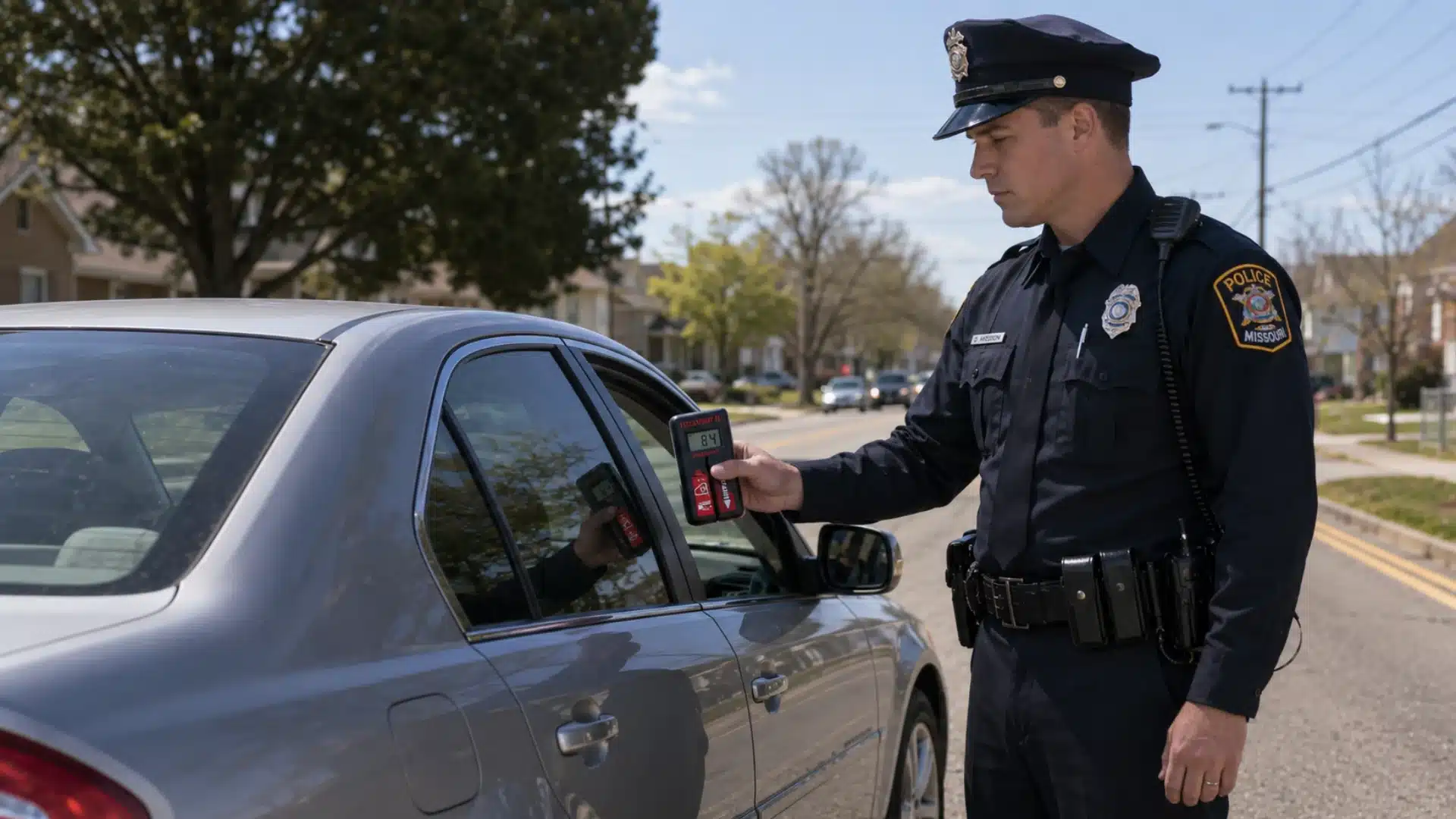
You’re driving through Kansas City on a sunny afternoon, and an officer signals you to pull over. The first thing he mentions is your windows. You’re not sure whether your tint is technically legal, and neither is he until he runs a meter. That scenario plays out more often than most drivers realize. Missouri’s tint laws are actually more permissive than those in many neighboring states, but the rules vary by window location, vehicle type, and whether you have a medical permit. Getting those details wrong can cost you a fine, complicate a traffic stop, and in some situations create legal problems that go further than a $75 ticket. This guide covers what the law requires, what it allows, and what to do if you end up on the wrong side of it. What Missouri Tint Laws Actually Require? Missouri’s window tinting rules are set forth in RSMo Section 307.173, enacted in 2002 as part of the state’s vehicle equipment regulations. The law uses the Visible Light Transmission percentage to set its limits. VLT measures how much light passes through both the tint film and the glass itself. The rules differ depending on where the window sits on the vehicle: Window location Legal VLT requirement Windshield Non-reflective tint only, above the manufacturer’s AS-1 line Front-side windows Must allow more than 35% VLT Rear side windows Any darkness permitted Rear window Any darkness permitted The rules for front windows are the same regardless of vehicle type. The main area of confusion for most drivers is the windshield. The AS-1 line is a marking etched into the glass by the manufacturer, typically located about five to six inches from the top. If your windshield does not have a visible AS-1 line, treating the top five inches as the boundary is the conservative […]

Being charged with evading arrest can have serious legal consequences, ranging from misdemeanor penalties to felony convictions depending on the circumstances. Many people mistakenly believe that evading arrest, resisting arrest, and evading arrest detention are the same offense, but each charge involves different legal elements and potential penalties. Prosecutors must prove specific facts to secure a conviction, including whether a person intentionally fled from a law enforcement officer who was attempting a lawful detention or arrest. Understanding how these charges are defined, what evidence is required, and what defenses may be available is essential for anyone facing allegations related to evading arrest or detention. What Does Evading Arrest Mean Under the Law? Evading arrest means a person tries to avoid being stopped, detained, or arrested by a police officer. In simple terms, it happens when an officer gives a clear order to stop, but the person runs away, drives off, hides, or otherwise avoids contact. The charge can apply even when the arrest has not yet occurred, as long as the officer is attempting to make a lawful stop or arrest. This offense can happen on foot, in a car, on a motorcycle, or by any other means. The facts matter because a small detail can change the charge. Running away on foot may be treated differently from leading police on a vehicle chase. Speed, danger, injury, prior charges, and state law can all affect how serious the case becomes. Evading Arrest Laws and Statutes State laws do not always treat this offense in the same way. One state may focus on running from an officer, while another may have a separate rule for driving away during a stop. This is why the exact statute matters before judging the charge. Most statutes explain: What conduct is illegal, such as fleeing, […]

Most people pick up the terms homicide and murder from TV news or crime dramas and assume they mean the same thing. In criminal law, they don’t. While both terms involve the death of one person caused by another, they carry very different legal meanings and are treated differently within the criminal justice system. Understanding that distinction is important because it affects how a case is investigated, charged, defended, and punished under the law. This guide explains the legal difference between homicide and murder in plain terms, including how murder is classified by degree, where manslaughter fits in, and when a killing is not a crime at all. Homicide vs Murder: Why the Distinction Matters Homicide is the broad legal term for one person causing the death of another. It covers both lawful killings, such as a police officer using force in the line of duty or a person acting in self-defense, and unlawful ones. Murder is a specific type of homicide: an unlawful killing committed with intent and malice aforethought. All murders are homicides, but not every homicide is a murder. A simple mistake in terminology can completely change how a case is understood, reported, and handled within the legal system. Understanding the difference is essential because each classification carries different legal consequences, defenses, and potential penalties. What Does Homicide Mean in Criminal Law? Homicide is the legal and medical term for any situation in which one person causes the death of another. A coroner can rule a death a homicide regardless of whether anyone acted unlawfully. Criminal law breaks homicide into three broad categories: Criminal homicide: An unlawful killing. This is the category that produces actual criminal charges. It includes murder and manslaughter. Justifiable homicide: A killing the law considers legally permitted. Self-defense, defense of others, and lethal force […]

When someone hears they have been charged or indicted, it can feel like the same thing. Both words sound serious, and both are tied to a criminal case. Still, they do not mean the exact same thing. A charge is the accusation that a person broke the law. An indictment is one formal way an accusation can proceed, usually after a grand jury reviews the evidence the prosecutor presents. In this blog on indictment vs charge, you will learn the simple difference without confusing legal talk. You will also see why an indictment can sound more serious, what it may mean for the next steps in court, and why state rules can change the process. If you are trying to understand what happens after an arrest, summons, or court notice, this will give you a clearer starting point. What Does It Mean to Be Charged with a Crime? A criminal charge is a formal accusation filed by a prosecutor. It starts a criminal case. After reviewing the evidence, the prosecutor decides whether probable cause exists to support an offense and files a charging document with the court. The court document may be called a complaint or an information, depending on how the court starts cases and what charge is being filed. Charges can be filed for misdemeanors and felonies. Many misdemeanor cases and some felony cases proceed without a grand jury. After charges are filed, the defendant receives notice and appears for arraignment, at which the charges are read, and a plea is entered. A preliminary hearing may follow so a judge can review the evidence. A charge is serious, but it is not a finding of guilt. What Does It Mean to Be Indicted? Being indicted means a grand jury has heard enough from the prosecutor to let the […]

Think a few drinks over the weekend will be gone by Monday’s probation urine test? That assumption has caused problems for countless people under court supervision. Most probation alcohol tests do not look for alcohol itself. They are looking for EtG, a metabolite that can remain in urine long after alcohol has left the bloodstream. That means a person can feel completely sober and still receive a positive test result days later. Understanding those factors can make the difference between passing a test and facing a probation violation. This guide explains how long a probation urine test can detect alcohol, how EtG testing works, what affects detection windows, and what options may exist if a positive result is challenged. How Long Can a Probation Urine Test Detect Alcohol? The answer depends entirely on the type of test your probation officer orders. Most people assume urine testing just checks for alcohol. Many programs have moved beyond that for years. Test type Detection window What it measures Standard ethanol urine test 12 to 48 hours Alcohol itself (ethanol) in urine EtG urine test 24 to 80 hours Alcohol metabolite after alcohol is gone Breathalyzer 6 to 24 hours Alcohol in the lung air correlates with blood level Blood test 12 to 24 hours Alcohol directly in the bloodstream Hair follicle test Up to 90 days Chronic alcohol use patterns (rarely used in routine probation) Why EtG Tests are Different from Standard Alcohol Urine Tests EtG stands for ethyl glucuronide. It is a byproduct the liver produces when it processes ethanol. Unlike ethanol, which clears the body within hours, EtG accumulates in urine and remains detectable well after the effects of alcohol have worn off. This distinction matters on probation. A breathalyzer or standard urine test asks: Is this person currently under the influence? […]

An arrest can turn a normal day into confusion within minutes, especially when questions about bail in law arise immediately. Families often hear terms like bail hearing, bond amount, or release conditions without fully understanding what they actually mean or how quickly decisions are made. Across the US, bail is more than just paying money to get out of jail. Judges consider specific legal factors before deciding whether someone can return home while a criminal case is still pending. Understanding how bail works in the US court system helps defendants and families navigate the criminal justice process more confidently after an arrest. What is Bail in Law? Bail is a monetary amount set by a court that allows a defendant to be released from jail before their case is resolved. According to the American Bar Association, bail is money posted to secure release until trial while ensuring court appearance. Its purpose is to give the defendant a financial reason to return to court, nothing more. The US legal system operates on the presumption of innocence, and bail reflects that principle by allowing release before a verdict while keeping defendants accountable to the legal process. Bail also differs from a fine because fines are imposed after conviction. Bail may be returned once the case ends and all court obligations are satisfied. How Does Bail Work in the US Court System? The bail process begins after an arrest and booking. A judge then reviews the charges, the defendant’s criminal history, and potential safety concerns during a bail hearing. Depending on the case, the court may grant release without bail, set bail conditions, or require the defendant to remain in custody until trial. 1. Arrest and Booking After an arrest, law enforcement officers take the defendant to a local jail or detention facility […]