

An arrest can turn a normal day into confusion within minutes, especially when questions about bail in law arise immediately.
Families often hear terms like bail hearing, bond amount, or release conditions without fully understanding what they actually mean or how quickly decisions are made.
Across the US, bail is more than just paying money to get out of jail.
Judges consider specific legal factors before deciding whether someone can return home while a criminal case is still pending.
Understanding how bail works in the US court system helps defendants and families navigate the criminal justice process more confidently after an arrest.
What is Bail in Law?
Bail is a monetary amount set by a court that allows a defendant to be released from jail before their case is resolved.
According to the American Bar Association, bail is money posted to secure release until trial while ensuring court appearance.
Its purpose is to give the defendant a financial reason to return to court, nothing more.
The US legal system operates on the presumption of innocence, and bail reflects that principle by allowing release before a verdict while keeping defendants accountable to the legal process.
Bail also differs from a fine because fines are imposed after conviction.
Bail may be returned once the case ends and all court obligations are satisfied.
How Does Bail Work in the US Court System?
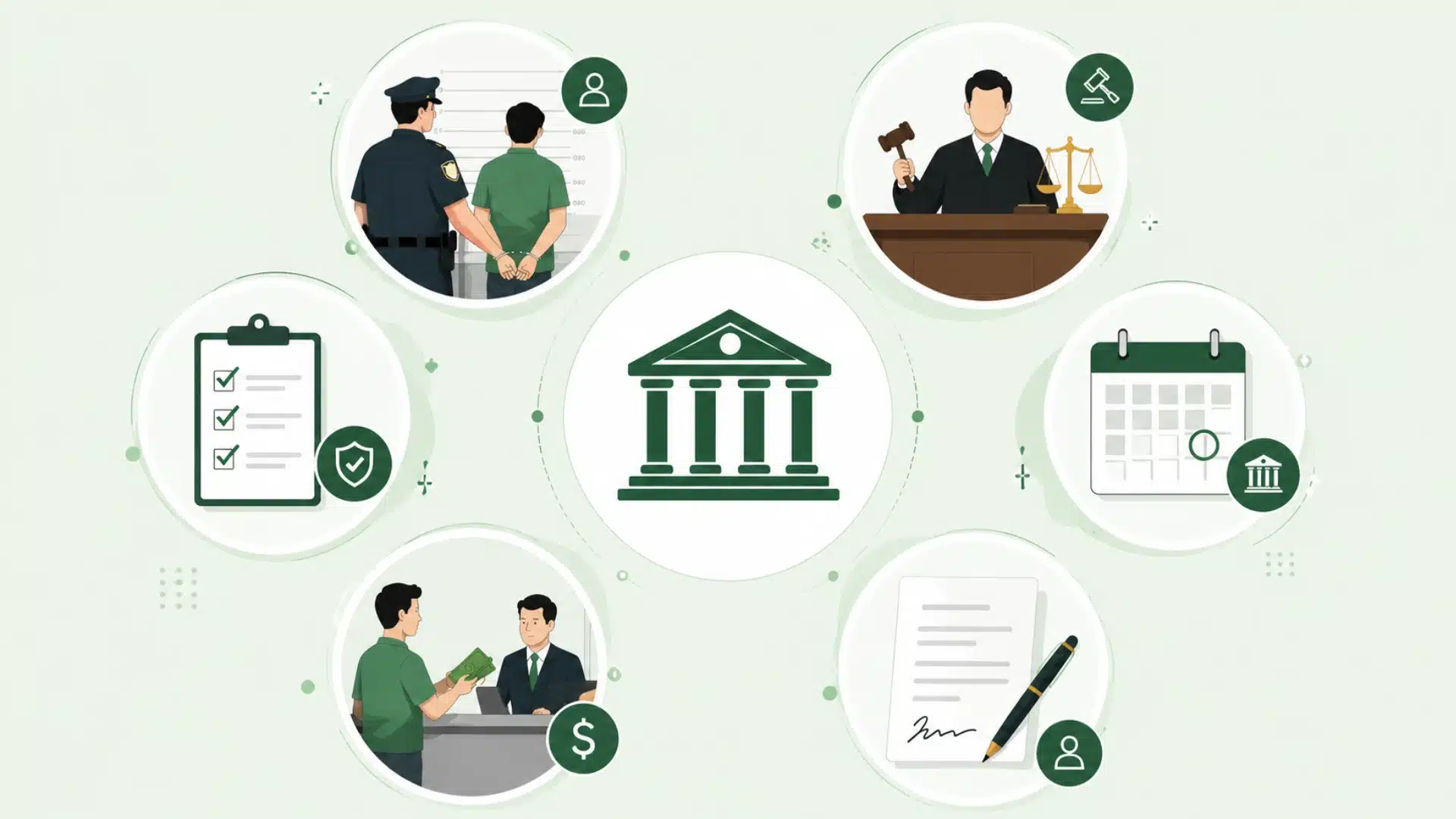
The bail process begins after an arrest and booking. A judge then reviews the charges, the defendant’s criminal history, and potential safety concerns during a bail hearing.
Depending on the case, the court may grant release without bail, set bail conditions, or require the defendant to remain in custody until trial.
1. Arrest and Booking
After an arrest, law enforcement officers take the defendant to a local jail or detention facility for booking.
During this process, officers record personal information, photograph and fingerprint the defendant, and document the alleged criminal offense.
Personal belongings are collected, inventoried, and held by the facility until release.
Whether there was probable cause for an arrest can become relevant during the bail hearing, and an attorney can raise that issue early to challenge the legality of the detention or arrest process.
2. Bail hearing
Following booking, the defendant appears before a judge for a bail hearing, sometimes called an initial appearance or pretrial release hearing.
During this hearing, the judge reviews the criminal charges, the defendant’s criminal history, ties to the community, and any potential public safety concerns.
The court also considers whether the defendant is likely to appear for future court dates and whether release conditions are necessary as the criminal case proceeds.
Depending on the circumstances, the judge may order release without bail, set bail, impose supervised release conditions, or require the defendant to remain in custody until further proceedings.
3. Bail Schedules vs Court Hearings
Many jurisdictions use a bail schedule that lists standard bail amounts for common criminal offenses. In some cases, defendants may secure release by paying the scheduled amount before seeing a judge.
However, serious felony charges, repeat offenses, or cases involving public safety concerns usually require a formal court hearing.
During the hearing, the judge may increase, reduce, or deny bail based on the facts of the case and the defendant’s risk level.
Under the law, judges retain discretion to determine whether detention or supervised release is appropriate during the pending criminal proceedings.
4. Release on Own Recognizance (OR Release)
A release on own recognizance, commonly called an OR release, allows a defendant to leave custody without paying bail.
Instead of providing money or collateral, the defendant signs a written promise agreeing to appear at all future court dates.
Courts generally grant OR release when a defendant has strong community ties, stable employment, a limited criminal history, and no history of missing court appearances.
Judges also consider whether the alleged offense poses any risk to public safety before approving release.
A judge may approve OR release when financial bail is not necessary to ensure the defendant returns to court or complies with release conditions during the criminal case.
5. Posting Bail
If bail is required, defendants have several options for securing release. Some defendants pay the full cash bail amount directly to the court.
Others work with a licensed bail bondsman, who posts a surety bond in exchange for a nonrefundable fee, typically ranging from 10% to 15% of the total bail amount.
Property bonds may also be accepted in certain situations, allowing defendants to use real estate or other assets as collateral.
Family members or friends may co-sign the bond to help secure the defendant’s release before trial.
6. Release Conditions
Courts frequently attach conditions to release, including travel restrictions, no-contact orders with victims, firearm prohibitions, and regular check-ins with a pretrial services officer.
Defendants must strictly comply with all court-ordered conditions while the criminal case remains pending.
Violating release terms can result in bail revocation, additional criminal penalties, re-arrest, and detention until the conclusion of the case.
Different Types of Bail in the United States
The US legal system uses several types of bail, depending on the charges, the defendant’s financial situation, and the level of risk.
- Cash Bail: The full bail amount is paid directly to the court using cash or certified funds. The money is usually refunded after all court appearances are completed.
- Surety Bond: A bail bond company pays the bail amount on behalf of the defendant in exchange for a nonrefundable fee, usually a percentage of the total bail.
- Property Bond: Property, such as a house or land, is used as collateral to secure release from jail. The court may seize the property if bail conditions are violated.
- Conditional Release: The defendant is released under strict conditions, such as electronic monitoring, travel restrictions, regular check-ins, or drug testing.
- Citation Release: In minor offenses, law enforcement may issue a citation ordering the person to appear in court without taking them into custody.
- Federal Bail: Federal criminal cases follow separate federal court rules, and judges often consider public safety and flight risk more strictly.
Understanding Modern Cash Bail Reforms
The traditional cash bail system has drawn sustained criticism for creating a two-tier result: defendants with money go home, those without the same resources sit in jail facing the same charges.
Several states have responded with reforms. Illinois abolished cash bail in 2023 under its Pretrial Fairness Act.
New Jersey, New Mexico, and Washington, D.C. have significantly reduced its use, relying on risk assessments instead.
New York eliminated cash bail for many misdemeanor and nonviolent felony charges, though the legislature later narrowed those changes.
If your case is in a jurisdiction that has moved away from cash bail, a defense attorney can explain what the current pretrial release process looks like in that court.
How is Bail Determined by a Judge?
Bail amounts are not arbitrary. Law requires judges to impose the least restrictive conditions necessary to protect public safety and ensure court appearance.
When bail is appropriate, judges consider the listed factors to determine custody status.
- The nature and circumstances of the charged offense
- The defendant’s employment history and financial resources
- Family relationships and ties to the community
- Length of residence in the area
- Prior criminal record, including any history of failing to appear on prior bail
- Whether community members would vouch for the defendant’s reliability
- The probable sentence if convicted and its bearing on flight risk
Prosecutors must prove that bail is necessary for public safety or court appearance. Judges may reduce bail if the amount exceeds the defendant’s actual risk level.
Can Bail Be Denied?
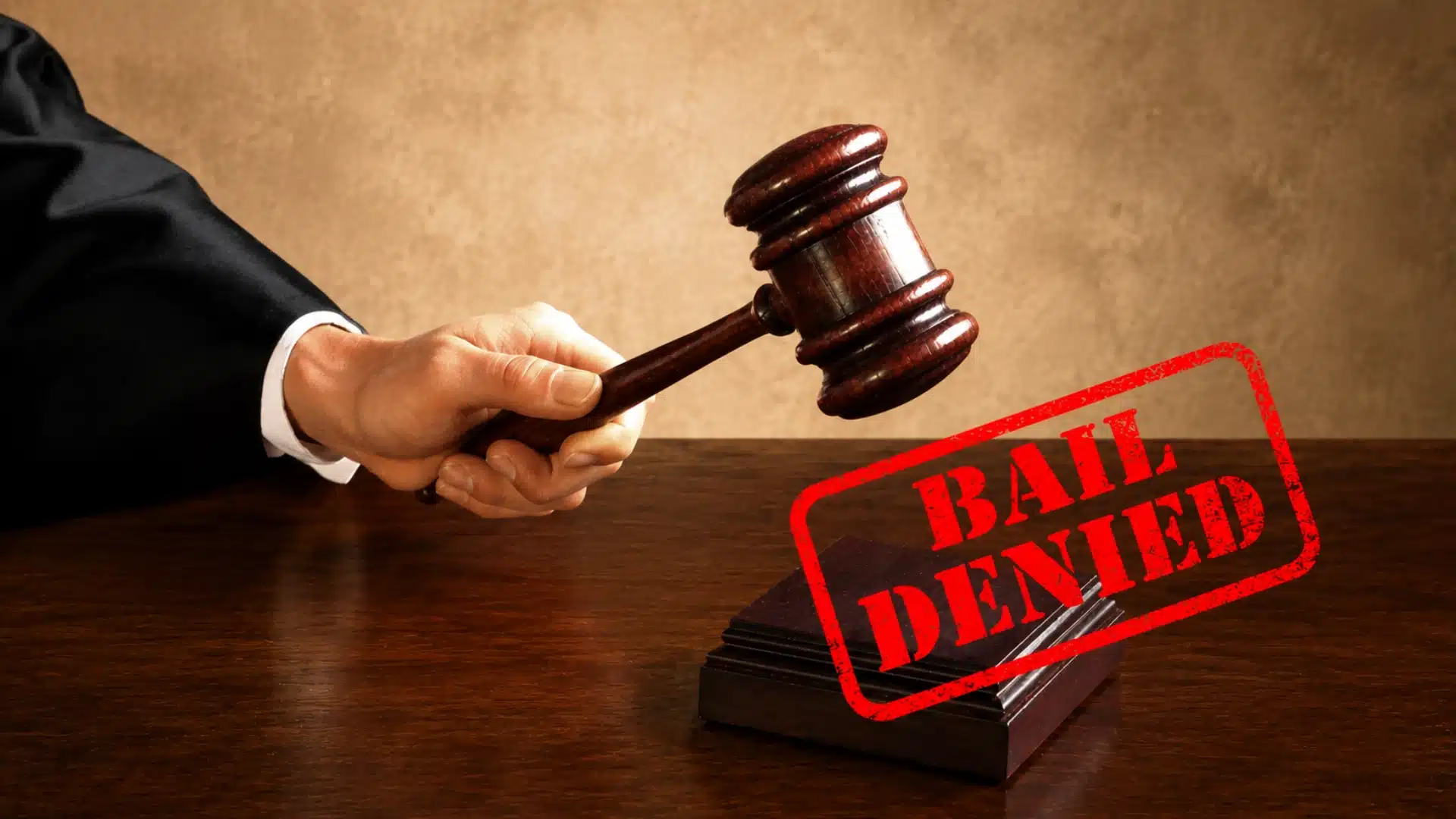
Defendants charged with first-degree murder may be held without bail when proof of guilt is evident or the presumption is strong.
A judge may revoke bail if a defendant violates release conditions, contacts protected persons, or faces new charges while released.
Defendants arrested for a felony while already on bail face stricter release limits.
A well-prepared bail hearing can significantly affect whether a defendant remains in custody during the case.
Judges also consider public safety risks, flight concerns, criminal history, and the seriousness of the alleged offense before deciding whether bail should be granted or denied.
In some situations, prosecutors may request preventive detention if they believe releasing the defendant could endanger victims, witnesses, or the community during ongoing legal proceedings.
Bail Bonds vs Bail Money
Many people confuse bail bonds with bail money, but they work differently. The main difference usually comes down to cost, refunds, and who is financially responsible if the defendant misses court.
| Factor | Bail Money | Bail Bond |
|---|---|---|
| Payment Method | Paid directly to the court | Paid through a bail bond company |
| Upfront Cost | Full bail amount required | A small percentage fee is required |
| Refundable | Usually refunded after court appearances | Fee is nonrefundable |
| Used When | The defendant can afford full bail | The full bail amount is too expensive |
| Collateral | Rarely required | Often required by a bondsman |
When to Call a Criminal Defense Attorney?
If you or a family member has been detained or arrested, contacting an attorney before the bail hearing is important.
The 48-hour window moves quickly. An attorney can review charges, gather evidence supporting release, and argue for lower bail or OR release at the 48-hour hearing.
Defendants can challenge bail at any stage. Courts may reconsider amounts if circumstances change or if the original decision relied on incomplete information.
Attorneys can also examine whether probable cause existed and how detention timelines apply.
Remaining in custody has real consequences. Employment, child custody arrangements, and the ability to help prepare a defense are all affected when a defendant stays jailed while their case is pending.
Conclusion
Bail is a legal mechanism designed to balance two legitimate interests: the defendant’s right to liberty before conviction and the court’s need to ensure the case can proceed.
The law approaches that balance with more structure than many defendants realize. The court is not free to set any number it wants.
It must consider all relevant statutory factors, apply the least restrictive conditions necessary to reasonably assure appearance and community safety, and provide the defense with an opportunity to be heard.
That process is most effective when a defendant has qualified legal representation at every stage.
Have thoughts about how bail should work in the legal system? Share your opinion or experience in the comments below and join the discussion.
Frequently Asked Questions
Is Bail Money Refunded After the Case Ends?
Yes. Courts usually refund bail after the case concludes and appearances are completed, minus fees. Bail bondsman premiums remain non-refundable under the law.
Can Bail Conditions Be Changed After Release?
Yes. Courts may modify bail conditions after release. Judges review compliance, public safety concerns, updated circumstances, and court appearance history before approving requested changes.
Can a Judge Lower Bail After It Has Been Set?
Yes. Defendants may request bail-reduction hearings, during which judges review NRS 178.4853 factors before deciding whether to lower, maintain, or increase bail amounts.