
Have you ever watched a news story about a politician or celebrity penalties at this level tend to be more severe, and federal charged with obstruction of justice and thought, “What does that actually mean?” You are not alone, and the confusion is understandable because the term gets thrown around constantly without much explanation behind it.
This concept is one of those legal terms that sounds complicated but becomes clear once someone walks through how it actually works.
This post breaks down the kinds of actions that qualify under the law, what prosecutors have to prove, and where the legal line sits between protected behavior and criminal conduct.
Disclaimer: This article is written for general informational purposes only and does not constitute legal advice. If you are facing a situation involving potential criminal liability, please consult a licensed attorney in your jurisdiction.
What Is Obstruction of Justice?
When people hear the phrase “obstruction of justice,” they often picture dramatic courtroom scenes or high-profile political scandals. In reality, it shows up far more quietly in everyday legal situations, and understanding what it actually means can matter more than most people realize.
At its foundation, obstruction of justice is not a single law. It is a legal category that covers a wide range of conduct under both federal and state statutes, all built around the same core idea: someone deliberately got in the way of a legal process that was already happening.
The U.S. Department of Justice recognizes this as one of the broader categories in criminal law, precisely because the conduct it covers is so varied.
What ties every case together are two requirements that prosecutors must establish: the person knew a legal proceeding was underway, and they acted on purpose to interfere with it.
Words like “willfully” and “corruptly” appear throughout these statutes because they do a specific job. They draw the line between someone who accidentally complicated an investigation and someone who set out to derail it.
Common Examples of Obstruction of Justice

While obstruction can take many forms, certain types of conduct come up repeatedly in both federal and state cases.
- Hiding, altering or destroying physical evidence after finding out that an investigation has been opened into a matter.
- Deleting digital files, text messages or emails specifically because a legal inquiry is already underway.
- Threatening, bribing or pressuring a witness to change their story or stay away from court entirely.
- Attempting to influence a juror’s decision through personal contact, gifts or intimidation outside the courtroom.
- Lying to federal investigators during an official questioning session, a false statement offense often charged under 18 U.S.C. § 1001, knowing the statements will be treated as part of the record.
- Encouraging or coaching another person to give false testimony during a legal proceeding.
- Physically blocking or resisting a law enforcement officer in a way that prevents them from carrying out an official duty connected to an active case.
What all of these examples share is the same two-part thread running through them: the person knew a legal process was happening and they made a deliberate choice to get in its way.
What Do Prosecutors Have to Prove?
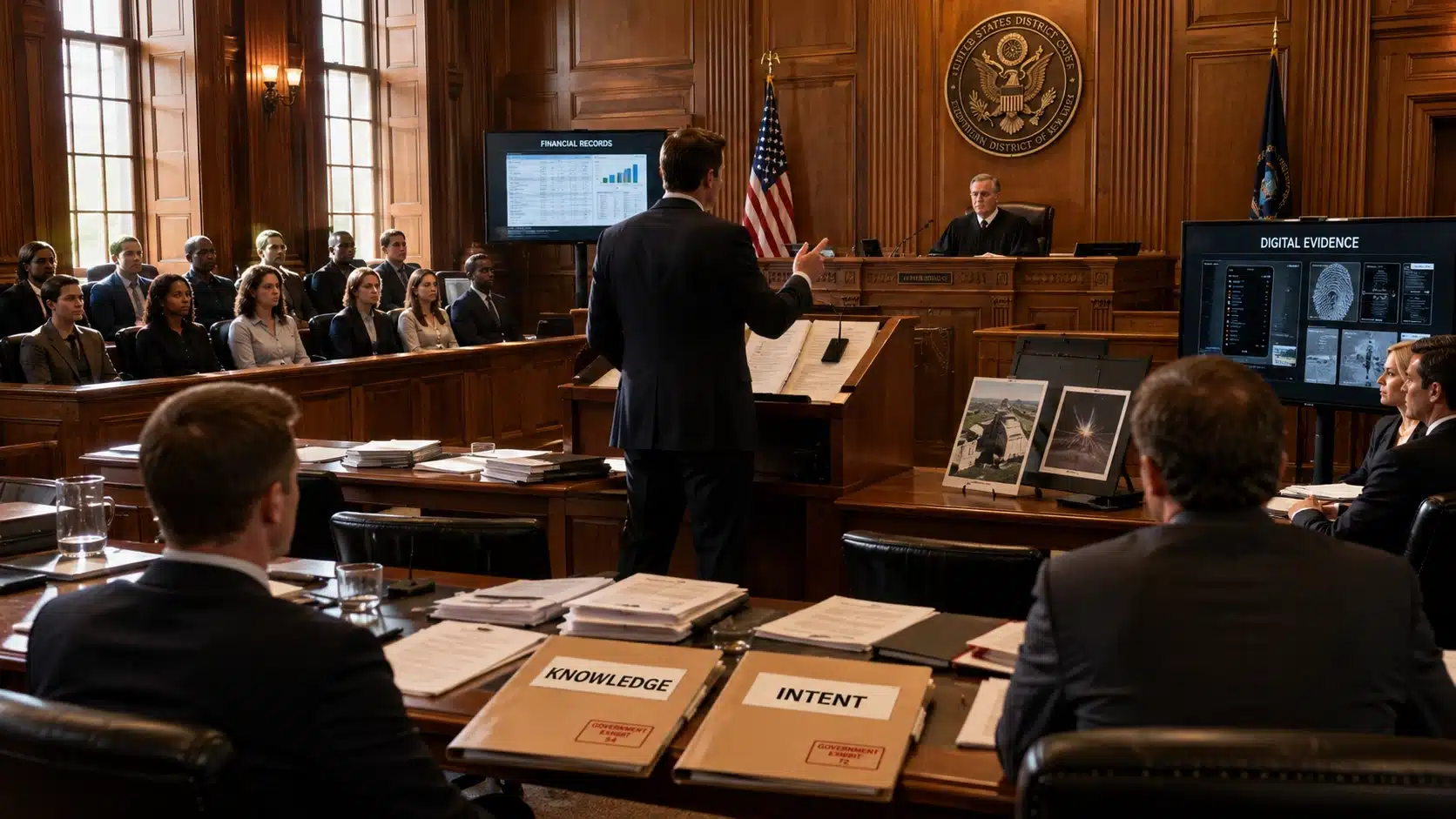
Knowing that obstruction of justice is a crime is one thing, but understanding what actually has to be established in court is where the picture gets genuinely interesting.
When prosecutors bring an obstruction case, they cannot simply point to an act that looks suspicious and call it a day. Under 18 U.S.C. Chapter 73, two specific elements must both be present at the same time, and if either one is missing, the charge does not hold.
Did They Know a Case Was Open?
Prosecutors have to show that the person was genuinely aware a legal process was already in motion before they acted, not just that they suspected something might happen eventually.
Here is what that awareness requirement actually looks like in practice:
- Actual knowledge is required: Suspecting that investigators might come knocking someday is not enough. The person must have known, at the time of the act, that a real investigation, court proceeding, or official inquiry was already underway.
- Timing is everything: Someone who deleted old files on a routine schedule before hearing about any investigation is in a completely different legal position than someone who deleted those same files the day after receiving a subpoena.
- Context shapes the outcome: Courts look at what the person knew, when they knew it, and what was happening around them at the time, because the Legal Information Institute at Cornell Law notes that this awareness requirement exists specifically to prevent the law from sweeping in conduct that had nothing to do with interfering with justice.
Without establishing this knowledge, the prosecution cannot move forward regardless of how suspicious the conduct appears.
Was the Act Done on Purpose?
Even if knowledge is established, prosecutors still have to prove that the interference was deliberate rather than accidental, careless, or the result of poor judgment.
These are the key distinctions courts pay attention to when evaluating intent:
- Accidents do not qualify: Accidentally slowing down an investigation through disorganization or poor record keeping does not meet the legal standard. The act has to have been done with the specific purpose of derailing, delaying, or corrupting the outcome of a legal process.
- Legitimate legal advice is protected: An attorney advising a client to exercise their right to remain silent is not committing obstruction, even if that advice makes the investigation harder. The intent behind the act is what separates protected conduct from criminal conduct.
- Courts read the full picture: Prosecutors and judges look at what the person said, what they knew, what they did, and what result they were clearly trying to produce, rather than judging the action as if it existed in a vacuum.
Intent without knowledge, or knowledge without intent, is never enough on its own. Both have to exist together, and that combination is a higher legal bar than most people expect when they first encounter this area of law.
What Falls Outside the Definition?
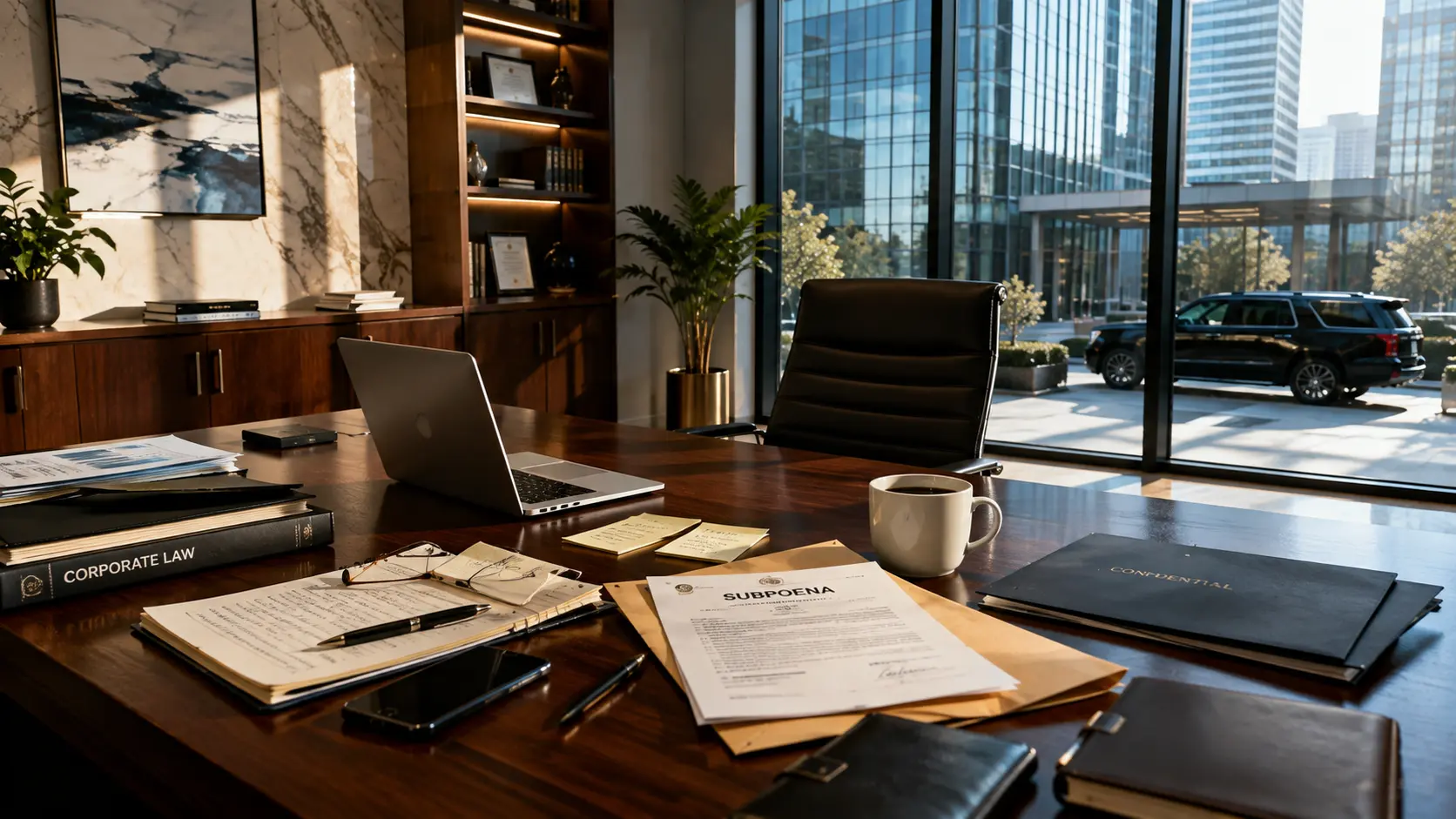
One of the biggest misconceptions people carry into this topic is the idea that refusing to cooperate with law enforcement is the same thing as obstructing justice. It is not, and the law is actually quite clear on this.
The U.S. Constitution gives every person the right to remain silent, decline warrantless searches, and retain legal counsel. Exercising any of these rights cannot form the legal basis for an obstruction charge, regardless of how uncooperative it might look to investigators on the outside.
Beyond constitutional protections, there is another category that people are confused about: conduct that resembles obstruction but lacks the required knowledge or intent.
Discarding records on a routine schedule before learning that any investigation exists is a good example of this, because the legal standard requires both elements to be present, not just one.
The Department of Justice makes a meaningful distinction between passive non-assistance and an affirmative act directed at a known proceeding. Simply being unhelpful, unresponsive, or difficult to reach does not cross that line.
Obstruction requires someone to actually do something with the purpose of interfering, and that distinction carries real legal weight.
How Do Federal and State Obstruction Laws Differ?
A question that comes up constantly among people researching this topic is whether obstruction of justice is a federal crime, a state crime, or both. The honest answer is that it can be either, and in some situations, the same act can trigger charges under both systems simultaneously.
At the federal level, obstruction offenses are governed primarily by 18 U.S.C. Chapter 73, which covers a wide range of conduct directed at federal proceedings specifically.
Two sections come up most often: 18 U.S.C. § 1503 covers interference with judicial proceedings, such as tampering with a juror or court officer, while 18 U.S.C. § 1505 covers interference with proceedings before Congress or a federal agency.
These sections include investigations by federal agencies like the FBI, proceedings before federal grand juries, and cases being heard in federal courts.
State laws operate on a parallel track. While the specific language varies from one jurisdiction to another, the underlying framework mirrors what exists at the federal level, built around the same two requirements of knowledge and intent.
Here is where the practical differences between the two systems tend to show up most clearly:
- Which proceeding was targeted: Federal charges apply when someone interferes with a federal investigation or court process, while state charges apply when the interference involves a state-level proceeding such as a local police investigation or a county court case.
- Penalty structure: Federal obstruction convictions often carry heavier sentences under the U.S. Sentencing Guidelines, whereas state penalties vary widely and can range from misdemeanor fines to felony prison time depending on the jurisdiction and severity of the conduct.
- Prosecutorial authority: Federal cases are handled by U.S. Attorneys operating under the Department of Justice, while state cases fall under the authority of local district attorneys or state attorneys general.
- Overlap situations: When a single act interferes with both a federal and a state proceeding at the same time, a person can face charges from both systems, because double jeopardy protections do not prevent separate sovereigns from pursuing separate charges for the same underlying conduct.
What this means practically is that the definition of the crime does not really change depending on which system is pursuing it. The conduct, the knowledge requirement, and the intent requirement remain consistent. What changes is the courtroom it plays out in and the consequences that follow a conviction.
What Are the Penalties for Obstruction of Justice?
Obstruction conviction penalties depend heavily on the statute involved and the seriousness of interference caused during the case because applicable laws vary between jurisdictions widely.
Federal penalties vary widely by section and legal sources note that judicial proceeding obstruction under 18 U.S.C. §1503 can carry sentences of ten years more.
Witness tampering and evidence destruction offenses may carry twenty or thirty year maximums, while congressional or agency obstruction usually has shorter limits near five years.
Judges weigh factors including disruption, threats, violence, and criminal history when deciding sentences, while fines, restitution, and imprisonment depend on the specific obstruction charge involved.
A conviction can create lasting consequences beyond punishment, including job limits, professional licensing issues, and possible restrictions on voting or firearm rights after felony conviction.
Conclusion
Obstruction of justice is not as mysterious as it sounds once you understand the two things that actually make it a crime: knowing a legal process is underway and choosing to interfere with it on purpose.
You also now know where the line sits between protected behavior, like staying silent or hiring a lawyer, and conduct that genuinely crosses into criminal territory.
If you came here wondering what this charge actually means, hopefully that question has a real answer now.
If you or someone you know is dealing with a situation that might involve these issues, speaking with a licensed criminal defense attorney is the most important next step you can take.
Frequently Asked Questions
What Is Obstruction of Justice in Simple Terms?
Obstruction of justice means deliberately interfering with an ongoing legal process, such as a police investigation, grand jury, or court case. Accidental interference does not qualify. The person must know about the proceeding and intentionally act to disrupt it.
What Is the Most Common Form of Obstruction of Justice?
Witness tampering and destroying evidence are among the most common forms charged in federal and state courts. Making false statements to federal investigators is also common. In each case, the person acts knowing a legal process is already underway.
Is Obstruction of Justice a Felony or A Misdemeanor?
It depends on the court system, jurisdiction, and seriousness of the conduct. Federal obstruction charges are typically felonies, while state charges may be felonies or misdemeanors. The original investigation does not have to result in a separate criminal conviction.
Can Staying Silent Lead to An Obstruction Charge?
Silence alone is not obstruction because the Fifth Amendment protects the right to remain silent during government proceedings. Obstruction requires an affirmative act aimed at interfering with a known legal process. Simply choosing not to speak is protected conduct.