

Probation gives people the chance to serve their sentence outside of jail. That freedom comes with conditions, and one of the most misunderstood involves travel.
Many people assume they can take a short trip across state lines without consequences, or that international travel is simply off the table. Neither assumption is fully accurate.
The challenge is that travel restrictions are not always as straightforward as people expect, which is why confusion around the topic is so common.
The rules are more structured than that, and the consequences of getting them wrong are serious. This blog covers what the law actually requires, how decisions get made, and when it makes sense to involve an attorney.
What is Probation?
Probation is a court-ordered period of supervision. It allows a person to live in the community instead of serving time in jail or prison, or after serving part of a sentence.
The court sets rules that must be followed during this period.
These rules can include meeting with a probation officer, staying employed, avoiding new arrests, paying fines or restitution, taking drug or alcohol tests, and attending treatment or classes.
Travel limits are also common. A person on probation may need approval before leaving the county, state, or country.
The exact rules depend on the probation order and the type of case. If someone breaks these terms, it may be treated as a probation violation. That can lead to stricter rules, a court hearing, or possible jail time.
Can You Leave the State on Probation?

In most cases, whether you can leave the state on probation depends on whether you have permission first.
Usually, a person on probation cannot travel outside the approved area without approval. Some probation orders limit travel outside the county, state, or court district.
Others may allow short trips, but only after the probation officer signs off. In some cases, the court may also need to approve the trip.
The rules can change based on the type of supervision, such as misdemeanor probation, felony probation, supervised release, parole, or federal probation.
That is why guessing is risky. A person should not rely on advice from friends, family, or online comments.
The safest step is to read the probation terms and ask the probation officer before making travel plans.
Can You Leave the Country on Probation?
International travel while on probation is treated far more seriously than crossing a state line. In most cases, leaving the country without explicit court approval is not permitted, and in many cases it is not permitted at all regardless of the reason.
The core issue is jurisdiction. Once a person leaves the United States, the court and probation officer have no practical ability to monitor compliance, conduct check-ins, or enforce conditions. That loss of oversight is exactly what courts are trying to prevent.
Passport and Border Considerations
Some probation orders include a condition requiring the person to surrender their passport or prohibiting them from applying for one. If that condition exists, international travel is not possible until the court formally removes it.
Even without an explicit passport condition, leaving the country without permission is still a violation.
Customs and Border Protection records international departures, and that information can surface during routine law enforcement checks or upon re-entry.
When International Travel May Be Considered
Courts and probation officers rarely approve international travel, but requests are sometimes considered in limited circumstances.
These typically include a serious family emergency, a medical procedure unavailable in the United States, or a work obligation tied to documented employment.
Approval in these cases almost always requires a formal court hearing, not just a conversation with a probation officer. The bar is significantly higher than a domestic travel request.
What to Do Before Making Any Plans
Anyone on probation considering international travel should speak with an attorney before approaching their probation officer or the court. The request needs to be properly framed, supported with documentation, and presented at the right stage in the process.
Acting without that preparation, or assuming the answer will be no and travelling anyway, carries the same consequences as any other probation violation, and sometimes more serious ones, given that leaving the country can be treated as an attempt to evade supervision entirely.
Why Does Probation Often Limit Travel?
Probation is court supervision, so travel is not treated like a normal personal choice.
The court and probation officer need to know where the person is, how they can be reached, and whether they are following the terms of release.
Travel can create problems with:
- Check-ins with the probation officer
- Drug or alcohol tests
- Work or school rules
- Court-ordered classes
- Treatment programs
- Restitution or fine payments
These limits are not the same in every case. One person may only need to report travel plans, while another may need written approval before leaving the county or state.
The rules often depend on the charge, the person’s risk level, and whether there have been past violations. That is why the probation order matters more than guesswork.
How to Ask for Permission to Travel While on Probation?
Before making travel plans, the person should read the probation order first. That order usually explains where they can go, who must approve travel, and whether a written permit is needed.
A clear request should include:
- Travel dates
- Destination and full address
- Reason for the trip
- Phone number during travel
- Return plan
- Proof of the reason, if needed
The person should contact the probation officer before booking flights, hotels, or long drives.
They should also ask whether the court must approve the trip or whether the officer can approve it on their own. If permission is given, they should keep proof of the approval.
During the trip, they must not miss check-ins, tests, classes, payments, treatment, or court dates. If travel plans change, they should ask what to do before changing them.
When You Can Apply for Travel While on Probation?
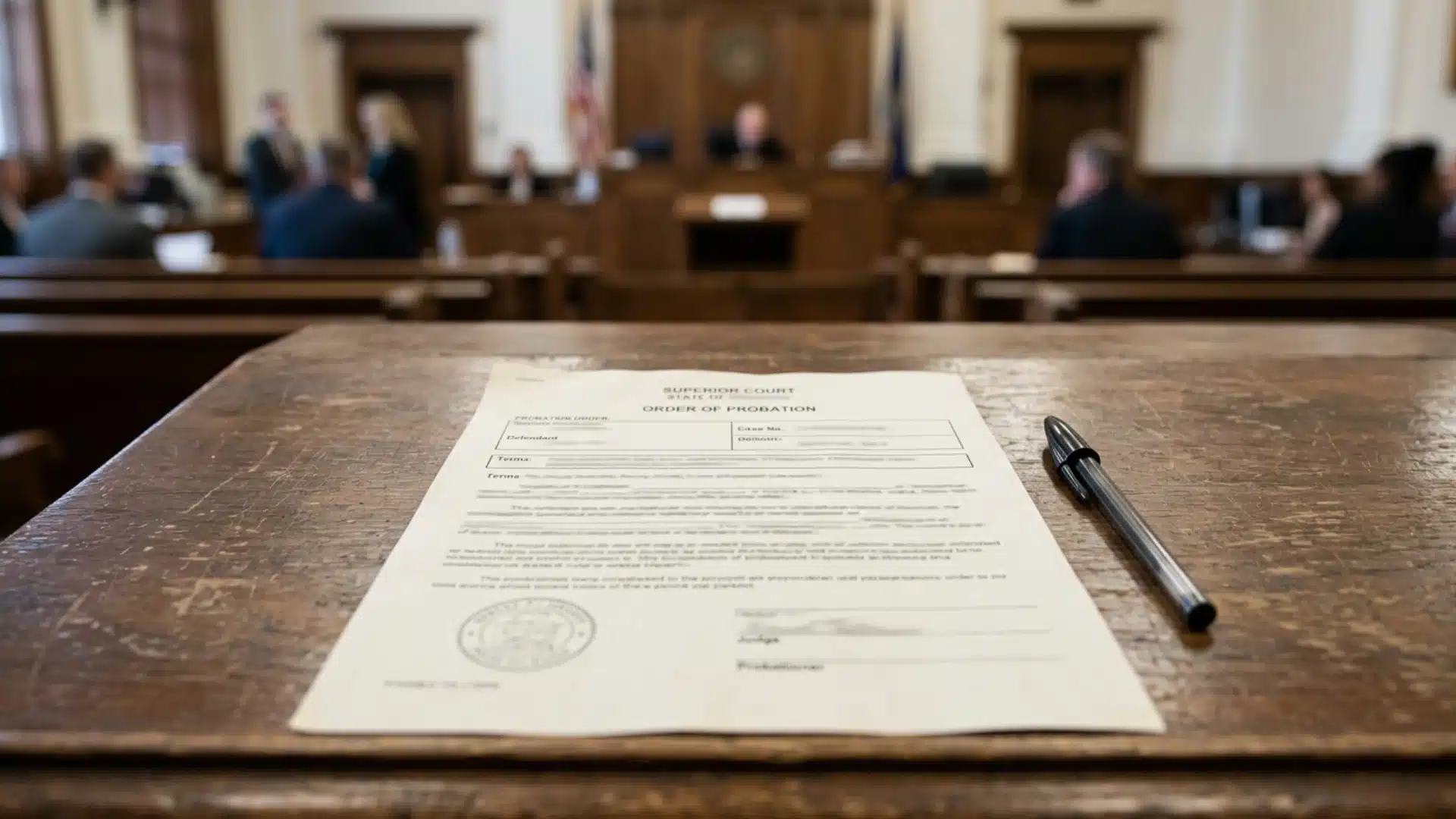
Travel restrictions are common during probation; courts and probation officers may approve requests when there is a legitimate reason for leaving the area.
- Work Obligations and Business Travel: Business trips, job assignments, conferences, or employment-related travel may qualify for approval.
- Educational Programs and Academic Requirements: Travel for classes, training courses, certifications, or academic events may be permitted.
- Family Emergencies and Urgent Situations: Serious illness, hospitalization, or other urgent family matters can justify a travel request.
- Funeral Attendance for Close Relatives: Courts and probation officers often consider requests to attend funerals of close family members.
- Personal Vacations and Recreational Travel: Some individuals may receive approval for leisure travel if they have complied with probation requirements.
- Child Custody and Family Court Matters: Travel related to child visitation, custody hearings, or family court proceedings may be approved.
- Religious Events and Faith-Based Commitments: Important religious ceremonies, pilgrimages, or faith-based obligations may be considered.
- Medical Treatment and Specialist Appointments: Specialized treatment, consultations, or procedures unavailable locally may justify travel.
Misdemeanor vs. Felony Probation: How the Rules Differ
Travel restrictions often depend on the severity of the offense and the level of supervision ordered by the court. In general, felony probation tends to involve stricter oversight than misdemeanor probation.
| Factor | Misdemeanor Probation | Felony Probation |
|---|---|---|
| Level of Supervision | Often less restrictive | Typically more closely monitored |
| Travel Approval | May be easier to obtain for short trips | Usually subject to greater scrutiny |
| Reporting Requirements | Often less frequent | Commonly more frequent and detailed |
| Interstate Travel | Permission may still be required | Permission is almost always required |
| Probation Conditions | Generally fewer restrictions | Often includes additional conditions and monitoring |
| Violation Consequences | Can lead to sanctions or revocation | May result in more severe penalties, including incarceration |
Regardless of the offense level, individuals should review their probation terms carefully and obtain any required approval before traveling.
How Do Probation Officers Decide Whether to Approve Travel Requests?

Probation officers look at several factors before approving a travel request. While every case is different, some reasons are more likely to result in approval than others.
1. Your Compliance Record
A strong record can improve your chances of approval. If you have followed probation rules, attended required meetings, and avoided violations, officers may view your request more favorably.
People who consistently meet their probation requirements generally have an easier time obtaining permission to travel. Showing responsibility over time can help build trust, and the trip is unlikely to interfere with supervision.
2. Reason for Travel
The purpose of the trip matters. Work obligations, family emergencies, medical treatment, and court-related matters are generally viewed more positively than vacations or recreational travel.
Probation officers often consider whether the travel serves a necessary or important purpose. Requests supported by a clear explanation and a legitimate need are stronger than those based solely on personal convenience.
3. Nature of the Offense
Some offenses come with additional restrictions. Cases involving victims, geographic limitations, or special supervision conditions may receive closer review before travel is approved.
The specific terms of probation can affect where and when a person is allowed to travel. In some situations, additional approval steps may be required to ensure the trip does not conflict with court-ordered conditions.
4. Supporting Documentation
Providing documents such as employer letters, medical records, court notices, or funeral information can help show that the travel request is legitimate.
Documentation allows probation officers to verify the reason for the trip. Well-supported requests are often easier to evaluate because they provide clear evidence of the travel’s purpose and timing.
5. Advance Notice
Submitting a request early gives probation officers time to review it. Last-minute requests are less likely to be approved, especially if court authorization is required.
Giving sufficient notice also allows time to address any questions or additional requirements that may arise during the review process. Planning ahead can help prevent delays and improve the chances of travel approval.
What Happens If You Leave the State or Country Without Permission?
Leaving your approved area without authorization is a probation violation and can lead to serious consequences.
- Probation Violation Report Filed: Your probation officer may report the unauthorized travel to the court as a probation violation.
- Court-Ordered Probation Hearing Scheduled: The court may require you to appear at a probation violation or revocation hearing.
- Judge May Issue Arrest Warrant: In some cases, a judge may issue a warrant for your arrest after learning of the violation.
- Extension of Existing Probation Term: The court may lengthen your probation period as a penalty for noncompliance.
- Stricter Reporting and Supervision Conditions: Additional reporting requirements, monitoring, or restrictions may be imposed.
- Loss of Future Travel Privileges: Future travel requests may face greater scrutiny, stricter review requirements, or be denied altogether.
- Potential Jail or Prison Sentence: If probation is revoked, you may be ordered to serve part or all of the original sentence in custody.
- Additional Court and Legal Expenses: Defending against a violation may involve attorney fees, court costs, and other expenses.
- Permanent Record of Probation Violation: The violation can become part of your probation history and affect future court decisions.
Moving to Another State on Probation: The ICAOS Process

The process starts with your probation officer, who submits a transfer request. The receiving state then has up to 45 days to review and respond.
If approved, supervision transfers to the new state, although the original case remains open in the sending state.
To qualify, you generally must have at least three months of probation remaining, be in compliance with your conditions, and have a valid reason for relocating, such as residency, employment, or qualifying family connections.
Moving without completing this process is considered a serious violation. Courts may treat it as absconding from supervision, which can lead to significant legal consequences beyond your original probation terms.
When to Talk to a Lawyer About Probation Travel?
A lawyer may help when probation travel is not simple or when the request needs court approval.
Legal support can be useful if a travel request was denied, if international travel is planned, or if there are claims that the person left without permission.
It may also help in emergency family situations, such as serious illness, hospitalization, or funerals, where a faster request may be needed.
Work-related travel can also require help, especially if the job conflicts with probation limits. A lawyer may also guide interstate relocation requests that involve the ICAOS transfer process.
Legal advice can be helpful when probation terms are confusing, when there were prior violations, or when a judge must approve the trip.
In these cases, an attorney can clearly present the reason and support the request with appropriate details.
Conclusion
Probation conditions are not suggestions. They are legally binding, and the consequences of treating them otherwise can add months or years to what was originally a manageable sentence.
If you are uncertain about what your conditions allow, the right step is to get clarity before making plans, not after the trip is over.
Understanding your options early is the most effective way to protect the progress you have made. The right approach can help you stay compliant while addressing important travel needs.
Have you or someone you know dealt with travel restrictions on probation? Share your thoughts or experiences in the comments below.
Frequently Asked Questions
Can You Fly on a Plane While on Probation?
Flying is generally permitted if your probation officer has approved the trip and issued a travel permit. You are not automatically barred from air travel, but you cannot board a flight to an out-of-state or international destination without documented authorization.
How Can Your Probation Officer Find Out if You Leave the State Without Permission?
Probation officers conduct regular check-ins, verify your whereabouts through various means, and coordinate with law enforcement across state lines. Customs records automatically flag international travel upon re-entry. A probation flag in law enforcement databases can surface during any routine stop, background check, or new arrest in any state.
Does Unsupervised Probation Have Travel Restrictions?
Unsupervised probation typically does not come with a probation officer monitoring your movements, but that does not mean geographic restrictions are automatically lifted. Your probation order may still include conditions about leaving the state. If you are unsure what your order says, reviewing it with an attorney is the safest approach before making any interstate travel plans.