You’re driving through Kansas City on a sunny afternoon, and an officer signals you to pull over. The first thing he mentions is your windows.
You’re not sure whether your tint is technically legal, and neither is he until he runs a meter. That scenario plays out more often than most drivers realize.
Missouri’s tint laws are actually more permissive than those in many neighboring states, but the rules vary by window location, vehicle type, and whether you have a medical permit.
Getting those details wrong can cost you a fine, complicate a traffic stop, and in some situations create legal problems that go further than a $75 ticket.
This guide covers what the law requires, what it allows, and what to do if you end up on the wrong side of it.
What Missouri Tint Laws Actually Require?
Missouri’s window tinting rules are set forth in RSMo Section 307.173, enacted in 2002 as part of the state’s vehicle equipment regulations.
The law uses the Visible Light Transmission percentage to set its limits. VLT measures how much light passes through both the tint film and the glass itself.
The rules differ depending on where the window sits on the vehicle:
| Window location | Legal VLT requirement |
|---|---|
| Windshield | Non-reflective tint only, above the manufacturer’s AS-1 line |
| Front-side windows | Must allow more than 35% VLT |
| Rear side windows | Any darkness permitted |
| Rear window | Any darkness permitted |
The rules for front windows are the same regardless of vehicle type. The main area of confusion for most drivers is the windshield.
The AS-1 line is a marking etched into the glass by the manufacturer, typically located about five to six inches from the top.
If your windshield does not have a visible AS-1 line, treating the top five inches as the boundary is the conservative and defensible position.
What VLT Percentage Means for Your Windows?
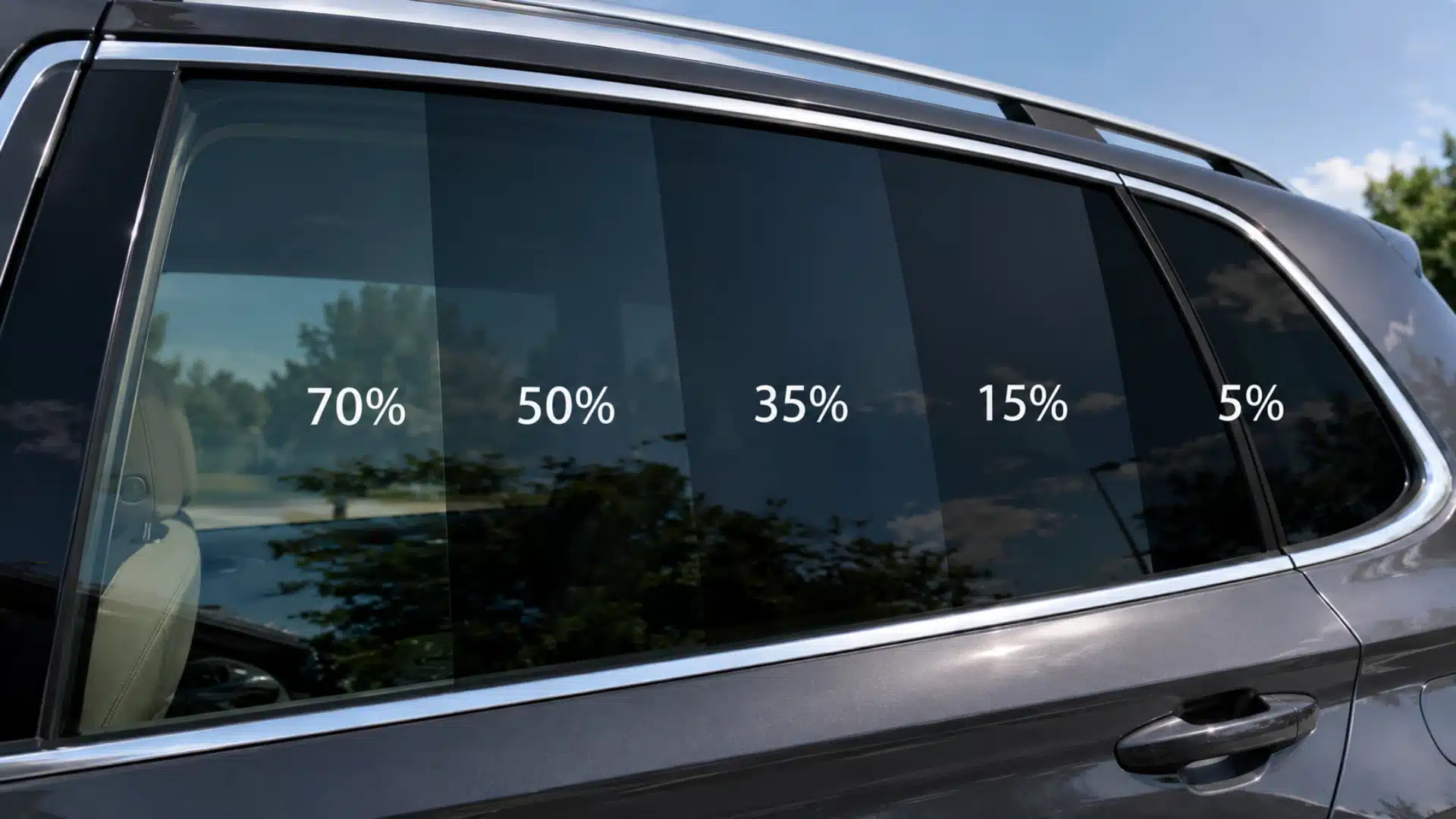
VLT percentage shows how much visible light passes through window tint, affecting brightness, privacy, heat control, glare reduction, and legality.
A higher VLT percentage means more light passes through, which means a lighter-looking tint. A lower percentage means a darker tint.
Missouri’s 35% VLT minimum for front-side windows means that at least 35 out of every 100 units of visible light must pass through.
Most drivers who install aftermarket tint are surprised by how dark 35% actually looks.
Film alone may be 35%, but when applied over factory-tinted glass, the combined VLT is often darker. That’s why installers typically stay slightly above the legal limit.
Missouri also allows a 3% enforcement variance, meaning a 32% VLT reading may still be compliant. This tolerance accounts for tint meter and environmental variations, not darker tint installations.
Reflectivity Rules and Other Missouri Tint Requirements
Tint darkness is only part of what Missouri regulates. The law also limits how reflective your tint can be, and for good reason.
Highly reflective tint can blind other drivers, particularly in bright sunlight, creating hazards unrelated to your own visibility.
Missouri’s reflectivity limits apply to both front and rear side windows:
- Front-side windows: Tint must not be more than 35% reflective.
- Rear side windows: Tint must not be more than 35% reflective.
Beyond reflectivity, there are a few other rules worth knowing:
- Side mirrors: If the rear window is tinted to any degree, the vehicle must have dual side mirrors. This requirement exists because a darkened rear window reduces rearward visibility, so the law compensates by requiring both mirrors to be present and usable.
- Restricted colors: Missouri does not restrict any specific tint colors. Red, blue, and other metallic shades are not banned by state law, though some localities may have separate ordinances.
- Film certification: Manufacturers of tint film do not need to certify the film they sell in Missouri. This puts the compliance burden on the vehicle owner, not the installer.
- Identification stickers: Missouri does not require a sticker on the vehicle to show that the tint is legal. However, drivers with a medical permit do receive specific decals that must remain on the vehicle.
Penalties for Illegal Tint in Missouri
Missouri’s window tint laws carry penalties that can extend beyond a simple ticket. For most drivers, staying within Missouri’s tint limits is far less costly than dealing with the legal and financial consequences of a violation.
- Fine: Missouri tint violations are misdemeanor traffic offenses with a standard $75 fine per infraction. If multiple windows are illegally tinted, multiple citations can be issued during a single stop.
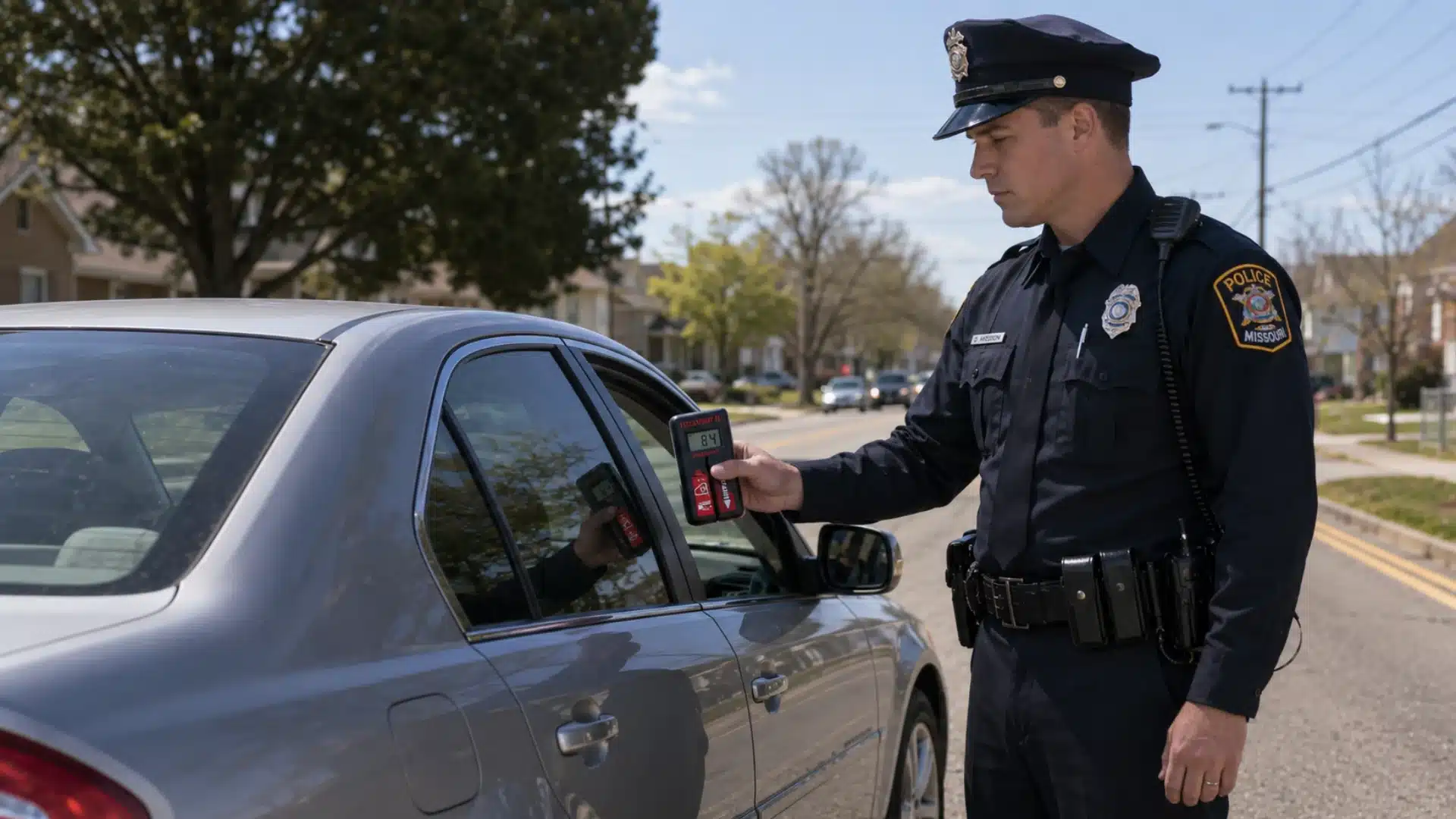
- Enforcement: Tint laws are enforced through traffic stops and annual vehicle safety inspections. Officers can use a tint meter to measure VLT, and a front side window reading below 35% may result in a citation unless the driver has a valid medical exemption.
- Traffic Stop Authority: A suspected tint violation provides lawful grounds for a traffic stop. While the tint violation alone does not authorize a full vehicle search, it allows officers to interact with the driver and investigate any additional violations observed during the stop.
- Additional Consequences: If an officer detects signs of impairment, the stop may escalate to a DUI investigation, including field sobriety testing. What begins as a tint violation can therefore lead to far more serious legal consequences.
Missouri requires annual inspections for most registered vehicles. An inspector can fail a vehicle for tint that reads below the legal threshold, which means you could discover a compliance issue during an inspection rather than a traffic stop.
Removing and replacing illegal tint before your inspection date avoids that outcome.
This section covers general legal information. If you have received a citation or your stop escalated beyond a tint ticket, consult a licensed attorney before taking action.
Can You Get a Prescription for Window Tint in Missouri?
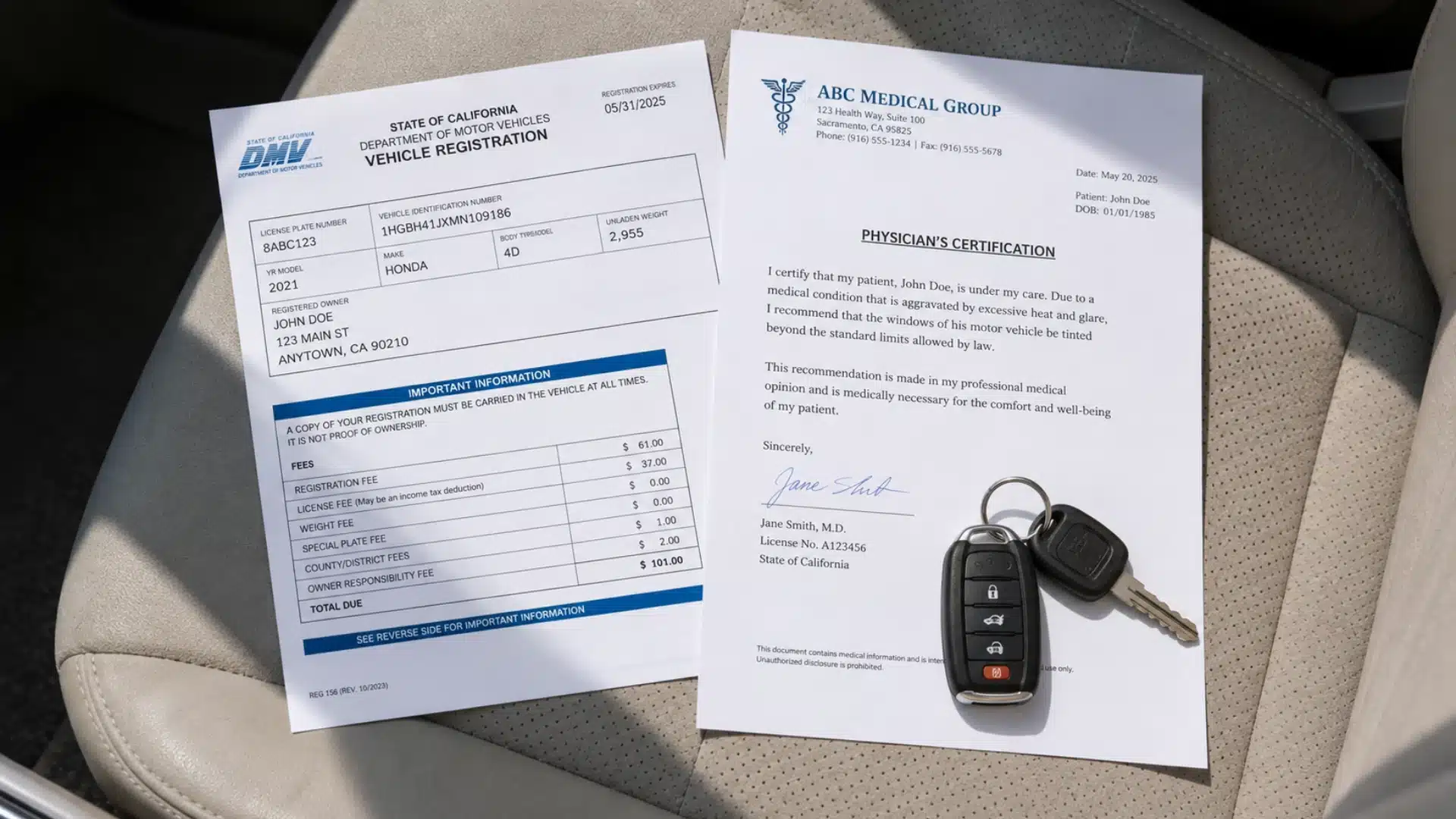
Yes. Missouri allows medical exemptions for drivers with qualifying conditions, and the process is more formal than most people expect.
The exemption is not just a doctor’s note you keep in your glovebox. It results in a state-issued permit and physical decals affixed to your vehicle by the Missouri State Highway Patrol.
The governing regulation is 11 CSR 30-7.010, which establishes the procedures for permit issuance under RSMo 307.173. Here is how the process works:
- Get a physician’s prescription: A medical exemption requires a doctor’s prescription stating that a qualifying condition necessitates a darker tint than the 35% VLT limit. Common qualifying conditions include lupus, albinism, photosensitivity disorders, and certain skin cancers.
- Present the prescription and vehicle to the Missouri State Highway Patrol: You bring the prescription and the vehicle to your local Highway Patrol Motor Vehicle Inspection Division. If you need permits for more than one vehicle, only one prescription is required, but all vehicles must be presented.
- Patrol issues permit SHP-524: The certifying officer verifies the prescription, completes the permit form, and affixes a sticker to the lower left inside of the windshield. A decal is placed on the outside lower left corner of the rear glass or rear bumper. You receive a copy of the form to keep in the vehicle at all times.
The permit stays with the vehicle, not the driver. If you sell the car, the permit does not automatically transfer to your new vehicle. You would need to go through the process again for the replacement vehicle.
The permit does not expire as long as you own that specific vehicle, but the underlying prescription must have been valid at the time of application.
One practical note: if you are pulled over and have a medical tint permit, have the permit copy and the prescription accessible immediately. The stickers on the vehicle help, but having the documentation ready answers questions before they become a longer conversation with the officer.
What to Do if You Get a Tint Ticket in Missouri?
If you get a ticket for tint in Missouri, do not rush to pay it without checking the details first.
Start by confirming the officer’s VLT reading, because Missouri allows a ±3% variance in tint measurements.
This matters most when your window tint is close to the legal 35 percent limit. A second test from a trusted inspection shop may help show whether the reading was accurate.
If the tint is clearly too dark, removing or replacing it and having the vehicle re-inspected may help resolve the matter more quickly.
Some drivers may avoid bigger problems by showing proof of correction before the court date.
When the ticket includes several windows, added violations, or a disputed reading, speaking with a traffic attorney can be a smart move before paying the fine or accepting the charge.
Conclusion
Missouri’s tint laws are more permissive than those in many other states, particularly for rear windows.
The 35% VLT minimum for front-side windows applies consistently; however, the consequences of getting it wrong extend beyond a single fine.
A tint violation can turn a routine drive into a complicated traffic stop, and illegal tint on a vehicle involved in an accident can factor into the legal analysis of that crash.
If you have a qualifying medical condition, the exemption process through the Missouri State Highway Patrol is clear and worth pursuing.
Have questions or experience with Missouri tint laws? Share them in the comments.
Frequently Asked Questions
Can an Officer Pull Me Over Solely for Window Tint in Missouri?
Yes. A suspected window tint violation alone gives Missouri law enforcement a valid reason to initiate a traffic stop
Does Missouri Require a Sticker to Show Legal Tint?
Missouri does not require a general identification sticker for standard legal tint. The sticker and decal requirements apply only to vehicles operating under a medical exemption permit issued by the Missouri State Highway Patrol. If your tint meets the standard 35% VLT requirement, no sticker is needed.
Can Factory-Installed Tint Violate Missouri Law?
Factory tint is specifically exempt under RSMo 307.173. The law does not prohibit factory-installed tinted glass or its direct equivalent replacement. Violations typically occur when aftermarket film is applied over existing factory tint, pushing the combined VLT below the legal threshold for front-side windows.
Will a Tint Violation Affect My Car Insurance in Missouri?
Yes. A tint citation can affect your driving record and may lead to higher insurance premiums, especially if it is combined with other traffic violations..