Finding out your name is not on the deed can feel unsettling, especially when you are married and the home has been part of your shared life.
You may start wondering if my partner owns the house, what rights I have, and the answer is not always as simple as whose name appears on the title.
A deed matters, but it is not the only thing courts may look at. When the property was bought, how it was paid for, whether marital funds were used, and what local property laws apply can all be important.
Maybe one spouse had stronger credit, or maybe no one thought to add the second name.
That is why it is important to know where your rights may begin, where they may stop, and what could affect your claim before you make your next move.
What a Deed Actually Tells You About Ownership?
A deed is a legal document that records who holds title to a property.
What it does not always do is settle the full question of who has rights to the home within a marriage.
The name on the deed identifies the titled owner for administrative and legal purposes. But depending on where you live, marital property rules may give a spouse rights even if their name is not listed on the title.
Think of it this way: the deed answers who is listed on the paperwork. Marital property law may answer a different question: who has a legal or financial interest in the home because of the marriage.
This distinction can matter during divorce, estate administration, refinancing, or whenever one spouse tries to sell or transfer property without the other spouse’s knowledge.
What Rights Does a Spouse Have If Their Name Is Not on the Deed?
Marriage creates certain protections in property even when only one spouse is named as the legal owner. The extent of those protections depends on where you live and how the property was acquired.
During the marriage, an unnamed spouse may have:
- The right to live in the home. In many states, the marital residence belongs to both spouses functionally, regardless of who holds title.
- Protection against unilateral sale. Some states require both spouses to consent before the home can be sold, transferred, or refinanced, even if only one is on the deed.
- Homestead protections. Many states have homestead laws that protect the family residence from certain creditors and from being transferred without the other spouse’s knowledge or approval.
Clients frequently come in assuming their spouse could simply sell the house without them, when in most states, that is not how it works at all.
Homestead protections exist specifically to prevent that kind of unilateral action.
For additional context, asset protection law can help explain how homestead protections and property rights may interact.
What Happens to the House if You Get Divorced?
Divorce is where deed issues often become real disputes.
In many places, marital property can be divided between spouses even if only one spouse’s name is on the deed. The court may not focus only on title.
It may also look at when the home was bought, how it was paid for, whether marital funds were used, and whether any valid agreement changed its ownership status.
In a divorce, courts usually look at:
- Date of Purchase: A home bought during the marriage is presumed to be community property. The spouse claiming it is separate usually must prove that.
- Source of Funds: If the home was bought with premarital savings, inherited money, or separate funds, the court may treat part or all of it differently.
- Marital Contributions: Mortgage payments, renovations, taxes, or improvements paid with marital income can give the community an interest, even if the home started as separate property.
- Written Agreements: A valid prenup or postnup can change how the home is classified and divided.
Many courts do not divide property based only on who caused the divorce. If the home is the main asset, the court may order one spouse to buy out the other’s share. It may also order the home sold and the proceeds divided.
For couples with significant property, a family trust may also help structure ownership and reduce future disputes.
How Marital Property Laws May Protect You?
Marital property laws may protect you even if your name is not on the deed.
In many states, a home bought during marriage can be treated as shared property if marital funds were used, even if only one spouse is listed as the owner.
This may apply to a house bought in one spouse’s name for mortgage approval or a condo purchased with shared savings.
Depending on local law, your spouse may need your consent to sell, transfer, refinance, or use the home as collateral.
For example, a couple buys a home during marriage, but only one spouse qualifies for the mortgage. The deed goes in that spouse’s name. Years later, both assume the titled spouse “owns” the house.
That assumption may be wrong. If the home was acquired during the marriage with marital funds, it may still be treated as marital property, regardless of how the title reads.
In other states, the titled spouse may have more control, but you may still have a claim during divorce or after death.
When Your Partner Owns the House: Is It Separate Property?
Not every home connected to a marriage is automatically shared property. Many legal systems recognize important exceptions, especially when one spouse owned the home before marriage or received it as a gift or inheritance.
Separate property may include:
1. Property Owned Before Marriage
If your spouse bought the home before the wedding, it may be treated as their separate property.
You may have a right to live there during the marriage, but that does not automatically mean you have an ownership share if the relationship ends.
The answer can change if marital money was used for mortgage payments, repairs, upgrades, or refinancing.
2. Gifts and Inheritances
If your partner inherited the home or received it as a gift meant only for them, it may remain separate property.
However, using marital funds for the home, jointly maintaining it, or adding both spouses to the title can affect its classification.
A gift made to both spouses is often treated as shared property. Records, title documents, and how the property was handled during marriage can all matter later.
3. Prenuptial or Postnuptial Agreements
A valid prenuptial, postnuptial, or other written agreement can classify a home as separate property, even if it would otherwise be considered marital property.
However, issues can arise when separate property becomes commingled with marital funds.
For example, if marital income is used for mortgage payments, renovations, or property taxes on a home owned before marriage, the marital estate may gain a financial interest in the property.
As a result, a spouse who contributed financially may have a stronger claim than they realize.
Do You Still Own the Home if Your Spouse Dies?
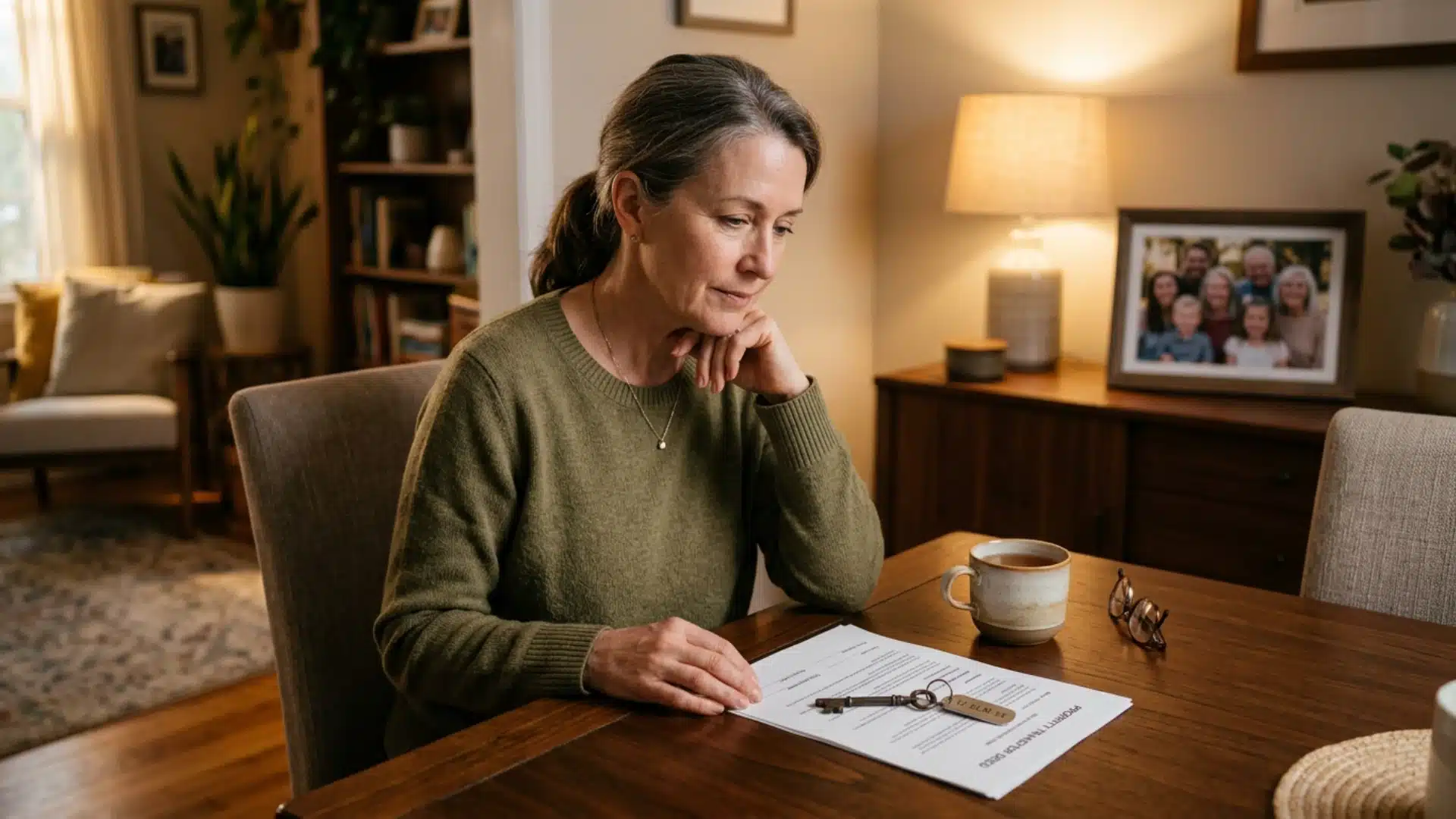
A surviving spouse may still have rights in the family home, even if their name is not on the deed. If the property is considered marital property, those rights do not automatically end when a spouse dies.
Depending on state law, protections may include:
- Inheritance rights
- Elective share rights
- Homestead protections
- Other safeguards against disinheritance
For example, many states allow a surviving spouse to claim part of an estate regardless of what a will says. See Minnesota Statutes 524.2-202 for one example.
Complications can arise when a spouse leaves their interest in the home to children or other beneficiaries, particularly in blended families.
In those situations, the surviving spouse may need to negotiate ownership rights, buy out another interest, or seek a court resolution. A will can transfer only the property the deceased spouse legally owned.
It generally cannot give away property that already belongs to the surviving spouse.
Can You Add Your Name to the Deed?
Yes, you can ask to add your name to the deed if your spouse agrees. This is often one of the clearest ways to show shared ownership while the marriage is still stable.
The process usually involves preparing a new deed with both spouses listed, signing it before a notary, and recording it with the county recorder’s office.
A real estate attorney can help make sure the deed follows state rules.
However, adding your name to the deed does not automatically add you to the mortgage. Lender approval or refinancing may be needed.
There may also be tax effects, so speaking with a tax professional is wise. Couples should also choose the right ownership type, such as joint tenancy or tenancy in common.
If your spouse refuses, consider getting legal advice.
When Should You Speak with a Property Rights Attorney?
Deed and ownership issues often stay hidden until something serious happens, such as a separation, refinancing, death, or a spouse threatening to sell the home.
You should consider speaking with an attorney if:
- Your spouse is threatening to sell or refinance the home without your signature.
- You are separating or divorcing, and the home was purchased during the marriage.
- Your name was never added to the deed, but you helped pay the mortgage, taxes, repairs, or improvements.
- Your spouse passed away, and the will does not seem to recognize your community property interest.
- Your spouse owned the home before marriage, but marital money was later used for payments, renovations, or property taxes.
The law may give unnamed spouses meaningful rights, but those rights usually need to be asserted. They do not enforce themselves.
The sooner you understand your position, the more options you may have.
Conclusion
If your name is not on the deed, that does not automatically mean you have no rights to the home.
A spouse may still have a marital property interest, especially if the home was bought during the marriage or paid for with marital funds.
The deed matters, but it is not the whole story. You may have rights while you are married, during divorce, and after a spouse dies.
But those rights usually need to be understood and asserted before a dispute gets worse.
Too many people wait too long, assume the title controls everything, or sign paperwork without knowing what they are giving up.
Have questions or want to share your experience? Leave a comment below.
Frequently Asked Questions
Can My Spouse Add Someone Else to the Deed Without My Consent?
In many cases, a spouse may not be able to transfer or encumber marital property without the other spouse’s consent. However, the exact rule depends on where you live, how the home is titled, and whether the property is considered marital or separate.
Does Paying the Mortgage Give Me Rights if My Name Is Not on the Deed?
It can. If mortgage payments were made with marital income, a court may treat those payments as marital contributions, even if only one spouse is on the deed or loan.
What is a Quitclaim Deed, and Can It Affect My Rights?
A quitclaim deed transfers whatever ownership interest you may have. If you sign one for the marital home, you may give up important property rights, so do not sign without legal advice.
If My Spouse Bought the House Before Marriage but I Paid for Renovations, Do I Have a Claim?
Possibly. If marital funds were used for renovations, mortgage payments, taxes, repairs, or improvements, you may have a claim for reimbursement, a partial interest, or another form of financial compensation depending on local law.