
A power of attorney can make life easier when someone needs help with legal, health, property, or money decisions.
It allows another person to act on their behalf, but only in the ways the document allows.
That person may sign papers, manage bank accounts, pay bills, handle property matters, or make care choices when the situation calls for it.
In my work reviewing estate planning documents, the most common mistake I see is people choosing a type that does not match what they actually need.
A general POA sounds comprehensive, but it ends the moment someone becomes incapacitated, which is often exactly when help is needed most.
In this post, I will walk you through the types of power of attorney in simple words, so you know what each one does and when it may be used.
By the end, you should have a clearer idea of which option fits a short-term task, future planning, or health care needs.
What is a Power of Attorney?
A power of attorney is a legal document that lets one person give authority to another person to act on their behalf.
The person who gives this authority is called the principal. The person who receives it and acts for them is called the agent.
The agent can take care of tasks based on what the document allows. These tasks may include handling finances, paying bills, managing property, making health care decisions, or handling legal matters.
The scope can be wide or limited, depending on how it is written. Some powers start right away, while others begin only in certain situations.
Different types are used for different needs, so the right choice depends on what kind of help is required and how long that help is needed.
Main Types of Power of Attorney
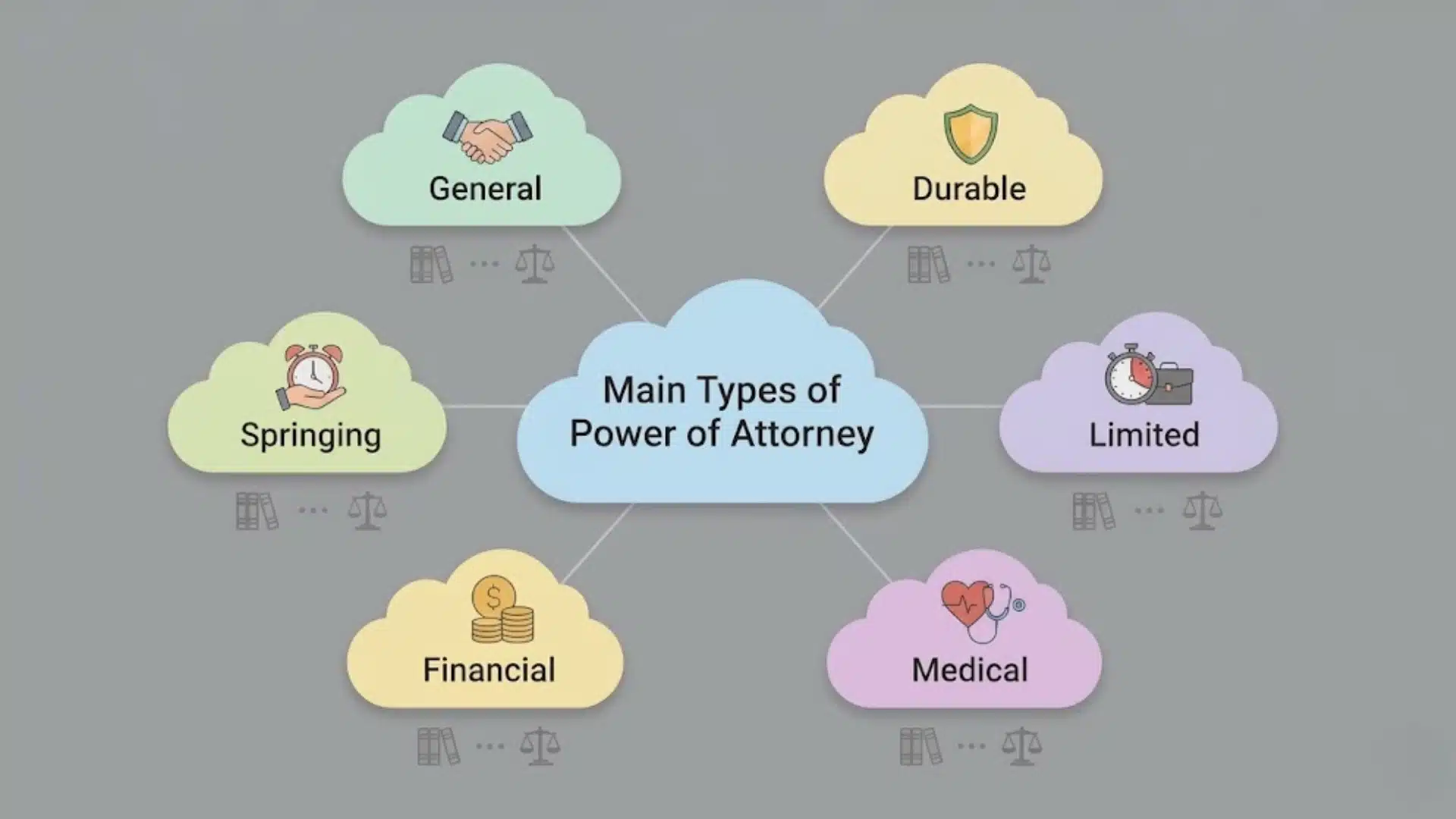
Power of attorney comes in different forms, each designed for a specific need based on control, timing, and the kind of decisions involved.
1. General Power of Attorney
A general power of attorney gives broad authority to handle legal and financial matters. The agent can manage bank accounts, sign contracts, pay bills, and deal with property.
It is typically used when someone needs short-term help or cannot be present to manage their affairs. This type works while the principal is still mentally capable of making decisions.
The catch is its built-in expiration: a general POA ends if the principal becomes incapacitated. That makes it a poor fit for long-term or end-of-life planning, even though people frequently reach for it in those situations.
2. Durable Power of Attorney
A durable power of attorney continues even if the principal becomes unable to make decisions. It is often chosen for long-term planning, especially for health or age-related concerns.
The agent can keep handling tasks like finances or property without interruption. This makes it useful for future security.
The document must clearly state that it is durable, or it may become invalid after incapacity. It offers peace of mind when planning ahead for uncertain situations.
A durable POA is also a key component of a broader estate plan. If you are considering setting up a family trust, your attorney will typically recommend that you have a durable POA in place alongside it.
3. Limited or Special Power of Attorney
A limited or special power of attorney is created for a specific task or for a short period. The agent only has authority for what is written in the document.
This could include selling a house, signing papers, or handling a business deal. Once the task is complete or the time period ends, the authority stops automatically.
It is useful when full control is not needed, and the principal wants to keep most decisions in their own hands.
4. Medical Power of Attorney
A medical power of attorney allows an agent to make health care decisions when the principal cannot do so. This may include choices about treatment, doctors, or care plans.
It becomes active when the person is unable to communicate or understand their condition. The agent is expected to follow the wishes of the principal as closely as possible.
It is often used along with other health care documents to ensure decisions match personal values and needs.
5. Financial Power of Attorney
A financial power of attorney gives authority to manage money-related matters. The agent can handle banking, pay bills, manage investments, file taxes, or deal with property.
It can be written as broad or limited, depending on the situation. Some people use it for daily help, while others set it up for future needs.
Clear instructions in the document help avoid misuse and make sure the agent acts within the allowed scope at all times.
6. Springing Power of Attorney
A springing power of attorney becomes active only when a specific event happens. This event is often linked to the principal becoming unable to make decisions.
Until that point, the agent has no authority to act. It is useful for those who want to keep full control unless a certain condition is met.
The document must clearly define when it takes effect. This avoids confusion and ensures the transition happens only under the right circumstances.
How These POA Types Are Different
Each type of power of attorney serves a different role, based on how much control it gives, when it starts, how long it lasts, and its main purpose.
| Type of POA | Scope | Timing | Duration | Purpose |
|---|---|---|---|---|
| General POA | Broad | Active immediately | Ends at incapacity | Legal and financial matters |
| Durable POA | Broad | Active immediately | Continues after incapacity | Long-term legal and financial needs |
| Limited or Special POA | Narrow | Active immediately | Ends after task or time limit | Specific task or short-term need |
| Medical POA | Narrow | Active on incapacity | Continues during incapacity | Health care decisions |
| Financial POA | Broad or Narrow | Active immediately or later | Depends on terms | Money, property, and tax matters |
| Springing POA | Broad or Narrow | Active on trigger event | Depends on terms | Future planning after a set condition |
Which Power of Attorney Type Fits Each Situation?
Choosing the right type depends on what kind of help is needed, how long it should last, and when the authority should begin.
- Long-term planning: A durable POA is best when ongoing support is needed, even if the person later becomes unable to make decisions.
- Health care decisions: A medical POA is used when someone must step in to make treatment and care choices during serious health situations.
- One specific task: A limited POA fits situations like selling property or signing documents for a single deal or short period.
- Broad short-term help: A general POA allows wide control for legal and financial matters but usually ends if the person loses decision-making ability.
- Future incapacity: A springing POA becomes active only when a set condition is met, often linked to the person becoming unable to manage their affairs.
When Does a Power of Attorney End?

A power of attorney ends in several situations, and knowing them matters as much as knowing when it begins. All types of POA end automatically at the principal’s death.
At that point, the executor of the estate takes over, not the agent. A non-durable POA also ends if the principal becomes mentally incapacitated.
A limited POA ends when the task is completed or the specified date passes.
A springing or durable POA can be revoked by the principal at any time, as long as they still have mental capacity to do so, typically through a written revocation notice sent to the agent and any third parties relying on the document.
Some POAs also include expiration dates set by the principal. If you are relying on an older document, it is worth confirming it is still valid.
Banks and title companies may reject a POA that is more than a few years old, even if it has no written expiration date.
What to Consider Before Choosing a Power of Attorney
Before choosing a power of attorney, a few key points need careful thought. The first is trust in the agent, since this person may handle money, property, or health decisions.
The choice should be someone reliable and clear about their responsibilities. State rules also matter, as laws can differ on how a POA is created, used, and accepted.
It is also important to decide when the power should begin. Some people want it active right away, while others prefer it to start only in certain situations.
If you skip a POA entirely and later become unable to manage your own affairs, a court may need to appoint someone through conservatorship or guardianship. That process is time-consuming, expensive, and removes the principal’s ability to choose who acts for them.
Another factor is the scope of the document. It can cover health care, financial matters, or both, depending on the need.
Taking time to think through these points helps avoid confusion later and ensures the document works as intended.
Common Mistakes to Avoid
Many issues with a power of attorney come from simple oversights, which can lead to confusion, misuse, or the document not working as expected.
- Choosing the wrong agent: Picking someone without full trust or understanding can lead to poor decisions or misuse of authority.
- Making the document too broad: Giving too much control without limits may create risks, especially in financial or property matters.
- Not updating after life changes: Major events like marriage, divorce, or relocation can make the document outdated or less useful.
- Thinking it works after death: A POA ends when the principal dies, so it cannot be used for handling estate matters.
- Not defining clear terms: Unclear language about what the agent can and cannot do is one of the most common sources of family disputes and legal delays.
Conclusion
A power of attorney is not one-size-fits-all. Each form has a different job. Some handle money. Some cover health care.
Some are made for one task, while others are used for future planning.
That is why understanding the types of power of attorney helps you choose a document that matches the situation, not just a general idea of control.
The right choice depends on what the agent needs to do, when the authority should begin, and how long it should last.
Before signing anything, it is smart to check your state rules and make sure the person you choose can be trusted with the role.
Still unsure which option fits your needs best? Share your questions in the comments below.
Frequently Asked Questions
Can a Power of Attorney Be Canceled?
Yes, it can usually be canceled as long as the principal is still mentally capable. The cancellation should be in writing, and banks, doctors, or other involved parties should be informed.
Can More Than One Agent Be Named?
Yes, a person can name more than one agent. They may act together or separately, depending on how the document is written.
Does a Power of Attorney Need to Be Notarized?
In many states, notarization is required or strongly recommended. Some documents may also need witnesses, especially for health care or real estate matters.