
A repaired car can still lose money the moment an accident appears on its history report. That is the part many drivers miss.
A diminished value claim helps recover the drop in resale or trade-in value after someone else damages your vehicle, even when the repairs look complete.
In my work as a personal injury attorney, I have seen how quickly insurers focus on repair bills while ignoring the impact of the crash on the car’s market value.
This blog post explains what diminished value means, why buyers and dealers pay less for accident history, and how the claim can affect your recovery after a crash.
By the end, you will understand when this type of compensation may be worth pursuing.
What Does a Diminished Value Claim Actually Mean?
Diminished value is the loss in a car’s market price after an accident, even when repairs are completed correctly.
It is the difference between what the vehicle was worth before the crash and what it is worth after repairs.
A vehicle can lose value even after the body shop completes the repairs. Buyers, dealers, and lenders often review reports from services such as Carfax or AutoCheck before making an offer.
When an accident appears on that record, the car is usually compared with similar vehicles that have clean histories.
Even if the paint matches, the frame is safe, and the parts were installed correctly, many buyers will still pay less because the vehicle has been in a crash. That difference is the financial loss a claim is meant to recover.
Main Types of Diminished Value After an Accident
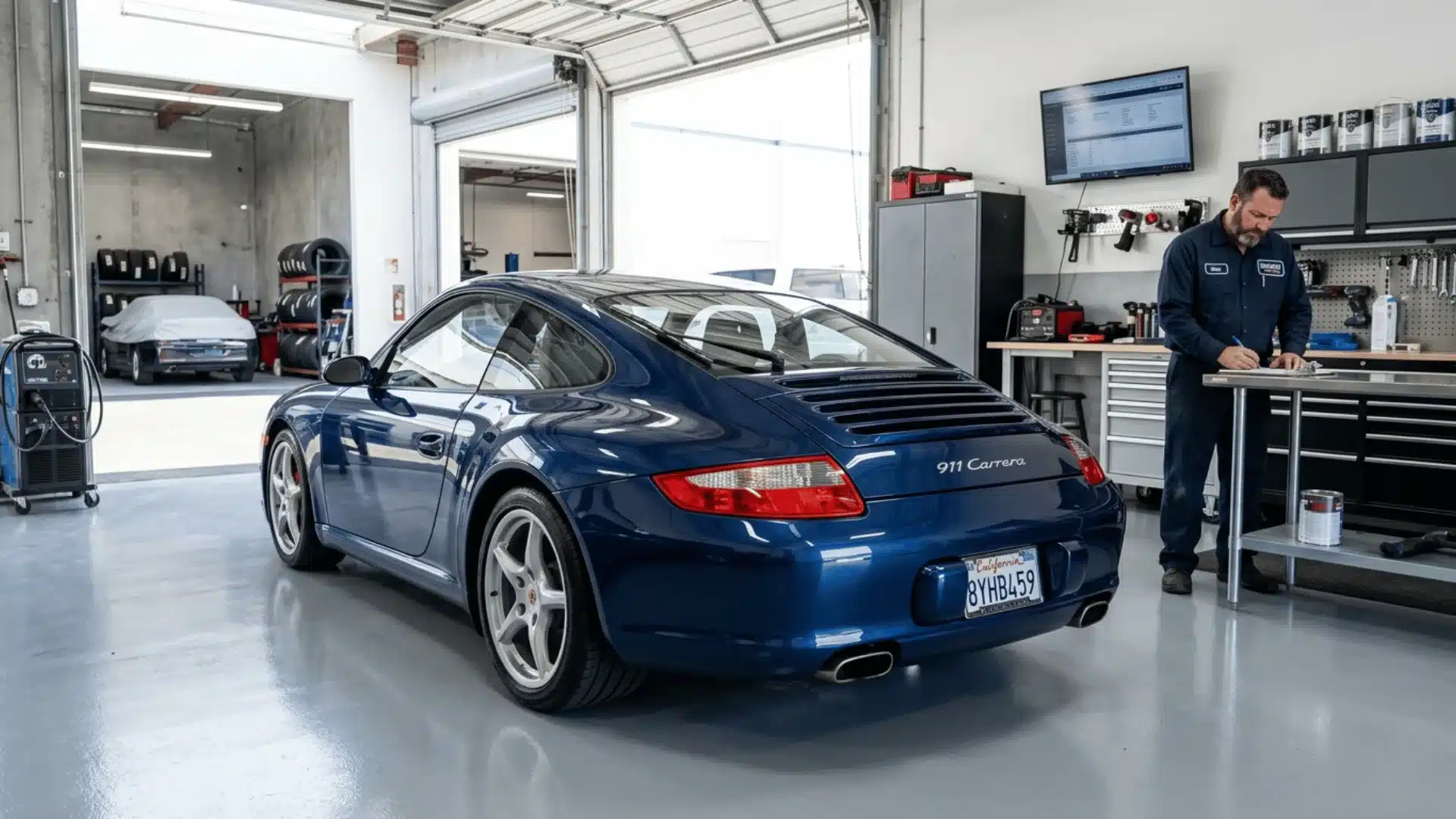
Diminished value is not always measured in the same way. These three types explain where the loss comes from after a vehicle accident, once the repairs are finished.
- Inherent diminished value: the loss of resale value caused by the accident history itself. Even after proper repairs, buyers may offer less because the vehicle now has a crash record.
- Repair-related diminished value: This happens when the repairs reduce the vehicle’s value further. Examples include mismatched paint, poor panel alignment, visible bodywork, or lower-quality replacement parts.
- Immediate diminished value: the drop in value immediately after the accident, before repairs are completed. It reflects the vehicle’s damaged condition at that point.
Knowing the type of loss helps you collect the right proof, explain your claim clearly, and challenge an insurance offer that does not reflect the car’s actual reduced value afterward.
Who Qualifies to File a Diminished Value Claim?
Not every driver can recover diminished value after a crash. A valid claim usually depends on fault, vehicle damage, proof of value loss, and the type of insurance claim involved.
- Driver fault: The accident usually must be caused by another driver. If you caused the crash, the other driver’s insurer will not pay for your vehicle’s lost value.
- Physical damage: The vehicle must have damage that requires repairs. Small incidents with no visible damage, no repair bill, or no loss of market value usually do not support this claim.
- Value loss: You need proof that the car is worth less after repairs. This can come from an independent appraisal, dealer quote, repair records, or comparable vehicle listings.
- Third party: This claim is filed with the at-fault driver’s insurance company. It is the most common way drivers seek diminished value compensation.
- First party: This claim is filed with your own insurance company. Many collision policies limit or exclude diminished value, so the policy language should be reviewed carefully.
- Vehicle type: Newer cars, luxury vehicles, specialty models, and high-demand trucks often lose more resale value after an accident than older vehicles with high mileage.
You can review what an auto accident settlement typically involves to get a broader picture of your recovery options.
How is the Diminished Value Amount Calculated?
Insurance companies often use the 17c Formula to estimate diminished value. This formula starts with the vehicle’s market value before the accident and then reduces it based on the damage level and mileage.
It is not the final value of every claim, but it shows how insurers may arrive at their initial offer.
Diminished Value = Pre-accident market value × 10% × Damage Multiplier × Mileage Multiplier
For example, assume the vehicle was worth $30,000 before the accident, had moderate damage, and had 40,000 miles.
| Step | Calculation | Result |
|---|---|---|
| Pre-accident market value | Starting value | $30,000 |
| Base loss cap | $30,000 × 10 percent | $3,000 |
| Damage multiplier | $3,000 × 0.50 | $1,500 |
| Mileage multiplier | $1,500 × 0.80 | $1,200 |
In this example, the insurer may estimate the diminished value at $1,200. However, this number may be lower than the vehicle’s real market loss.
An independent appraisal can compare repair records, dealer offers, and similar vehicles to show a more accurate value.
How to File a Diminished Value Claim: Step-by-Step Process
The process for filing a diminished value claim is manageable if you follow the right sequence. A careful step-by-step approach helps you avoid weak evidence, low offers, and delays.
1. Document the Vehicle Damage
Start by photographing the vehicle before repairs begin. Capture the front, rear, sides, interior damage, odometer, VIN plate, and close shots of each damaged area.
Save the police report, repair estimate, final invoice, parts list, and any messages from the insurer or body shop.
These records show what happened, what was repaired, and how serious the damage was. Without this proof, the insurer may argue that the loss of value is not supported.
2. Get an Independent Appraisal
Hire a certified appraiser who has experience with diminished value claims. The appraiser should review the repair records, vehicle history, mileage, condition, and local market data.
The report should state the vehicle’s pre-accident value, post-repair value, and the dollar amount of the loss.
This provides stronger support for the claim than an insurer’s basic estimate. A clear appraisal also gives you evidence to use during negotiation.
3. Check the Filing Deadline
Every state has a deadline for property damage claims, often called the statute of limitations. The time limit can vary based on state law, the type of claim, and the facts of the accident.
Check the deadline as soon as possible instead of waiting until repairs are finished. Missing the deadline can completely stop the claim, even when the vehicle has clearly lost value.
Filing early helps protect your right to recover compensation.
4. Send a Demand Letter
Send a written demand letter to the at-fault driver’s insurance company. Include the accident date, claim number, repair records, photos, appraisal report, and the exact amount requested.
Explain that the amount is based on market-value loss, not solely on the insurer’s formula. Keep the tone professional and direct.
Send the letter by email or certified mail so there is a clear record of when the insurer received it.
5. Negotiate With the Adjuster
The adjuster may respond with a lower offer, especially if the insurer relies on the 17c Formula. Review the offer carefully before accepting it.
Compare it with the independent appraisal, repair records, dealer quotes, and similar vehicle listings.
Reply in writing and explain why your amount is better supported. Keep copies of every email, letter, and offer. Written communication makes it easier to prove what was discussed.
6. Escalate the Claim
If the insurer refuses to make a fair offer, consider the next step.
The National Association of Insurance Commissioners (NAIC) provides a direct path to your state’s insurance department complaint portal, and insurers cannot discriminate against you for filing one.
You may file a complaint with the state insurance department, use small claims court if the amount fits the court limit, or speak with a personal injury attorney.
Escalation is most useful when liability is clear, the appraisal is strong, and the insurer still ignores the evidence. Legal help may also be needed when injuries and vehicle damage are connected.
What Insurance Companies Do to Reduce Your Payout?

Insurers may question your evidence, rely on low formulas, or slow the process, so knowing their tactics helps you respond with stronger records afterward quickly.
- Formula limits: Adjusters may present 17c as the final value, but it is only an insurance method. Use an appraisal, repair records, and market comparisons to respond.
- Repair arguments: Insurers may say repairs fully restored the car, but an accident history can still lower resale value. Dealer offers and vehicle reports can show that loss.
- Fault disputes: The insurer may argue you shared fault for the crash. Police reports, photos, witness details, and written records can support your version.
- Delay tactics: Insurers may request repeated documents or take longer to reply. Keep copies of emails, letters, repair bills, appraisals, and offers.
When to Call a Personal Injury Attorney?
Call a personal injury attorney when the claim becomes difficult to resolve on your own.
Legal help may be useful if the insurer denies the claim, refuses to move beyond a low 17c Formula offer, or ignores a strong appraisal.
An attorney can review the denial reason, organize evidence, and negotiate with the insurer.
Help may also be important when the vehicle is newer, luxury, specialty, or worth enough that the value loss is significant.
If the accident also caused injuries, one attorney can handle the injury and property damage issues together.
Legal advice may also help when the at-fault driver has limited insurance coverage after repair costs.
Conclusion
An insurer’s first offer is not always the amount your vehicle truly lost after a crash. The stronger your records are, the better your position becomes.
Repair invoices, photos, a police report, dealer comparisons, and an independent appraisal can help show the real drop in market value.
If the insurer ignores that proof or relies only on a low formula, you still have ways to respond.
A diminished value claim is about recovering the loss that remains after repairs are done.
Have you filed a diminished value claim before? Comment with what worked, what did not, and what you wish you had known earlier.
Frequently Asked Questions
Can I File a Diminished Value Claim if My Car Was Totaled?
If your vehicle is declared a total loss, a traditional diminished value claim does not apply because the car is not being repaired and returned to you.
How Long Does a Diminished Value Claim Take to Resolve?
The timeline varies depending on how quickly the insurer responds, whether an independent appraisal is disputed, and whether the claim moves into negotiation or escalation.
Does the Age of My Car Affect My Diminished Value Payout?
Yes. Older vehicles with higher mileage typically receive lower diminished-value recoveries because their pre-accident market value is already reduced, and buyers apply a smaller discount for accident history on older cars.