

Most people never imagine they could face a homicide charge. Then something goes wrong in a fraction of a second, and the law becomes very real.
A driver runs a red light. Someone mishandles a firearm at a range. A caregiver leaves a child unsupervised near water for a few minutes too long.
None of these people planned to hurt anyone, and that is exactly the point. The law draws a clear line between someone who intended to kill and someone whose reckless or negligent conduct caused a death.
That line is involuntary manslaughter. When you land on the wrong side of it, the consequences can be severe, and understanding what the charge actually means is the first step toward facing it clearly.
In this blog, we’ll take a closer look at where the law draws that line, why these cases are often more complex than they first appear, and the key legal issues that can shape the outcome when a death occurs without intent.
What is Involuntary Manslaughter?
Involuntary manslaughter is the unlawful killing of a person without any intent to cause death. The charge does not require malice, premeditation, or any plan to harm.
What it does require is that the death resulted from conduct the law considers criminally reckless, negligent, or unlawful.
The term itself can feel contradictory. How can a killing be “involuntary” if the person still committed some act? The answer is that the act was voluntary; the death was not.
A person who fires a gun carelessly in a crowded area chooses to pull that trigger. They did not choose to kill anyone.
But the law holds that choosing to act recklessly when a reasonable person would recognize the danger is sufficient to support a criminal charge.
Many states use different labels for similar conduct. “Criminally negligent homicide” and “involuntary homicide” describe the same basic offense across different jurisdictions. The label matters less than the legal elements behind it.
Key Elements of Involuntary Manslaughter
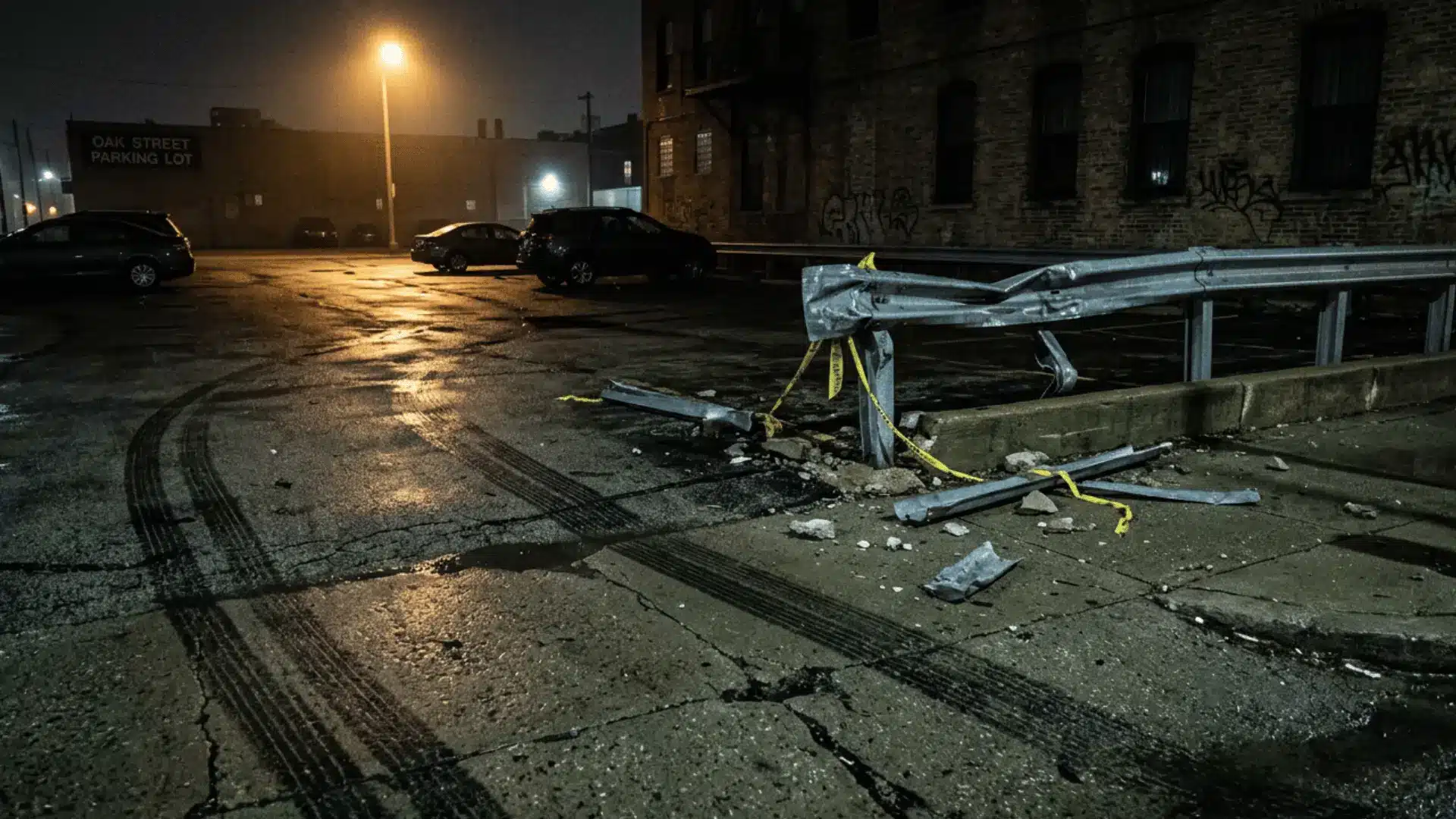
Prosecutors must prove specific legal ingredients before a court can convict someone of involuntary manslaughter. The exact elements vary by state, but three requirements appear in virtually every jurisdiction.
1. A Death Must Have Occurred
Involuntary manslaughter requires proof that a real person died because of the defendant’s conduct.
Prosecutors must show the act directly and proximately caused the death. A death happening nearby or around the same time is not enough.
If a separate medical error, third-party act, or other intervening event breaks the causal chain, the charge may fail because the link between the conduct and the death becomes too remote for criminal liability.
2. No Intent to Kill
Involuntary manslaughter usually involves no intent to kill. The defendant did not plan, want, or deliberately choose the victim’s death.
That lack of intent separates it from murder in most cases. Courts still review the facts closely.
If evidence shows the defendant wanted the person to die, prosecutors may pursue a murder charge instead because the case then points toward intentional or extremely reckless conduct.
3. Reckless, Negligent, or Unlawful Conduct
Simple carelessness is not enough for involuntary manslaughter. The conduct must show criminal negligence, reckless disregard, or an unlawful act that led to death.
Criminal negligence means failing to recognize a serious and unjustifiable risk. Recklessness means knowing the risk and proceeding anyway.
Some states also allow misdemeanor manslaughter when death occurs during a minor unlawful act, depending on the statute.
Involuntary Manslaughter vs. Voluntary Manslaughter vs. Murder
These three charges are related but legally distinct. The difference comes down to intent, premeditation, and the circumstances surrounding the death.
| Charge | Intent to kill? | Premeditation? | Typical cause |
|---|---|---|---|
| First-degree murder | Yes | Yes | Planned, deliberate killing |
| Second-degree murder | Yes | No | Intentional but unplanned killing |
| Voluntary manslaughter | Yes | No | Heat-of-passion killing after provocation |
| Involuntary manslaughter | No | No | Reckless or negligent conduct |
Voluntary manslaughter involves an intentional killing that occurred in the “heat of passion” following a serious provocation. Understanding how this differs from murder charges helps clarify why provocation matters legally.
The person meant to cause harm but acted in a moment of extreme emotional disturbance rather than with a calculated plan.
Courts sometimes describe this as what happens when a reasonable person would “lose control” under similar circumstances. Involuntary manslaughter sits below all of these on the severity scale.
The death was neither planned nor intended. It happened because of dangerous or unlawful conduct, and the law assigns criminal responsibility for that outcome even without a murderous state of mind.
Common Examples of Involuntary Manslaughter Cases
The scenarios that give rise to this charge vary widely, but they all share the same core: someone acted recklessly or negligently, and a person died.
- Impaired driving: A driver under the influence causes a fatal crash. There is no intent to kill, but impaired driving is reckless enough to support involuntary manslaughter.
- Reckless firearm handling: Someone carelessly handles a loaded gun, it discharges, and a bystander dies. Courts may treat this as involuntary manslaughter, especially when intoxication is also involved.
- Negligent supervision: A childcare worker leaves a toddler unattended near a pool despite knowing the child cannot swim. If the child drowns, that failure may meet criminal negligence.
- Workplace safety failures: A foreman orders workers to dismantle scaffolding without safety equipment during strong winds. If a worker falls and dies, that choice may support criminal charges.
- Dangerous pranks: A prank that pushes someone into a dangerous act or causes fatal injuries can support charges. Courts usually reject joking as a defense to reckless conduct.
- Medical or caregiver negligence: A caretaker fails to provide needed medication or supervision, and a vulnerable person dies. Criminal negligence depends on how serious the failure was and the jurisdiction.
- Misdemeanor manslaughter: Some states allow this charge when someone causes death while committing a minor unlawful act, such as a traffic violation, even without clear recklessness.
- Vehicular manslaughter: This charge applies when a driver’s reckless, negligent, or impaired conduct behind the wheel causes a death. Depending on state law, factors such as excessive speeding, running red lights, distracted driving, or DUI can increase the severity of the charge and potential penalties.
Is Involuntary Manslaughter a Felony?
While generally a felony, sentencing outcomes for involuntary manslaughter can range from probation in low-level cases (especially with strong mitigating factors) to several years in prison.
In most U.S. states, involuntary manslaughter (or equivalent offenses like criminally negligent homicide) is classified as a felony.
Though a few jurisdictions permit misdemeanor treatment in limited circumstances, typically involving minor conduct only indirectly causing death.
- Under federal law (18 U.S.C. § 1112), involuntary manslaughter is a felony punishable by a fine and/or up to 8 years in prison. State classifications vary significantly.
- In California, involuntary manslaughter under Penal Code § 192(b) is a felony, though prosecutors have some discretion in charging related lesser offenses based on the facts.
- In Texas, criminally negligent homicide is a state jail felony (Penal Code § 19.05).
- In New York, criminally negligent homicide is a Class E felony (Penal Law § 125.10).
A felony conviction can also trigger collateral consequences, including restrictions on voting rights (state-dependent), firearm ownership, professional licensing, employment, and immigration status.
Prosecutors frequently use involuntary manslaughter charges when murder is difficult to prove or during plea negotiations.
What is the Sentence for Involuntary Manslaughter?

Sentences for involuntary manslaughter vary significantly by state and depend on multiple factors, including the defendant’s criminal history, the level of negligence or recklessness, the circumstances surrounding the death, the victim’s vulnerability, and whether a deadly weapon was used.
A conviction can result in up to 8 years in federal prison (18 U.S.C. § 1112). In California, involuntary manslaughter is punishable by 2, 3, or 4 years in state prison and a fine of up to $10,000.
In Texas, criminally negligent homicide carries a sentence of 180 days to 2 years in state jail. In New York, criminally negligent homicide (a Class E felony) is punishable by up to 4 years in prison.
In Washington, there is up to life imprisonment for reckless conduct; up to 10 years for criminally negligent conduct.
In Alabama, vehicular manslaughter involving intoxication can carry up to 10 years in prison and $15,000 in fines for a first-time offender.
Courts also consider the degree of recklessness, use of a deadly weapon, victim vulnerability, and the appropriateness of probation versus incarceration.
Although involuntary manslaughter carries lighter penalties than murder, a conviction can still result in significant prison time, substantial fines, probation, restitution, and a permanent criminal record that affects employment, housing, and civil rights.
Aggravating and Mitigating Factors that Affect Sentencing
Judges in involuntary manslaughter cases rarely apply a one-size-fits-all sentence. They weigh the circumstances on both sides before settling on a term. Understanding these factors matters whether you are preparing a defense or trying to assess likely outcomes.
| Aggravating factors (increase sentence) | Mitigating factors (reduce sentence) |
|---|---|
| Prior criminal history or prior reckless behavior | No prior criminal record |
| Use of a deadly weapon | Genuine remorse and cooperation with authorities |
| Victim was a child, elderly, or otherwise vulnerable | The conduct was a single lapse, not a pattern |
| Intoxication at the time of the incident | No intoxication involved |
| Extreme recklessness or gross negligence | Minimal deviation from a reasonable standard of care |
| Multiple victims or deaths from the same conduct | Strong community ties and stable employment history |
Probation is possible in low-level cases with strong mitigating factors, particularly for first-time offenders with no history of dangerous behavior. Cases involving gross negligence, intoxication, or a vulnerable victim rarely result in probation alone.
How Prosecutors Decide What to Charge
When a death occurs and no clear intent to kill is evident, prosecutors do not automatically file an involuntary manslaughter charge. They evaluate the available evidence against the full range of homicide charges and choose the one they believe they can prove beyond a reasonable doubt.
Several factors guide that decision:
- Degree of recklessness: If the conduct was extreme enough that the defendant could be said to have “consciously disregarded” a near-certain risk of death, prosecutors may pursue second-degree murder instead. Courts sometimes describe this as “depraved indifference” to human life.
- Physical evidence: Text messages, blood alcohol results, witness accounts, and surveillance footage can all push a case from negligence toward recklessness, or pull it back.
- Prosecutorial discretion: Prosecutors sometimes charge involuntary manslaughter when they believe a murder charge is unlikely to result in a conviction. It is also a common plea negotiation tool: a defendant facing murder may agree to plead guilty to the lesser charge to avoid a more severe sentence.
- Jurisdiction and local charging practices: What constitutes “gross negligence” in one state may meet the recklessness standard in another. Charging practices also vary by county and district attorney.
Understanding what probable cause means and how it shapes early charging decisions can help defendants and their families understand why a case is filed as it is, and whether the initial charge is likely to change as the investigation develops.
Common Defenses to Involuntary Manslaughter Charges
A charge is not a conviction, and several defenses can apply depending on the facts.
- Lack of criminal negligence: The defense argues the defendant’s actions did not amount to criminal negligence. A brief lapse in judgment or attention is insufficient to establish the gross deviation required for criminal liability.
- Causation challenge: The defense may contend that the defendant’s conduct was not the direct cause of death. An independent intervening event could break the causal chain and undermine liability.
- Self-defense: If the defendant acted to protect themselves or another person from an imminent threat, self-defense may apply. The central issue is whether that belief and response were reasonable.
- Lawful act performed lawfully: The defense can argue that the act was lawful and carried out with reasonable care. Without unlawful conduct or unlawful execution, essential elements of the charge may be absent.
- Mistaken identity or insufficient evidence: The prosecution must prove guilt beyond a reasonable doubt. If evidence linking the defendant to the death is weak, unreliable, or inconsistent, the defense may challenge it.
A strong defense depends on the facts of the case, including how probable cause was established, what evidence was collected, and whether law enforcement followed proper procedures.
When assault and criminal charges stem from the same incident, defense strategies can become more complex.
Families affected by such incidents may also pursue a wrongful death claim alongside any criminal case.
When to Contact a Criminal Defense Attorney
If you or someone you know is facing an involuntary manslaughter charge, or if law enforcement is asking questions in connection with a death, getting a criminal defense attorney involved early is critical.
Prosecutors begin building their case as soon as an investigation starts. Statements made to law enforcement without legal counsel can be used against you, even if they seem harmless at the time.
Evidence may be lost, misinterpreted, or challenged if no one is protecting your interests. An attorney can evaluate whether the prosecution can prove criminal negligence, recklessness, and causation beyond a reasonable doubt.
They can also identify weaknesses in the case and assess whether a charge reduction or dismissal is a realistic outcome based on the facts.
Conclusion
Involuntary manslaughter is a serious charge, but it occupies a specific place in the law for a reason.
The legal system distinguishes between someone who planned a killing and someone whose reckless or negligent conduct caused a death they never intended.
That distinction matters enormously for how a case is charged, prosecuted, and ultimately resolved. None of this makes the charge minor.
A felony conviction carries consequences that follow a person for years, and the sentencing ranges across states reflect how seriously courts treat conduct that leads to a death, even an unintentional one.
Do you think involuntary manslaughter laws strike the right balance between accountability and intent? Share your thoughts in the comments below.
Frequently Asked Questions
Can an Involuntary Manslaughter Conviction Be Sealed or Expunged?
Eligibility to seal or expunge an involuntary manslaughter conviction varies by state. Waiting periods differ, often starting after the sentence and probation end, and some convictions may not qualify for expungement.
Can Accidental Death Lead to Involuntary Manslaughter Charges?
Yes, a death may appear accidental from the defendant’s perspective, but prosecutors can still file involuntary manslaughter charges if they believe reckless or criminally negligent conduct contributed to the fatality.
Can Someone Go to Jail for an Accidental Death?
Potentially, if the death resulted from criminal negligence, reckless behavior, or an unlawful act, criminal charges such as involuntary manslaughter may apply. The outcome depends on the specific facts and applicable state law.