
ABOUT THE AUTHOR




Legal terms can be confusing, especially when two words are often used as if they mean the same thing. Bail and bond are among the most misunderstood terms in the criminal justice system. Many people hear them in court cases, news reports, or legal discussions and assume they refer to the same process. In reality, there are important differences that affect how a person is released from custody before trial. Understanding the difference between bail and bond can make legal situations much easier to follow. While both help a defendant remain out of jail while a case moves through the court system, they work in different ways and can involve different financial responsibilities. This blog explains what bail and bond mean, how each one works, the key legal distinctions between them, and what happens when court obligations are not met. What is Bail and How Does it Work? Bail is an amount of money or property that allows a defendant to be released from jail while a criminal case is still pending. It serves as a guarantee to the court that the defendant will return for all required hearings and follow any conditions of release. In most cases, a judge sets the bail amount during the defendant’s first court appearance, often called an arraignment or initial hearing. Once the required amount is paid, either by the defendant, a family member, or another person acting on the defendant’s behalf, the defendant can leave custody and remain free until future court dates. The purpose of bail is to balance public safety and court attendance while recognizing that a person is presumed innocent until proven guilty. If the defendant appears at all scheduled hearings and complies with court requirements, the bail money may be returned at the end of the case, depending on […]
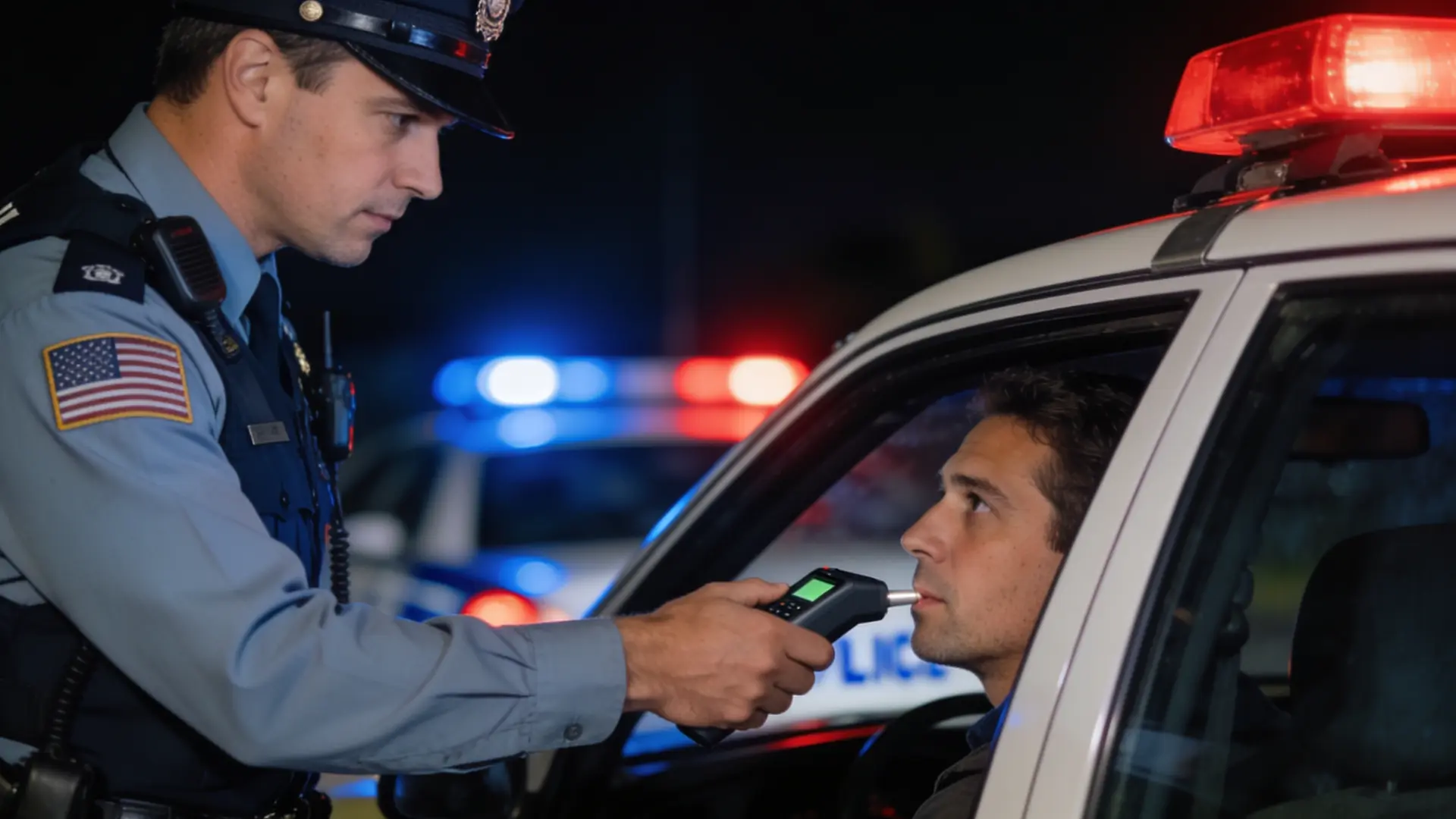
Most people understand there’s a legal alcohol limit. Fewer understand what actually happens when they cross it, and even fewer realize that impairment begins well before that number. The law was built around that reality, and the penalties reflect it. A DUI charge does not resolve quickly or quietly. It triggers criminal proceedings, a separate DMV administrative process, and a range of penalties that can include fines, jail time, mandatory programs, and years of elevated insurance costs. In the more serious cases, it changes the course of a person’s professional and personal life. This blog breaks down what the legal BAC limit means for different types of drivers, what the open container law actually requires, and what you can realistically expect from the legal system if you are charged with exceeding it. What Does the Legal BAC Limit Mean? Blood alcohol concentration is the measure of how much alcohol is present in a given volume of blood. A BAC of 0.08% means there are 0.08 grams of alcohol per 100 milliliters of blood. That might sound abstract, but at that level, the National Highway Traffic Safety Administration documents measurable declines in concentration, short-term memory, speed control, and the ability to process information from multiple sources at once. The 0.08% standard is what’s known as a “per se” DUI. Under per se laws, reaching or exceeding that BAC is sufficient for a DUI charge by itself. The prosecution does not need to prove the driver was behaving erratically or showing obvious signs of impairment. The number alone is enough. All 50 states adopted the 0.08% threshold as a condition of receiving full federal highway funding under the Transportation Equity Act for the 21st Century. What is the Legal BAC Limit for Different Types of Drivers? The 0.08% standard applies to most […]

One split-second decision behind the wheel can change multiple lives forever, and when a fatal crash occurs, the legal consequences can be severe. Across the United States, drivers who cause a death through negligent, reckless, or impaired driving may face serious criminal charges, even when they never intended to harm anyone. While the laws vary from state to state, prosecutors must still prove specific legal elements before securing a conviction. Understanding how vehicular manslaughter laws work is critical for anyone facing an investigation, criminal charges, or questions about liability after a deadly accident. Knowing the legal standards, potential penalties, and available defenses can make a significant difference when navigating these cases. This blog explains charges, penalties, defenses, state differences, Colorado law, and what happens after an arrest in these cases today. What is Vehicular Manslaughter? Vehicular manslaughter is the unlawful killing of another person caused bynegligent, reckless, or impaired driving. Most states treat it as a separate category of homicide that applies only to driving-related deaths. The charge goes by different names depending on the state. Some states call it vehicular manslaughter, others call it vehicular homicide, and some use terms like homicide by vehicle or criminally negligent homicide. A handful of states, including Alabama and Arizona, do not have a dedicated vehicular homicide statute and instead charge fatal crash cases under general manslaughter or homicide laws. Regardless of the label, the prosecution must prove two things: that the driver’s conduct met the legal standard for negligence or recklessness, and that the driving was the direct cause of the death. Both elements are challengeable in court. Types of Vehicular Manslaughter Charges The charge a driver faces depends on what they were doing at the time and how the prosecutor reads the facts of the crash. 1. Gross Negligence Vehicular Manslaughter […]

You slide into the driver’s seat after a beach day in Florida, sandals tossed aside, feet still warm from the sand. Then the question hits: is it illegal to drive barefoot in Florida? Many drivers have heard warnings from parents, friends, or driving instructors, but the real answer is often mixed with myth. Some wonder, is it illegal to drive without shoes, while others ask, is it against the law to drive barefoot at all? It is a small everyday moment, yet nobody wants a traffic ticket or trouble after an accident. Florida roads already come with enough stress, from busy highways to sudden rain. So, before pressing the pedal with bare feet, it makes sense to know what the law actually says and why safety still matters even when something may be legal. Can You Legally Drive Barefoot in Florida? Yes, one can legally drive barefoot in Florida. The law does not require drivers to wear shoes behind the wheel. The Florida Uniform Traffic Control Law does not mention footwear, which means driving barefoot is not a traffic violation. An officer cannot ticket you simply for driving without shoes. The same is true across the United States. No state has a law that specifically bans barefoot driving in a passenger vehicle. This myth likely comes from motorcycle rules in some states, where footwear requirements may apply, and people mistakenly assume the same rule applies to cars. That said, legal does not always mean risk-free. If barefoot driving contributes to a crash, it may still become an issue in a reckless driving case or an insurance claim. Is It Against the Law to Drive Barefoot in Any State? No. It is not against the law to drive barefoot in any U.S. state when operating a regular passenger vehicle. Driving without […]

Organized criminal activity in Texas is not limited to gangs or crime leaders. It can involve everyday people who may not even realize they are part of a group committing a crime. When more than one person works together, the damage often becomes bigger. That is why the law treats it very seriously. Many expect to face charges only for the main offense. But when multiple people are involved, the situation can change fast. Understanding what a racketeering conspiracy is can help clarify how coordinated criminal conduct gets prosecuted at different levels. A lower-level felony can escalate into a more serious one simply because a few individuals coordinate. This is where organized criminal activity in Texas law becomes important. The focus is not just on the act, but on how it was carried out and who was involved. Even small roles can lead to higher charges. Quick answer: Under Texas Penal Code Section 71.02, this offense means committing or planning a listed crime as part of a group of three or more people or a gang. The charge raises the level of the original offense. What is Engaging in Organized Criminal Activity At its core, engaging in organized criminal activity means working with others to commit crimes in a planned or coordinated way. It is not the same as one person acting alone. The key difference is collaboration. When people join together with a shared goal, the law treats it as a bigger threat. Common examples make this easier to understand. A group moving stolen car parts across states. A network committing insurance fraud together. A gang handling drug distribution across different areas. These are not isolated acts. They involve planning, roles, and shared profit. This is not a separate crime by itself. It works as a charge that increases the […]

If someone is arrested or accused of a crime, the first assumption many people make is that guilt must be obvious. Criminal law does not work that way. In Nevada courtrooms, I have seen prosecutors struggle to prove the exact legal elements required for a conviction. A voluntary act, a criminal mental state, and a direct connection between the two form the foundation of most criminal offenses. Some charges also require proof that actual harm occurred. An arrest alone does not establish guilt. Every element of a charge must be supported with evidence beyond a reasonable doubt. That legal structure matters whether someone is studying criminal law, trying to understand a case, or facing charges in Las Vegas or anywhere in Clark County. In criminal cases, the smallest legal detail can change the outcome completely. What Are the Elements of a Crime? Criminal law does not treat wrongdoing as a vague idea. It breaks every offense into specific parts that must be proven in court. These parts, known as the elements of a crime, form the foundation of any criminal charge. A court requires clear proof of each element before reaching a guilty verdict. Typically, this includes a voluntary act, a certain mental state, and a connection between the act and intent. In some offenses, particularly result-based crimes, proof of resulting harm is also required. If even one of these is missing, the case weakens significantly. This structured approach ensures fairness and prevents decisions based on assumptions. Understanding these elements helps read legal cases more accurately and recognize how the justice system evaluates responsibility. For anyone dealing with a criminal charge in Nevada, this framework is the starting point for any defense strategy. 4 Key Elements of a Crime Criminal law is commonly taught by breaking crimes down into four […]

Searches for “Martha Stewart prison” or “Martha Stewart jail” usually come from a place of curiosity that goes far beyond news headlines. People want to know what really happened during that period, especially how a globally recognized figure adjusted to life in a federal prison. There is a strong interest in understanding the reality behind the situation rather than just the legal outcome. Questions often focus on her daily routine, the type of work she did, how she interacted with other inmates, and what kind of mental and emotional challenges she faced during that time. Here, I will bring all of that together in one place. I will cover the legal case that led to her sentence, what daily life looked like inside the facility, the responsibilities she handled, and the reflections she shared after release. I will also explain how this phase influenced her public image and long-term career. Why Did Martha Stewart Go to Prison? Martha Stewart’s legal case in 2004 became one of the most talked-about corporate scandals involving a public figure. The issue started with a stock sale involving ImClone Systems, a biotech company. Investigators questioned whether the sale was based on insider information. While many expected an insider trading conviction, the final charges were different. According to the U.S. Department of Justice official case announcement, she was found guilty of: Obstruction of justice Making false statements to investigators Conspiracy related to misleading authorities The key issue was not just the trade itself but the attempt to cover up details during the investigation. This distinction played a major role in the court’s final decision. Cases like the Casey Anthony trial show how public interest in high-profile legal cases goes far beyond the courtroom verdict. Martha Stewart Prison Sentence Breakdown Martha Stewart received a sentence that included […]

Most murder cases go cold because there is nothing to work with, no witnesses, no footage, no leads. The Delphi case was different, and in some ways, that made it harder to bear. Investigators knew what the suspect looked like. The public knew what his voice sounded like. And for five and a half years, he walked free anyway. Few true crime cases have gripped the American public the way Delphi did, not because it was unsolvable, but because it felt like it should have been solved sooner. The evidence was there. The answer was close. What finally broke the case wasn’t new evidence. If you’ve searched for crime scene photos, wondered what the video actually showed, or want to understand what finally broke the case, this is the clearest breakdown available, built entirely from official sources. What Happened on February 13, 2017 On the afternoon of February 13, 2017, two young girls from Delphi, Indiana, Abigail Williams, 13, and Liberty German, set out to hike the Monon High Bridge Trail, a popular local trail running through Carroll County. They were dropped off near the Mears Road trailhead around 1:00 PM. They were never seen alive again. When the girls weren’t picked up that afternoon, family members reported them missing. Volunteer searchers discovered both girls’ bodies the following morning, Valentine’s Day, February 14, in a wooded area near Deer Creek, not far from the trail. Carroll County Coroner Brian Harmon confirmed both deaths were homicides. What set this case apart from every other in Carroll County history: before she was killed, Liberty German had used her phone to secretly record the man who followed them onto the bridge. Carroll County Prosecutor Nicholas McLeland later described it as “arguably the biggest piece of evidence that we had.” That footage would drive […]

One moment can change everything for a family, a community, and even an entire country. That is exactly why the case of Summer Wells continues to stay in people’s minds years after her disappearance. Many readers searching for a Summer Wells update still hope for answers, while others are trying to understand how a young child could suddenly vanish without a clear explanation. Questions about whether Summer Wells was found continue to spread across social media, news reports, and online discussions, often mixed with rumors and emotional reactions. The story of Summer Wells is more than a missing-person case. It is a painful reminder of uncertainty, unanswered questions, and the fear that comes when a child disappears. Even today, people continue following every update closely, hoping that one day the mystery surrounding Summer Wells will finally be solved. Who is Summer Wells? She is the missing girl from Rogersville, Tennessee, whose disappearance became one of the most talked-about missing child cases in the United States. Category Details Full Name Summer Moon-Utah Wells Date of Birth February 4, 2016 Age at Time of Disappearance 5 years old Hometown Rogersville, Tennessee, United States Parents Donald Wells and Candus Wells Date Reported Missing June 15, 2021 Current Case Status Summer Wells remains missing, and the investigation is still active. What Happened to Summer Wells? Summer Moon-Utah Wells was 5 years old when she disappeared from her family’s home on Ben Hill Road in the Beech Creek community of Hawkins County, Tennessee. She had spent the afternoon with her mother, Candus Bly, and her grandmother, planting flowers near a camper. When they finished, Summer went back inside to play with her toys in the basement. Her mother checked on her minutes later and called her name, but Summer did not respond. When Candus went […]

A teenager’s confession changed the course of one of America’s most debated criminal cases, but the questions surrounding Brendan Dassey never truly disappeared. Years after Making a Murderer brought global attention to his conviction, many people still want answers about what happened to him and whether justice was ever fully served. If you are wondering where Brendan Dassey is now, the story goes far beyond a simple prison update. His case sparked national debate over juvenile interrogations, false confessions, and the treatment of vulnerable defendants within the legal system. Understanding where he is today also means understanding the legal battles, public controversy, and lasting impact his case continues to have across the United States. Who is Brendan Dassey? Brendan Ray Dassey was born on October 19, 1989, in Manitowoc County, Wisconsin. He grew up near his uncle, Steven Avery, whose earlier wrongful conviction had already brought attention to the Avery family. Dassey was 16 years old when investigators connected him to the 2005 disappearance and murder of Teresa Halbach, a photographer who visited the Avery Auto Salvage property on October 31, 2005. School records later showed Dassey had significant language-based learning disabilities and below-average verbal comprehension skills. His case became widely known through Making a Murderer, which focused heavily on his police interrogations and the controversy surrounding his confession. Why was Brendan Dassey Convicted? Brendan Dassey was convicted in 2007 for first-degree intentional homicide, second-degree sexual assault, and mutilation of a corpse in connection with Teresa Halbach’s murder. He was arrested in March 2006 after several police interrogations conducted while he was still a teenager. Prosecutors claimed he helped Steven Avery commit the crimes on the Avery Salvage Yard property. No forensic evidence directly linked Dassey to the crime scene. His conviction depended mainly on a videotaped confession that later […]