

Something happened, and it left more than a visible mark. You are wondering whether an emotional distress lawsuit even makes sense for what you went through.
The honest answer depends less on how bad it felt and more on where you live and what the other person actually did.
Courts split these claims into two paths with very different proof requirements, and the rules on which path works in your state can be stricter, or looser, than you would guess.
Filing windows move faster than most people expect too.
Here is what actually decides whether your case holds up, what your state specifically allows, and when filing genuinely makes sense.
What is an Emotional Distress Lawsuit?
An emotional distress lawsuit is a civil claim seeking compensation for psychological harm, not just medical bills or lost wages.
Courts recognize it as a real, compensable injury, but only when it is tied to specific legal conduct and backed by evidence.
It is rarely a lawsuit on its own. In most cases, it is one type of damages sought within a larger claim, like a car accident or workplace harassment case.
It only becomes its own standalone lawsuit when the conduct behind it meets a high bar, which is where the two legal paths below come in. What makes this different from just having a hard time is proof.
In practice, the cases that hold up are the ones where the distress is documented as it happens, not reconstructed months later from memory.
Courts want a clear, contemporaneous link between what the other person did and the distress you are dealing with now. That link, more than the severity of your feelings, is what determines whether a case exists at all.
Does Your State Allow You to Sue for Emotional Distress?
Quick answer: it depends entirely on your state and which type of claim you are filing.
Every state allows intentional infliction of emotional distress (IIED) as a standalone claim when the conduct is extreme and outrageous.
Far fewer states allow a standalone negligent infliction of emotional distress (NIED) claim, and the ones that do attach strict conditions, like requiring you to be a close family member who witnessed the injury firsthand.
1. California
California does not require a physical injury for a bystander claim, but it does require you to clear a specific three-part test.
Under California’s bystander test, a plaintiff must be closely related to the person who was injured, present at the scene and aware in the moment that the injury was happening, and left with distress beyond what an unrelated witness would feel.
IIED claims do not need to meet any of this. They can stand on their own without a bystander test at all, as long as the conduct itself was extreme and outrageous.
2. Texas
Texas is one of the strictest states here.
Its Supreme Court held in the Boyles v. Kerr ruling that there is no general duty in Texas not to negligently inflict emotional distress, which means a standalone NIED claim generally does not work.
A claimant can typically only recover mental anguish damages when it is connected to the breach of some other legal duty, like a separate negligence or personal injury claim.
IIED remains available on its own.
3. New York
New York recognizes NIED through two routes: a bystander theory and a direct-duty theory.
Direct-victim claims generally require physical harm or a direct duty owed to the plaintiff, while purely psychological harm with neither is hard to pursue.
For family members, the zone of danger rule allows a claim if the family member was threatened with bodily harm or witnessed a relative’s death or serious injury. Deadlines differ sharply by claim type.
IIED carries a one-year deadline, NIED tied to a personal injury claim carries three years, and claims against government entities require a notice within 90 days.
4. Florida
Florida follows the impact rule, one of the stricter physical-injury requirements in the country.
A person generally needs a direct physical impact that causes physical harm to recover for emotional distress in a negligence claim.
There are exceptions, though. Intentional torts do not require proof of physical effects to satisfy the rule.
Florida also allows recovery when someone witnesses a severe injury to a close family member and suffers a clear physical manifestation of the trauma, per Florida’s impact rule exceptions.
5. Illinois
Illinois splits its rule by role. Courts generally apply the zone of physical danger rule to bystander claims, while direct-victim claims often require a contemporaneous physical impact or injury.
For bystanders specifically, the person must have been close enough to face an immediate threat to their own safety and have genuinely feared physical harm, not just witnessed something upsetting from a distance.
The pattern across all five states: physical-injury and proximity requirements vary wildly, IIED is consistently more permissive than NIED, and deadlines are claim-specific, not one-size-fits-all.
This is exactly why a local attorney’s read matters more than any general summary, including this one.
Negligent vs. Intentional Infliction of Emotional Distress
Now that you know how your state treats these claims, it helps to understand the two underlying legal paths themselves.
Which one applies depends on what the other person actually did: was it careless, or was it deliberate?
Negligent Infliction of Emotional Distress (NIED)
This path applies when someone’s carelessness caused your trauma. Think a car crash, not a targeted attack. Some states require your distress to show up physically.
Panic attacks, insomnia, or a racing heart count.
Without that physical link, some courts will not recognize the claim on its own, as the state breakdown above shows. It usually rides alongside a personal injury case instead.
Intentional Infliction of Emotional Distress (IIED)
This path is different. It requires conduct that is extreme and outrageous, not just careless.
Courts use that phrase for behavior that goes far past normal decency. Stalking, severe harassment, and direct threats all qualify.
This claim can stand on its own. You do not need an underlying accident or physical injury to file it. The bar is high, though. A rude comment or bad customer service will not meet it.
What Trade-Offs Should You Weigh Before Filing?
Compensation for emotional distress can swing wildly from case to case. That is not a fluke.
Averages you see quoted often mix cases that have nothing in common. Some involve physical injury alongside the distress; others do not.
In our practice, that single difference tends to change the payout range more than almost anything else in the file.
Pain and suffering calculations already vary by severity and documentation, and emotional distress damages move on those same factors, just without a broken bone to point to.
Jurisdiction matters too, and not just in the ways covered above.
The zone of danger rule that limits recovery in New York, for example, first took shape in a federal railroad case rather than an ordinary accident claim.
In Consolidated Rail Corp. v. Gottshall, the Supreme Court adopted the zone of danger rule for federal railway workers, and versions of that same standard now shape how several states decide these claims.
The lesson holds regardless of the specific case: the legal standard a court applies can shift a claim’s outcome as much as the facts themselves.
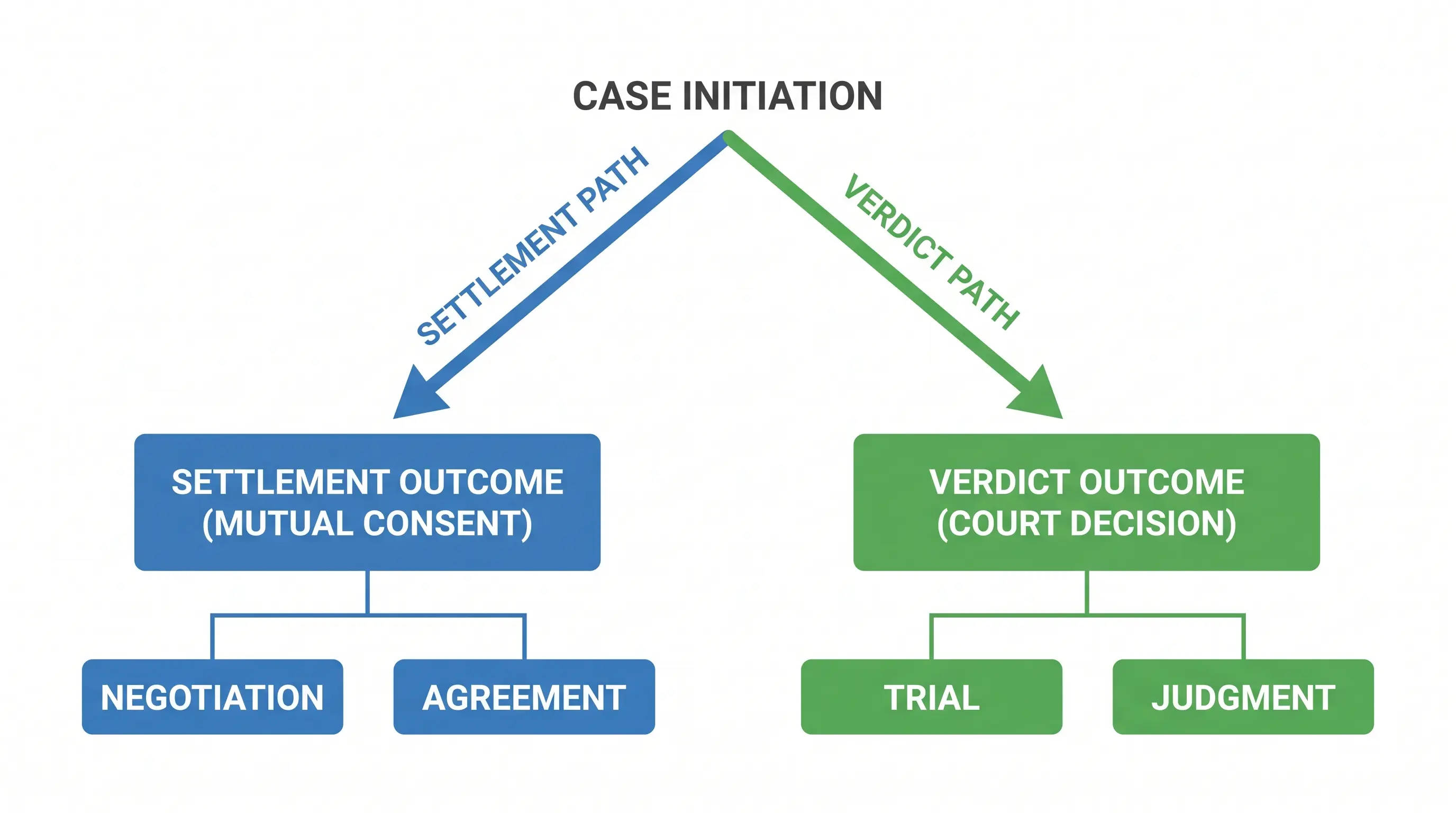
Then there is settlement versus verdict. A quiet settlement often lands lower than what a jury might award at trial.
Blending the two into one number hides more than it reveals. This is why comparing your situation to a single reported average rarely helps.
Your case has its own mix of factors, and in more serious cases, courts sometimes separate punitive damages from your basic compensation entirely, which can widen the range even further.
Filing also costs more than money. It takes time, and it can mean reliving painful details in depositions or in court.
Weigh that against what a realistic outcome looks like for someone in your specific circumstances, not the headline number.
A case with strong documentation and a clear at-fault party looks different from one built on a single upsetting incident.
Before deciding, get a straight read on where your case actually falls. That matters more than any number floating around online.
What Conditions Change Whether You Actually Have a Case?
Having emotional distress isn’t the same as being able to prove it. Courts need evidence that supports your claim, not just your description of what happened.
The strength of a case usually depends on a few key conditions:
1. How Well You Can Document Your Distress
Medical records, therapy notes, and a clear timeline can help show that your symptoms started after the event and continued over time.
Consistency matters more than the number of documents. If your records tell the same story, your claim is easier to support.
2. How Quickly You Seek Help
Timing can affect how a court views your claim. Waiting a long time before getting medical or mental health support may raise questions about how severe the distress was.
For example, if you wait eight months before seeing a therapist, the other side may argue that your symptoms were not as serious as you claim.
3. Whether You Have a Physical Injury
A physical injury can change what type of claim you can bring. Some states limit emotional distress claims unless they are connected to a physical harm or another recognized legal claim.
4. Where You File Your Case
The state where you bring the claim affects the rules, evidence requirements, and deadlines. Laws around emotional distress claims vary widely by location.
5. Whether You Act Within the Legal Deadline
The time you have to file is usually limited, often ranging from one to three years depending on the state and type of claim. Missing that deadline can end your case before a court ever considers the strength of your evidence.
Your experience may be real, but the legal system requires proof in a specific form. Evidence built early and consistently usually gives your claim a stronger foundation.
When Is It Actually Worth Suing for Emotional Distress?

A standalone emotional distress claim may be worth pursuing when your documentation is consistent, and the other person’s actions meet the legal requirements in your state.
If your situation does not meet that standard, it may make more sense to include emotional distress as part of an existing injury claim rather than filing a separate lawsuit.
The difficult part is knowing where your case falls. Most people cannot judge the strength of their claim on their own, and that is common.
An attorney can compare your evidence with the rules in your state and help you understand whether your situation is likely to qualify.
Timing matters too. Legal deadlines can limit your options, even if you have strong evidence.
Speaking with someone before that deadline passes gives you more choices than waiting until after you have tried to handle everything yourself.
How to File an Emotional Distress Lawsuit?

Filing isn’t a single form. It’s a sequence of steps, and skipping or rushing any of them can weaken a case before it starts.
Step 1. Get Support and Identify Your Legal Claim
Start by getting medical or mental health support to address your symptoms and create an early record connecting them to the event.
Then determine whether your situation fits negligent infliction of emotional distress (NIED) or intentional infliction of emotional distress (IIED), since the legal requirements differ.
Step 2. Gather Evidence and Check Legal Deadlines
Build a detailed record of what happened, including medical records, therapy notes, messages, emails, and witness observations.
At the same time, confirm your state’s statute of limitations and check whether special notice rules apply, especially if a government entity is involved.
Step 3. Speak With an Attorney and Consider Settlement
Consult a personal injury or civil litigation attorney to evaluate your claim, evidence, and filing options.
Knowing what a personal injury lawyer does day to day, gathering records, dealing with insurers, valuing a claim, helps set realistic expectations before that first meeting.
Before going to court, your attorney may send a demand letter or attempt settlement discussions to resolve the dispute.
Step 4. File the Lawsuit and Enter Discovery
If settlement does not resolve the matter, your attorney files a complaint in the appropriate court. During discovery, both sides exchange evidence, answer questions, and may take depositions to build their cases.
Step 5. Resolve the Case Through Settlement or Trial
Many emotional distress claims settle during or after discovery. If both sides cannot agree, the case proceeds to trial, where a judge or jury reviews the evidence and decides the outcome.
Wrapping Up
An emotional distress lawsuit depends on more than how painful the experience felt.
The strongest claims usually have a clear legal basis, steady documentation, and a timeline that connects the event to the distress that followed.
State rules matter too, since some places allow broader claims while others require physical injury, close family connection, or a separate legal duty.
That is why payout averages and general online examples rarely tell you what your own case is worth. Your facts, records, deadline, and local law decide the answer.
If you think your distress may qualify, gather your records, write down the timeline, and speak with a local attorney before your filing window closes.
Frequently Asked Questions
What is the Average Payout for Emotional Distress?
Payouts vary too much to rely on one number. They depend on whether physical injury was involved, how strong your documentation is, and where you filed. A case tied to a serious accident often settles differently than a standalone claim. Talk to an attorney about what fits your situation.
What Evidence Do You Need to Prove Emotional Distress?
Courts look for consistency over time, not a single strong piece of proof. Medical records and therapy notes matter, along with a timeline showing when your symptoms began. Statements from family, friends, or mental health professionals can back up that timeline and show how the distress has affected your daily life.
What Qualifies as Emotional Distress Under the Law?
It depends on which claim you’re filing. Negligence-based claims often need symptoms tied to an accident, sometimes with physical signs like insomnia or panic attacks. Intentional claims need conduct that’s extreme and outrageous, not just upsetting. General distress without either element usually won’t meet the legal bar.
How Long Do I Have to File an Emotional Distress Lawsuit?
Deadlines depend on your state and typically run from one to three years after the incident. That window can be shorter than you expect. Confirm your exact deadline with a local attorney early. Waiting to check can cost you the right to file at all.
Does California or Texas Allow an Emotional Distress Lawsuit?
California allows both direct victim and bystander negligent infliction claims, alongside intentional infliction claims for outrageous conduct. Texas is stricter: courts generally will not recognize a standalone negligent infliction claim unless it ties back to another legal duty, though intentional infliction claims remain available in both states.