
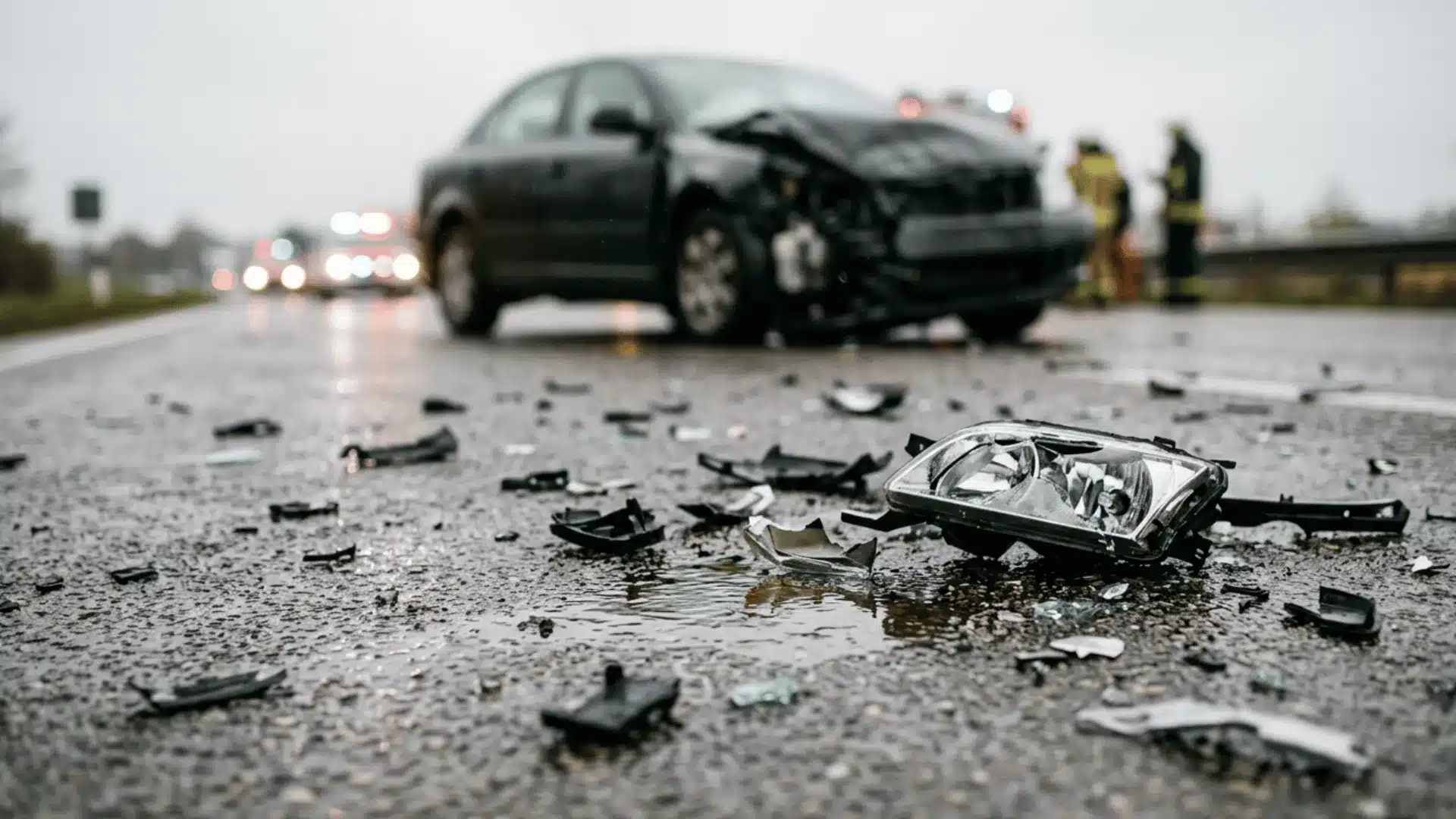
One split-second decision behind the wheel can change multiple lives forever, and when a fatal crash occurs, the legal consequences can be severe.
Across the United States, drivers who cause a death through negligent, reckless, or impaired driving may face serious criminal charges, even when they never intended to harm anyone.
While the laws vary from state to state, prosecutors must still prove specific legal elements before securing a conviction.
Understanding how vehicular manslaughter laws work is critical for anyone facing an investigation, criminal charges, or questions about liability after a deadly accident.
Knowing the legal standards, potential penalties, and available defenses can make a significant difference when navigating these cases.
This blog explains charges, penalties, defenses, state differences, Colorado law, and what happens after an arrest in these cases today.
What is Vehicular Manslaughter?
Vehicular manslaughter is the unlawful killing of another person caused bynegligent, reckless, or impaired driving. Most states treat it as a separate category of homicide that applies only to driving-related deaths.
The charge goes by different names depending on the state. Some states call it vehicular manslaughter, others call it vehicular homicide, and some use terms like homicide by vehicle or criminally negligent homicide.
A handful of states, including Alabama and Arizona, do not have a dedicated vehicular homicide statute and instead charge fatal crash cases under general manslaughter or homicide laws.
Regardless of the label, the prosecution must prove two things: that the driver’s conduct met the legal standard for negligence or recklessness, and that the driving was the direct cause of the death.
Both elements are challengeable in court.
Types of Vehicular Manslaughter Charges
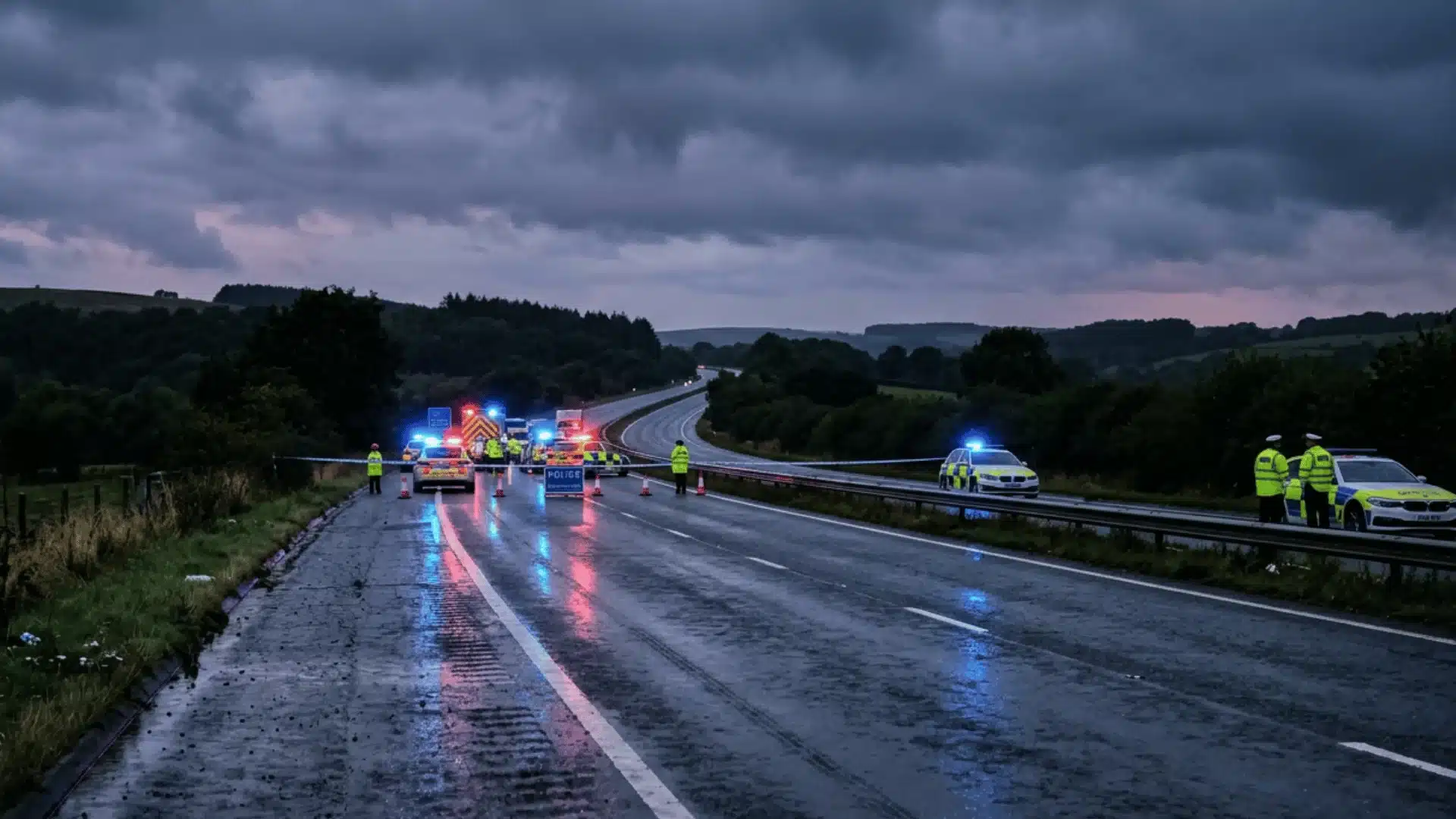
The charge a driver faces depends on what they were doing at the time and how the prosecutor reads the facts of the crash.
1. Gross Negligence Vehicular Manslaughter
Gross negligence vehicular manslaughter applies when a driver knowingly engages in extremely dangerous conduct and shows a conscious disregard for human life.
Unlike a simple mistake, the driver recognizes the risk but proceeds anyway. Common examples include street racing, excessive speeding through residential neighborhoods, or repeatedly running red lights.
Because the conduct demonstrates an extreme departure from reasonable behavior, most states classify this offense as a felony carrying significant prison penalties.
2. Ordinary Negligence Vehicular Manslaughter
Ordinary negligence vehicular manslaughter involves a driver’s failure to exercise the level of care that a reasonably prudent person would use under similar circumstances.
Examples include distracted driving, running a stop sign, failing to yield, or making an unsafe lane change.
Although the conduct is less blameworthy than gross negligence, criminal charges may still apply when the negligence directly causes a fatality, depending on state law and the specific facts.
3. DUI-Related Vehicular Homicide Cases
When a driver causes a fatal crash while impaired by alcohol or drugs, the offense is usually treated more seriously than other vehicular manslaughter cases.
Many states have specific DUI-homicide laws that impose enhanced felony penalties. Impairment can result from alcohol, illegal drugs, prescription medications, or certain over-the-counter substances.
Prior DUI convictions, high blood alcohol levels, and other aggravating factors often lead to harsher charges and longer sentences.
First Degree Manslaughter vs. Second Degree Vehicular Manslaughter
Many states recognize different degrees of vehicular manslaughter, and the degree determines the severity of the felony classification and potential prison sentence.
The distinction usually depends on two factors: the level of danger involved in the driving and whether alcohol or drugs played a role.
- A driver who causes a death through ordinary negligence may face a misdemeanor or a lower-level felony charge.
- In contrast, a driver who was intoxicated, street racing, or acting with gross recklessness is more likely to face a higher-degree felony.
Prosecutors have significant discretion when deciding which charges to pursue. The charge filed at arrest is not always the one that ultimately reaches trial.
Defense attorneys often negotiate with prosecutors, and charges may be reduced or amended as evidence is reviewed.
In especially egregious cases, some prosecutors have bypassed vehicular homicide statutes and pursued second-degree murder charges when the driver’s conduct demonstrated extreme disregard for human life.
Not all states use formal “first degree” and “second degree” labels for vehicular cases; many classify offenses by felony level or specific enhancements instead.
Vehicular Manslaughter Penalties and Prison Sentences
Sentences vary widely by state, but some general ranges apply across most jurisdictions.
| Charge type | Typical felony class | Prison range | Notes |
|---|---|---|---|
| Ordinary negligence (non-DUI) | Misdemeanor to Class 4 felony | Up to 1-6 years | Varies significantly by state |
| Gross negligence (non-DUI) | Class 3-4 felony | 2-10 years | Most states treat it as a felony |
| DUI-related vehicular homicide | Class 2-3 felony | 4-20 years | Alabama 10+ yrs; Texas up to 20 yrs |
Beyond prison, a conviction typically results in license revocation, heavy fines, mandatory parole after release, and a permanent felony record.
That record can affect employment, housing, professional licenses, and immigration status for years after a sentence ends.
Aggravating circumstances, including prior DUI convictions or the death of multiple people, can increase sentences significantly.
Defense Strategies Against Vehicular Manslaughter Charges

A successful defense usually focuses on creating reasonable doubt about whether the driver acted negligently or recklessly, and whether their actions directly caused the fatality. These are not the same argument, and a competent defense attorney will examine both independently.
1. Challenging Causation
The prosecution must prove that the driver’s conduct directly caused the death. A defense attorney may challenge this by pointing to other possible causes, such as another driver’s actions, unsafe road design, vehicle defects, or sudden hazards.
If the evidence shows that something else contributed to the fatal crash, it may weaken the prosecution’s theory and create reasonable doubt.
2. Mechanical Failures and Road Conditions
Mechanical issues and unsafe road conditions can play a major role in fatal crashes.
Brake failure, tire blowouts, steering problems, poor signage, dangerous intersections, bad lighting, or severe weather may show that the accident was not caused solely by the driver.
These factors do not automatically defeat the charge, but they should be carefully reviewed before any plea or trial decision.
3. Independent Accident Reconstruction
An independent accident reconstruction can be critical in a vehicular manslaughter case. Defense experts may study skid marks, impact points, vehicle damage, road conditions, speed estimates, and crash data to test the prosecution’s version of events.
Police reports are not always complete or accurate. A separate reconstruction may reveal facts that support the defense and challenge the state’s conclusions.
4. Disputing Negligence or Recklessness
A defense may also focus on whether the driver’s conduct actually met the legal standard for negligence or recklessness. Not every fatal crash is a crime.
Some accidents happen because of sudden medical emergencies, unexpected hazards, another driver’s mistake, or events no careful driver could avoid. If the conduct was not criminally careless, the prosecution may struggle to prove the charge.
5. Challenging DUI Evidence
In DUI-related vehicular manslaughter cases, the defense may challenge how impairment evidence was collected, tested, and interpreted.
Breath machines can produce unreliable results if they are not properly maintained or calibrated. Blood samples may be contaminated or mishandled.
Medical conditions can also affect readings. Field sobriety tests in Las Vegas and Clark County must be reviewed closely for errors.
6. Unlawful Police Conduct
Police must follow constitutional rules during every stage of a vehicular manslaughter investigation.
If officers lacked reasonable suspicion for a stop, did not have probable cause for an arrest, or obtained evidence through improper procedures, the defense may seek to suppress that evidence.
When key evidence is excluded, the prosecution’s case can become much weaker before trial.
7. Contributory Factors From Third Parties
Fatal crashes often involve more than one contributing factor. Other drivers, pedestrians, vehicle owners, trucking companies, repair shops, maintenance providers, or government agencies may have played a role in the accident.
A defense attorney may investigate these outside factors to show that the defendant was not fully responsible. This can create doubt about legal causation and criminal liability.
Vehicular Manslaughter in Colorado: What the Law Says?
Colorado does not use the term “vehicular manslaughter.” The official charge is vehicular homicide under C.R.S. § 18-3-106. It applies when a driver causes a death through reckless driving or while under the influenceof alcohol or drugs.
Reckless-driving vehicular homicide is a Class 4 felony, punishable by 2-6 years in prison and fines of $2,000-$500,000. DUI-related vehicular homicide is a Class 3 felony, carrying 4-12 years in prison and fines of $3,000-$750,000.
Both convictions trigger mandatory parole and driver’s license revocation, and sentences may be doubled for extraordinary aggravating circumstances.
Colorado’s manslaughter statute (C.R.S. § 18-3-104) or even second-degree murder charges may apply in extreme cases. DUI-based vehicular homicide is strict liability; prosecutors need only prove impairment contributed to the death.
Understanding field sobriety test results and how they were administered is often a starting point in Colorado DUI-related cases.
What Happens After a Vehicular Manslaughter Arrest?
After an arrest for vehicular manslaughter, the criminal process typically moves quickly. A first appearance usually occurs within 24–72 hours , where a judge informs the defendant of the charges and sets bail.
Next is the arraignment, where the defendant enters a plea. A preliminary hearing may follow to determine whether sufficient probable cause exists to continue the case.
Many cases are resolved through plea negotiations, which may reduce charges or penalties. If no agreement is reached, the case proceeds to a jury trial. Evidence preservation matters at every stage.
The most important step after an arrest is hiring a defense attorney quickly . Evidence can disappear, witness memories may fade, and crash-scene evidence can be lost or altered.
Early defense investigation helps preserve critical facts before they are gone.
When to See a Defense Attorney?
A defense attorney should be contacted as soon as questioning, investigation, or arrest begins because early guidance can prevent mistakes and protect your rights properly.
- During police questioning: Speak with an attorney before answering questions about the crash, timeline, speed, alcohol use, phone activity, or road conditions. Even a short statement can be used later by prosecutors.
- After an arrest: Legal support is important immediately after arrest because bond, court dates, charging decisions, and release conditions can affect how the case moves forward.
- When under investigation: You do not need to wait for formal charges. If police, detectives, or prosecutors contact you about a fatal crash, legal advice should come first.
- Before accepting any deal: A plea offer may seem like a quick solution, but it can carry prison time, license loss, fines, and a lasting criminal record.
- When consequences feel unclear: Vehicular manslaughter cases can involve serious penalties and long-term effects. An attorney can explain the risks, legal options, and next steps in plain terms.
Conclusion
A vehicular manslaughter charge is one of the most serious criminal cases a driver can face. A single crash can lead to felony charges, lengthy prison sentences, license revocation, and consequences that follow a person for years.
However, every case depends on the facts. Prosecutors must still prove negligence, recklessness, impairment, causation, and every other required element beyond a reasonable doubt.
Investigations are often complex, and evidence such as crash reconstruction reports, witness statements, vehicle data, and toxicology results can significantly affect the outcome.
Acting quickly after an arrest is critical because valuable evidence can disappear and legal deadlines arrive fast.
Have questions about vehicular manslaughter laws, defenses, or penalties in your state? Drop a comment below and share your thoughts or experiences.
Frequently Asked Questions
Can a Fatal Accident Lead to Murder Charges Instead of Vehicular Manslaughter?
Yes, in some jurisdictions, prosecutors may pursue second-degree murder charges when the driver’s conduct demonstrates extreme indifference to human life, such as repeat DUI offenses or exceptionally reckless behavior.
Can a Pedestrian Death Result in Vehicular Manslaughter Charges?
Yes, vehicular manslaughter charges can arise when a driver allegedly causes the death of a pedestrian, cyclist, passenger, or another motorist through negligent, reckless, or impaired driving.
Can I Be Charged with Vehicular Manslaughter if the Other Driver Caused the Accident?
Yes. In most states, a driver can still face charges if prosecutors believe their conduct was a substantial contributing factor in the death, even if another driver also played a role. The other driver’s actions may support a contributory negligence defense, but they do not automatically eliminate criminal exposure for the defendant.